
— 28 attributes · 10+ options each · Save once
AI Fashion Accessory Fashion Model Generator — with click-driven control over every attribute.
Accessories sell through proportion, face framing, and repeatable styling, so the model has to stay consistent from first SKU to the hundredth. You set 28 body attributes with 10+ options each, save the model once, and reuse it across jewelry, handbags, watches, sunglasses, and more. Every model is a synthetic composite, transparently labelled and ready for C2PA-signed output.
- ~$0.99 per model
- ~50–60s per generation
- 150+ styles
- 28 attributes × 10+ options
- Save once, reuse across catalog
- Synthetic composite models
7-day free trial • 50 tokens (10 images) • Cancel anytime

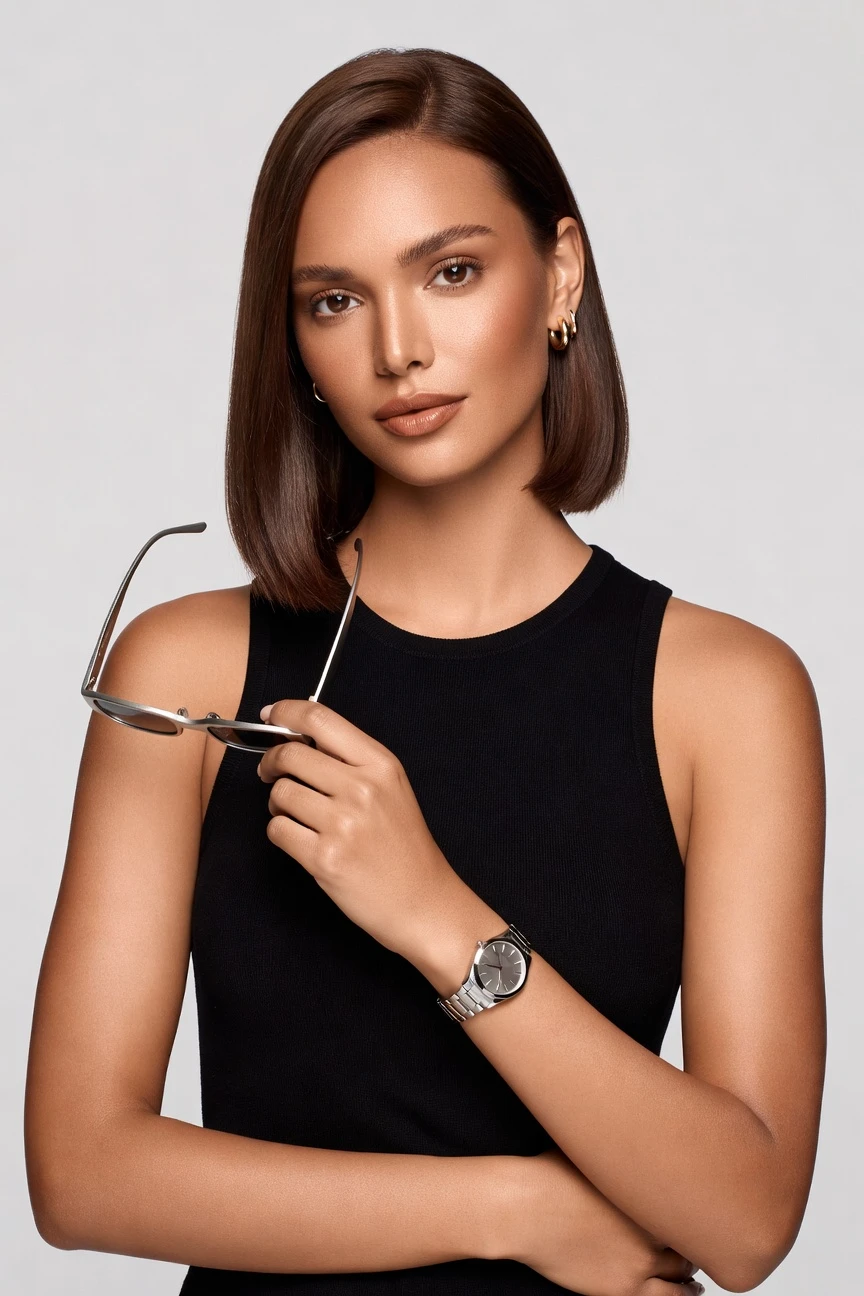
Saved model setup
Female · 26–35 · Dark brown · 175cm
Build a model. Zero prompts.
This setup starts from Copper skin tone and shapes a reusable accessory model for polished catalog work. You click age, height, hair, and body presentation once, then save that identity for repeated handbag, eyewear, watch, and jewelry shoots. 28 attributes · 10+ options each
- 5 clicks · 0 keystrokes
- app.rawshot.ai / build_model
How it works
Build Once, Reuse Across Accessory Lines
Start with the model, save it to your library, then keep the same face and proportions across every accessory shoot.
- Step 01
Set the Model Identity
Choose the body attributes that matter for accessory presentation, then lock in the face, proportions, and styling baseline. You build with controls, not typed instructions.
- Step 02
Save and Reuse the Face
Store that model in your library once the identity is right. The same saved person can carry handbags, jewelry, watches, eyewear, and seasonal drops without drifting.
- Step 03
Deploy Across Shoots or API
Use the saved model in the browser for single campaigns or through the REST API for catalog-scale pipelines. The same identity stays available whether you are making one image or ten thousand.
Spec sheet
Proof for Accessory-First Model Workflows
These twelve checks show how RAWSHOT keeps model creation usable for lean teams and reliable enough for repeated catalog work.
- 01
Attribute-Driven Model Building
Build from 28 body attributes with 10+ options each. Every saved model is a synthetic composite designed to avoid accidental real-person likeness.
- 02
Every Setting Is a Click
You choose face, body, hair, age, and expression with buttons, sliders, and presets. The interface behaves like production software, not a blank text field.
- 03
Built Around the Product
Accessories still depend on faithful presentation of color, finish, scale, and how pieces sit on the body. RAWSHOT is engineered so the garment or item stays the brief.
- 04
Diverse Synthetic Models
Create broad representation for different brands, collections, and customer segments. The model library supports variety without compromising transparency.
- 05
Consistency Across SKUs
Save one face and reuse it across full collections. That keeps handbags, sunglasses, watches, and jewelry aligned across PDPs, campaigns, and refresh cycles.
- 06
150+ Visual Styles
Switch from catalog to editorial, studio, street, campaign, vintage, or clean marketplace looks without rebuilding the model. Style changes stay separate from identity control.
- 07
2K, 4K, Any Ratio
Output stills in 2K or 4K and frame for every channel. Go from tight accessory crops to full-body compositions without leaving the same system.
- 08
Labelled and Compliant
Outputs are C2PA-signed, visibly watermarked, cryptographically watermarked, and AI-labelled. RAWSHOT is built for EU-hosted compliance workflows, including Article 50 readiness and California disclosure rules.
- 09
Signed Audit Trail per Image
Each output carries provenance data that helps teams track origin, generation context, and disclosure handling. That matters when assets move across agencies, marketplaces, and internal review.
- 10
GUI to REST API
Build a single accessory model in the browser, then use the same model library in catalog-scale pipelines. There is no separate product for bigger teams.
- 11
Fast, Predictable Economics
Model generations cost about $0.99 and take around 50–60 seconds. Tokens never expire, and failed generations refund their tokens.
- 12
Permanent Worldwide Rights
Every output includes full commercial rights for permanent worldwide use. That keeps campaign, ecommerce, and marketplace deployment straightforward.
Outputs
Saved Models for Accessory Catalogs
Create a reusable model identity once, then direct different accessory shoots around it. The result is a cleaner catalog, faster approvals, and less visual drift between collections.


Browse all 600+ models →
Comparison
RAWSHOT vs category tools vs DIY prompting
Three lenses on every dimension — what you optimize for in RAWSHOT versus typical category tools and blank-box AI workflows.
01
Interface
RAWSHOT
Click-driven controls for model attributes, styling, framing, and output reuseCategory tools + DIY
Often mix limited presets with vague creative inputs and less structured controls. DIY prompting: You type instructions repeatedly and hope the model interprets them the same way02
Garment fidelity
RAWSHOT
Engineered around real products, proportions, finishes, and accessory placementCategory tools + DIY
Can stylize well but often soften product-specific details under aesthetic presets. DIY prompting: Generic image models drift on scale, invent details, or alter logos and hardware03
Model consistency across SKUs
RAWSHOT
Save one synthetic model and reuse that identity across the whole catalogCategory tools + DIY
May offer reusable looks, but consistency can vary between sessions or tools. DIY prompting: Faces change from output to output, so collections stop looking like one brand world04
Provenance + labelling
RAWSHOT
C2PA-signed outputs with visible and cryptographic watermarking plus AI labellingCategory tools + DIY
Disclosure and provenance support are inconsistent across the category. DIY prompting: No reliable provenance metadata, no signed trail, and unclear disclosure handling05
Commercial rights
RAWSHOT
Permanent worldwide commercial rights included for every generated outputCategory tools + DIY
Rights terms can vary by plan, feature set, or contract layer. DIY prompting: Usage rights and training context are often unclear to commerce teams06
Iteration speed
RAWSHOT
Reusable saved models reduce retakes and keep accessory shoots repeatableCategory tools + DIY
Iteration is faster than studios but may still require rebuilding characters. DIY prompting: Each variation starts over, with prompt edits, reruns, and more cleanup07
Pricing transparency
RAWSHOT
Same per-model price, no per-seat gates, tokens never expireCategory tools + DIY
Category pricing often adds seat limits, tiers, or sales-gated features. DIY prompting: Entry feels cheap, but labor time rises with retries and failed outputs08
Catalog scale
RAWSHOT
Browser GUI and REST API use the same engine and model libraryCategory tools + DIY
Some tools split small-team usage from enterprise workflows. DIY prompting: No dependable batch pipeline for thousands of accessory SKUs
Prompting does not scale
Stop writing essays. Direct the shoot.
Most AI photo tools start with a blank text box. Rawshot turns the shoot into repeatable controls, so creative teams can produce consistent fashion imagery without prompt syntax or one-off hacks.
Category norm
ManualCreate a premium editorial fashion photograph of a model wearing the exact navy oversized wool coat from SKU-1842, full-body crop, realistic hands, consistent facial identity, clean e-commerce lighting, subtle Paris street background, 85mm lens, no logo distortion, no fabric hallucination, same pose as last campaign, repeatable for all colorways...
A prompt can describe one image. It cannot become a shared production system for hundreds of products, models, angles and markets.
Rawshot
ClicksSaved shoot recipe
Apply to 1 SKU or 10,000 via GUI, CSV or REST API.
Rawshot makes creative direction visible: buttons, presets and sliders instead of hidden prompt craft. The result is easier to teach, faster to approve and built for repeat production.
Use cases
Where Reusable Accessory Models Matter Most
Operator archetypes and how click-directed, garment-first output fits the way they actually work.
- 01
Indie Jewelry Labels
Launch earrings, necklaces, and rings on a consistent Copper-toned model before you can afford a full studio calendar.
Confidence · high
- 02
DTC Handbag Brands
Keep one saved face across crossbody, tote, and mini-bag drops so product pages feel like one brand system.
Confidence · high
- 03
Watch Startups
Show wristwear in repeated framing and styling without reshooting every colorway or strap update.
Confidence · high
- 04
Sunglasses Collections
Test multiple frame shapes on the same reusable model so shoppers compare products, not changing faces.
Confidence · high
- 05
Marketplace Accessory Sellers
Generate cleaner on-model imagery for listings that need consistent proportions and fast turnaround.
Confidence · high
- 06
Crowdfunded Product Launches
Present accessories on a polished model before inventory is fully staged for traditional photography.
Confidence · high
- 07
Factory-Direct Brands
Move from sample arrival to catalog-ready accessory imagery with a saved model library and repeatable outputs.
Confidence · high
- 08
Seasonal Capsule Drops
Refresh styling, backgrounds, and framing around the same model identity when holiday or summer collections go live.
Confidence · high
- 09
Adaptive Accessory Lines
Build clearer representation and reuse it across supportive products without rebuilding the cast every time.
Confidence · high
- 10
Resale and Vintage Curators
Standardize mixed-inventory accessory listings with one dependable model identity instead of inconsistent sourcing images.
Confidence · high
- 11
Student Fashion Projects
Create editorial accessory presentations on a tight budget while keeping the model, labeling, and rights straightforward.
Confidence · high
- 12
Catalog Operations Teams
Save approved models once, then push thousands of accessory combinations through browser or API workflows without visual drift.
Confidence · high
— Principle
Honest is better than perfect.
Accessory imagery moves fast across PDPs, marketplaces, ads, and social placements, so provenance cannot be an afterthought. RAWSHOT labels outputs, applies visible and cryptographic watermarking, and signs provenance data with C2PA so teams can publish with a cleaner record of what the asset is. Our models are synthetic composites by design, EU-hosted, and built for disclosure-forward commerce workflows.
Rights & provenance
Full commercial rights. Forever.
- C2PA-signed on every image — EU AI Act Article 50 compliant
- 28-attribute synthetic models — real-person likeness statistically impossible
- Full commercial rights to every generation — no recurring licensing fees
- Tokens never expire · One-click cancel · Transparent pricing
EU AI Act
C2PA
Commercial use
Pricing
~$0.99 per model generation.
~50–60 seconds per generation. Save the model once, reuse it across your entire catalog.
- 01Tokens never expire. Cancel in one click.
- 02Same face, same body, every SKU — no drift between shoots.
- 03No per-seat gates. No 'contact sales' walls for core features.
- 04Failed generations refund their tokens.
FAQ
Practical answers on control, rights, pricing, scale, and compliant publishing.
Do I need to write prompts to use RAWSHOT?
Never—you direct every output with sliders, presets, and clicks on the garment, not typed prompts. That matters because fashion teams need repeatable decisions, not creative guesswork hidden inside a chat box. In RAWSHOT, camera, angle, framing, lighting, style, model attributes, and product focus are all handled like normal application controls, so buyers, merchandisers, and creative leads can work inside a shared system without learning special syntax.
For catalog teams, reliability matters more than novelty. RAWSHOT keeps token pricing, generation timings, refund rules, commercial rights, provenance signalling, visible and cryptographic watermarking, and REST workflows explicit, which makes launches easier to plan and audit. The practical takeaway is simple: if your team can click through a commerce tool, it can build consistent on-model outputs without turning shoot direction into trial-and-error text work.
What does an AI fashion accessory fashion model generator actually change for accessory catalogs?
It changes the hardest part of accessory merchandising: keeping the human presentation consistent while the products change. A strong accessory catalog depends on proportion, face framing, wrist position, neckline exposure, and repeatable styling, especially when customers are comparing similar products across a range. RAWSHOT lets you build a reusable synthetic model once, then keep that identity stable across jewelry, handbags, watches, sunglasses, and other accessories.
That consistency helps teams make cleaner PDPs, sharper collection pages, and faster seasonal refreshes. Instead of rebuilding a cast for every new drop, you save approved models to a library and reuse them in the browser or through the REST API. The operational benefit is not abstract efficiency language; it is a more controlled catalog where shoppers focus on the product differences you are actually selling.
Why skip reshooting every accessory SKU when the season changes?
Because most seasonal updates do not require rebuilding the human identity from zero. If the face, body proportions, and fit context are already approved, what usually changes is styling, lighting, framing, background, and the product assortment. RAWSHOT separates those decisions so you can keep the same saved model while updating the visual direction for a new campaign, channel, or product release.
That is especially useful for brands with handbags, watches, jewelry, or eyewear in many variants. You can move from catalog to editorial presets, adjust crop depth, switch environments, and keep the same model intact across the set. For commerce teams, the takeaway is straightforward: reuse the approved model identity, then refresh the presentation layer when the market moment changes.
How do we turn flat accessory products into catalogue-ready imagery without prompting?
You start by choosing the model identity in the interface, then direct the shoot with normal controls. Select the saved model, place the product, choose framing, set lighting, pick a visual style, and generate. Because RAWSHOT is built around the product rather than a text-first workflow, teams can work from actual merchandising goals such as showing scale, finish, drape, or how an item sits on the body.
That matters for accessory categories where detail and placement sell the product. A watch needs wrist clarity, a handbag needs proportion and carry angle, and jewelry needs clean visibility around skin, neckline, or hand position. The practical workflow is to approve the reusable model first, then standardize presets for each accessory type so your team can generate repeatable outputs without guesswork.
Why does RAWSHOT beat DIY prompting in ChatGPT, Midjourney, or generic image tools for fashion PDPs?
The difference is control structure. Generic image tools usually ask you to keep re-explaining what you want, which creates drift between outputs and makes product accuracy harder to protect. That is a poor fit for fashion PDP work, where logos, finishes, proportions, color, and the same approved face need to stay stable across many assets. RAWSHOT replaces that uncertainty with controls built for commerce teams: model attributes, garment-led direction, lighting systems, framings, styles, and reusable model libraries.
There is also a trust layer. RAWSHOT provides C2PA-signed provenance, visible and cryptographic watermarking, AI labelling, explicit commercial rights, and predictable token economics. DIY tools can be useful for rough concepting, but they are weak where apparel operations need reproducibility and disclosure. For publishable catalog work, a click-driven system beats prompt roulette every time.
Can we use RAWSHOT outputs commercially for ads, PDPs, and marketplaces?
Yes. RAWSHOT grants full commercial rights to every output for permanent worldwide use, which is exactly what ecommerce, paid media, and marketplace teams need before they push imagery live. That clarity matters because accessory assets travel across many surfaces, from product pages and social placements to retail decks and reseller feeds, and rights ambiguity slows down approvals.
RAWSHOT also approaches trust directly rather than hiding it in fine print. Outputs are AI-labelled, C2PA-signed, and watermarked in visible and cryptographic layers so teams can maintain a clear disclosure posture as assets move downstream. The practical rule for operators is simple: treat the assets as production-ready commercial media, and keep the provenance record attached as part of your normal publishing workflow.
What should a buyer or ecommerce lead check before publishing accessory images made in RAWSHOT?
Check the same things you would check in any strong product image review, but be explicit about them. Confirm product fidelity first: color, finish, hardware, logo handling, scale, and how the accessory sits on the model. Then confirm the saved model is the approved one, the framing fits the selling context, and the chosen style matches the channel, whether that is a clean PDP, a marketplace tile, or a campaign crop.
After visual QA, verify the trust signals are handled correctly. RAWSHOT outputs carry AI labelling, C2PA provenance, and watermarking layers, which helps your team preserve disclosure and auditability as files move into DAM, CMS, ad tools, or partner feeds. The operational takeaway is to review fidelity, identity consistency, and provenance together, not as separate late-stage checks.
How much does a reusable accessory model cost, and what happens if a generation fails?
A model generation costs about $0.99 and usually completes in around 50–60 seconds. That pricing is separate from still-image or video workloads because model creation establishes the reusable identity you will keep deploying across products. For accessory teams, that makes budgeting easier: you create the model once, save it to the library, and then reuse it across many shoots instead of rebuilding from scratch each time.
RAWSHOT keeps the token rules simple. Tokens never expire, failed generations refund their tokens, and cancellation is available in one click from the pricing page. The practical takeaway is that your team can test, approve, and scale model identities without worrying that unused balance vanishes or that failed runs quietly eat your budget.
Can RAWSHOT plug into Shopify-scale or PLM-connected accessory workflows through an API?
Yes. RAWSHOT provides a REST API for catalog-scale pipelines, which means the same core system used in the browser can also support larger operational flows. That matters for accessory brands managing many SKUs, rapid variant turnover, or upstream product data coming from merchandising, ERP, or PLM-connected environments. You are not switching to a different product when volume increases; you are extending the same logic into automation.
The advantage is consistency. Approved models, style decisions, and output expectations can move from manual creative work into repeatable batch processes without changing the underlying engine or rights model. For operations teams, the recommendation is to standardize model libraries and output presets in the GUI first, then map them into API-driven batch routines once the workflow is approved.
How do small creative teams and large catalog teams use the same model system without an enterprise gate?
They use the same engine, the same saved model logic, and the same pricing structure. A designer can build one accessory model in the browser for a small launch, while a larger catalog team can reuse that approach across thousands of SKUs through the API. RAWSHOT does not split core capability behind per-seat gates or force teams into a separate edition just because usage grows.
That continuity matters because growth should not break process. When the same model library, provenance rules, rights terms, and UI logic apply at every scale, teams can move from experimental drops to full catalog operations without retraining around a new product. The practical benefit is stable infrastructure: one workflow for one shoot or ten thousand, with the same controls and the same expectations.
Keep exploring