
— Desert campaign · 150+ styles · 4K
Direct your next desert campaign with the AI High Fashion Desert Photography Generator.
Generate high-fashion desert imagery that keeps the garment front and center, from clean campaign frames to editorial heat and motion. Select lens, framing, ratio, resolution, and style with buttons, sliders, and presets in a real fashion workflow. No studio. No samples shipped. No prompts.
- ~$0.55 per image
- ~30–40s per generation
- 150+ styles
- 2K or 4K
- Every aspect ratio
- Full commercial rights
7-day free trial • 50 tokens (10 images) • Cancel anytime

Direct the shoot. Zero prompts.
This setup biases toward a polished desert fashion frame: an 85mm lens for compressed editorial perspective, half-body framing for styling focus, 4:5 for campaign crops, and 4K for publication-ready detail. You click into the look with controls, then generate around the garment. ~$0.55 per image · ~30-40s
- 4 clicks · 0 keystrokes
- app.rawshot.ai / new_shoot
How it works
Build Desert Editorials Around the Garment
Three steps take you from apparel asset to campaign-ready desert imagery with directorial control, consistent output, and no typing box in the way.
- Step 01
Set the Scene
Choose the frame you want for desert-facing fashion work: lens, crop, ratio, light, and visual style. The controls behave like an application for image-making, so you direct the scene without writing instructions.
- Step 02
Anchor the Garment
Build the image around the product, not around a text guess. Cut, colour, pattern, logo, and proportion stay central so the outfit reads as merchandise, not mood alone.
- Step 03
Generate and Scale
Create one campaign frame or expand the same look across a wider assortment. The same engine supports browser-based art direction and catalog-scale workflows through the API.
Spec sheet
Proof for Desert Campaign Production
These twelve signals show how RAWSHOT turns styled desert concepts into reliable fashion operations, from garment fidelity to provenance and scale.
- 01
Designed to Avoid Likeness Risk
Every model is a synthetic composite built from 28 body attributes with 10+ options each, making accidental real-person likeness statistically negligible by design.
- 02
Every Setting Is a Click
You direct lens, framing, angle, expression, lighting, background, and style through controls. No blank box. No syntax hurdle between you and the image.
- 03
The Garment Stays the Brief
RAWSHOT is engineered around the product, so cut, colour, fabric behavior, logo placement, and silhouette remain faithful when you push into strong fashion styling.
- 04
Diverse Synthetic Models
Choose from broad body and appearance combinations for inclusive fashion storytelling, with transparent labelling built in from the start.
- 05
Consistency Across a Drop
Keep the same face, visual language, and framing logic across multiple looks. That matters when a campaign needs cohesion from hero images to supporting PDP assets.
- 06
150+ Visual Styles
Move from clean sun-washed campaigns to harsher editorial desert moods with presets tuned for fashion imagery, not generic aesthetic guessing.
- 07
2K and 4K in Any Ratio
Generate square, portrait, landscape, and vertical crops in 2K or 4K. The same product image can support PDPs, social cuts, paid media, and lookbook layouts.
- 08
Labelled and Compliant by Design
Outputs are AI-labelled, watermarked, and aligned with EU AI Act Article 50, California SB 942, and GDPR expectations for transparent synthetic media.
- 09
Signed Audit Trail per Image
Each output carries C2PA-signed provenance metadata with an image-level record. That gives teams clear internal traceability for review, publishing, and governance.
- 10
GUI for One Look, API for 10,000
Art direct a single desert story in the browser or run the same logic at catalog scale through REST. There is no separate product for bigger teams.
- 11
Fast, Flat Pricing
Still images run at about $0.55 each and usually generate in 30–40 seconds. Tokens never expire, and failed generations refund tokens automatically.
- 12
Permanent Worldwide Rights
Every output includes full commercial rights, permanent and worldwide. Teams can publish across ecommerce, marketplaces, ads, and campaign channels without extra licensing layers.
Outputs
Desert Frames, Garment First
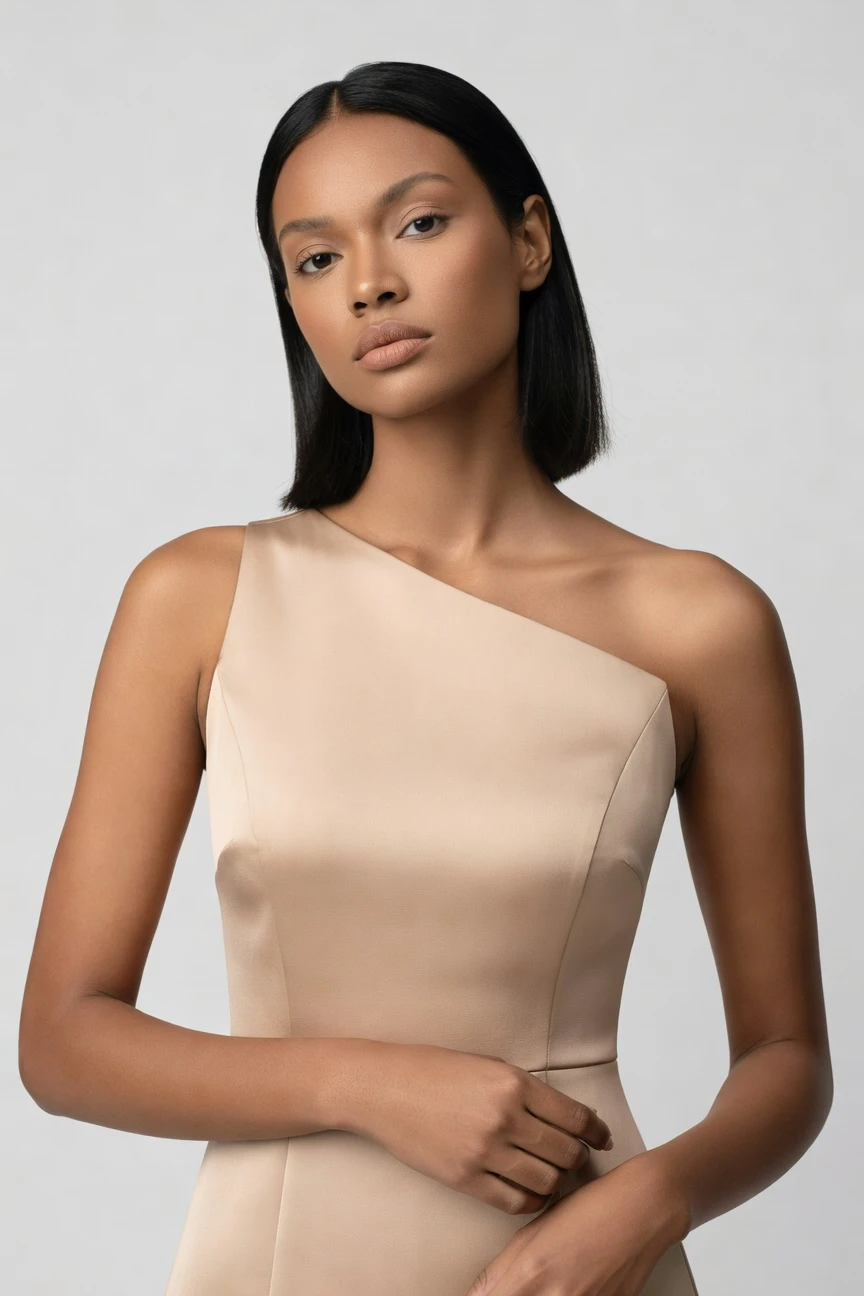
From clean campaign portraits to harsher editorial cuts, the scene changes while the product remains the center of the image. That is the difference between fashion mood and merchandise control.


Browse 150+ visual styles →
Comparison
RAWSHOT vs category tools vs DIY prompting
Three lenses on every dimension — what you optimize for in RAWSHOT versus typical category tools and blank-box AI workflows.
01
Interface
RAWSHOT
Click-driven controls for lens, crop, light, style, and product focusCategory tools + DIY
Often mix lightweight controls with vague text-led direction. DIY prompting: You type instructions repeatedly and hope the model interprets fashion language correctly02
Garment fidelity
RAWSHOT
Built around the garment so cut, colour, logos, and drape stay centralCategory tools + DIY
May stylize aggressively and soften product-specific details. DIY prompting: Garments drift, logos mutate, and details get invented between outputs03
Model consistency
RAWSHOT
Keep the same synthetic model across multiple looks and campaign variationsCategory tools + DIY
Consistency can weaken across sessions or larger assortments. DIY prompting: Faces and body proportions shift from image to image with no stable baseline04
Provenance
RAWSHOT
C2PA-signed outputs with visible and cryptographic watermarking plus AI labelsCategory tools + DIY
Labelling and provenance support vary widely by platform. DIY prompting: Usually no signed provenance metadata and no reliable audit layer05
Commercial rights
RAWSHOT
Full commercial rights to every output, permanent and worldwideCategory tools + DIY
Rights terms are often harder to parse across plans and tools. DIY prompting: Usage rights can be unclear across models, sources, and platform terms06
Pricing transparency
RAWSHOT
Flat per-image pricing, tokens never expire, one-click cancel, refunded failuresCategory tools + DIY
Commonly add seat limits, gated plans, or opaque usage bands. DIY prompting: Costs vary by tool, retries, and wasted generations without fashion-specific safeguards07
Iteration speed
RAWSHOT
Variant generation stays operational because the controls are preset and repeatableCategory tools + DIY
Moderate iteration, but less predictable for exact fashion refinements. DIY prompting: Prompt-engineering overhead slows every new angle, style shift, and correction08
Catalog scale
RAWSHOT
Same engine works in GUI and REST API from one shoot to 10,000 SKUsCategory tools + DIY
Enterprise scale is often segmented behind separate workflows or plans. DIY prompting: No dependable SKU pipeline, review trail, or repeatable batch structure for commerce
Prompting does not scale
Stop writing essays. Direct the shoot.
Most AI photo tools start with a blank text box. Rawshot turns the shoot into repeatable controls, so creative teams can produce consistent fashion imagery without prompt syntax or one-off hacks.
Category norm
ManualCreate a premium editorial fashion photograph of a model wearing the exact navy oversized wool coat from SKU-1842, full-body crop, realistic hands, consistent facial identity, clean e-commerce lighting, subtle Paris street background, 85mm lens, no logo distortion, no fabric hallucination, same pose as last campaign, repeatable for all colorways...
A prompt can describe one image. It cannot become a shared production system for hundreds of products, models, angles and markets.
Rawshot
ClicksSaved shoot recipe
Apply to 1 SKU or 10,000 via GUI, CSV or REST API.
Rawshot makes creative direction visible: buttons, presets and sliders instead of hidden prompt craft. The result is easier to teach, faster to approve and built for repeat production.
Use cases
Who Wins With Desert Fashion Imagery
Operator archetypes and how click-directed, garment-first output fits the way they actually work.
- 01
Indie Resortwear Labels
Launch a desert-facing campaign before a studio budget exists, while keeping the garment credible enough for sales pages and press outreach.
Confidence · high
- 02
DTC Womenswear Brands
Turn a seasonal drop into polished warm-climate fashion imagery for PDPs, landing pages, and paid social without rebuilding the concept in text each time.
Confidence · high
- 03
Menswear Campaign Teams
Create dry-land editorial frames that add attitude to tailoring, denim, or outerwear while preserving fit cues buyers need to judge the product.
Confidence · high
- 04
Swim and Beachwear Operators
Build heat, light, and location-coded fashion scenes around swim lines without shipping samples into a remote production setup.
Confidence · high
- 05
Accessories Brands
Place sunglasses, handbags, jewelry, and watches into high-fashion desert compositions where styling elevates the product instead of burying it.
Confidence · high
- 06
Footwear Launch Managers
Generate campaign-ready boot, sandal, or sneaker imagery with desert mood while keeping shape, texture, and branding readable for conversion.
Confidence · high
- 07
Marketplace Sellers
Add premium editorial variation to product listings and ads so smaller catalogs look considered, not generic, across crowded marketplaces.
Confidence · high
- 08
Crowdfunded Fashion Projects
Show a concept collection in polished arid campaign settings before full production, helping backers understand silhouette, tone, and brand ambition.
Confidence · high
- 09
Vintage and Resale Curators
Give one-off pieces a strong sun-bleached story that feels editorial, while still presenting enough garment truth for buyers to trust the listing.
Confidence · high
- 10
Factory-Direct Manufacturers
Test desert campaign aesthetics across multiple lines quickly, then push the same creative logic into larger assortments through structured workflows.
Confidence · high
- 11
Creative Students and Graduates
Build portfolio-ready fashion desert editorials around real garments without paying for location permits, a crew, or a full production day.
Confidence · high
- 12
Adaptive Fashion Brands
Direct inclusive high-fashion scenes with diverse synthetic models and garment-led controls, so representation and product clarity travel together.
Confidence · high
— Principle
Honest is better than perfect.
High-fashion desert imagery can look polished and aspirational, which makes clear labelling more important, not less. Every RAWSHOT output is AI-labelled, carries visible and cryptographic watermarking, and includes C2PA-signed provenance metadata. We are EU-hosted, GDPR-compliant, and built for transparent synthetic media workflows teams can actually publish with confidence.
Rights & provenance
Full commercial rights. Forever.
- C2PA-signed on every image — EU AI Act Article 50 compliant
- 28-attribute synthetic models — real-person likeness statistically impossible
- Full commercial rights to every generation — no recurring licensing fees
- Tokens never expire · One-click cancel · Transparent pricing
EU AI Act
C2PA
Commercial use
Pricing
~$0.55 per image.
~30–40 seconds per generation. Tokens never expire. Cancel in one click.
- 01The cancel button is on the pricing page.
- 02No per-seat gates. No 'contact sales' walls for core features.
- 03Failed generations refund their tokens.
- 04Full commercial rights to every output, permanent, worldwide.
FAQ
Practical answers on control, rights, pricing, scale, and compliant publishing.
Do I need to write prompts to use RAWSHOT?
Never—you direct every output with sliders, presets, and clicks on the garment, not typed prompts. That UI control is consistent across GUI and REST API payloads, which is why ecommerce teams onboard buyers without rewriting creative briefs as chat threads. Instead of translating fashion language into syntax, you choose camera, framing, lighting, aspect ratio, visual style, and product focus in a structured interface built for apparel imagery.
For catalog teams, reliability matters more than model cleverness; RAWSHOT keeps tokens, timings, refund rules, commercial rights framing, provenance signalling, watermarking cues, REST surface, and SKU-scale batch patterns explicit so operations can rehearse PDP launches without hallucinated garment inventions. The practical takeaway is simple: your team learns buttons and presets once, then uses the same workflow for a single campaign frame or a much larger assortment without a prompt specialist in the loop.
What does AI-assisted fashion photography change for SKU-scale catalogs and campaign teams?
It changes who gets access to photography and how consistently teams can operate it. Traditional shoots are expensive, scheduling-heavy, and hard to repeat at the exact moment a buyer, merchandiser, or marketer needs a new angle. RAWSHOT gives teams a structured way to generate on-model fashion imagery around the garment itself, so campaign concepts and product operations no longer live in separate worlds.
For catalog teams, that means one engine can support a hero image for a launch page and repeatable outputs across a broader assortment through the API. For creative teams, it means you can move between clean campaign, editorial, and desert mood presets without sacrificing product readability or rights clarity. The result is not abstract efficiency talk; it is practical access to imagery for teams that previously had to skip the shoot altogether.
Why skip reshooting every SKU when the season, setting, or campaign mood changes?
Because seasonal updates often need a new visual context more than a whole new production day. If the garment remains the item you are selling, changing the frame, style, crop, or environment should not require rebuilding the entire shoot calendar. RAWSHOT lets teams adjust those creative variables in the application while keeping the product itself central to the output.
That matters for fashion operators who need warm-climate storytelling, desert campaign energy, or editorial variation across the same line without waiting on samples, crew availability, or location logistics. With 150+ visual styles, multiple aspect ratios, 2K and 4K output, and flat per-image pricing, you can refresh launch assets or paid media quickly while keeping a stable production logic. In operations terms, you update the scene when the market changes instead of reopening the whole shoot process.
How do we turn flat garments into catalogue-ready imagery without prompting?
You start by selecting the controls that define the shot rather than typing an instruction. Choose the lens, framing, pose direction, lighting approach, background logic, style preset, aspect ratio, resolution, and product focus. RAWSHOT then generates imagery around the garment so the result works as apparel content, not as a generic styled picture.
For commerce teams, the important part is repeatability. The same control system can be used by a single creative in the browser for one look or mapped into a larger workflow through the REST API for bigger assortments. Because pricing, refund behavior, rights, and provenance are explicit, teams can build approval steps around the output instead of around experimentation in a chat box. The operational takeaway is to treat the garment as the source asset and the UI as your art-direction layer.
Why does RAWSHOT beat ChatGPT, Midjourney, or generic image models for fashion PDPs?
Because fashion PDPs need product truth, repeatability, and publishing confidence more than open-ended image cleverness. Generic models rely on typed instructions and broad interpretation, which is where garment drift, invented logos, unstable faces, and inconsistent proportions creep in. That may be acceptable for mood exploration, but it is weak infrastructure for commerce imagery tied to a real SKU.
RAWSHOT is built around the garment and the production workflow. You direct the output through controls, keep model choices more stable across a drop, receive C2PA-signed provenance metadata, and work with clear commercial rights on every output. Failed generations refund tokens, and the same system extends from GUI work to API pipelines. For teams responsible for PDP trust, that combination matters more than having a more talkative interface.
Is an ai high fashion desert photography generator safe to publish for commercial fashion use?
It is safe to publish when the system is transparent, rights are clear, and your review process is disciplined. RAWSHOT labels outputs as AI, applies visible and cryptographic watermarking, and attaches C2PA-signed provenance metadata so teams can identify what the image is and retain an audit trail. Every output also includes full commercial rights, permanent and worldwide, which removes a major source of uncertainty for commerce and marketing teams.
For fashion brands, the standard should be honesty rather than pretending nothing synthetic is involved. RAWSHOT is EU-hosted, GDPR-compliant, and built to align with the disclosure direction of EU AI Act Article 50 and California SB 942. In practice, that means you can publish desert campaign imagery with a stronger governance posture: review the garment, confirm the label and provenance expectations, and move forward with clear documentation instead of ambiguity.
What should our team check before publishing desert campaign images on PDPs or ads?
Check the same things you would in any disciplined fashion workflow, but do it with synthetic-media signals included. First, verify the garment itself: cut, colour, pattern, logo placement, fabric behavior, and silhouette should match the item you are selling. Next, confirm that the framing, crop, and aspect ratio suit the destination, whether that is a PDP, landing page, social placement, or paid media unit.
Then confirm the transparency layer. RAWSHOT outputs are AI-labelled, watermarked, and C2PA-signed, so teams should keep those governance expectations inside their review process rather than treating them as an afterthought. Because rights are permanent and worldwide, the remaining question is operational fit, not licensing uncertainty. A strong publishing routine is simple: validate the garment, validate the channel crop, validate the provenance record, and then approve with confidence.
How much does the ai high fashion desert photography generator cost for still images?
For stills, RAWSHOT runs at about $0.55 per image, and most generations complete in roughly 30–40 seconds. Tokens never expire, failed generations refund tokens, and cancellation is one click from the pricing page. That makes budgeting straightforward for small brands, campaign tests, and larger assortment planning because the unit economics stay visible instead of being buried behind seat tiers or sales calls.
For a fashion team, the useful comparison is not only against a production day but against the cost of not having imagery at all. You can generate a handful of desert campaign options for concept review, then expand the approved direction without changing tools or plan logic. Since every output includes full commercial rights, permanent and worldwide, finance and marketing teams can model usage with much less friction than they get from patching together generic image tools.
Can we push this into Shopify-scale workflows or our own catalog pipeline through an API?
Yes. RAWSHOT supports browser-based work for one-off shoots and a REST API for catalog-scale production, so teams do not have to switch products when volume rises. The practical benefit is consistency: the same image logic, model choices, and creative controls that work for a merchandiser in the GUI can be translated into structured, repeatable operations for larger product sets.
That matters for brands managing recurring launches, assortment refreshes, and marketplace feeds. Instead of treating campaign images and catalog operations as separate creative universes, you can keep one workflow for approvals, provenance handling, and output standards. Because pricing is per image and not locked behind per-seat gating for core features, the API becomes an extension of the same product rather than a separate enterprise wall. The right move is to prototype in the GUI, then operationalize approved patterns in your pipeline.
Can one buyer, one marketer, and one catalog team scale from a single look to thousands of images in RAWSHOT?
Yes, that is one of the main product principles. The same engine supports a single hero frame and a much larger image program without forcing teams into separate editions, separate model systems, or separate pricing logic. A buyer can review garment accuracy, a marketer can shape the campaign feel, and a catalog operator can move the approved setup into a repeatable production rhythm.
For growing brands, that matters because scale usually breaks consistency before it breaks budget. RAWSHOT keeps the workflow legible: click-driven controls, flat per-image pricing, non-expiring tokens, refunds on failed generations, full commercial rights, and signed provenance metadata on each output. That lets different roles work in sequence without turning fashion production into a specialist syntax problem. In practice, teams start with one look, lock the visual logic, and then expand volume with much less operational drift.
Keep exploring