
— Punk imagery · 150+ styles · 4K
Direct your next drop’s campaign with the AI Punk Fashion Photography Generator.
Build sharp punk campaign imagery around the actual garment, from safety-pin details to distressed textures and hard-edged silhouettes. Select lens, framing, aspect ratio, style, and product focus with clicks in a real interface built for fashion teams. No studio. No samples. No prompts.
- ~$0.55 per image
- ~30–40s per generation
- 150+ styles
- 2K or 4K
- Every aspect ratio
- Full commercial rights
7-day free trial • 50 tokens (10 images) • Cancel anytime

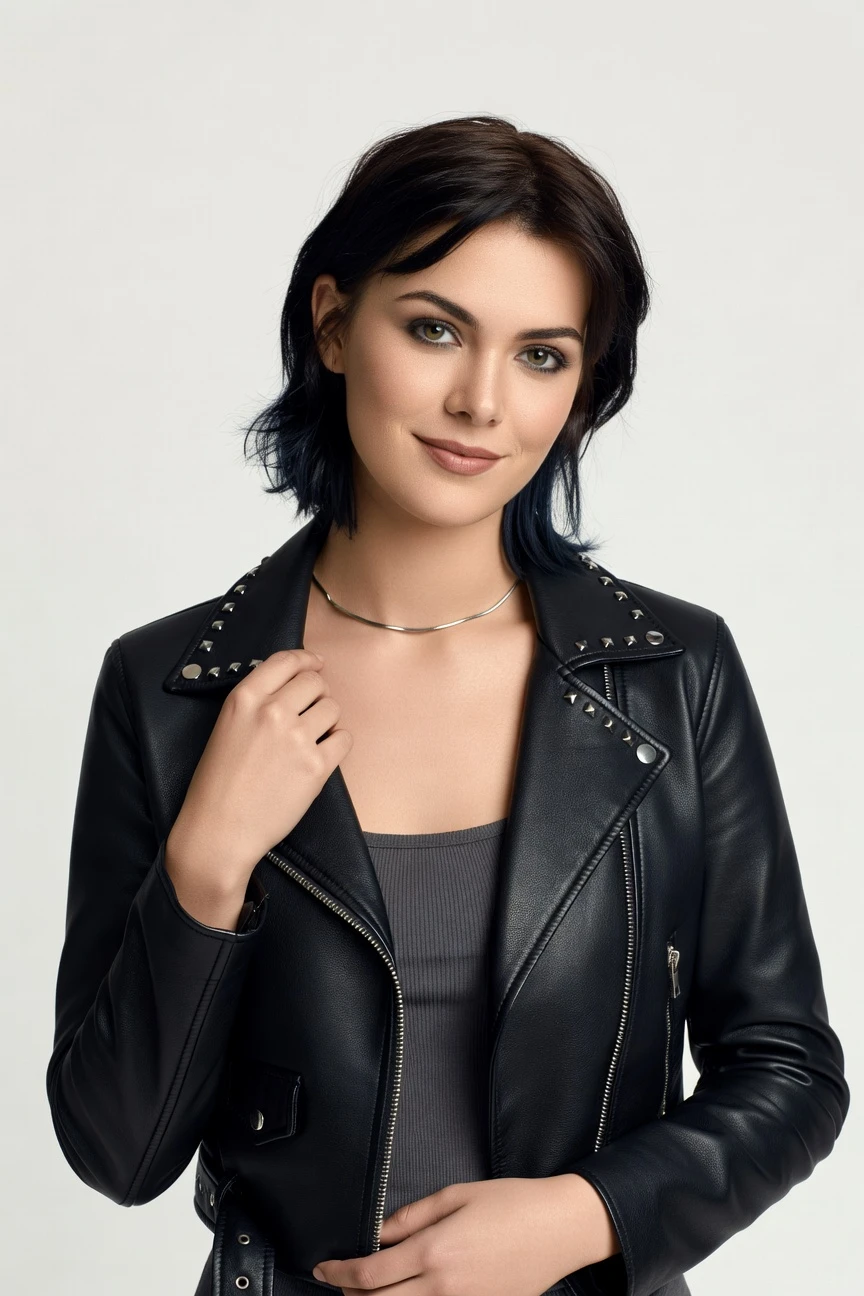
Direct the shoot. Zero prompts.
This setup starts from a tight half-body punk fashion frame with an 85mm lens, 4:5 crop, and 4K output. You click into campaign-ready portrait coverage that keeps the garment front and center while the styling edge comes from presets, not typed instructions. ~$0.55 per image · ~30-40s
- 4 clicks · 0 keystrokes
- app.rawshot.ai / new_shoot
How it works
Build Punk Editorials From Product-First Controls
Three steps take you from garment upload to campaign-ready imagery without studio booking, shipped samples, or command-line workflows.
- Step 01
Upload the Garment
Start with the real product and let the garment set the brief. RAWSHOT is built to represent cut, colour, pattern, logo, fabric, and proportion before style decisions even begin.
- Step 02
Shape the Punk Direction
Click through lens, framing, lighting, background, mood, and visual style to push the shoot toward punk editorial, street flash, or clean campaign territory. Every decision lives in buttons, sliders, and presets.
- Step 03
Generate and Scale
Create one hero image for a drop page or run consistent variants across a full collection. The same engine works in the browser for single looks and through the REST API for large SKU pipelines.
Spec sheet
Proof for Punk Fashion Teams
These twelve points show where the product earns trust: garment fidelity, operator control, provenance, rights, and scale.
- 01
Synthetic Models by Design
Every model is built from 28 body attributes with 10+ options each. Accidental real-person likeness is statistically negligible by design, which keeps identity risk out of your image pipeline.
- 02
Every Setting Is a Click
You direct lens, framing, pose, expression, light, background, and style in the interface. It behaves like production software for apparel teams, not a blank text box.
- 03
The Garment Leads the Image
RAWSHOT is engineered around the product, so punk details like hardware, contrast panels, prints, hems, and drape stay central. The imagery follows the garment instead of bending it into generic aesthetics.
- 04
Diverse Bodies, Consistent Casting
Choose from broad synthetic model variation without casting logistics or reshoot delays. You can keep a brand-consistent face and body setup across repeated drops.
- 05
Stable Across Full Collections
Reuse the same model, framing logic, and visual direction across many SKUs. That consistency matters when a collection needs to read as one world instead of a stack of unrelated outputs.
- 06
Punk, Noir, Flash, or Gloss
Pick from 150+ visual style presets, from gritty street flash to clean campaign gloss. You can push attitude without sacrificing operational repeatability.
- 07
2K, 4K, and Every Crop
Generate stills in 2K or 4K across square, portrait, landscape, and social formats. That makes one shoot direction usable across PDPs, lookbooks, ads, and marketplace placements.
- 08
Labelled and Compliance-Ready
Every output is AI-labelled, watermarked, and aligned with EU AI Act Article 50, California SB 942, and GDPR expectations. Honest labelling is part of the product, not an afterthought.
- 09
Signed Audit Trail per Image
Each output carries C2PA-signed provenance metadata plus visible and cryptographic watermarking. Commerce teams get a record of what the file is and where it came from.
- 10
GUI for One Shoot, API for Scale
Use the browser for drop-day image direction or connect the REST API for catalog automation. The indie label and the enterprise team use the same product, not different tiers of access.
- 11
Fast, Clear Token Economics
Images run at about $0.55 each and usually generate in 30–40 seconds. Tokens never expire, and failed generations refund automatically, so testing looks does not become sunk cost.
- 12
Commercial Rights Stay Simple
Every output includes full commercial rights, permanent and worldwide. That keeps usage clear when assets move from ecommerce to paid social, marketplaces, and wholesale decks.
Outputs
From Street Edge to Campaign Polish
Explore punk-led looks that stay rooted in the garment, whether you want stark catalog framing, flash-heavy attitude, or a tighter editorial crop. The style shifts, but control stays operational.


Browse 150+ visual styles →
Comparison
RAWSHOT vs category tools vs DIY prompting
Three lenses on every dimension — what you optimize for in RAWSHOT versus typical category tools and blank-box AI workflows.
01
Interface
RAWSHOT
Click-driven controls for lens, framing, lighting, style, and product focusCategory tools + DIY
Often mix simple presets with partial text-driven inputs and looser controls. DIY prompting: Typed instructions in chat-style tools with trial-and-error wording before useful output02
Garment fidelity
RAWSHOT
Built around the real garment’s cut, colour, drape, pattern, and logoCategory tools + DIY
Can stylise well but often soften product-specific details under aesthetic presets. DIY prompting: Garments drift, logos get invented, and trims mutate between outputs03
Model consistency across SKUs
RAWSHOT
Keep the same synthetic model logic across repeated catalog or campaign runsCategory tools + DIY
Consistency varies by workflow and often needs extra manual management. DIY prompting: Faces and body proportions change from image to image without warning04
Provenance
RAWSHOT
C2PA-signed files with visible and cryptographic watermarking on every outputCategory tools + DIY
Labelling and provenance support are often partial or absent. DIY prompting: No dependable provenance metadata and no signed record for commerce governance05
Commercial rights
RAWSHOT
Full commercial rights, permanent and worldwide, included in the productCategory tools + DIY
Rights can be harder to parse across plans, vendors, or stock dependencies. DIY prompting: Rights clarity is often unclear for commercial fashion deployment06
Pricing transparency
RAWSHOT
Per-image pricing, no per-seat gates, tokens never expire, refunds on failuresCategory tools + DIY
Seats, bundles, or sales-led plans can complicate basic production access. DIY prompting: Cheap to test, expensive in operator time and repeated failed iterations07
Catalog scale
RAWSHOT
Same engine in browser GUI and REST API for one look or 10,000 SKUsCategory tools + DIY
Scale features may sit behind enterprise packaging or separate workflows. DIY prompting: No reliable batch structure for repeatable apparel production at catalog scale08
Operator workload
RAWSHOT
Fashion teams direct outputs through production controls instead of syntax guessingCategory tools + DIY
Less setup than DIY, but still often requires workaround habits. DIY prompting: Prompt-engineering overhead becomes a real production task before image QA even starts
Prompting does not scale
Stop writing essays. Direct the shoot.
Most AI photo tools start with a blank text box. Rawshot turns the shoot into repeatable controls, so creative teams can produce consistent fashion imagery without prompt syntax or one-off hacks.
Category norm
ManualCreate a premium editorial fashion photograph of a model wearing the exact navy oversized wool coat from SKU-1842, full-body crop, realistic hands, consistent facial identity, clean e-commerce lighting, subtle Paris street background, 85mm lens, no logo distortion, no fabric hallucination, same pose as last campaign, repeatable for all colorways...
A prompt can describe one image. It cannot become a shared production system for hundreds of products, models, angles and markets.
Rawshot
ClicksSaved shoot recipe
Apply to 1 SKU or 10,000 via GUI, CSV or REST API.
Rawshot makes creative direction visible: buttons, presets and sliders instead of hidden prompt craft. The result is easier to teach, faster to approve and built for repeat production.
Use cases
Where Punk Fashion Operators Need Access
Operator archetypes and how click-directed, garment-first output fits the way they actually work.
- 01
Indie Punk Label Launching a First Drop
Build campaign and PDP imagery before a young brand can justify a full studio day, while keeping the collection’s attitude coherent.
Confidence · high
- 02
DTC Brand Testing Graphic Capsule Lines
Generate on-model coverage for multiple graphic directions fast enough to validate what should go live, restock, or disappear.
Confidence · high
- 03
Marketplace Seller With Alt-Fashion Inventory
Turn inconsistent supplier assets into a cleaner punk-inspired presentation that still keeps the product recognizable and sellable.
Confidence · high
- 04
Resale Curator Merchandising One-Off Pieces
Create sharper fashion presentation for unique vintage or reworked garments without needing a bespoke shoot for every single item.
Confidence · high
- 05
Crowdfunded Designer Showing Pre-Production Looks
Present campaign-ready imagery before manufacturing so backers can understand silhouette, styling, and brand direction earlier.
Confidence · high
- 06
Festivalwear Brand Building Social Crops
Generate portrait, marketplace, and social-ready aspect ratios from the same visual direction for launch week distribution.
Confidence · high
- 07
Footwear Label Pushing Hard-Edged Styling
Keep boots and shoe details central while shifting between catalog clarity and punk editorial attitude in the same workflow.
Confidence · high
- 08
Accessories Maker Selling Belts and Hardware
Focus on metalwork, texture, and finish with close framing that gives smaller products a stronger fashion context.
Confidence · high
- 09
Student Collection Preparing Graduate Portfolio Images
Show garments in a polished editorial frame without renting a studio or coordinating a full production crew.
Confidence · high
- 10
Factory-Direct Manufacturer Pitching Alternative Retailers
Create brandable line-sheet and campaign visuals that help wholesale buyers imagine the product in a finished punk story.
Confidence · high
- 11
Small Catalog Team Refreshing Seasonal PDPs
Update imagery across many SKUs with a stable model and framing logic instead of reshooting every product for each season.
Confidence · high
- 12
On-Demand Label Running Frequent Micro-Drops
Move from design file to on-model punk fashion photography in a repeatable rhythm that matches fast release cycles.
Confidence · high
— Principle
Honest is better than perfect.
Punk style has always had a strong point of view, and your image stack should be just as clear about what it is. Every RAWSHOT output is AI-labelled, watermarked, and C2PA-signed, with EU-hosted processing and a per-image audit trail that gives commerce teams proof instead of ambiguity.
Rights & provenance
Full commercial rights. Forever.
- C2PA-signed on every image — EU AI Act Article 50 compliant
- 28-attribute synthetic models — real-person likeness statistically impossible
- Full commercial rights to every generation — no recurring licensing fees
- Tokens never expire · One-click cancel · Transparent pricing
EU AI Act
C2PA
Commercial use
Pricing
~$0.55 per image.
~30–40 seconds per generation. Tokens never expire. Cancel in one click.
- 01The cancel button is on the pricing page.
- 02No per-seat gates. No 'contact sales' walls for core features.
- 03Failed generations refund their tokens.
- 04Full commercial rights to every output, permanent, worldwide.
FAQ
Practical answers on control, rights, pricing, scale, and compliant publishing.
Do I need to write prompts to use RAWSHOT?
Never—you direct every output with sliders, presets, and clicks on the garment, not typed prompts. That UI control is consistent across GUI and REST API payloads, which is why ecommerce teams onboard buyers without rewriting creative briefs as chat threads. Instead of guessing wording, you select lens, framing, lighting, background, style, aspect ratio, and product focus in a way that maps to how fashion teams already review imagery.
For catalog teams, reliability matters more than model cleverness; RAWSHOT keeps tokens, timings, refund rules, commercial rights framing, provenance signalling, watermarking cues, REST surface, and SKU-scale batch patterns explicit so operations can rehearse PDP launches without hallucinated garment inventions. The practical takeaway is simple: build a repeatable image recipe in clicks, keep the garment central, and let your team scale that logic from one drop to a larger assortment without turning syntax into a production dependency.
What does AI-assisted fashion photography change for SKU-scale catalogs?
It changes who gets access to on-model imagery and how consistently teams can produce it. Traditional shoots ask catalog teams to bundle garments into studio days, coordinate talent, and accept long feedback loops, which is manageable for some brands and impossible for many others. RAWSHOT gives operators a way to turn real garments into labeled, commerce-ready imagery in roughly 30–40 seconds per image while keeping lens, framing, style, and output specs under direct control.
For SKU-scale work, the key shift is repeatability rather than novelty. The same engine supports a one-off browser session or a larger REST API pipeline, with the same per-image pricing, the same model logic, and the same provenance approach on every file. That means teams can standardize how products are shown, keep collection pages visually coherent, and expand coverage without waiting for the next physical shoot window.
Why skip reshooting every SKU for season updates?
Because many seasonal updates are really presentation problems, not product problems. A team may need darker mood, a tighter crop, a new ratio for channels, or a more editorial treatment for a drop page, yet a full reshoot asks for logistics, budget, and calendar time that do not match the change itself. RAWSHOT lets you re-direct the image treatment around the same garment with interface controls for visual style, framing, and format, so the update happens at production speed instead of studio speed.
That matters most when assortments are broad and margins are tight. You can keep a consistent model setup, switch from clean catalog to harder-edged campaign looks, generate in 2K or 4K, and retain full commercial rights to the outputs without opening a separate licensing conversation. Operationally, teams should reserve physical shoots for the moments that truly need them and use RAWSHOT when the requirement is coverage, consistency, or speed of seasonal refresh.
How do we turn flat garments into catalogue-ready imagery without prompting?
You start with the real garment and direct the output through product-first controls. In practice, that means choosing framing, lens, angle, lighting, style, aspect ratio, and product focus in the interface so the resulting image is built around the apparel item rather than around a text instruction. For buyers and ecommerce managers, this is much easier to review because every creative choice is visible, repeatable, and tied to a named control.
RAWSHOT is designed for apparel categories including upper body, lower body, full outfit, footwear, jewelry, handbags, watches, sunglasses, and accessories, with up to four products in one composition. You can generate catalog-clean imagery or push further into editorial styling while still working from the same production surface and the same token logic. The useful habit is to establish a house setup for each product category, then reuse that setup across launches so your team gets stable image quality without a manual rewrite every time.
Why does garment-led control beat ChatGPT, Midjourney, or generic image tools for fashion PDPs?
Because fashion PDPs fail when the garment stops being trustworthy. Generic image tools are built to interpret broad intent, which often produces drifting silhouettes, invented logos, changed trims, or inconsistent faces across a set of outputs. That may be tolerable for loose concepting, but it becomes a problem the moment a customer is expected to make a purchase decision from the image. RAWSHOT is engineered around the garment first, with a UI that makes production choices explicit instead of burying them inside trial-and-error wording.
The difference is not only visual; it is operational. RAWSHOT includes C2PA-signed provenance, visible and cryptographic watermarking, full commercial rights, refunded tokens on failed generations, and a workflow that extends from browser use to REST API scale. Teams choosing assets for product pages need reproducibility, governance, and a clear path from one approved setup to hundreds of outputs, which is exactly where generic chat-led image workflows break down.
Can I use AI punk fashion photography generator output commercially and still stay transparent?
Yes. RAWSHOT provides full commercial rights to every output, permanent and worldwide, and it also keeps transparency visible rather than hiding it in fine print. Every file is AI-labelled, watermarked, and C2PA-signed, which gives teams a concrete provenance layer when assets move between ecommerce, paid media, marketplaces, and brand presentations. For fashion operators, that balance matters because commercial usability without trust controls simply creates a second governance problem.
RAWSHOT’s approach is built around honest labelling, not ambiguity. Outputs are created with synthetic models designed from 28 body attributes with 10+ options each, EU-hosted processing, and compliance-oriented handling aligned to current disclosure expectations such as EU AI Act Article 50 and California SB 942. In practice, that means you can publish the work with a clearer internal record, clearer rights framing, and clearer disclosure posture than you would get from ad hoc image generation tools.
What should a merchandiser check before publishing generated fashion imagery?
A merchandiser should check the same core truths they would check on any product image: does the garment read correctly, are brand details intact, is the framing appropriate for the selling context, and is the asset properly labelled for governance. RAWSHOT makes those checks easier because the controls are explicit and the provenance layer is built into the file, so teams are not reverse-engineering what happened after the image exists. The goal is not perfection for its own sake; it is a dependable review process tied to commerce outcomes.
In practice, confirm product focus, compare visible details like pattern, hardware, and proportion against the source garment, verify the selected aspect ratio and resolution, and keep the C2PA and watermarking workflow intact as the file moves downstream. Because failed generations refund tokens and tokens never expire, teams can reject weak variants without pressure to publish borderline work. The right operating model is simple: approve only what represents the garment honestly and archive the signed, labelled file as the version of record.
How much does still-image generation cost, and what happens if a run fails?
Still images cost about $0.55 each and typically generate in around 30–40 seconds. Tokens never expire, which matters for fashion teams working in uneven launch cycles because a quiet month does not erase spend that was already committed. The pricing model is deliberately plain: no per-seat gates for core use, no sales-wall requirement to access the main product, and a visible cancel path on the pricing page.
If a generation fails, the tokens are refunded. That changes the risk calculation for teams testing alternate crops, visual styles, or collection-specific setups, because iteration does not mean paying twice for outputs you never received. Compared with studio planning or opaque software packaging, the practical advantage is predictability: you can estimate image coverage, test a few directions, and expand only once the setup is working for the assortment.
Can we connect this to a Shopify-scale or PLM-fed image pipeline through API?
Yes. RAWSHOT supports a REST API for catalog-scale production while keeping the browser GUI available for single-shoot direction and approvals. That matters for teams with mixed workflows, where creative leads may define the look in the interface and operations teams then apply the same logic across a larger product feed. The important point is that scale does not require moving to a different product tier with different image behavior.
RAWSHOT is also integration-ready for larger product data environments, including PLM-connected workflows, and each image carries a signed audit trail that helps governance survive automation. For a Shopify-scale or marketplace-heavy business, the best pattern is to approve a small set of reliable visual recipes by product type, then pass those settings into batch production so launches stay consistent without rebuilding the shoot logic every day.
Is the ai punk fashion photography generator only for single images, or can teams run whole collections through it?
It handles both ends of the workload. A designer can open the browser, direct one hero image for a launch page, and export a commercial-ready file; a catalog team can use the same engine to run repeated setups across a large assortment with consistent model logic, framing, and style. That continuity matters because teams should not have to choose between a simple creative tool and a production system built for real operational load.
For collection-scale work, consistency is usually the deciding factor rather than raw speed alone. RAWSHOT keeps per-image pricing stable, avoids per-seat gates, supports 2K and 4K outputs in every major aspect ratio, and maintains provenance and labelling on every file. The operational takeaway is clear: define the visual standard once, test it in the GUI, then extend it through API-driven runs when the assortment grows beyond manual handling.
Keep exploring