
— Full-body fashion imagery · 150+ styles · 4K
Direct full-look campaigns with the AI Full Body Image Generator.
Generate full-body fashion imagery that keeps the garment, proportions, and styling decisions clear from head to toe. Select lens, framing, pose, angle, light, background, and aspect ratio with buttons and presets in a real application built for fashion teams. No studio. No samples shipped. No prompts.
- ~$0.55 per image
- ~30–40s per generation
- 150+ styles
- 2K or 4K
- Every aspect ratio
- Full commercial rights
7-day free trial • 50 tokens (10 images) • Cancel anytime

Direct the shoot. Zero prompts.
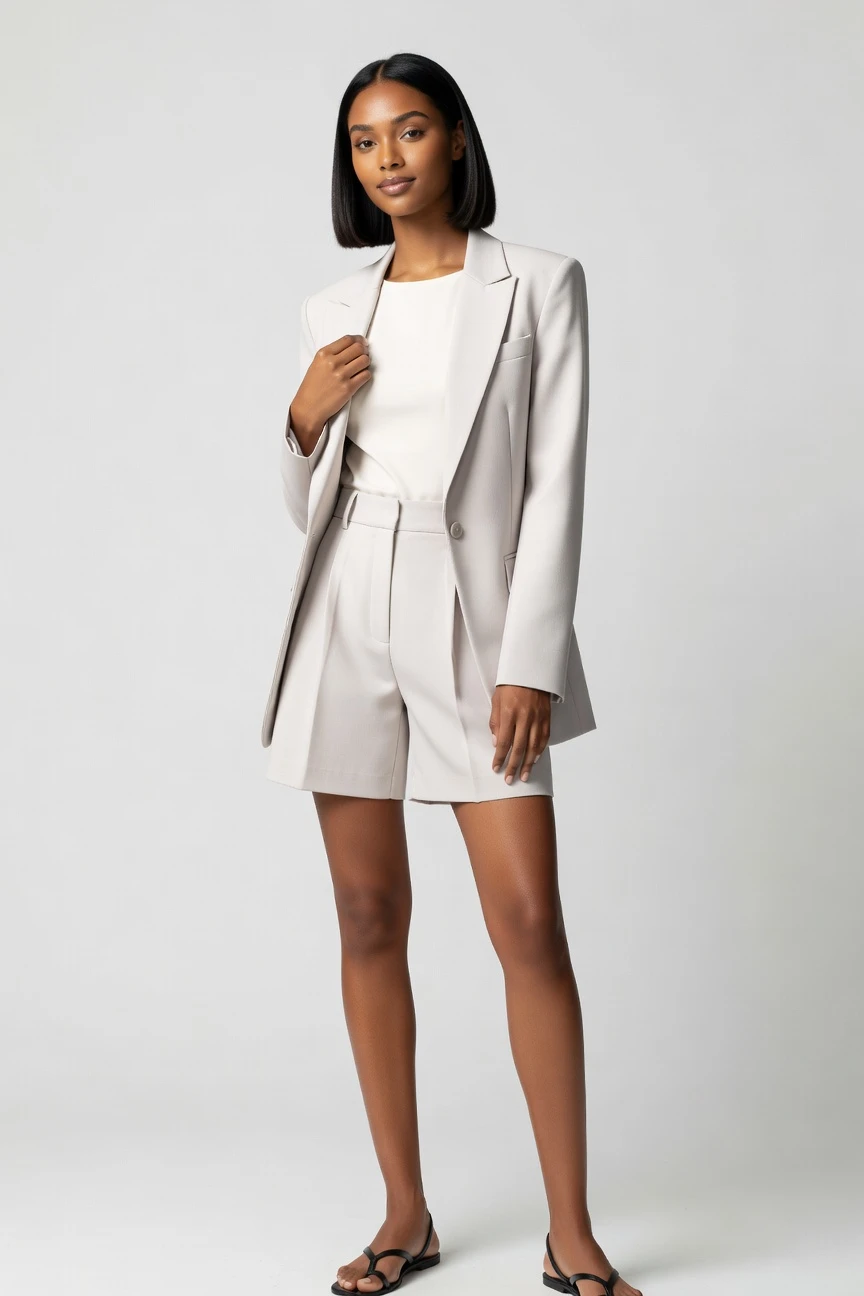
This setup is tuned for full-body fashion imagery: an 85mm lens, 3/4 body framing, 4:5 crop, and 4K output. You click into a clean campaign look, then adjust pose, angle, light, and background as needed for the garment. ~$0.55 per image · ~30-40s
- 4 clicks · 0 keystrokes
- app.rawshot.ai / new_shoot
How it works
From Garment Upload to Full-Body Output
Three steps take you from product asset to labelled on-model imagery without studio logistics or chat-style guesswork.
- Step 01
Upload the Garment
Start with the product. RAWSHOT builds the image around the cut, colour, pattern, logo, and drape so the garment stays the brief.
- Step 02
Set the Full-Body Frame
Choose lens, framing, pose, angle, lighting, background, and style from visual controls. You direct the shot with application settings, not text syntax.
- Step 03
Generate and Scale
Create a single hero image in the browser or push whole catalogs through the API. The same engine, pricing logic, and output standards apply at every volume.
Spec sheet
Proof for Full-Body Fashion Imaging
These twelve surfaces show how RAWSHOT handles garment accuracy, operator control, provenance, and scale in one workflow.
- 01
Synthetic Models by Design
Every model is a synthetic composite built from 28 body attributes with 10+ options each. Accidental real-person likeness is statistically negligible by design.
- 02
Every Setting Is a Click
Lens, framing, pose, facial expression, lighting, background, and style live in the interface. You direct the shoot with controls, not a blank text box.
- 03
Garment-Led Fidelity
RAWSHOT is engineered around the product itself. Cut, colour, pattern, logos, fabric feel, drape, and proportion stay central in the output.
- 04
Diverse Bodies, Reusable Cast
Build imagery across different body presentations without changing tools or workflows. The same model logic supports campaign work and broad catalog coverage.
- 05
Consistency Across SKUs
Keep the same face, framing logic, and visual system across many products. That means fewer retakes and cleaner category pages.
- 06
150+ Visual Styles
Move from catalog clean to editorial noir, studio gloss, street flash, Y2K, vintage, and more. Brand direction stays selectable and repeatable.
- 07
2K, 4K, and Every Ratio
Generate for PDPs, lookbooks, paid social, marketplaces, and email in the crop you need. Full-body work holds up across vertical, square, and widescreen layouts.
- 08
Labelled and Compliant
Outputs are AI-labelled, watermarked, and aligned with EU AI Act Article 50, California SB 942, and GDPR expectations. Honest handling is built into the product.
- 09
Signed Audit Trail per Image
Each asset carries C2PA-signed provenance metadata. Teams can track what an image is, where it came from, and how it entered the workflow.
- 10
GUI for One Shoot, API for Scale
Use the browser for hands-on art direction or connect the REST API for nightly catalog runs. Indie operators and enterprise teams use the same core platform.
- 11
Predictable Speed and Pricing
Stills run at about $0.55 per image and take roughly 30–40 seconds. Tokens never expire, and failed generations refund tokens automatically.
- 12
Permanent Worldwide Rights
Every output includes full commercial rights, permanent and worldwide. That keeps campaign, ecommerce, and marketplace usage simple.
Outputs
Full-Body Outputs, Ready to Publish
See how complete looks hold together across campaign, catalog, and commerce crops. The garment stays legible while the framing, lighting, and style shift around it.


Browse 150+ visual styles →
Comparison
RAWSHOT vs category tools vs DIY prompting
Three lenses on every dimension — what you optimize for in RAWSHOT versus typical category tools and blank-box AI workflows.
01
Interface
RAWSHOT
Click-driven controls for lens, pose, light, frame, style, and outputCategory tools + DIY
Usually mix presets with limited control panels and uneven fashion-specific direction. DIY prompting: Typed instructions in a chat box with trial-and-error wording and weak reproducibility02
Garment fidelity
RAWSHOT
Built around the garment so cut, colour, pattern, and logos stay centralCategory tools + DIY
Often optimize for mood and model styling over product precision. DIY prompting: Garment drift, invented logos, altered hems, and changed fabric details are common03
Model consistency
RAWSHOT
Same synthetic model logic can stay consistent across full catalogsCategory tools + DIY
Consistency often depends on narrower preset systems or manual retakes. DIY prompting: Faces and body presentation shift between outputs even with similar instructions04
Provenance and labelling
RAWSHOT
C2PA-signed, visibly watermarked, cryptographically watermarked, and AI-labelledCategory tools + DIY
Labelling and provenance support vary, and audit depth is often unclear. DIY prompting: No dependable provenance metadata, audit trail, or standardized output labelling05
Commercial rights
RAWSHOT
Full commercial rights to every output, permanent and worldwideCategory tools + DIY
Rights may depend on plan level or platform-specific terms. DIY prompting: Usage rights and source accountability can stay ambiguous for commerce teams06
Iteration speed per variant
RAWSHOT
New full-body variants generate in about 30–40 seconds per imageCategory tools + DIY
Fast enough for small batches but often less predictable at volume. DIY prompting: Iteration speed gets lost in repeated rewrites, retries, and cleanup passes07
Pricing transparency
RAWSHOT
Around $0.55 per image, tokens never expire, one-click cancelCategory tools + DIY
Seats, plan gates, or sales-led access can complicate cost planning. DIY prompting: Low entry cost hides heavy operator time and unreliable usable yield08
Catalog scale
RAWSHOT
Same product in browser GUI and REST API for one shoot or 10,000Category tools + DIY
Scale features are more often segmented into separate enterprise workflows. DIY prompting: No fashion-native pipeline, weak SKU handling, and poor auditability at scale
Prompting does not scale
Stop writing essays. Direct the shoot.
Most AI photo tools start with a blank text box. Rawshot turns the shoot into repeatable controls, so creative teams can produce consistent fashion imagery without prompt syntax or one-off hacks.
Category norm
ManualCreate a premium editorial fashion photograph of a model wearing the exact navy oversized wool coat from SKU-1842, full-body crop, realistic hands, consistent facial identity, clean e-commerce lighting, subtle Paris street background, 85mm lens, no logo distortion, no fabric hallucination, same pose as last campaign, repeatable for all colorways...
A prompt can describe one image. It cannot become a shared production system for hundreds of products, models, angles and markets.
Rawshot
ClicksSaved shoot recipe
Apply to 1 SKU or 10,000 via GUI, CSV or REST API.
Rawshot makes creative direction visible: buttons, presets and sliders instead of hidden prompt craft. The result is easier to teach, faster to approve and built for repeat production.
Use cases
Who Needs Full-Body Coverage Most
Operator archetypes and how click-directed, garment-first output fits the way they actually work.
- 01
Indie Designer Launching a First Drop
Create full-look campaign imagery before a studio day is financially possible, while keeping the garment at the center.
Confidence · high
- 02
DTC Brand Refreshing PDPs
Update full-body ecommerce imagery across bestsellers without reshooting every style for each seasonal change.
Confidence · high
- 03
Marketplace Seller Expanding Assortment
Standardize on-model full-body images across many listings so the catalog feels coherent and shoppable.
Confidence · high
- 04
On-Demand Label Testing New Looks
Photograph garments before bulk production to validate demand with finished-looking outfit imagery.
Confidence · high
- 05
Lookbook Team Building Seasonal Stories
Move from one full-body frame to the next with controlled styling, lighting, and crops that still feel like one collection.
Confidence · high
- 06
Kidswear Brand Showing Complete Fits
Present tops, bottoms, and layering pieces together so buyers understand proportion and outfit logic at a glance.
Confidence · high
- 07
Adaptive Fashion Line Explaining Function
Use full-body views to show overall silhouette while preserving garment details that matter for fit and access.
Confidence · high
- 08
Lingerie DTC Brand Directing Coverage Carefully
Control angle, framing, styling, and background precisely so the product reads clearly and the brand tone stays deliberate.
Confidence · high
- 09
Resale Seller Organizing Mixed Inventory
Bring inconsistent inbound garments into a consistent full-body visual system without booking repeated shoots.
Confidence · high
- 10
Factory-Direct Manufacturer Pitching Buyers
Turn product assets into full-body presentation images for line sheets, wholesale outreach, and digital showrooms.
Confidence · high
- 11
Crowdfunding Creator Pre-Selling a Capsule
Show the complete look early, giving backers confidence in silhouette, styling, and brand world before production ramps.
Confidence · high
- 12
Catalog Ops Team Running Nightly Batches
Push large sets of full-body imagery through the API while keeping output structure, pricing logic, and audit trails consistent.
Confidence · high
— Principle
Honest is better than perfect.
Full-body fashion imagery carries trust questions because it shows the whole person and the whole look. RAWSHOT answers that with C2PA-signed provenance metadata, visible and cryptographic watermarking, AI labelling, and EU-hosted infrastructure. We do not hide what the image is; we make that legible so commerce teams can publish with clear records and brand confidence.
Rights & provenance
Full commercial rights. Forever.
- C2PA-signed on every image — EU AI Act Article 50 compliant
- 28-attribute synthetic models — real-person likeness statistically impossible
- Full commercial rights to every generation — no recurring licensing fees
- Tokens never expire · One-click cancel · Transparent pricing
EU AI Act
C2PA
Commercial use
Pricing
~$0.55 per image.
~30–40 seconds per generation. Tokens never expire. Cancel in one click.
- 01The cancel button is on the pricing page.
- 02No per-seat gates. No 'contact sales' walls for core features.
- 03Failed generations refund their tokens.
- 04Full commercial rights to every output, permanent, worldwide.
FAQ
Practical answers on control, rights, pricing, scale, and compliant publishing.
Do I need to write prompts to use RAWSHOT?
Never—you direct every output with sliders, presets, and clicks on the garment, not typed prompts. That matters because fashion teams already have enough variables to manage across fit, styling, SKU coverage, aspect ratios, and publishing deadlines; translating all of that into chat syntax only adds friction. In RAWSHOT, camera choice, framing, pose, angle, lighting, background, visual style, and product focus are all interface controls, so the workflow feels like using an application rather than negotiating with a blank box.
For catalog and campaign operators, reliability beats clever wording. The same control logic works in the browser GUI for one-off shoots and in the REST API for larger pipelines, which keeps handoff between creative and operations clean. Pricing, timing, token refunds on failed generations, commercial rights, provenance metadata, and watermarking are all explicit instead of implied. The practical takeaway is simple: your team can standardize a repeatable image workflow without teaching anyone text syntax first.
What does AI-assisted full-body fashion photography change for ecommerce catalogs?
It changes who can afford complete on-model coverage and how consistently a catalog can be maintained. Full-body imagery is especially valuable in apparel because shoppers want to understand silhouette, proportion, layering, and how separate products read together from head to toe. Traditional shoots solve that well, but they also bring scheduling, samples, talent coordination, and day-rate pressure that many operators cannot absorb across every SKU and every seasonal refresh.
RAWSHOT gives teams a way to direct those full-body outputs inside a fashion-specific interface. You choose framing, lens, pose, lighting, background, style, aspect ratio, and resolution while the garment remains the central input, then publish assets with full commercial rights and C2PA-signed provenance. Because stills generate in roughly 30–40 seconds at about $0.55 per image, teams can cover more products, test more layouts, and keep visual systems tighter. In practice, that means fuller PDP coverage without rebuilding your whole business around studio availability.
Why skip reshooting every SKU for season updates or merchandising changes?
Because most catalog updates are not creative overhauls; they are operational changes in assortment, timing, channel mix, or brand presentation. If a product needs a cleaner marketplace crop, a new background, a different full-body framing, or a campaign variant aligned to a seasonal drop, a physical reshoot can be disproportionate to the actual adjustment required. That creates a bottleneck where teams either overspend on logistics or publish inconsistent imagery across channels.
RAWSHOT lets you keep the garment as the brief while changing the presentation around it through controls. You can shift framing, lens, aspect ratio, style, and background without rebuilding the workflow from scratch, then keep outputs labelled and traceable with watermarking and provenance metadata. The result is not about replacing established photography where it already works well; it is about giving smaller teams and fast-moving operators access to imagery updates they otherwise would not make. Operationally, that means seasonal refreshes become a planning decision, not a production crisis.
How do we turn flat garments into catalogue-ready imagery without prompting?
You start from the product asset and then direct the image using interface settings that map to real shoot decisions. In RAWSHOT, teams select lens, framing, pose, camera angle, lighting, background, visual style, aspect ratio, resolution, and product focus from buttons, sliders, and presets. That structure matters for apparel commerce because the work is rarely about inventing a scene from scratch; it is about presenting the garment clearly, consistently, and at the right level of brand expression.
For full-body catalogue imagery, the most useful pattern is usually to lock core decisions first: choose the body framing, decide the output crop for the channel, then tune environment and style around the garment. Because the system is built around fashion products rather than generic image generation, teams can create repeatable image recipes for categories, collections, or channel-specific needs. Add C2PA-signed provenance, visible and cryptographic watermarking, and permanent worldwide commercial rights, and the output is ready for real commerce workflows rather than one-off experiments.
Why does garment-led control beat ChatGPT, Midjourney, or generic image tools for fashion PDPs?
Because product detail is the job, not a side effect. Generic image tools are optimized for broad creativity, so apparel teams often spend time wrestling with garment drift, invented logos, altered trims, inconsistent body presentation, and outputs that look persuasive until merchandising reviews them closely. Even when a result appears usable, reproducing the same face, framing logic, or styling system across many SKUs becomes a fragile manual process.
RAWSHOT is structured differently. The garment is the center of the workflow, and the creative decisions live in controls instead of chat-style wording, which makes outcomes more reproducible for commerce teams. On top of that, rights are clearly framed, outputs are AI-labelled, and every image can carry C2PA provenance plus watermarking rather than arriving as an isolated file with unclear traceability. For fashion PDPs, that combination matters more than novelty: teams need dependable product representation, repeatable operating patterns, and assets they can confidently publish at scale.
Can I use outputs from this ai full body image generator commercially?
Yes. RAWSHOT gives you full commercial rights to every output, and those rights are permanent and worldwide. That matters for fashion teams because the same asset often moves across PDPs, email, paid social, organic social, wholesale decks, marketplaces, and internal merchandising documents; unclear usage terms create operational risk long after the image is generated. With RAWSHOT, the rights position is direct rather than buried behind a custom sales process or plan-specific exception.
Trust is handled just as explicitly. Outputs are AI-labelled and watermarked, with C2PA-signed provenance metadata available to support auditability, and the platform is built to align with GDPR and disclosure expectations such as EU AI Act Article 50 and California SB 942. That does not just answer a legal question; it gives brand, ecommerce, and ops teams a cleaner publishing standard. The practical takeaway is that you can brief, approve, and distribute assets inside one rights and provenance framework instead of patching policy together after the fact.
What should our team check before publishing full-body synthetic fashion images?
Start with garment accuracy, because that is what the customer ultimately buys. Review silhouette, hem length, sleeve shape, pattern scale, logo treatment, closure details, fabric behavior, and whether the chosen full-body framing keeps the relevant product information visible enough for the sales context. Then confirm that the output matches the intended channel in crop and resolution, and that the brand presentation is consistent with the rest of the category or campaign.
After visual review, check the trust layer. RAWSHOT outputs are designed to be AI-labelled, visibly and cryptographically watermarked, and supported by C2PA-signed provenance metadata, which gives teams a stronger publication record than ordinary downloadable image files. Because the models are synthetic by design, likeness risk is reduced structurally rather than left to guesswork. In day-to-day operations, the best practice is to treat publication review as both a merchandising check and an attribution check, so product clarity and honest labelling move together.
How much does a still-image workflow cost for full-body product imagery?
For stills, RAWSHOT runs at about $0.55 per image, and a generation typically takes around 30–40 seconds. That makes budgeting easier for ecommerce and brand teams because you can estimate output volume directly instead of negotiating around day rates, reshoot exposure, travel, or minimum production thresholds. Tokens never expire, which also means experimentation does not come with an artificial time penalty if your launch calendar shifts.
The other cost controls are practical rather than promotional. Failed generations refund their tokens, the cancel button is on the pricing page, and core product access is not blocked behind per-seat gates or a mandatory sales conversation. Video and model generation are priced separately because they use different resources, but for a still-image page like this one, the useful planning unit is simple: how many publishable full-body variants does each SKU need across PDP, marketplace, campaign, and social channels. Once your team answers that, the spend model is straightforward.
Can RAWSHOT plug into Shopify-scale or PLM-connected image pipelines?
Yes. RAWSHOT is built for both browser-based single-shoot work and REST API-driven catalog workflows, so teams do not need separate tools for creative exploration and production throughput. That matters when one group is art-directing hero imagery while another is responsible for nightly catalog updates, marketplace formatting, or downstream asset distribution tied to SKU records. A platform only becomes useful at scale when those two modes can share the same logic rather than diverge into separate systems.
In practice, teams use the GUI to refine visual rules and then map those settings into API workflows for larger batches. Because the platform is PLM-integration ready and maintains a signed audit trail per image, outputs can fit into governance-heavy environments as well as faster-moving DTC stacks. The important operational point is consistency: the same garment-led setup, pricing logic, rights framing, and provenance standard can carry from a single browser session to a much larger catalog pipeline without changing the product underneath the team.
How far can a small team scale an ai full body image generator through the UI and API together?
Far enough to cover both launch-day creativity and catalog maintenance without splitting the organization into separate tooling camps. A designer, merchandiser, or founder can use the browser interface to direct a small set of full-body hero images with hands-on control over framing, lens, lighting, and brand style. The same business can then extend that visual system across many SKUs through the API, keeping outputs aligned instead of rebuilding instructions every time volume increases.
This is where RAWSHOT’s product stance matters. There are no per-seat gates for core features, tokens do not expire, failed generations refund tokens, and the same engine serves one shoot or ten thousand. Add permanent worldwide commercial rights plus C2PA-signed provenance and watermarking, and the workflow remains publication-ready as it grows. For a lean team, the practical model is simple: establish a repeatable look in the GUI, then operationalize it through the API when assortment, channels, or cadence demand more throughput.
Keep exploring