
— Baby fashion imagery · 150+ styles · 4K
Direct babywear campaigns with the AI Baby Photography Generator
Generate baby and kids fashion imagery built around the garment, from clean catalog frames to softer campaign scenes. Direct framing, lens, aspect ratio, lighting, and product focus with buttons, sliders, and presets in a real application. No studio. No samples. No typed syntax.
- ~$0.55 per image
- ~30–40s per generation
- 150+ styles
- 2K or 4K
- Every aspect ratio
- Full commercial rights
7-day free trial • 50 tokens (10 images) • Cancel anytime

Direct the shoot. Zero prompts.
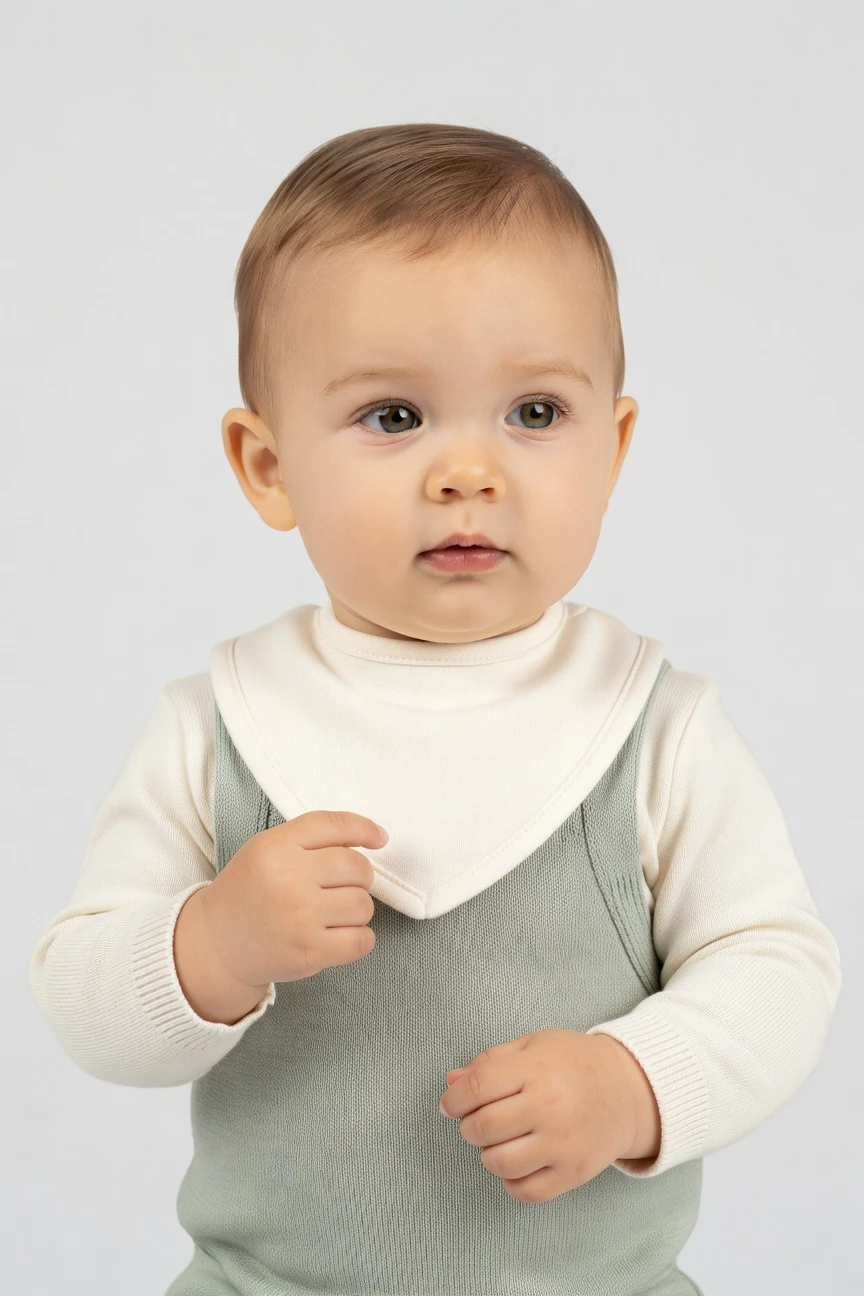
This setup starts with a half-body babywear frame for clearer product visibility on tops, bibs, knit sets, and layered looks. 85mm, 4:5, and 4K keep the image commerce-ready while every other choice stays one click away. ~$0.55 per image · ~30-40s
- 4 clicks · 0 keystrokes
- app.rawshot.ai / new_shoot
How it works
From Babywear Flat to Finished Image
Three steps turn a real garment into labelled fashion imagery without studio logistics or typed creative syntax.
- Step 01
Upload the Garment
Start from the real product images or design assets. RAWSHOT builds the output around the garment's cut, colour, print, logo, and proportion.
- Step 02
Set the Shoot Visually
Choose lens, framing, lighting, background, style, and aspect ratio with interface controls. You direct the image like an application, not a chat thread.
- Step 03
Generate and Scale
Create one image for a launch page or repeat the same setup across a larger babywear catalog. Use the browser for single shoots or the API for batch production.
Spec sheet
Proof Built for Baby and Kidswear
These twelve points show where garment-led control, transparency, and catalog operations matter most for baby fashion teams.
- 01
Synthetic by Design
Every model is built from 28 body attributes with 10+ options each. That structure keeps accidental real-person likeness statistically negligible by design.
- 02
Every Setting Is a Click
You select lens, framing, light, mood, background, and product focus in the UI. There is no empty text box standing between you and usable output.
- 03
Garment-Led Representation
RAWSHOT is engineered around the actual product, so colour, print placement, trims, drape, and silhouette stay central to the image instead of getting bent around generic image logic.
- 04
Diverse Synthetic Models
Build inclusive baby and kids fashion imagery with a broad model system designed for repeat use. You get variety without losing operational control.
- 05
Consistency Across SKUs
Keep the same visual setup across a full collection. That matters when babywear comes in multiple colours, prints, seasonal drops, or sibling product families.
- 06
150+ Visual Styles
Move from catalog-clean to campaign-soft, editorial, vintage, studio, or lifestyle looks with presets made for apparel imagery. Your brand direction stays selectable and repeatable.
- 07
2K, 4K, Every Ratio
Generate square, portrait, landscape, marketplace, and social crops from the same workflow. Use 2K or 4K output depending on PDP, campaign, or retail channel needs.
- 08
Labelled and Compliant
Every output is AI-labelled, watermarked, and C2PA-signed. RAWSHOT is built for EU AI Act Article 50, California SB 942, GDPR, and EU-hosted operations.
- 09
Signed Audit Trail per Image
Each file carries provenance metadata and a clear record of what it is. That gives commerce teams something concrete for review, governance, and downstream distribution.
- 10
GUI for One Shot, API for Scale
Use the browser when a designer needs a few launch images, then move the same logic into the REST API for larger catalogs. No separate product tier is required for core workflow.
- 11
Fast and Price-Stable
Images run about $0.55 each and usually generate in 30–40 seconds. Tokens never expire, and failed generations refund their tokens.
- 12
Clear Commercial Rights
Every output includes full commercial rights, permanent and worldwide. Teams can publish across PDPs, ads, marketplaces, and campaigns without rights ambiguity.
Outputs
Babywear Outputs, directed by clicks
From soft campaign portraits to clean commerce frames, the output stays centred on the garment and labelled for honest use. The same system handles one hero look or a larger kidswear catalog.


Browse 150+ visual styles →
Comparison
RAWSHOT vs category tools vs DIY prompting
Three lenses on every dimension — what you optimize for in RAWSHOT versus typical category tools and blank-box AI workflows.
01
Interface
RAWSHOT
Buttons, sliders, presets, and saved visual setups for fashion teamsCategory tools + DIY
Usually lighter controls with less application depth and less operational structure. DIY prompting: Typed instructions, retries, and manual wording changes to chase usable outputs02
Garment fidelity
RAWSHOT
Built around the real garment's cut, colour, logo, and drapeCategory tools + DIY
Often stronger on mood than on precise product representation. DIY prompting: Garment drift, invented trims, shifted patterns, and logos that mutate across attempts03
Model consistency
RAWSHOT
Repeat the same model system and setup across many babywear SKUsCategory tools + DIY
Consistency can vary between sessions and larger product batches. DIY prompting: Faces and body proportions drift from one output to the next04
Provenance
RAWSHOT
C2PA-signed, visibly watermarked, cryptographically watermarked, and AI-labelledCategory tools + DIY
Labelling and provenance support are often partial or absent. DIY prompting: No reliable provenance metadata and little auditability after download05
Commercial rights
RAWSHOT
Full commercial rights to every output, permanent and worldwideCategory tools + DIY
Rights language can be narrower or tied to plan limitations. DIY prompting: Usage rights and training provenance are often unclear for commerce teams06
Iteration speed
RAWSHOT
Adjust one control and regenerate a new on-model variant quicklyCategory tools + DIY
Variant generation exists but can feel less exact on garment decisions. DIY prompting: Each change means rewriting instructions and hoping the model interprets them07
Pricing transparency
RAWSHOT
About $0.55 per image, tokens never expire, one-click cancelCategory tools + DIY
More likely to segment access with seats, plan walls, or sales steps. DIY prompting: Low entry cost hides the time spent fixing misses and remaking assets08
Catalog scale
RAWSHOT
Browser GUI and REST API use the same core engine and qualityCategory tools + DIY
Scale features may sit behind separate enterprise packaging. DIY prompting: No reliable batch pipeline for SKU-level repeatability and audit trails
Prompting does not scale
Stop writing essays. Direct the shoot.
Most AI photo tools start with a blank text box. Rawshot turns the shoot into repeatable controls, so creative teams can produce consistent fashion imagery without prompt syntax or one-off hacks.
Category norm
ManualCreate a premium editorial fashion photograph of a model wearing the exact navy oversized wool coat from SKU-1842, full-body crop, realistic hands, consistent facial identity, clean e-commerce lighting, subtle Paris street background, 85mm lens, no logo distortion, no fabric hallucination, same pose as last campaign, repeatable for all colorways...
A prompt can describe one image. It cannot become a shared production system for hundreds of products, models, angles and markets.
Rawshot
ClicksSaved shoot recipe
Apply to 1 SKU or 10,000 via GUI, CSV or REST API.
Rawshot makes creative direction visible: buttons, presets and sliders instead of hidden prompt craft. The result is easier to teach, faster to approve and built for repeat production.
Use cases
Where Babywear Teams Need Imagery Fast
Operator archetypes and how click-directed, garment-first output fits the way they actually work.
- 01
Indie babywear labels
Launch a first collection with on-model imagery before a traditional shoot budget exists.
Confidence · high
- 02
Kidswear DTC brands
Refresh PDPs, landing pages, and email banners with consistent child and baby fashion visuals across each drop.
Confidence · high
- 03
Organic cotton basics brands
Show colourways, fit, and layering clearly across onesies, leggings, and knit sets without reshooting each variant.
Confidence · high
- 04
Crowdfunded nursery and apparel projects
Create campaign-ready baby product imagery early enough to test demand before full production quantities are committed.
Confidence · high
- 05
Marketplace sellers
Generate cleaner catalog images for Amazon, Etsy, Zalando, or regional marketplaces with repeatable framing and aspect ratios.
Confidence · high
- 06
Factory-direct manufacturers
Turn product lines into presentable babywear visuals for wholesale sheets, retailer outreach, and private-label pitches.
Confidence · high
- 07
Boutique retailers
Give small seasonal edits a polished look without waiting for every brand to supply updated photography.
Confidence · high
- 08
Resale and vintage childrenswear shops
Present unique pieces with more consistent styling when one-off inventory makes conventional shoots impractical.
Confidence · high
- 09
Adaptive kids clothing makers
Show closure details, proportions, and product function with closer framing that stays centred on the garment.
Confidence · high
- 10
Accessories and bib brands
Use close crops and half-body compositions to keep attention on bibs, hats, socks, and soft accessories.
Confidence · high
- 11
Pre-launch design teams
Photograph babywear concepts before final sample logistics catch up, so merchandising and brand teams can plan earlier.
Confidence · high
- 12
Catalog operations teams
Move from one hero image to large SKU batches through the same interface logic and API-ready workflow.
Confidence · high
— Principle
Honest is better than perfect.
Baby and kids fashion needs trust as much as aesthetics. Every RAWSHOT image is AI-labelled, C2PA-signed, and protected with visible and cryptographic watermarking, so teams can publish with clear provenance instead of pretending the file came from somewhere else. We are EU-hosted, GDPR-compliant, and built for transparent commerce operations.
Rights & provenance
Full commercial rights. Forever.
- C2PA-signed on every image — EU AI Act Article 50 compliant
- 28-attribute synthetic models — real-person likeness statistically impossible
- Full commercial rights to every generation — no recurring licensing fees
- Tokens never expire · One-click cancel · Transparent pricing
EU AI Act
C2PA
Commercial use
Pricing
~$0.55 per image.
~30–40 seconds per generation. Tokens never expire. Cancel in one click.
- 01The cancel button is on the pricing page.
- 02No per-seat gates. No 'contact sales' walls for core features.
- 03Failed generations refund their tokens.
- 04Full commercial rights to every output, permanent, worldwide.
FAQ
Practical answers on control, rights, pricing, scale, and compliant publishing.
Do I need to write prompts to use RAWSHOT?
Never—you direct every output with sliders, presets, and clicks on the garment, not typed prompts. That UI control is consistent across GUI and REST API payloads, which is why ecommerce teams onboard buyers without rewriting creative briefs as chat threads. Instead of translating babywear needs into guesswork, you choose framing, lens, light, style, background, aspect ratio, and product focus directly in the application.
For catalog teams, reliability matters more than model cleverness; RAWSHOT keeps tokens, timings, refund rules, commercial rights framing, provenance signalling, watermarking cues, REST surface, and SKU-scale batch patterns explicit so operations can rehearse PDP launches without hallucinated garment inventions. That matters when you need knit sets, bibs, rompers, and seasonal layers to stay recognisable from one output to the next. In practice, the only thing your team writes is brand copy around the asset, not instructions for producing it.
What does an ai baby photography generator actually change for ecommerce teams?
It changes who gets access to babywear imagery in the first place. Instead of waiting for sample shipping, casting, studio coordination, and a day rate that can put proper photography out of reach, a small team can generate labelled on-model fashion images around the real garment inside a browser. That means merchandising, paid social, and site teams can work from visuals much earlier in the product cycle.
For ecommerce operations, the practical shift is control and repeatability. RAWSHOT gives you the same engine for one-off launch images and larger SKU runs, with about $0.55 per image, 30–40 second generation times, 2K and 4K output, and every major aspect ratio. You keep outputs commercially usable, provenance-signed, and clearly labelled, which makes internal review easier. The result is not abstract efficiency language; it is image access for teams that previously had no workable route to baby fashion photography at all.
Why skip reshooting every babywear SKU for seasonal updates?
Because seasonal retail moves faster than studio logistics, especially when baby and kids lines multiply by size, print, colour, and bundle. If each refresh demands new samples, new styling, and another coordinated shoot day, small operators end up choosing between stale imagery and no imagery. A garment-led digital workflow lets the team update launches, holiday edits, and campaign pages without restarting the entire production process.
RAWSHOT is useful here because the setup is operationally stable. You can keep the same framing logic, visual direction, and model system across a product family, then generate updated variants as collections change. That helps with continuity on PDPs and landing pages while preserving label transparency through C2PA metadata and watermarking. The practical takeaway is simple: reserve physical shoots for the moments that genuinely need them, and use click-driven imagery to keep the rest of the catalog visually current.
How do we turn flat garments into catalogue-ready imagery without prompting?
You start with the actual garment assets, then set the shoot visually inside the interface. Select lens, framing, lighting, background, mood, style preset, aspect ratio, and product focus, and RAWSHOT generates the output around the product rather than around an improvised text instruction. That is especially useful for babywear, where small differences in proportion, trim, and print placement matter to the purchase decision.
Commerce teams usually need a workflow they can repeat, not a one-off image that looked good once. RAWSHOT supports that by keeping the controls explicit in the browser and available again through the REST API for broader catalog work. You can move from half-body knitwear frames to closer accessory crops while keeping image rights, timings, refund logic, and provenance handling clear. In day-to-day operations, that means buyers and marketers can direct usable catalogue imagery themselves instead of waiting on someone fluent in chat-style image wrangling.
Why does garment-led control beat ChatGPT, Midjourney, or generic image models for fashion PDPs?
Because fashion PDPs are judged on product accuracy, not on whether a model can improvise a pleasing scene. Generic image tools tend to reward broad aesthetic direction, but apparel teams need the opposite: stable control over colour, logo placement, seams, silhouette, and repeatability from one SKU to the next. In babywear, where products are small and details carry the commercial meaning, generic systems often drift into invented trims, altered prints, or inconsistent proportions.
RAWSHOT is built as an application for garment-led production. You adjust explicit controls instead of rewriting instructions, and every output is labelled, watermarked, and C2PA-signed so the file has a clear provenance record. You also get permanent worldwide commercial rights to the outputs, browser workflow for smaller shoots, and REST API access for larger batches. For teams publishing product pages, that combination is more useful than prompt roulette because it gives operations a repeatable process instead of a string of near misses.
Can I use RAWSHOT babywear images commercially, and are they clearly labelled?
Yes. Every RAWSHOT output comes with full commercial rights, permanent and worldwide, so teams can use the files across PDPs, marketplaces, ads, email, and campaign pages without murky usage language. Just as important, the files are not presented as something they are not: outputs are AI-labelled and protected with visible and cryptographic watermarking. That transparency matters for brand trust, especially in categories involving babies and children.
RAWSHOT also attaches C2PA-signed provenance metadata and keeps an audit-minded approach to output handling. The platform is EU-hosted, GDPR-compliant, and built for the disclosure direction of EU AI Act Article 50 and California SB 942. For a commerce team, the practical rule is straightforward: publish the imagery as labelled synthetic fashion output with confidence, because the rights are clear and the provenance signal is built into the asset rather than added later as an afterthought.
What should a buyer or ecommerce manager check before publishing labelled baby fashion images?
Check the same things you would review in any apparel asset, then add provenance discipline. First, confirm the garment itself is represented correctly: colour, pattern scale, trim placement, silhouette, and the areas customers scrutinise most on a product page. Then confirm the framing and crop suit the channel, whether that is a PDP, marketplace tile, email hero, or paid social placement. Good review is still product review.
With RAWSHOT, the trust layer is also explicit. Teams should verify the output remains AI-labelled, preserve the file provenance, and keep watermarking and C2PA metadata intact throughout downstream handling. Because the platform is built around synthetic models and signed audit trails, reviewers have concrete signals to work with rather than vague assurances. The operational takeaway is to make image QA part of merchandising QA: approve the garment, approve the label and provenance, then publish only when both standards are satisfied.
How much does the ai baby photography generator cost for still images?
For stills, RAWSHOT runs at about $0.55 per image, and most generations complete in roughly 30–40 seconds. Tokens never expire, failed generations refund their tokens, and you can cancel in one click directly from the pricing page. That makes the economics easier to plan than agency-style quotes or tool stacks that hide useful workflow behind seat limits and sales conversations.
For babywear teams, those numbers matter because catalogs tend to fan out quickly across sizes, colourways, and seasonal edits. A brand can test a small image set in the browser, keep the same workflow for a broader launch, and only spend against actual output needs rather than a fixed studio day. RAWSHOT also keeps core features available without per-seat gates, so designers, marketers, and catalog operators can work in the same system. The practical move is to budget by image volume and variant count, not by access restrictions or expiring credits.
Can RAWSHOT fit a Shopify-sized catalog or merch pipeline through the API?
Yes. RAWSHOT is designed so the same core engine supports a single browser shoot and a larger catalog pipeline through the REST API. That means teams do not need one tool for creative exploration and another for production scale; they can validate a babywear look in the GUI, then map the same logic into repeatable API-driven runs for broader SKU coverage. This is especially helpful when product lines expand across coordinated sets, seasonal colour drops, or regional assortments.
Operationally, the value is consistency without a separate enterprise-only workflow. There are no per-seat gates for core features, tokens do not expire, and each output keeps its commercial-rights clarity and provenance signalling. Because RAWSHOT is PLM-integration ready and maintains a signed audit trail per image, commerce teams can build reviewable asset pipelines instead of ad hoc batches. In practice, that lets merchandising, engineering, and brand teams share one imaging system rather than stitching together incompatible steps.
How do small teams and larger catalog ops use the same babywear imaging workflow?
They use the same product, not a cut-down version for one group and a gated version for another. A founder or designer can open the browser interface, set a few controls, and generate launch-ready babywear imagery for a new drop. A larger catalog team can take the same logic into repeatable workflows, maintain model and styling consistency across many SKUs, and keep rights, pricing, provenance, and cancellation rules predictable. The core behavior stays the same even as volume changes.
That is the point of RAWSHOT's access model. One shoot or ten thousand, the engine, controls, and output standards remain aligned, so teams do not have to relearn the platform as they grow. For operations leaders, that reduces handoff friction between creative direction and production execution. For smaller brands, it means the tool they start with is still the tool they can scale with later, which is far more useful than graduating into a different system once the catalog gets serious.
Keep exploring