
— Instagram · Square & 4:5 · 150+ styles
Direct your next drop with the AI Instagram Post Generator.
Generate fashion posts built for the feed, from clean product moments to campaign-ready brand visuals. Select framing, lens, aspect ratio, visual style, and product focus with buttons, sliders, and presets around the garment. No studio. No samples. No prompts.
- ~$0.55 per image
- ~30–40s per generation
- 150+ styles
- 2K or 4K
- 1:1 and 4:5
- Full commercial rights
7-day free trial • 50 tokens (10 images) • Cancel anytime

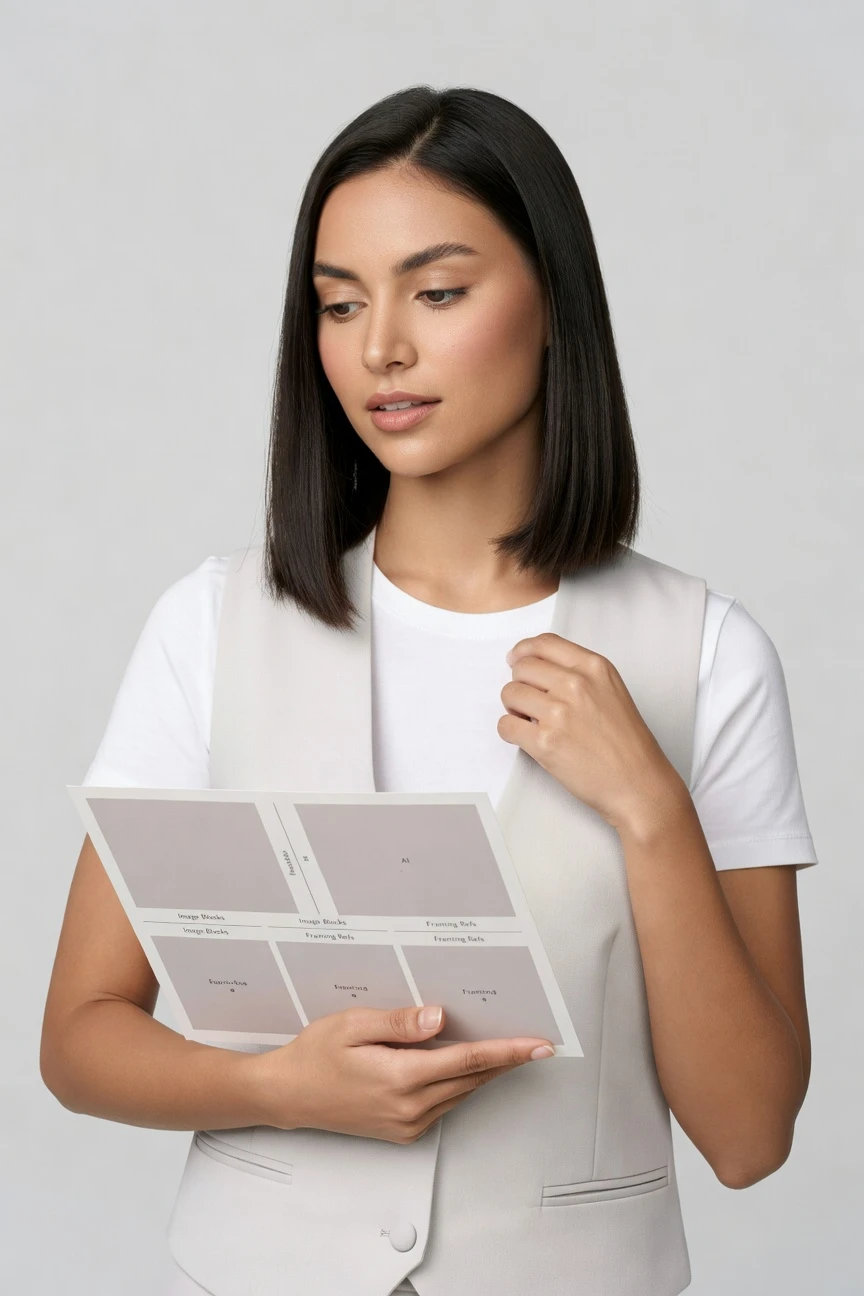
Direct the shoot. Zero prompts.
This setup is tuned for Instagram commerce posts: a half-body frame, 85mm lens, 4:5 portrait crop, and 4K output for feed placement. You click the look and framing you want, then generate labelled fashion imagery around the real garment. ~$0.55 per image · ~30-40s
- 4 clicks · 0 keystrokes
- app.rawshot.ai / new_shoot
How it works
Build Feed-ready Fashion Posts by Click
A simple three-step flow for turning real garments into social assets with consistent framing, styling, and product representation.
- Step 01
Set the Post Format
Choose square or portrait, then select the framing that fits the garment and the feed slot you need. Instagram-ready composition starts with format, not guesswork.
- Step 02
Direct the Visual
Adjust lens, pose, lighting, background, and style with interface controls built for fashion work. Every choice stays anchored to the product instead of drifting with typed instructions.
- Step 03
Generate and Publish
Create labelled outputs in about 30–40 seconds, review the garment, and export with full commercial rights. Repeat the same setup across a whole drop for consistent social creative.
Spec sheet
Proof for Social-first Fashion Teams
These twelve points show why RAWSHOT works for Instagram content, from garment fidelity and style control to rights, provenance, and scale.
- 01
Synthetic Models by Design
Choose from diverse synthetic models built from 28 body attributes with 10+ options each. Accidental real-person likeness is statistically negligible by design.
- 02
Every Setting Is a Click
You direct the shoot through buttons, sliders, and presets instead of an empty text box. That makes creative control usable for marketers, founders, and merch teams alike.
- 03
Built Around the Garment
Cut, colour, pattern, logo, fabric, drape, and proportion stay central to the image. The product is the brief, whether you need a clean post or a styled brand asset.
- 04
Diverse Faces, One Interface
Work with a broad range of model options in the same workflow and pricing. You can match brand casting needs without rebuilding the process for each post.
- 05
Consistency Across the Drop
Keep the same model, framing logic, and visual direction across many SKUs. That steadiness matters when a carousel, feed grid, and product launch all need to feel related.
- 06
150+ Visual Style Presets
Move from catalog clean to street flash, film grain, noir, Y2K, or campaign gloss in a few clicks. Social teams can test brand tone without reshooting garments.
- 07
Made for Platform Formats
Generate in 2K or 4K and choose the aspect ratio that fits the placement. Square, portrait, landscape, and story-ready crops live in the same system.
- 08
Labelled and Compliant
Outputs are AI-labelled, watermarked, and C2PA-signed, with compliance designed for EU AI Act Article 50, California SB 942, and GDPR expectations.
- 09
Audit Trail per Image
Each output carries a signed record of what it is. That gives brand and legal teams clearer provenance than unlabeled assets passed around a content calendar.
- 10
GUI for One-offs, API for Scale
Create a single Instagram post in the browser or run catalog-scale workflows through the REST API. The same engine serves indie launches and enterprise pipelines.
- 11
Fast, Clear Pricing
Images cost about $0.55 and generate in roughly 30–40 seconds. Tokens never expire, failed generations refund tokens, and there are no per-seat gates.
- 12
Rights Stay Simple
Every output includes full commercial rights, permanent and worldwide. That matters when a social asset graduates into paid media, PDP content, or retail creative.
Outputs
From Product Shot to Feed Post
See how the same garment can move across brand moods, formats, and campaign contexts without losing product clarity. Build a social system, not just a single image.


Browse 150+ visual styles →
Comparison
RAWSHOT vs category tools vs DIY prompting
Three lenses on every dimension — what you optimize for in RAWSHOT versus typical category tools and blank-box AI workflows.
01
Interface
RAWSHOT
Click-driven controls for lens, framing, light, style, and formatCategory tools + DIY
Often mix light presets with limited text-led direction fields. DIY prompting: Requires typed instructions and repeated rewrites to steer basic composition02
Garment fidelity
RAWSHOT
Engineered around cut, colour, logos, fabric, and drapeCategory tools + DIY
Can stylise fast but may soften product-specific details. DIY prompting: Garments drift, prints mutate, and logos get invented or distorted03
Model consistency
RAWSHOT
Reuse the same synthetic model logic across posts and SKUsCategory tools + DIY
Consistency varies across sessions and tool modes. DIY prompting: Faces shift between outputs, making a drop look patched together04
Provenance
RAWSHOT
C2PA-signed, AI-labelled, visible and cryptographic watermarking includedCategory tools + DIY
Labelling and provenance support are often partial or absent. DIY prompting: No reliable provenance metadata for assets moving into commerce workflows05
Commercial rights
RAWSHOT
Full commercial rights to every output, permanent and worldwideCategory tools + DIY
Rights terms may depend on plan level or product surface. DIY prompting: Usage clarity can be unclear when assets pass through generic tools06
Pricing transparency
RAWSHOT
Same per-image pricing, no per-seat gates, tokens never expireCategory tools + DIY
May add seat limits, tier jumps, or sales-gated access. DIY prompting: Tool pricing is disconnected from repeatable fashion production needs07
Iteration speed
RAWSHOT
Social-ready variants in about 30–40 seconds per imageCategory tools + DIY
Fast for simple variants, slower when control gets fragmented. DIY prompting: Time disappears into prompt-engineering overhead and failed attempts08
Catalog scale
RAWSHOT
Browser GUI and REST API use the same engine and output logicCategory tools + DIY
Enterprise workflow often splits from self-serve product experience. DIY prompting: No dependable batch pipeline for thousands of garment-led outputs
Prompting does not scale
Stop writing essays. Direct the shoot.
Most AI photo tools start with a blank text box. Rawshot turns the shoot into repeatable controls, so creative teams can produce consistent fashion imagery without prompt syntax or one-off hacks.
Category norm
ManualCreate a premium editorial fashion photograph of a model wearing the exact navy oversized wool coat from SKU-1842, full-body crop, realistic hands, consistent facial identity, clean e-commerce lighting, subtle Paris street background, 85mm lens, no logo distortion, no fabric hallucination, same pose as last campaign, repeatable for all colorways...
A prompt can describe one image. It cannot become a shared production system for hundreds of products, models, angles and markets.
Rawshot
ClicksSaved shoot recipe
Apply to 1 SKU or 10,000 via GUI, CSV or REST API.
Rawshot makes creative direction visible: buttons, presets and sliders instead of hidden prompt craft. The result is easier to teach, faster to approve and built for repeat production.
Use cases
Who Turns Instagram Creative Into Revenue
Operator archetypes and how click-directed, garment-first output fits the way they actually work.
- 01
Indie Designer Launching a Drop
Create feed posts for a new capsule before a full production shoot exists, so the brand can sell the idea while samples are still scarce.
Confidence · high
- 02
DTC Brand Social Manager
Build consistent 1:1 and 4:5 posts across weekly product pushes without waiting for a studio calendar to open.
Confidence · high
- 03
Crowdfunding Fashion Founder
Show garments on-model in campaign updates and Instagram teasers before committing to a costly physical shoot.
Confidence · high
- 04
Marketplace Seller
Turn flat product inventory into cleaner fashion posts that look native to the feed rather than like a spreadsheet export.
Confidence · high
- 05
Resale Curator
Package one-off pieces into polished Instagram content that still represents each garment honestly and clearly.
Confidence · high
- 06
Kidswear Label Team
Generate labelled social imagery for launches and seasonal edits without organizing full studio logistics for small collections.
Confidence · high
- 07
Adaptive Fashion Brand
Direct inclusive social creative with diverse synthetic models and controlled product focus around fit, access, and design details.
Confidence · high
- 08
Lingerie DTC Operator
Produce feed-safe campaign and catalog-style posts with deliberate framing, styling, and rights clarity for paid and organic use.
Confidence · high
- 09
Factory-direct Manufacturer
Turn development-stage garments into branded Instagram content for wholesale outreach, market testing, and direct sales pages.
Confidence · high
- 10
Student Brand Builder
Make an AI-assisted Instagram posting workflow usable from day one, even without production experience or agency support.
Confidence · high
- 11
On-demand Label Owner
Generate social launch assets as soon as a style is ready, then reuse the visual system across many SKUs.
Confidence · high
- 12
Catalog Team Extending PDP Assets
Adapt commerce imagery into Instagram-ready formats so the same garment system serves product pages, ads, and the feed.
Confidence · high
— Principle
Honest is better than perfect.
Instagram content moves fast, but trust breaks even faster when provenance is unclear. RAWSHOT outputs are AI-labelled, watermarked, and C2PA-signed, giving social, legal, and brand teams a clearer record of what they are publishing. We built that into the product because labelled fashion imagery is better brand infrastructure than pretending the question does not exist.
Rights & provenance
Full commercial rights. Forever.
- C2PA-signed on every image — EU AI Act Article 50 compliant
- 28-attribute synthetic models — real-person likeness statistically impossible
- Full commercial rights to every generation — no recurring licensing fees
- Tokens never expire · One-click cancel · Transparent pricing
EU AI Act
C2PA
Commercial use
Pricing
~$0.55 per image.
~30–40 seconds per generation. Tokens never expire. Cancel in one click.
- 01The cancel button is on the pricing page.
- 02No per-seat gates. No 'contact sales' walls for core features.
- 03Failed generations refund their tokens.
- 04Full commercial rights to every output, permanent, worldwide.
FAQ
Practical answers on control, rights, pricing, scale, and compliant publishing.
Do I need to write prompts to use RAWSHOT?
Never—you direct every output with sliders, presets, and clicks on the garment, not typed prompts. That UI control is consistent across GUI and REST API payloads, which is why ecommerce teams onboard buyers without rewriting creative briefs as chat threads. Instead of guessing which wording will produce a usable fashion image, you select lens, framing, pose, lighting, background, style, aspect ratio, and product focus inside a real application.
For catalog teams, reliability matters more than model cleverness; RAWSHOT keeps tokens, timings, refund rules, commercial rights framing, provenance signalling, watermarking cues, REST surface, and SKU-scale batch patterns explicit so operations can rehearse PDP launches without hallucinated garment inventions. The practical takeaway is simple: if your team can choose a crop and approve a visual direction, they can run RAWSHOT without learning syntax first.
What does an ai instagram post generator actually change for fashion ecommerce teams?
For fashion teams, it changes who gets to publish polished on-model creative in the first place. Instead of treating Instagram content as something that only happens after a shoot day, you can generate feed-ready imagery from the garment itself, then adjust framing, style, and placement for square and portrait formats as needed. That matters for launches, restocks, and seasonal refreshes where the social calendar moves faster than studio logistics.
With RAWSHOT, the gain is not a vague automation story; it is directorial control without the usual barriers. You generate labelled 2K or 4K outputs in about 30–40 seconds per image, use 150+ style presets, keep full commercial rights, and work inside a click-driven interface that merch, marketing, and founder teams can actually share. In practice, that means social creative becomes part of normal operations, not a special event that only happens when budget, samples, and people all align.
Why skip reshooting every SKU just to refresh seasonal social content?
Because seasonal change usually affects styling, mood, framing, and channel timing more than it changes the garment itself. If the product is already defined, reshooting every SKU to get a winter edit, a sale push, or a launch teaser creates cost, delay, and coordination work that many brands simply cannot absorb. Social teams end up posting less often, reusing tired assets, or dropping products from the feed entirely.
RAWSHOT lets you keep the garment at the center while changing the visual context around it through interface controls and presets. You can move from clean catalog presentation to a more campaign-led look, shift between square and 4:5 formats, and keep the same model logic across a whole drop without booking another studio day. The operational takeaway is to treat seasonal social updates as a controlled image-generation workflow, not as a miniature production crisis every time the calendar changes.
How do we turn flat garments into catalogue-ready imagery for Instagram without prompting?
You start by uploading the garment and setting the output format you need for the channel. Then you choose the framing, lens, model, background, lighting, and visual style with clicks, not text, so the system is directed through concrete fashion controls rather than interpretive wording. That workflow keeps the product central while giving social and ecommerce teams enough flexibility to create clean feed posts, launch visuals, or more styled editorial crops.
RAWSHOT is built for that garment-led process across upper-body pieces, lower-body pieces, full outfits, footwear, jewellery, handbags, watches, sunglasses, and accessories, with up to four products in one composition. Outputs arrive labelled, watermarked, and C2PA-signed, and every image carries full commercial rights with refunded tokens on failed generations. The practical advice is to standardise a few channel-specific presets for your team, then reuse them across collections instead of rebuilding each post from scratch.
Why does garment-led control beat ChatGPT, Midjourney, or generic image AI for fashion PDPs and social posts?
Because fashion work fails when the garment stops being the source of truth. Generic image tools are good at broad visual invention, but they often drift on cut, colour, logos, proportion, and fabric behaviour once you start chasing a specific result through text alone. That creates a familiar loop of revision, inconsistency, and manual checking that is especially painful when the same SKU needs to appear across product pages, ads, and Instagram posts.
RAWSHOT takes the opposite approach: the garment is the brief, and the controls are purpose-built for fashion production. You direct lens, framing, light, style, and output format through the interface, keep model logic consistent across a range, and receive labelled assets with C2PA provenance, watermarking, commercial-rights clarity, and API-ready workflows when volume increases. For commerce teams, that means fewer invented logos, fewer drifting silhouettes, and a more reproducible path from product file to publishable asset.
Can I use RAWSHOT images for paid social, ecommerce, and organic posts with clear rights?
Yes. RAWSHOT grants full commercial rights to every output, permanent and worldwide, so the same image can move from an Instagram post into paid media, a PDP, an email, or a retail presentation without forcing teams into a separate licensing puzzle. That clarity matters because fashion assets rarely stay in one channel; the strongest social image often becomes the one that merch, performance, and brand teams all want to reuse.
RAWSHOT also pairs rights clarity with transparent labelling and provenance rather than treating disclosure as an afterthought. Outputs are AI-labelled, carry visible and cryptographic watermarking, and include C2PA-signed metadata, which gives legal and brand teams a cleaner record of what they are approving and distributing. The best operational move is to fold those assets into your normal DAM, ad, and ecommerce approval flows instead of handling them as exceptions.
What should a brand team check before publishing AI-assisted fashion posts?
Start with the garment itself: verify the cut, colour, logo treatment, pattern placement, fabric behaviour, and overall proportion against your source product. Then check whether the framing suits the channel, whether the styling supports the brand rather than distracting from the item, and whether the selected model and crop are consistent with the rest of the launch or collection. Social speed matters, but accuracy matters more when shoppers are deciding whether the product matches what they will receive.
With RAWSHOT, teams should also confirm the provenance and packaging side of publication. The output should remain AI-labelled, the watermarking and C2PA record should stay intact in your workflow, and the chosen aspect ratio should match the intended placement before export. A disciplined QA pass takes only a few minutes, and it is the simplest way to keep social creative useful for both brand storytelling and commerce conversion.
How much does a fashion image workflow cost if I only need Instagram posts and campaign stills?
For still images, RAWSHOT costs about $0.55 per output, and most generations complete in roughly 30–40 seconds. Tokens never expire, failed generations refund their tokens, and you can cancel in one click from the pricing page, which makes budgeting far easier than committing to a fixed shoot day for a small product run or a test launch. That pricing is especially useful when a team wants to test multiple crops, moods, or post variants without turning every experiment into a production meeting.
It also helps that RAWSHOT does not gate core features behind per-seat restrictions or a sales wall. A founder, social manager, and merch lead can all work from the same product logic whether they need one image or a much larger set, while video and model generation stay separately priced when those formats are actually needed. The practical takeaway is to cost the workflow by the assets you want to publish, not by headcount or platform theatrics.
Can RAWSHOT plug into a Shopify-scale or marketplace image pipeline through API?
Yes. RAWSHOT supports both a browser workflow for one-off creative work and a REST API for catalog-scale operations, so teams do not need to switch tools when volume increases. That matters for brands running Shopify launches, marketplace feeds, or nightly SKU updates, because the same core logic that works for a single social post can also support structured batch production once process and approvals are defined.
The platform is designed so the indie designer and the enterprise catalog team use the same engine, the same models, the same quality logic, and the same per-image pricing. It is PLM-integration ready, carries a signed audit trail per image, and avoids the usual pattern of hiding scale behind a separate edition. In practice, teams should prove their visual system in the GUI first, then port the approved settings into API-driven workflows when the catalog grows.
What happens when we need one look today and 10,000 SKUs next month?
The workflow stays on the same product instead of forcing you into a different commercial lane. RAWSHOT uses the same engine, the same synthetic model system, the same per-image price, and the same output logic whether you are building a single Instagram asset in the browser or running a large overnight pipeline through the API. That continuity is important because scaling fashion imagery usually breaks when the small-team tool and the enterprise tool stop resembling each other.
Operationally, this means your team can develop repeatable settings now and keep them later. Founders, marketers, ecommerce operators, and catalog teams can all work from a shared visual standard that includes labelled outputs, C2PA provenance, watermarking, rights clarity, and refunded failed generations instead of learning a second system once volume appears. The smart move is to build a process that survives growth from day one, rather than treating scale as a separate future problem.
Keep exploring