
— Cover imagery · Editorial styling · 4K
Direct your next fashion cover with the AI Magazine Cover Generator.
Create cover-ready fashion imagery built around the garment, not around chat syntax. Select lens, crop, style, light, and cover framing with buttons, sliders, and presets inside a real application. No studio. No samples. No prompts.
- ~$0.55 per image
- ~30–40s per generation
- 150+ styles
- 2K or 4K
- Every aspect ratio
- Full commercial rights
7-day free trial • 50 tokens (10 images) • Cancel anytime

Direct the shoot. Zero prompts.
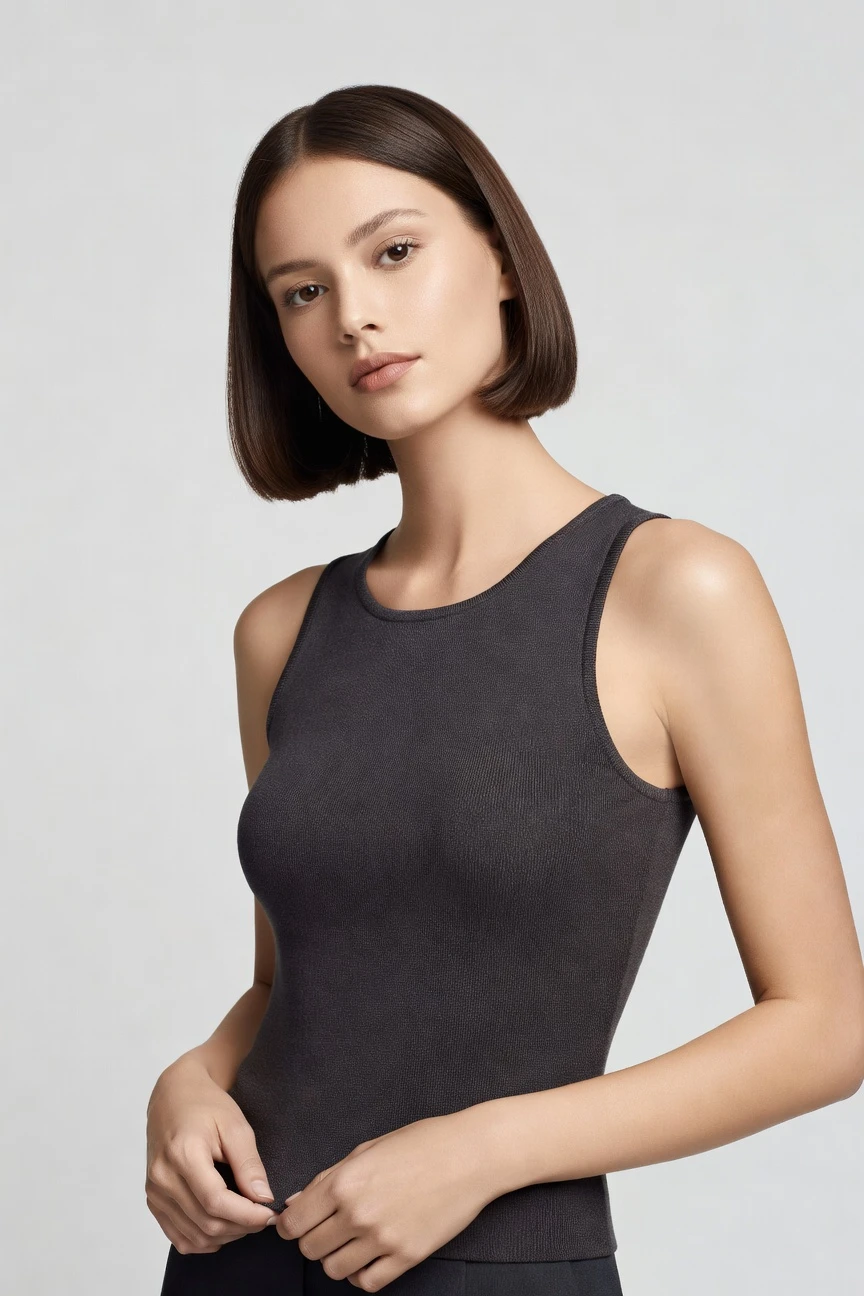
For fashion cover work, the preset stack starts with an 85mm lens, half-body framing, a 4:5 crop, and 4K output. That gives you a clean magazine-cover silhouette while keeping the garment, masthead space, and editorial styling under direct click control. ~$0.55 per image · ~30-40s
- 4 clicks · 0 keystrokes
- app.rawshot.ai / new_shoot
How it works
From Garment to Cover Frame
A cover shoot becomes a repeatable product workflow when styling, crop, and image proof all live in clicks.
- Step 01
Upload the Garment
Start with the real product and choose the item the cover should hero. RAWSHOT builds the image around cut, colour, pattern, logo, and drape instead of bending the garment to a text guess.
- Step 02
Set the Cover Frame
Click through lens, crop, pose, background, lighting, and visual style until the composition fits your masthead and issue theme. Every decision lives in controls your team can repeat.
- Step 03
Generate and Publish
Generate 2K or 4K stills in roughly 30–40 seconds, review labelled provenance, and move the selected image into your editorial or commerce workflow. The same setup can be reused across more covers, drops, and campaigns.
Spec sheet
Proof for Fashion Cover Work
These twelve surfaces show why editorial teams use RAWSHOT for controlled, garment-led cover imagery instead of chat-led image roulette.
- 01
Built From Synthetic Attributes
Every model is a synthetic composite built from 28 body attributes with 10+ options each, reducing accidental real-person likeness by design.
- 02
Every Setting Is a Click
Lens, framing, pose, light, background, expression, and style live in buttons, sliders, and presets. You direct the cover without typed syntax.
- 03
Garment Fidelity Comes First
Cut, colour, pattern, logos, fabric behaviour, and proportion stay central. The garment is the brief, whether you are shooting a blazer, dress, or full look.
- 04
Diverse Models, Labelled Clearly
Choose from diverse synthetic models for editorial direction while keeping the output transparently labelled. Honest imagery is stronger brand practice than vague realism claims.
- 05
Consistent Faces Across Issues
Keep the same model identity and visual direction across multiple covers, teaser assets, and social crops. That consistency matters when a brand wants continuity, not near-matches.
- 06
150+ Editorial Style Presets
Move from glossed campaign polish to noir, street flash, vintage, Y2K, or clean studio cover looks with preset visual systems built for fashion imagery.
- 07
4K Covers in Any Ratio
Generate in 2K or 4K and crop for 4:5, 1:1, 3:4, 16:9, 9:16, and more. Master art, social cutdowns, and press assets can stay in one workflow.
- 08
Labelled and Compliance-Ready
Outputs carry C2PA provenance, visible and cryptographic watermarking, and AI labelling. RAWSHOT is built for EU-hosted, transparent fashion publishing.
- 09
Signed Audit Trail per Image
Each image includes an audit-ready record so teams can track what was generated and how it was handled. That matters when editorial, legal, and brand teams all touch the same asset.
- 10
GUI for One Covers, API for Runs
Direct a single hero cover in the browser or push large seasonal batches through the REST API. The product does not split serious controls behind a separate edition.
- 11
Fast, Clear, Refund-Safe Output
Still images cost about $0.55 each, generate in around 30–40 seconds, tokens never expire, and failed generations refund their tokens automatically.
- 12
Worldwide Commercial Rights Included
Every output comes with full commercial rights, permanent and worldwide. That gives teams clear usage footing for covers, PDPs, ads, and press kits.
Outputs
Cover Concepts, Without the Studio Day
Build fashion cover imagery for issue mockups, launch announcements, subscriber campaigns, and press decks from the same garment-led controls. The result is editorial direction you can repeat, label, and ship fast.


Browse 150+ visual styles →
Comparison
RAWSHOT vs category tools vs DIY prompting
Three lenses on every dimension — what you optimize for in RAWSHOT versus typical category tools and blank-box AI workflows.
01
Interface
RAWSHOT
Click-driven shoot controls built like a fashion applicationCategory tools + DIY
Preset-heavy interfaces with lighter directorial depth and less explicit workflow structure. DIY prompting: Typed instructions in a chat box with trial-and-error wording overhead02
Garment fidelity
RAWSHOT
Engineered around cut, colour, pattern, logo, and drapeCategory tools + DIY
Often style-first, with weaker representation of garment details. DIY prompting: Garment drift, invented trims, and logos changing between outputs03
Model consistency
RAWSHOT
Same synthetic model can stay consistent across repeated cover variantsCategory tools + DIY
Consistency varies across sessions and styling changes. DIY prompting: Faces drift across generations, making series continuity unreliable04
Provenance
RAWSHOT
C2PA-signed, AI-labelled, with visible and cryptographic watermarkingCategory tools + DIY
Labelling and provenance support differ by vendor. DIY prompting: Usually no native provenance metadata or signed output record05
Commercial rights
RAWSHOT
Full commercial rights included for every output worldwideCategory tools + DIY
Rights terms often require closer plan and platform reading. DIY prompting: Rights clarity depends on model, host, and training source uncertainty06
Iteration speed
RAWSHOT
New cover variants in about 30–40 seconds per imageCategory tools + DIY
Fast for broad concepts, but less controllable per fashion detail. DIY prompting: Many retries lost to wording changes and inconsistent interpretation07
Pricing transparency
RAWSHOT
Same per-image pricing, tokens never expire, one-click cancelCategory tools + DIY
Seats, tiers, or sales-gated plans are common. DIY prompting: Tool costs stack across subscriptions, retries, and manual cleanup time08
Catalog scale
RAWSHOT
Browser GUI and REST API use the same core engineCategory tools + DIY
Scale features may sit behind separate enterprise packaging. DIY prompting: No clean audit trail or stable pipeline for high-volume apparel operations
Prompting does not scale
Stop writing essays. Direct the shoot.
Most AI photo tools start with a blank text box. Rawshot turns the shoot into repeatable controls, so creative teams can produce consistent fashion imagery without prompt syntax or one-off hacks.
Category norm
ManualCreate a premium editorial fashion photograph of a model wearing the exact navy oversized wool coat from SKU-1842, full-body crop, realistic hands, consistent facial identity, clean e-commerce lighting, subtle Paris street background, 85mm lens, no logo distortion, no fabric hallucination, same pose as last campaign, repeatable for all colorways...
A prompt can describe one image. It cannot become a shared production system for hundreds of products, models, angles and markets.
Rawshot
ClicksSaved shoot recipe
Apply to 1 SKU or 10,000 via GUI, CSV or REST API.
Rawshot makes creative direction visible: buttons, presets and sliders instead of hidden prompt craft. The result is easier to teach, faster to approve and built for repeat production.
Use cases
Where Fashion Teams Need a Cover Fast
Operator archetypes and how click-directed, garment-first output fits the way they actually work.
- 01
Indie Magazine Founders
Build issue covers before print commitments land, using the real garments and a repeatable editorial frame.
Confidence · high
- 02
DTC Launch Teams
Create cover-style hero art for a collection drop, then reuse the same model and styling across supporting campaign assets.
Confidence · high
- 03
Fashion PR Agencies
Mock up magazine-style key visuals for pitches, press decks, and launch narratives without booking a studio day first.
Confidence · high
- 04
Student Designers
Present graduate collections with polished cover imagery that shows the garment clearly when budget would otherwise block visibility.
Confidence · high
- 05
Crowdfunding Creators
Turn early apparel concepts into magazine-cover campaign art that helps a project look coherent before large production runs begin.
Confidence · high
- 06
Lookbook Editors
Generate seasonal opener images that feel editorial while keeping lens, crop, and model choices consistent from page to page.
Confidence · high
- 07
Marketplace Fashion Sellers
Use cover-style hero images to elevate storefront launches and branded landing pages without losing the product itself.
Confidence · high
- 08
Resale Curators
Frame standout vintage pieces in magazine-inspired visuals for capsule drops, social teasers, and archive storytelling.
Confidence · high
- 09
Accessories Brands
Compose handbag, jewelry, sunglasses, or watch covers with close framing and controlled masthead space for campaign announcements.
Confidence · high
- 10
On-Demand Apparel Labels
Test magazine-cover directions before manufacturing scale, so the creative story can be validated before inventory risk grows.
Confidence · high
- 11
Creative Directors on Tight Timelines
Try multiple cover directions in one sitting by switching framing, background, and style presets rather than rebuilding a shoot from scratch.
Confidence · high
- 12
Editorial Commerce Teams
Use a browser-first ai magazine cover generator workflow for hero art, then extend the same garments into PDP and social production.
Confidence · high
— Principle
Honest is better than perfect.
Magazine-style fashion imagery carries extra scrutiny because it travels across press, commerce, and brand channels fast. RAWSHOT keeps that work labelled, watermarked, and C2PA-signed, with an audit trail per image, so teams can publish striking cover visuals without hiding what they are.
Rights & provenance
Full commercial rights. Forever.
- C2PA-signed on every image — EU AI Act Article 50 compliant
- 28-attribute synthetic models — real-person likeness statistically impossible
- Full commercial rights to every generation — no recurring licensing fees
- Tokens never expire · One-click cancel · Transparent pricing
EU AI Act
C2PA
Commercial use
Pricing
~$0.55 per image.
~30–40 seconds per generation. Tokens never expire. Cancel in one click.
- 01The cancel button is on the pricing page.
- 02No per-seat gates. No 'contact sales' walls for core features.
- 03Failed generations refund their tokens.
- 04Full commercial rights to every output, permanent, worldwide.
FAQ
Practical answers on control, rights, pricing, scale, and compliant publishing.
Do I need to write prompts to use RAWSHOT?
Never—you direct every output with sliders, presets, and clicks on the garment, not typed prompts. That UI control is consistent across GUI and REST API payloads, which is why ecommerce teams onboard buyers without rewriting creative briefs as chat threads. For cover work, that means you choose lens, framing, crop, lighting, background, and visual style directly, then generate a version your team can review against brand and editorial needs.
For catalog teams, reliability matters more than model cleverness; RAWSHOT keeps tokens, timings, refund rules, commercial rights framing, provenance signalling, watermarking cues, REST surface, and SKU-scale batch patterns explicit so operations can rehearse PDP launches without hallucinated garment inventions. The practical takeaway is simple: if your team can click through a shoot setup, it can direct fashion imagery in RAWSHOT without learning chat syntax first.
What does an AI-assisted magazine cover workflow change for fashion teams?
It changes who gets to make cover-quality fashion imagery at all. Traditional shoots ask for studio time, crew coordination, sample logistics, retouching rounds, and a budget many smaller labels or editorial teams simply do not have. RAWSHOT turns that into a product workflow where the garment stays central and the team sets framing, styling, crop, and output specs in a controlled interface.
For commerce and editorial operations, that matters because the same image system can serve launch art, issue mockups, social teasers, and supporting product pages without changing tools. You can generate 2K or 4K stills in roughly 30–40 seconds, keep outputs labelled with C2PA provenance and watermarking, and move from one hero cover to a larger batch through the same platform. In practice, teams stop treating elevated imagery as a rare event and start using it as repeatable infrastructure.
Why skip reshooting every SKU when seasonal cover styling changes?
Because the expensive part of seasonal creative is often not the idea but the reshoot requirement. When a new issue theme, drop story, or campaign angle appears, many brands are forced to rebuild production from scratch just to test a fresh visual direction. RAWSHOT lets the team keep the garment and direct a new cover treatment with controls for lens, framing, lighting, background, and style instead.
That means a coat can move from a minimal studio cover to an editorial noir frame or a campaign-gloss treatment without reopening the full logistics chain. The same per-image pricing applies whether you are making one hero image or extending across a wider set, tokens do not expire, and failed generations refund tokens. Operationally, that gives fashion teams room to iterate seasonally without treating every update like a new physical shoot day.
How do we turn flat garments into catalogue-ready cover imagery without prompting?
You start with the product, then direct the output through interface controls rather than text interpretation. In RAWSHOT, the team selects the garment, chooses the model and body setup, sets the lens and framing, decides on lighting and background, and picks a visual style preset that matches the publication or brand direction. That keeps the workflow concrete and reviewable, which is exactly what fast-moving fashion teams need.
For a magazine-style cover, most teams begin with half-body or bust framing, a crop such as 4:5, and a cleaner background that leaves room for masthead and sell lines. From there, you generate the still, check garment fidelity, confirm the labelled provenance, and export with commercial rights already clear. The result is a controlled path from flat product to publishable fashion image without asking the team to become chat operators first.
Why does RAWSHOT beat ChatGPT, Midjourney, or generic image tools for fashion covers?
Because fashion cover production is not a general image game; it is a garment accuracy problem with brand consequences. Generic tools can create broad mood quickly, but they commonly drift on logos, trims, silhouettes, fabric behaviour, and model continuity across retries. They also lean on typed instructions, which makes reproducibility harder when multiple people need to reach the same result.
RAWSHOT is built around the product and the decisions fashion teams actually make. You click through camera, crop, pose, lighting, background, aspect ratio, and style inside a dedicated application, then receive labelled outputs with C2PA provenance, watermarking, and clear commercial rights. If your team needs a fashion cover that can also connect to catalog, campaign, or API-driven operations, garment-led control will serve you better than prompt roulette.
Can we use cover images commercially if they are labelled as AI?
Yes. RAWSHOT gives full commercial rights to every output, permanent and worldwide, so teams can use approved images across covers, ads, PDPs, social channels, decks, and launch materials. The important distinction is that RAWSHOT does not hide what the asset is; the output is AI-labelled and carries provenance and watermarking signals by design. For brand teams, that transparency is a strength, not a weakness.
Clear rights only matter when paired with clear handling, so RAWSHOT also supports C2PA-signed provenance, visible and cryptographic watermarking, and a per-image audit trail. That makes it easier for marketing, legal, and editorial stakeholders to review an image before it moves into distribution. In practice, the safest workflow is straightforward: generate, verify the garment and label state, archive the approved output, then publish with confidence.
What quality checks should a fashion team run before publishing a synthetic cover image?
Start with the garment, because that is where trust is won or lost. Check cut, colour, pattern, logo placement, proportions, and fabric behaviour against the real item, then confirm the crop serves the intended masthead, cover lines, or launch layout. After that, review whether the chosen model, pose, and style still keep the product legible rather than burying it under concept.
The second pass is governance. Confirm the output carries the expected provenance and labelling signals, keep the associated audit record, and make sure the exported file matches the target resolution and aspect ratio for the channel you plan to publish. RAWSHOT gives you the tools for both sides of that review—creative control in the interface and compliance cues in the output—so teams can build a simple publish checklist instead of improvising one every time.
How much does an ai magazine cover generator cost per image on RAWSHOT?
For still imagery, RAWSHOT runs at about $0.55 per image, with most generations completing in roughly 30–40 seconds. Tokens never expire, failed generations refund their tokens, and cancellation is one click from the pricing page. That makes cover experimentation much easier to budget than a traditional shoot structure built around day rates, crew time, and retouching rounds.
The useful planning point for fashion teams is that cover work does not require a separate premium lane. The same pricing logic applies whether you are testing a single masthead concept for a pitch deck or generating a broader editorial pack for a collection launch. Because the cost is tied to output rather than seat count, smaller teams can work directly and larger teams can scale without switching to a different core product.
Can RAWSHOT connect magazine-style hero images to Shopify or larger catalog pipelines?
Yes. RAWSHOT supports browser-based work for single-image direction and a REST API for larger operational flows, which means cover-style hero imagery does not have to live in a disconnected creative silo. A team can art direct one launch visual in the GUI, then reuse the same product and model logic in downstream catalog or campaign production. That continuity matters when brand, commerce, and content calendars all move together.
For Shopify-scale or marketplace-scale operations, the key benefit is consistency. The same engine, model system, and rights structure can support a hero image, supporting PDP assets, and broader seasonal batches without forcing a platform change. If your workflow needs PLM-ready integration patterns, auditability per image, and a path from one-off art direction to repeatable output, RAWSHOT is designed for that handoff.
How do small teams and enterprise catalog teams use the same cover workflow without losing control?
They use the same underlying product and simply enter at different points. A small brand may direct a single cover image in the browser by choosing model, framing, background, and style, while a larger commerce team may turn those same decisions into repeatable API calls for nightly or campaign-based production. The important part is that the rules do not change with company size.
RAWSHOT keeps pricing per image, avoids per-seat gates for core use, and does not hide the serious workflow behind a sales-wall edition. That means the indie designer and the enterprise catalog operator can both work from the same garment-led system, the same provenance expectations, and the same rights model. In operations terms, you do not outgrow the workflow just because your image volume increases.
Keep exploring