
— Pinterest pin imagery · 150+ styles · 4K
Turn product shots into scroll-stopping fashion pins with the AI Pinterest Pin Generator.
Create Pinterest-ready fashion imagery that keeps the garment clear, the styling sharp, and the format built for saves. Direct framing, lens, light, background, pose, and aspect ratio with buttons, sliders, and presets inside a real application. No studio. No samples. No prompts.
- ~$0.55 per image
- ~30–40s per generation
- 150+ styles
- 2K or 4K
- 4:5 and 1:1
- Full commercial rights
7-day free trial • 50 tokens (10 images) • Cancel anytime

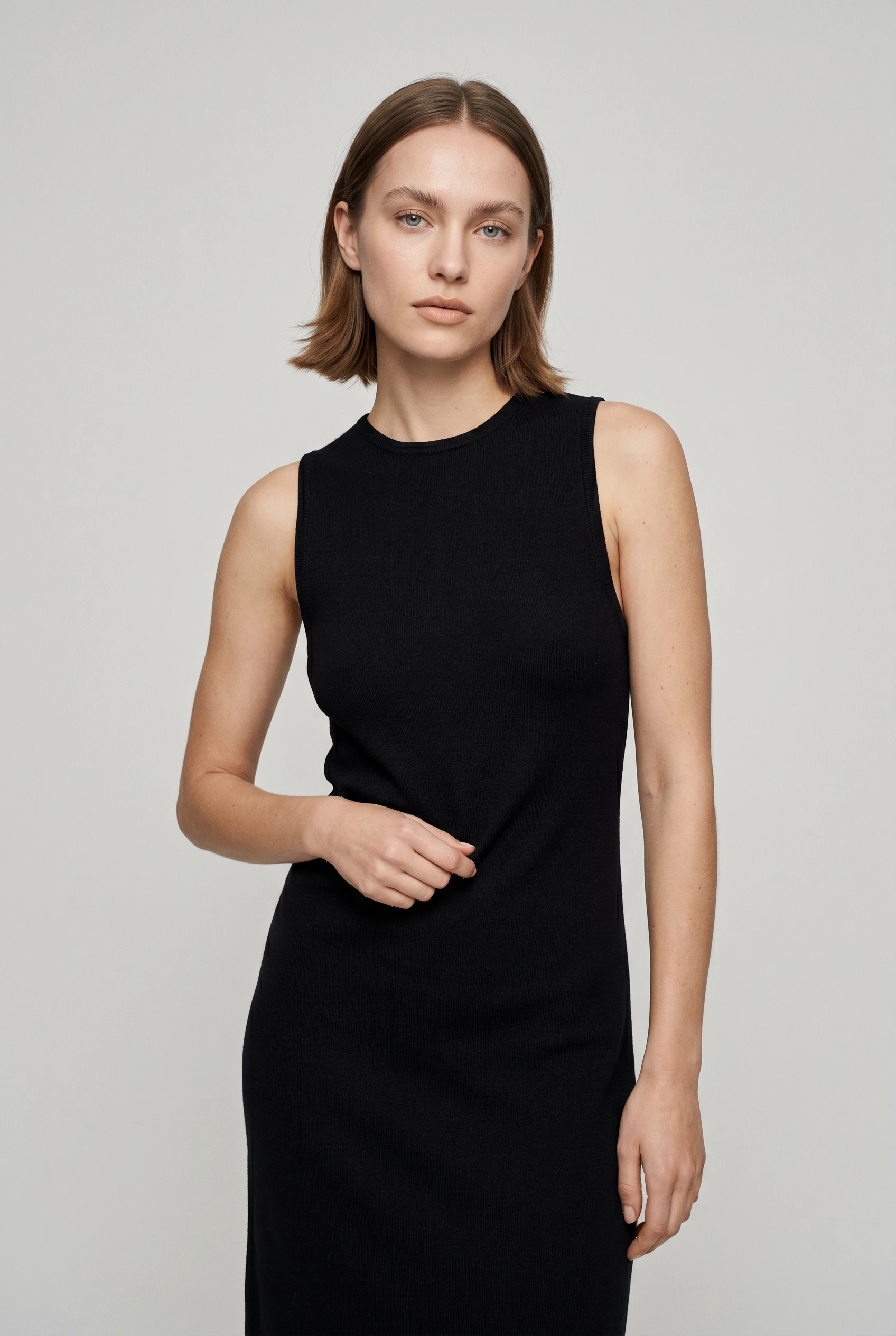
Direct the shoot. Zero prompts.
This setup is tuned for Pinterest-ready fashion pins: vertical framing, clean campaign mood, studio-soft lighting, and a 4:5 canvas that gives the garment room to lead. You click the visual direction, keep the product central, and generate branded imagery built for discovery feeds. 5 tokens · ~34s per image
- 6 clicks · 0 keystrokes
- app.rawshot.ai / new_shoot
How it works
Build Pinterest-Ready Fashion Pins in Three Clicked Steps
From garment upload to vertical campaign imagery, the workflow stays visual, repeatable, and built for fashion teams instead of chat boxes.
- Step 01
Upload the Garment
Start with the product, not a blank text field. RAWSHOT reads the item as the brief, so the cut, colour, pattern, and branding stay central from the first frame.
- Step 02
Set the Pin Layout
Choose lens, framing, lighting, background, visual style, and aspect ratio with clicks. Build a vertical or square composition that suits Pinterest surfaces without rewriting anything.
- Step 03
Generate and Scale Variants
Create one hero pin or a whole campaign system in matching styles. Keep the same visual direction across launches, categories, and SKU batches in the browser or through the API.
Spec sheet
Proof for Pinterest-Ready Fashion Output
These twelve surfaces show how RAWSHOT keeps fashion imagery usable, labelled, and operational from one pin to a full catalog push.
- 01
Synthetic Models by Design
Every model is built from 28 body attributes with 10+ options each. Accidental real-person likeness is statistically negligible by design, not left to chance.
- 02
Every Setting Is a Click
You direct the shoot through buttons, sliders, and presets. Camera, pose, light, background, and style live in the interface, not in a chat workflow.
- 03
Garment-Led Representation
RAWSHOT is engineered around the product. Cut, colour, print, logo, proportion, and drape stay faithful so the garment remains the brief.
- 04
Diverse Bodies, Consistent Faces
Choose from a broad library of transparently labelled synthetic models. Keep representation intentional while maintaining brand consistency across campaigns and pins.
- 05
Repeatable Across SKU Runs
Use the same model, framing logic, and style direction across many products. That consistency matters when you need dozens of Pinterest assets from one collection.
- 06
150+ Visual Style Presets
Move from catalog clean to editorial gloss, street flash, noir, Y2K, or film-inspired looks. You select the mood visually and keep output aligned to the channel.
- 07
Built for Feed Formats
Generate in 2K or 4K and choose every major aspect ratio. Square and vertical layouts are ready for Pinterest surfaces, landing pages, and creative testing.
- 08
Labelled and Compliant
Outputs are AI-labelled, C2PA-signed, and protected with visible plus cryptographic watermarking. RAWSHOT is EU-hosted and built for current transparency requirements.
- 09
Audit Trail per Image
Each file carries a signed provenance record. That gives teams clearer internal review, approval history, and downstream asset handling than unlabeled image generation.
- 10
Browser to REST API
Work one shoot at a time in the GUI or run catalog-scale production through the API. The same engine, models, and pricing apply at every volume.
- 11
Fast, Flat, Transparent Pricing
Images cost about $0.55 each and generate in around 30–40 seconds. Tokens never expire, failed generations refund tokens, and there are no per-seat gates.
- 12
Commercial Rights Included
Every output comes with full commercial rights, permanent and worldwide. That clarity matters when pins become paid creative, landing-page assets, and catalog imagery.
Outputs
Pins That Hold the Garment.
From clean product-led covers to editorial discovery imagery, the output stays built around the item you sell. Use one visual system across Pinterest, PDPs, and campaign landing pages.


Browse 150+ visual styles →
Comparison
RAWSHOT vs category tools vs DIY prompting
Three lenses on every dimension — what you optimize for in RAWSHOT versus typical category tools and blank-box AI workflows.
01
Interface
RAWSHOT
Click-driven controls for lens, pose, light, frame, and styleCategory tools + DIY
Often mix presets with lighter text-led direction and fewer fashion-specific controls. DIY prompting: Typed instructions, iterative guesswork, and inconsistent wording between generations02
Garment fidelity
RAWSHOT
Built around the uploaded garment so logos, colour, and cut stay centralCategory tools + DIY
Can stylise quickly but may soften product-specific construction details. DIY prompting: Garment drift, invented logos, altered trims, and changed silhouettes are common03
Model consistency across SKUs
RAWSHOT
Reuse the same synthetic model and visual setup across many productsCategory tools + DIY
Consistency exists but can vary by workflow and pricing tier. DIY prompting: Faces and body presentation shift across outputs, making catalog continuity difficult04
Provenance + labelling
RAWSHOT
C2PA-signed, AI-labelled, and watermarked with visible and cryptographic layersCategory tools + DIY
Labelling and provenance support vary and are not always standard per file. DIY prompting: No native provenance metadata, unclear origin history, and weak downstream traceability05
Commercial rights
RAWSHOT
Full commercial rights included for every output, permanent and worldwideCategory tools + DIY
Rights terms are often platform-specific and less explicit in product copy. DIY prompting: Usage rights can be unclear across models, tools, and source assets06
Pricing transparency
RAWSHOT
Flat per-image pricing, no seat gates, no core feature sales wallCategory tools + DIY
Plans can add seat limits, feature gates, or scale-based packaging. DIY prompting: Cheap entry point, but time cost rises with retries and failed outputs07
Catalog scale
RAWSHOT
Same product for one image or 10,000-SKU API pipelinesCategory tools + DIY
Scale features may sit behind higher plans or separate enterprise packaging. DIY prompting: Manual file handling and prompt repetition break down at merchandising scale08
Operational reliability
RAWSHOT
Failed generations refund tokens and every image gets a signed recordCategory tools + DIY
Refund logic and audit visibility are not always clear per asset. DIY prompting: No audit trail, no refund logic, and heavy prompt-engineering overhead for teams
Prompting does not scale
Stop writing essays. Direct the shoot.
Most AI photo tools start with a blank text box. Rawshot turns the shoot into repeatable controls, so creative teams can produce consistent fashion imagery without prompt syntax or one-off hacks.
Category norm
ManualCreate a premium editorial fashion photograph of a model wearing the exact navy oversized wool coat from SKU-1842, full-body crop, realistic hands, consistent facial identity, clean e-commerce lighting, subtle Paris street background, 85mm lens, no logo distortion, no fabric hallucination, same pose as last campaign, repeatable for all colorways...
A prompt can describe one image. It cannot become a shared production system for hundreds of products, models, angles and markets.
Rawshot
ClicksSaved shoot recipe
Apply to 1 SKU or 10,000 via GUI, CSV or REST API.
Rawshot makes creative direction visible: buttons, presets and sliders instead of hidden prompt craft. The result is easier to teach, faster to approve and built for repeat production.
Use cases
Where Pinterest-First Fashion Teams Use RAWSHOT
Operator archetypes and how click-directed, garment-first output fits the way they actually work.
- 01
Indie Label Launch Pins
Turn a new drop into vertical fashion assets that look campaign-led before you ever book a studio day.
Confidence · high
- 02
DTC Collection Teasers
Build saveable Pinterest covers for upcoming releases while keeping the garment accurate across every variant.
Confidence · high
- 03
Marketplace Seller Mood Boards
Create cleaner fashion imagery for discovery surfaces when standard packshots are too flat to earn attention.
Confidence · high
- 04
Seasonal Trend Boards
Restyle the same garments into autumn, resort, bridal, or gifting directions with presets instead of reshoots.
Confidence · high
- 05
Resale and Vintage Merchandising
Give one-off items stronger discovery creative for pin-based traffic without rebuilding a full studio workflow.
Confidence · high
- 06
Kidswear Discovery Creative
Produce parent-friendly catalog and pin imagery with consistent styling across fast-changing assortments.
Confidence · high
- 07
Accessories Story Pins
Frame handbags, jewelry, sunglasses, and watches into vertical compositions built for browse-heavy channels.
Confidence · high
- 08
Pre-Sample Concept Marketing
Photograph garments before production to test demand, collect saves, and shape launch messaging earlier.
Confidence · high
- 09
Crowdfunding Launch Assets
Give your campaign page and Pinterest funnel a coherent visual story before inventory arrives.
Confidence · high
- 10
Factory-Direct Trend Tests
Run multiple styling directions for the same product line and see which pin creative wins attention.
Confidence · high
- 11
Editorial-to-PDP Reuse
Generate one fashion system that can stretch from Pinterest storytelling into product page support imagery.
Confidence · high
- 12
Agency Creative Mockups
Show clients channel-ready fashion concepts quickly, then expand the winning direction into broader asset sets.
Confidence · high
— Principle
Honest is better than perfect.
Pinterest imagery travels fast across boards, ads, landing pages, and shared creative decks, so traceability matters. Every RAWSHOT output is AI-labelled, C2PA-signed, and protected with visible plus cryptographic watermarking. We treat provenance as part of the product, not a disclaimer hidden after generation.
Rights & provenance
Full commercial rights. Forever.
- C2PA-signed on every image — EU AI Act Article 50 compliant
- 28-attribute synthetic models — real-person likeness statistically impossible
- Full commercial rights to every generation — no recurring licensing fees
- Tokens never expire · One-click cancel · Transparent pricing
EU AI Act
C2PA
Commercial use
Pricing
~$0.55 per image.
~30–40 seconds per generation. Tokens never expire. Cancel in one click.
- 01The cancel button is on the pricing page.
- 02No per-seat gates. No 'contact sales' walls for core features.
- 03Failed generations refund their tokens.
- 04Full commercial rights to every output, permanent, worldwide.
FAQ
Practical answers on control, rights, pricing, scale, and compliant publishing.
Do I need to write prompts to use RAWSHOT?
Never—you direct every output with sliders, presets, and clicks on the garment, not typed prompts. That UI control is consistent across GUI and REST API payloads, which is why ecommerce teams onboard buyers without rewriting creative briefs as chat threads. Instead of guessing wording, you choose lens, framing, pose, lighting, background, style, aspect ratio, and product focus inside the application.
For catalog teams, reliability matters more than model cleverness; RAWSHOT keeps tokens, timings, refund rules, commercial rights framing, provenance signalling, watermarking cues, REST surface, and SKU-scale batch patterns explicit so operations can rehearse PDP launches without hallucinated garment inventions. The result is a workflow buyers, marketers, and founders can actually share: click the visual choices, generate the asset, review garment fidelity, then publish with a clear record of what the image is.
What does an AI Pinterest pin generator actually change for fashion marketing teams?
It changes who gets to make channel-ready fashion imagery in the first place. Instead of waiting for a studio budget, shipped samples, model bookings, and post-production, your team can turn a garment upload into Pinterest-ready on-model creative in roughly 30–40 seconds per image. That matters for brands using Pinterest as a discovery engine, because the format rewards frequent, visually coherent publishing rather than occasional hero shoots.
RAWSHOT makes that operational by giving you fashion-specific controls rather than an empty text field. You set the frame, light, lens, background, visual style, and aspect ratio with clicks, then keep the same model and art direction across a whole range. For commerce teams, the practical shift is simple: creative stops being a rare event and becomes infrastructure you can use for launches, trend tests, evergreen traffic, and catalog support without losing control of the garment itself.
Why skip reshooting every SKU when the season, trend board, or campaign angle changes?
Because most seasonal updates are changes in framing, styling direction, background, and channel format, not changes in the garment itself. A traditional reshoot asks you to pay again for studio time, talent, scheduling, logistics, and post just to restage the same product for a new moment. For teams with narrow margins or fast assortments, that means many products simply never get the imagery they deserve.
RAWSHOT lets you preserve the product while changing the visual direction around it. You can take one dress, jacket, or accessory and restyle it into clean catalog, editorial gloss, lifestyle warmth, or trend-led discovery creative using presets and controls in the UI. That makes seasonal refreshes and Pinterest testing practical, especially when you need variants in 1:1 and 4:5, want the same model across the line, and need each output labelled, signed, and commercially usable from day one.
How do we turn flat garments into catalogue-ready imagery without prompting?
You begin with the product file, then build the image with interface controls instead of typed instructions. In RAWSHOT, you select the model, lens, framing, pose, angle, lighting, background, mood, visual style, aspect ratio, and resolution directly in the application. That means the workflow feels closer to directing a shoot than negotiating with a chat tool.
For apparel teams, the key advantage is repeatability. Once you find a setup that works for tops, dresses, denim, footwear, or accessories, you can apply that same visual logic across a broader assortment while keeping the garment itself central. Review then becomes more concrete too: merchandisers can check logo accuracy, colour handling, silhouette, drape, and crop placement before publishing. In practice, that shortens the path from flat source material to catalogue-ready and Pinterest-ready imagery without making your team learn syntax first.
Why does garment-led control beat DIY prompting in ChatGPT, Midjourney, or generic image tools for fashion PDPs?
Because fashion teams need repeatable product representation, not occasional lucky images. Generic image systems are built around text interpretation, so garments can drift between attempts: logos change, trims appear or vanish, colours shift, silhouettes soften, and faces vary across outputs. That is frustrating in moodboard work and costly in commerce, where one inaccurate sleeve, hem, or print can make an asset unusable for a product page or campaign pin.
RAWSHOT starts from the garment and keeps the control surface visual. You click settings for the camera, framing, pose, background, light, and style, then generate against a fashion-specific workflow designed for catalog and campaign needs. The platform also gives you clearer commercial rights, signed provenance metadata, and watermarking support that DIY image workflows usually lack. If the job is fashion operations rather than one-off experimentation, garment-led control wins because teams can reproduce good results on purpose.
Are RAWSHOT images labelled for commercial use, and what rights do we get?
Yes. RAWSHOT outputs are AI-labelled, and every file includes full commercial rights that are permanent and worldwide. That matters for commerce teams because Pinterest assets rarely stay in one place; the same image often moves into paid social, PDP support, landing pages, retail decks, email, and wholesale presentations. Clear rights reduce hesitation when your creative starts performing and needs to travel fast.
We pair that rights clarity with provenance and transparency measures rather than treating compliance as an afterthought. Each output is C2PA-signed and protected with visible plus cryptographic watermarking, and the platform is EU-hosted with a product stance built around honest labelling. The practical takeaway is straightforward: your team can publish, repurpose, and archive assets with a stronger record of what they are, where they came from, and how they should be handled in a real commercial workflow.
What should our team check before publishing Pinterest-ready fashion imagery from RAWSHOT?
Start with garment fidelity. Confirm the cut, colour, print, logo placement, hardware, fabric behaviour, and crop all match the product you intend to sell. Then review channel fit: make sure the framing leaves enough visual space for Pinterest surfaces, the image reads clearly on mobile, and the chosen style supports the intended audience rather than overpowering the product. Those checks matter more than chasing visual novelty.
After creative review, validate the trust layer. Keep the AI labelling intact, store the C2PA-signed asset record, and preserve watermarking cues in your asset pipeline rather than stripping them out through careless export habits. Teams should also confirm the output is attached to the correct SKU or campaign folder and that any repeated model usage stays consistent across adjacent products. Good publishing practice is not complicated here: check the garment, check the format, check the provenance, then release with confidence.
How much does a Pinterest image workflow cost in RAWSHOT, and what happens to unused tokens?
Still images run at about $0.55 per generation, and most complete in roughly 30–40 seconds. Tokens never expire, failed generations refund their tokens, and cancellation is one click from the pricing page. That pricing structure is useful for fashion teams because creative demand is uneven; you may need ten exploratory pins this week, then hundreds of launch assets next month, without wanting a complicated contract in the middle.
RAWSHOT keeps the economics plain. There are no per-seat gates for core features, no forced sales conversation to access normal production workflows, and no penalty for keeping tokens on hand for future launches. If you are budgeting channel creative, the practical model is easy to plan around: estimate image volume, test directions quickly, keep the winning presets, and scale output only where the product and campaign actually merit more coverage.
Can we run this into Shopify-scale merchandising or campaign pipelines through an API?
Yes. RAWSHOT supports both the browser GUI for hands-on art direction and a REST API for catalog-scale production. That means a small brand can work image by image in the interface while a larger merchandising or content operations team can move the same logic into structured pipelines for many SKUs. The product does not split into a toy mode and a serious mode; it is the same engine across both surfaces.
For teams tied to Shopify, PLM, DAM, or internal content systems, the important point is consistency. The same synthetic models, pricing logic, provenance handling, and garment-led generation approach carry from one-off creative into batch workflows. In practice, you can establish approved visual setups in the UI, translate them into repeatable API calls, and produce channel-specific assets for product pages, launch collections, and Pinterest distribution without rebuilding the process each time.
Can one team use the UI for creative direction and still scale to thousands of fashion assets later?
Yes, and that continuity is one of RAWSHOT's strongest operational advantages. A founder, buyer, or marketer can establish the visual system in the browser first by choosing the model, framing, lens, background, lighting, and style that fits the brand. Once that direction is approved, the same logic can expand into larger production runs without changing tools, retraining the team around a new product tier, or rewriting the process as a prompt-heavy workflow.
That matters because fashion image production usually grows unevenly. One month you need a handful of concept pins for a launch board; the next month you need a broad category rollout across dozens or thousands of products. RAWSHOT is built for that range with the same per-image pricing, the same commercial-rights clarity, and the same provenance handling across volumes. The operational takeaway is simple: start with clicks, standardise what works, then scale output without losing creative or compliance discipline.
Keep exploring