
— On-model imagery · 150+ styles · 4K
Direct vintage fashion campaigns by clicks — with the AI Vintage Photo Generator.
Create vintage-coded fashion imagery that still keeps the garment honest. Select lens, framing, style, light, and crop through a real interface built for apparel teams. No studio. No samples. No prompts.
- ~$0.55 per image
- ~30–40s per generation
- 150+ styles
- 2K or 4K
- Every aspect ratio
- Full commercial rights
7-day free trial • 50 tokens (10 images) • Cancel anytime

Direct the shoot. Zero prompts.
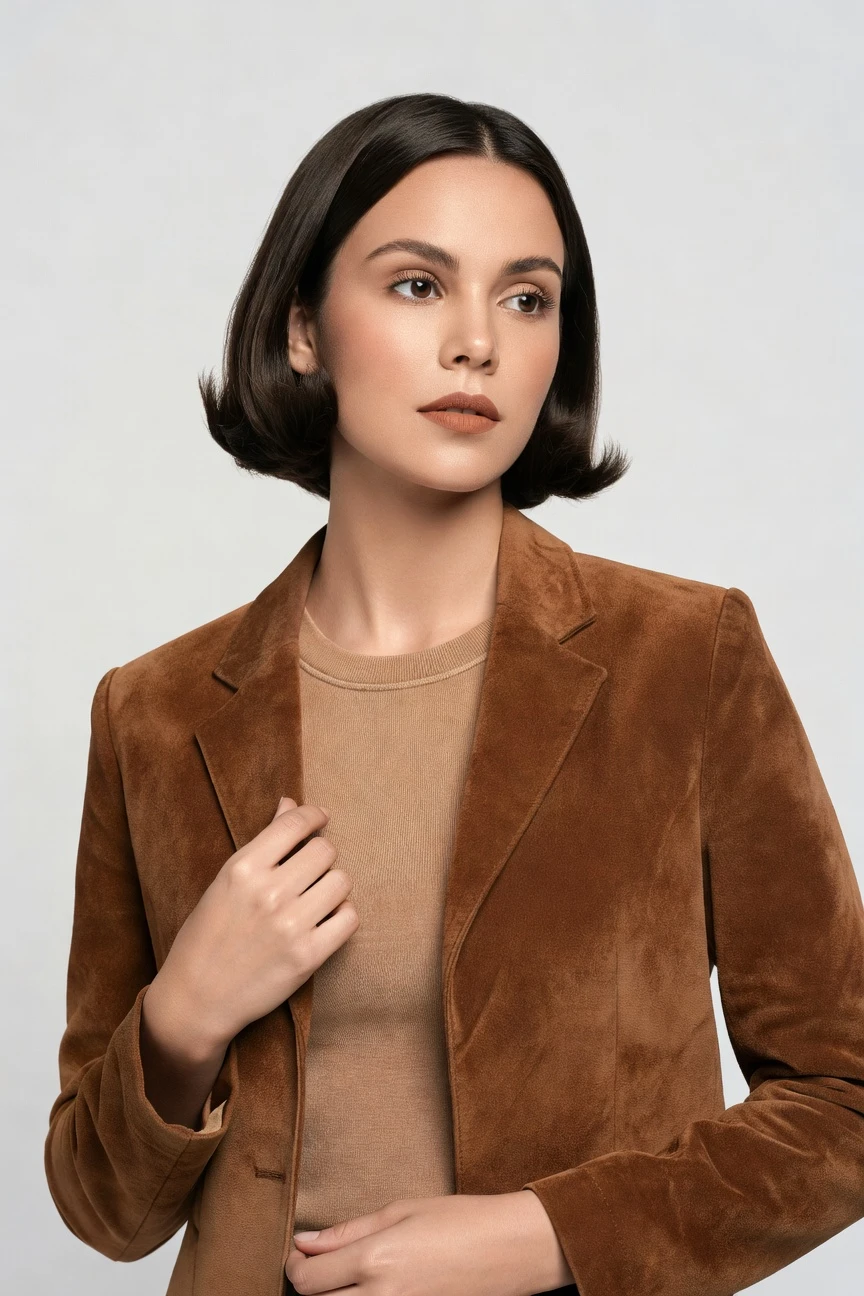
For a vintage fashion setup, the controls are already pointed at an 85mm lens, half-body framing, 4:5 crop, and 4K output. You click into the retro mood through style presets and camera choices instead of writing instructions. ~$0.55 per image · ~30-40s
- 4 clicks · 0 keystrokes
- app.rawshot.ai / new_shoot
How it works
Build Vintage Imagery Around the Garment
A retro look should come from clear controls and faithful product representation, not trial-and-error text guessing.
- Step 01
Upload the Garment
Start with the product, not a blank text box. RAWSHOT reads the item as the brief, so the vintage mood wraps around the cut, colour, pattern, and logo you actually sell.
- Step 02
Set the Vintage Direction
Choose lens, framing, lighting, aspect ratio, and a retro-coded visual style preset. Every creative decision lives in buttons, sliders, and presets you can repeat across a full collection.
- Step 03
Generate and Scale
Produce campaign-ready stills in 2K or 4K, then keep the same setup across more SKUs in the browser or through the REST API. The output stays labelled, signed, and ready for commercial use.
Spec sheet
Proof for Vintage-Led Fashion Shoots
These twelve surfaces show how RAWSHOT keeps retro styling usable for real commerce teams, from garment fidelity to audit trails.
- 01
Synthetic Models by Design
Every model is built from 28 body attributes with 10+ options each. Accidental real-person likeness is statistically negligible by design, not left to chance.
- 02
Every Setting Is a Click
You direct the image through controls for camera, framing, light, pose, background, style, and product focus. The interface behaves like an application for fashion teams, not a chat box.
- 03
Vintage Mood, Honest Garment
Retro treatment should not bend the product out of shape. RAWSHOT is engineered to represent cut, colour, pattern, logo, fabric, drape, and proportion faithfully.
- 04
Diverse Synthetic Cast
Select from a broad synthetic model system built for apparel presentation across categories and body combinations. That gives brands access to representation without casting bottlenecks.
- 05
Stay Consistent Across SKUs
Keep the same face, framing logic, and visual direction across a full drop. You get repeatable catalog rhythm instead of near-matches that break the page.
- 06
Retro Styles Without Guesswork
Choose from 150+ presets including film grain, noir, Y2K digital, street flash, and campaign gloss. Vintage can lean editorial, catalog, or lifestyle without rebuilding the setup each time.
- 07
2K, 4K, and Every Crop
Generate stills in 2K or 4K for PDPs, social, marketplaces, and lookbooks. Square, portrait, landscape, and platform-native ratios are built into the workflow.
- 08
Labelled and Compliance-Ready
Outputs are AI-labelled, C2PA-signed, and protected with visible plus cryptographic watermarking. RAWSHOT is built for EU AI Act Article 50, California SB 942, and GDPR-aligned operation.
- 09
Signed Audit Trail per Image
Each image carries provenance metadata that records what it is. That gives commerce and brand teams a clear chain of accountability instead of unverifiable files passed around in folders.
- 10
Browser to REST API
Use the GUI for one-off art direction or connect the same engine to catalog-scale pipelines. One shoot or ten thousand uses the same product surface and output logic.
- 11
Fast, Clear, Token-Safe
Images run at about $0.55 and usually generate in 30–40 seconds. Tokens never expire, and failed generations refund tokens automatically.
- 12
Commercial Rights Included
Every output comes with full commercial rights, permanent and worldwide. You do not need a separate negotiation to publish, sell, or distribute the imagery.
Outputs
Vintage Looks, real product control
From film-coded editorials to softer retro catalog frames, the styling changes while the garment stays central. That is the difference between mood you can use and mood that distorts the item.


Browse 150+ visual styles →
Comparison
RAWSHOT vs category tools vs DIY prompting
Three lenses on every dimension — what you optimize for in RAWSHOT versus typical category tools and blank-box AI workflows.
01
Interface
RAWSHOT
Click-driven controls for lens, framing, light, style, and product focusCategory tools + DIY
Often mix limited presets with lightweight text inputs and fewer apparel-specific controls. DIY prompting: Requires typed instructions, repeated rewrites, and manual trial-and-error to steer results02
Garment fidelity
RAWSHOT
Engineered around the real garment’s cut, colour, pattern, logo, and drapeCategory tools + DIY
Can style fashion well but often smooth over product-specific construction details. DIY prompting: Garments drift between outputs, logos get invented, and fabric details mutate03
Model consistency
RAWSHOT
Same model logic can repeat across many SKUs and collection variantsCategory tools + DIY
Consistency varies by workflow and may need manual matching across outputs. DIY prompting: Faces shift from image to image, making catalog pages feel assembled not directed04
Vintage art direction
RAWSHOT
Retro aesthetics come from repeatable presets and camera choices you can saveCategory tools + DIY
Vintage looks exist but are often harder to standardize across teams and batches. DIY prompting: Mood depends on phrasing luck, so one strong image rarely becomes a system05
Provenance + labelling
RAWSHOT
C2PA-signed, AI-labelled, and watermarked with visible and cryptographic layersCategory tools + DIY
Labelling and provenance support are uneven or absent across the category. DIY prompting: No dependable provenance metadata or consistent disclosure layer attached to outputs06
Commercial rights
RAWSHOT
Full commercial rights included for every output, permanent and worldwideCategory tools + DIY
Rights language can vary by plan, seat, or enterprise negotiation. DIY prompting: Usage terms are often unclear for brand publication, resale, or scaled campaign deployment07
Pricing transparency
RAWSHOT
About $0.55 per image, tokens never expire, failed generations refund tokensCategory tools + DIY
Pricing often adds seat gates, volume tiers, or sales-led access for scale. DIY prompting: Low entry cost hides heavy iteration waste, unclear rights, and unpredictable rerun time08
Catalog scale
RAWSHOT
Same engine works in browser GUI and REST API for nightly SKU pipelinesCategory tools + DIY
Enterprise workflows may sit behind separate products or gated integrations. DIY prompting: No reliable apparel pipeline, no signed audit trail, and weak reproducibility at scale
Prompting does not scale
Stop writing essays. Direct the shoot.
Most AI photo tools start with a blank text box. Rawshot turns the shoot into repeatable controls, so creative teams can produce consistent fashion imagery without prompt syntax or one-off hacks.
Category norm
ManualCreate a premium editorial fashion photograph of a model wearing the exact navy oversized wool coat from SKU-1842, full-body crop, realistic hands, consistent facial identity, clean e-commerce lighting, subtle Paris street background, 85mm lens, no logo distortion, no fabric hallucination, same pose as last campaign, repeatable for all colorways...
A prompt can describe one image. It cannot become a shared production system for hundreds of products, models, angles and markets.
Rawshot
ClicksSaved shoot recipe
Apply to 1 SKU or 10,000 via GUI, CSV or REST API.
Rawshot makes creative direction visible: buttons, presets and sliders instead of hidden prompt craft. The result is easier to teach, faster to approve and built for repeat production.
Use cases
Where Vintage Styling Becomes Commercially Useful
Operator archetypes and how click-directed, garment-first output fits the way they actually work.
- 01
Indie Denim Labels
Show washes, cuts, and hardware in a retro editorial frame without booking a studio day for every new drop.
Confidence · high
- 02
DTC Knitwear Brands
Build warm, vintage-coded campaign imagery that still keeps stitch definition and silhouette clear for shoppers.
Confidence · high
- 03
Resale and Vintage Sellers
Present one-off pieces with consistent on-model photography even when inventory changes every day.
Confidence · high
- 04
Marketplace Apparel Teams
Create retro-style assortment imagery that fits platform crops while keeping product representation usable at scale.
Confidence · high
- 05
Crowdfunded Fashion Launches
Test a vintage campaign direction before production samples are shipped across borders and budgets disappear.
Confidence · high
- 06
Y2K-Inspired Streetwear Brands
Lean into digital-retro styling for launch assets, socials, and PDPs without turning the garment into visual noise.
Confidence · high
- 07
Editorial Capsule Drops
Shape a seasonal story with noir, film grain, or flash-heavy looks while maintaining a repeatable product system.
Confidence · high
- 08
Factory-Direct Manufacturers
Offer buyers a vintage visual treatment for line sheets and digital selling without separate shoot logistics.
Confidence · high
- 09
Kidswear Collections
Use softer nostalgic styling cues for campaign pages while preserving garment colour, trim, and fit.
Confidence · high
- 10
Accessories and Handbags
Apply retro mood to close-ups and half-body compositions without losing hardware, texture, or branding details.
Confidence · high
- 11
Student Fashion Portfolios
Create polished vintage-fashion imagery for concepts and graduate collections when there is no studio budget at all.
Confidence · high
- 12
Archive Reissue Programs
Reframe heritage silhouettes in contemporary retro imagery while keeping the original garment details central.
Confidence · high
— Principle
Honest is better than perfect.
Vintage styling can make imagery feel nostalgic, but it should never make attribution fuzzy. RAWSHOT labels outputs, signs them with C2PA metadata, and applies visible plus cryptographic watermarking so teams can publish retro-coded fashion work with proof attached. EU-hosted infrastructure, GDPR alignment, and compliance-ready disclosure are part of the product, not a footer disclaimer.
Rights & provenance
Full commercial rights. Forever.
- C2PA-signed on every image — EU AI Act Article 50 compliant
- 28-attribute synthetic models — real-person likeness statistically impossible
- Full commercial rights to every generation — no recurring licensing fees
- Tokens never expire · One-click cancel · Transparent pricing
EU AI Act
C2PA
Commercial use
Pricing
~$0.55 per image.
~30–40 seconds per generation. Tokens never expire. Cancel in one click.
- 01The cancel button is on the pricing page.
- 02No per-seat gates. No 'contact sales' walls for core features.
- 03Failed generations refund their tokens.
- 04Full commercial rights to every output, permanent, worldwide.
FAQ
Practical answers on control, rights, pricing, scale, and compliant publishing.
Do I need to write prompts to use RAWSHOT?
Never—you direct every output with sliders, presets, and clicks on the garment, not typed prompts. That UI control is consistent across GUI and REST API payloads, which is why ecommerce teams onboard buyers without rewriting creative briefs as chat threads. Instead of guessing wording, you select concrete settings like lens, framing, lighting, background, style preset, aspect ratio, and product focus, then generate.
For catalog teams, reliability matters more than model cleverness; RAWSHOT keeps tokens, timings, refund rules, commercial rights framing, provenance signalling, watermarking cues, REST surface, and SKU-scale batch patterns explicit so operations can rehearse PDP launches without hallucinated garment inventions. The practical takeaway is simple: if your team can click through a shoot plan, it can direct consistent fashion imagery without learning syntax or relying on a specialist to translate taste into text.
What does AI-assisted vintage fashion photography actually change for ecommerce teams?
It changes who gets access to directed imagery and how consistently a team can produce it. For ecommerce, the problem is rarely only creativity; it is the gap between wanting campaign-level presentation and having the budget, time, samples, and operational slack to run repeated shoots. RAWSHOT closes that gap by letting teams build vintage-coded on-model imagery around the actual garment through a click-driven interface.
That matters because apparel teams need repeatability, not isolated hero shots. You can keep the same visual logic across a collection, generate in 2K or 4K, use aspect ratios for PDPs and social placements, and move from one-off browser work to REST API scale without switching products. Vintage becomes a usable merchandising system instead of a moodboard that collapses when you need fifty more images by tomorrow morning.
Why skip reshooting every SKU when the season needs a vintage refresh?
Because most teams do not need another logistics project; they need a new visual direction that keeps the product intact. Seasonal refreshes usually mean coordinating samples, calendars, studios, casting, post-production, and approvals, all before a single garment goes live. RAWSHOT lets you restyle the presentation around the garment with camera choices, framing, lighting systems, and retro presets while staying inside one application.
The operational benefit is control without drift. You can update a collection into a film-grain, noir, flash, or warm archival mood and still preserve cut, colour, logo placement, and proportion across the range. That makes seasonal repositioning practical for smaller brands and faster for larger catalog teams, especially when you need commerce-ready imagery more than a prolonged production cycle.
How do we turn flat garments into catalogue-ready imagery without prompting?
You start with the product asset, then direct the result through visual controls rather than text. In RAWSHOT, the garment is the brief, so the workflow is built around preserving what the item is while you choose how it should be photographed. Teams select lens, framing, pose, lighting, background, visual style, aspect ratio, resolution, and product focus, then generate the output as a composed fashion image.
That process is useful because catalog readiness depends on consistency and detail, not only aesthetics. A buyer or merchandiser can keep half-body framing for tops, choose 4:5 for PDP and paid social needs, render in 2K or 4K, and repeat the same setup across an entire assortment. The result is a workflow the team can standardize, QA, and scale instead of a series of one-off experiments that are difficult to reproduce.
Why does garment-led control beat ChatGPT, Midjourney, or generic image models for fashion PDPs?
Because fashion PDPs live or die on faithful product representation. Generic image tools are strong at atmosphere, but they are not built around apparel operations, so the garment often bends to the model’s visual guesswork. That is where teams see drifting silhouettes, altered fabric behavior, invented logos, inconsistent faces, and the familiar problem of getting one promising frame but failing to reproduce it across the rest of the line.
RAWSHOT is built the other way around. The interface gives fashion-specific controls, the system is engineered around the garment, outputs carry C2PA provenance and watermarking, and rights are stated clearly for commercial use. For a commerce team, that means less prompt roulette, fewer unusable near-matches, and a path from art direction to publishable assets that can actually survive merchandising review.
Can I use an ai vintage photo generator for paid campaigns and storefronts with clear rights?
Yes—RAWSHOT includes full commercial rights to every output, permanent and worldwide. That matters because fashion teams do not create images only for experimentation; they need to publish to storefronts, marketplaces, paid media, emails, lookbooks, and wholesale materials without uncertainty around reuse. Rights clarity has to be part of the buying decision, not something discovered after the assets are already in circulation.
RAWSHOT also takes transparency seriously at the file level. Outputs are AI-labelled, protected with visible and cryptographic watermarking, and signed with C2PA provenance metadata so attribution is not left vague. For brand and legal teams, the practical step is straightforward: treat the imagery as commercially deployable creative with disclosure and provenance already attached, then review garment accuracy and channel fit before launch.
What should our team check before publishing vintage-style product imagery?
Check the same fundamentals you would check in any apparel review, then add disclosure and provenance. Start with garment fidelity: verify cut, colour, pattern, logo placement, hardware, proportion, and drape against the source product. Then confirm the styling choices are helping the shopper read the item rather than burying it inside the retro mood. Vintage should shape the presentation, not weaken the sell-through information.
After visual QA, confirm the file carries the trust layer your team expects. With RAWSHOT, that means AI labelling, C2PA-signed provenance metadata, and watermarking signals are already part of the output, alongside clear commercial rights. The practical publishing rule is simple: approve only when both the garment and the attribution are accurate, because brand trust is built from both what shoppers see and what you can prove.
How much does this cost for still images, and what happens if a generation fails?
For stills, RAWSHOT runs at about $0.55 per image, and a generation usually completes in around 30–40 seconds. Tokens never expire, which matters for brands that work in bursts around drops, approvals, or wholesale deadlines rather than on a fixed daily cadence. You are not forced into a use-it-now cycle just to protect prepaid value.
If a generation fails, the tokens are refunded automatically. That makes budgeting cleaner for small labels and larger operations alike, because the cost model stays tied to usable output rather than dead attempts. Add one-click cancellation on the pricing page, no per-seat gates, and no sales wall for core features, and you get a pricing structure that is much easier to run through procurement or founder-level cash planning.
How does the REST API fit Shopify-scale catalogs or brand editorial workflows?
The REST API lets teams move from individual shoot direction to repeatable batch operations without changing engines. That is useful when a browser user has already established the look—lens, crop, style family, lighting logic, product focus—and operations needs to apply the same system across a larger set of SKUs. Instead of rebuilding the workflow elsewhere, you carry the same product behavior into a pipeline that can support nightly or scheduled generation.
For commerce teams, the value is consistency and handoff. Creative can define the visual standard in the GUI, technical teams can connect that standard to catalog infrastructure, and each image still benefits from the same commercial-rights framing and provenance layer. The result is a workflow that can support PDP volume and editorial variation at the same time, without splitting brand direction from operations reality.
Can one team handle both one-off vintage editorials and 10,000-SKU image pipelines in RAWSHOT?
Yes—the same product is designed for both ends of that range. A smaller brand can direct a single drop in the browser with clicks, while a larger catalog team can run high-volume generation through the REST API using the same underlying controls, model system, and output logic. RAWSHOT does not reserve the serious workflow for a separate enterprise edition, which keeps the transition from experimentation to scale much cleaner.
That shared surface is important for team coordination. Buyers, marketers, founders, merchandisers, and technical operators can work from one visual language instead of translating between disconnected tools. When the setup is consistent, vintage-style creative stops being a special project and becomes infrastructure your team can repeat across launches, replenishment, marketplace updates, and regional campaigns.
Keep exploring