
— Catalog · Studio Clean · 150+ styles · 4K
Direct consistent SKU imagery with the AI Catalog Photography Generator
Generate clean, campaign-ready catalog images that keep the garment at the center. Click lens, framing, lighting, background, and style instead of wrestling with text syntax. No studio. No samples shipped. No prompts.
- ~$0.55 per image
- ~30–40s per generation
- 150+ styles
- 2K or 4K
- Every aspect ratio
- REST API ready
7-day free trial • 50 tokens (10 images) • Cancel anytime

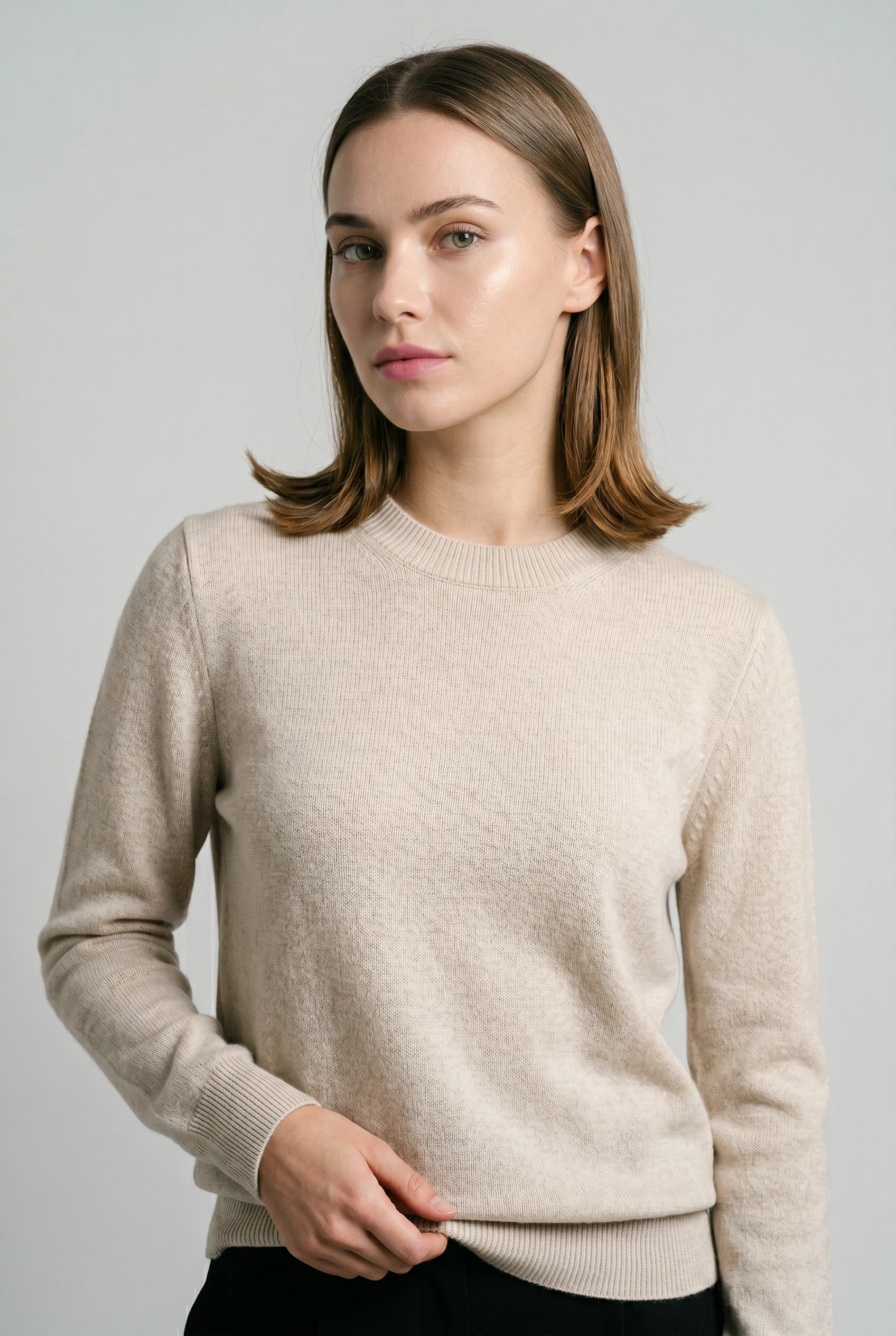
Direct the shoot. Zero prompts.
This setup is tuned for catalog work: an 85mm lens, half-body framing, clean softbox light, and a light grey seamless so the garment reads clearly across PDPs. You click the controls, lock the look, and reuse it across the whole assortment. 5 tokens · ~34s per image
- 6 clicks · 0 keystrokes
- app.rawshot.ai / new_shoot
How it works
From Garment Upload to Catalog Output
A repeatable workflow for ecommerce teams that need consistent on-model imagery without studio logistics or text-led trial and error.
- Step 01
Upload the Garment
Start with the real product so the clothing, not a text guess, drives the image. RAWSHOT is built to represent cut, colour, pattern, logo, fabric, and proportion faithfully.
- Step 02
Set the Catalog Controls
Choose lens, framing, pose, angle, lighting, background, aspect ratio, and visual style from the interface. Save a repeatable setup for clean PDP imagery across every SKU.
- Step 03
Generate and Scale
Create a single image in the browser or run the same look across large assortments through the REST API. Each output arrives labelled, watermarked, and ready for commercial use.
Spec sheet
Proof for Real Catalog Operations
These twelve surfaces show how RAWSHOT handles garment accuracy, repeatability, provenance, rights, and scale for commerce teams.
- 01
Synthetic Models by Design
Every RAWSHOT model is a synthetic composite built from 28 body attributes with 10+ options each. Accidental real-person likeness is statistically negligible by design.
- 02
Every Setting Is a Click
Camera, pose, angle, lighting, frame, background, and style live in buttons, sliders, and presets. You direct the shoot in an application, not a chat box.
- 03
The Garment Stays the Brief
RAWSHOT is engineered around the clothing itself, so cut, drape, colour, pattern, and logo stay central. That matters when PDP accuracy decides returns and trust.
- 04
Diverse Models, Consistent System
Build outputs across a wide range of body presentations with the same control structure each time. The workflow stays stable whether you shoot one look or a whole category.
- 05
Consistency Across SKUs
Lock a model, camera setup, framing, and style, then reuse them across a collection. Your catalog reads as one system instead of a patchwork of near-matches.
- 06
150+ Visual Style Presets
Move from catalog clean to editorial, lifestyle, noir, street, or vintage without rewriting anything. Presets make brand variation fast while keeping the product readable.
- 07
2K, 4K, and Every Ratio
Generate stills in 2K or 4K and choose the aspect ratio your channel needs. PDP crops, marketplace slots, social placements, and campaign assets can share one source setup.
- 08
Labelled and Compliant
Outputs are AI-labelled, C2PA-signed, and protected with visible and cryptographic watermarking. RAWSHOT is built for EU AI Act Article 50, California SB 942, GDPR, and EU hosting.
- 09
Audit Trail per Image
Each output carries signed provenance metadata for traceability. That gives teams a clear record of what was generated, when, and through which production system.
- 10
GUI to REST API
Use the browser for single-shoot work or connect the same engine to catalog pipelines through the API. There is no separate enterprise-only product behind a sales wall.
- 11
Fast, Transparent Economics
Images cost about $0.55 and generate in roughly 30–40 seconds. Tokens never expire, and failed generations refund their tokens automatically.
- 12
Full Commercial Rights Included
Every output comes with permanent, worldwide commercial rights. That clarity matters when assets move from PDPs to marketplaces, ads, and seasonal updates.
Outputs
Catalog Outputs, Locked to the Garment
Clean product-first imagery for ecommerce teams that need consistency more than improvisation. Build one visual system, then carry it from launch day through catalog scale.


Browse 150+ visual styles →
Comparison
RAWSHOT vs category tools vs DIY prompting
Three lenses on every dimension — what you optimize for in RAWSHOT versus typical category tools and blank-box AI workflows.
01
Interface
RAWSHOT
Click-driven controls for lens, pose, light, frame, and styleCategory tools + DIY
Often mix presets with lighter text input and looser workflow control. DIY prompting: Typed instructions, repeated rewrites, and unstable results between attempts02
Garment fidelity
RAWSHOT
Engineered around the real garment so product details stay centralCategory tools + DIY
Can stylise well but may soften exact cut or trim detail. DIY prompting: Garment drift, invented logos, wrong seams, and altered proportions are common03
Model consistency across SKUs
RAWSHOT
Reuse the same model and setup across the full assortmentCategory tools + DIY
Consistency can vary across sessions and larger catalogs. DIY prompting: Faces, body shape, and pose drift heavily from image to image04
Provenance + labelling
RAWSHOT
C2PA-signed, AI-labelled, visible watermarks, and cryptographic watermarkingCategory tools + DIY
Labelling and provenance support are often partial or absent. DIY prompting: No dependable provenance metadata or standardized labelling record05
Commercial rights
RAWSHOT
Permanent worldwide commercial rights included with every outputCategory tools + DIY
Rights can depend on plan, seat, or negotiated terms. DIY prompting: Usage clarity is often unclear across tools, models, and source assets06
Pricing transparency
RAWSHOT
~$0.55 per image, tokens never expire, one-click cancelCategory tools + DIY
Credits, seats, and volume structures can complicate forecasting. DIY prompting: Cost is hard to predict when retries pile up and workflow time expands07
Catalog scale
RAWSHOT
Same product in browser GUI and REST API for batch pipelinesCategory tools + DIY
Core scale features may sit behind sales-led packaging. DIY prompting: No reliable batch system for garment-safe, repeatable catalog production08
Operational overhead
RAWSHOT
Teams standardize looks through saved controls and repeatable setupsCategory tools + DIY
More tooling than generic AI, but less locked-down repeatability. DIY prompting: Prompt-engineering overhead slows buyers, marketers, and catalog operators
Prompting does not scale
Stop writing essays. Direct the shoot.
Most AI photo tools start with a blank text box. Rawshot turns the shoot into repeatable controls, so creative teams can produce consistent fashion imagery without prompt syntax or one-off hacks.
Category norm
ManualCreate a premium editorial fashion photograph of a model wearing the exact navy oversized wool coat from SKU-1842, full-body crop, realistic hands, consistent facial identity, clean e-commerce lighting, subtle Paris street background, 85mm lens, no logo distortion, no fabric hallucination, same pose as last campaign, repeatable for all colorways...
A prompt can describe one image. It cannot become a shared production system for hundreds of products, models, angles and markets.
Rawshot
ClicksSaved shoot recipe
Apply to 1 SKU or 10,000 via GUI, CSV or REST API.
Rawshot makes creative direction visible: buttons, presets and sliders instead of hidden prompt craft. The result is easier to teach, faster to approve and built for repeat production.
Use cases
Who Needs Catalog Imagery on Demand
Operator archetypes and how click-directed, garment-first output fits the way they actually work.
- 01
Indie Fashion Labels
Launch a first collection with clean on-model PDP imagery before a traditional shoot is even on the budget.
Confidence · high
- 02
DTC Apparel Brands
Keep new drops visually consistent across product pages, email, and paid social with one locked catalog setup.
Confidence · high
- 03
Marketplace Sellers
Generate platform-ready ratios and cleaner product presentation for listings that need speed and repeatability.
Confidence · high
- 04
Factory-Direct Manufacturers
Show garments on models without shipping every style into a studio workflow first.
Confidence · high
- 05
Crowdfunded Brands
Present campaign pages with polished catalog visuals while production samples are still limited.
Confidence · high
- 06
Resale and Vintage Operators
Standardize mixed inventory into a cleaner storefront even when garments come from many eras and suppliers.
Confidence · high
- 07
Kidswear Teams
Build catalog imagery with product-first consistency across sizes, colorways, and coordinated sets.
Confidence · high
- 08
Adaptive Fashion Brands
Represent fit and styling clearly for assortments that are often underserved by traditional production budgets.
Confidence · high
- 09
Lingerie DTC Teams
Direct clean, controlled catalog photography with careful framing and repeatable styling choices.
Confidence · high
- 10
Accessories and Footwear Sellers
Mix full-outfit context with product-specific crops for bags, shoes, watches, and eyewear in one system.
Confidence · high
- 11
In-House Ecommerce Managers
Refresh seasonal catalog imagery quickly when backgrounds, aspect ratios, or styling direction need updating.
Confidence · high
- 12
Enterprise Catalog Operations
Run the same garment-led engine through the API for large nightly pipelines without changing tools or pricing logic.
Confidence · high
— Principle
Honest is better than perfect.
Catalog imagery needs trust as much as polish. Every RAWSHOT output is AI-labelled, C2PA-signed, and protected with visible plus cryptographic watermarking, with a signed audit trail per image. For commerce teams, that means clearer governance, cleaner handoff across systems, and labelled assets you can use without pretending they came from somewhere else.
Rights & provenance
Full commercial rights. Forever.
- C2PA-signed on every image — EU AI Act Article 50 compliant
- 28-attribute synthetic models — real-person likeness statistically impossible
- Full commercial rights to every generation — no recurring licensing fees
- Tokens never expire · One-click cancel · Transparent pricing
EU AI Act
C2PA
Commercial use
Pricing
~$0.55 per image.
~30–40 seconds per generation. Tokens never expire. Cancel in one click.
- 01The cancel button is on the pricing page.
- 02No per-seat gates. No 'contact sales' walls for core features.
- 03Failed generations refund their tokens.
- 04Full commercial rights to every output, permanent, worldwide.
FAQ
Practical answers on control, rights, pricing, scale, and compliant publishing.
Do I need to write prompts to use RAWSHOT?
Never—you direct every output with sliders, presets, and clicks on the garment, not typed prompts. That UI control is consistent across GUI and REST API payloads, which is why ecommerce teams onboard buyers without rewriting creative briefs as chat threads. Instead of guessing the right wording, you choose lens, framing, pose, angle, lighting, background, visual style, product focus, aspect ratio, and resolution directly in the interface.
For catalog teams, reliability matters more than model cleverness; RAWSHOT keeps tokens, timings, refund rules, commercial rights framing, provenance signalling, watermarking cues, REST surface, and SKU-scale batch patterns explicit so operations can rehearse PDP launches without hallucinated garment inventions. You get a real application for fashion work, not a blank text field. That makes it practical to standardize one visual system across merchandisers, marketers, and catalog operators.
What does an ai catalog photography generator actually change for ecommerce teams?
It changes who gets access to polished product imagery and how repeatable that imagery becomes. Instead of planning studio days, coordinating samples, and accepting uneven output across SKUs, your team can build a controlled visual setup in the browser and generate catalog-ready stills around the garment itself. That matters for ecommerce because the work is rarely one hero image; it is hundreds or thousands of product pages that need consistency in framing, lighting, and product focus.
RAWSHOT is designed for that operational reality. You can choose 2K or 4K, set aspect ratios for marketplaces and PDPs, reuse the same model and camera setup, and move from one-off browser work to REST API batch runs without switching products. The practical outcome is not hype; it is a clearer, faster path to consistent assets that help buyers compare products and help teams publish on schedule.
Why skip reshooting every SKU when the season, background, or styling direction changes?
Because most seasonal updates do not require rebuilding the whole production process from zero. If your garments are already the source and your visual system is controlled in software, you can update framing, background, aspect ratio, or style direction without reopening all the logistics that come with traditional photography. For fashion teams, that means less dependency on sample movement, location calendars, and the narrow windows when every stakeholder is available at once.
RAWSHOT lets you lock the constants that should stay stable and adjust only what the new season demands. You can keep the same model, lens logic, and product-first treatment while shifting from marketplace squares to fresh PDP crops or from neutral seamless backgrounds to a more campaign-leaning look. In practice, that gives merchandising and ecommerce teams a cleaner way to refresh presentation without losing catalog consistency.
How do we turn flat garments into catalogue-ready on-model imagery without prompting?
You start with the garment, then direct the shoot through the interface. Choose the model setup, pick the lens, set the framing, select the lighting, choose the background, and lock the aspect ratio and visual style that fit your storefront. Because those decisions are made through controls rather than text syntax, the workflow is easier to standardize across people who know product and brand but do not want to become specialists in generic image tools.
RAWSHOT is built specifically for fashion categories, including upper-body, lower-body, full-outfit, footwear, jewelry, handbags, watches, sunglasses, and accessories, with up to four products in one composition. That means the practical path from flat product to on-model catalog image is direct: upload the garment, set the scene, generate, review for product accuracy, and reuse the configuration across the range. The result is a repeatable production method that fits commerce teams, not a one-off experiment.
Why does RAWSHOT beat ChatGPT, Midjourney, or generic image tools for fashion PDP work?
Because fashion PDP work depends on repeatability and garment truth, not on open-ended image invention. Generic tools are strong at broad image synthesis, but they commonly drift on logos, alter trims, reshape silhouettes, and change faces or body proportions from one image to the next. They also push the burden of control back onto the user, who has to keep rewriting instructions and hope the model interprets them the same way each time.
RAWSHOT takes a different route. The garment is the brief, and the interface exposes the controls that fashion teams actually need: camera, angle, pose, lighting, background, style, frame, and product focus. On top of that, outputs are AI-labelled, C2PA-signed, and covered by clear commercial rights. For commerce teams, that makes RAWSHOT less about novelty and more about dependable asset production you can govern, repeat, and scale.
Can we use RAWSHOT images commercially if they are AI-labelled and watermarked?
Yes. RAWSHOT gives you full commercial rights to every output, permanent and worldwide, and it does so without asking you to hide what the asset is. The AI label, C2PA provenance metadata, and visible plus cryptographic watermarking are part of an honest production standard, not a signal that the image is unusable. For many brands, that transparency is better governance and better long-term brand hygiene than trying to pass synthetic work off as something else.
For an ecommerce team, the key point is operational clarity. Rights are explicit, provenance is attached per image, and the asset can move from PDPs to marketplaces, campaigns, and internal DAM workflows with a clearer audit record. That gives legal, marketing, and catalog stakeholders a shared basis for approval, which matters far more in practice than vague promises about realism.
What should our team check before publishing catalogue images from RAWSHOT?
Start with garment accuracy. Confirm that cut, colour, pattern, drape, logos, trims, and proportion read correctly, then check that framing, crop, and aspect ratio suit the destination channel. After that, review the output as an operations asset: make sure the selected model and setup match the rest of the assortment, and confirm the image carries the labelling and provenance signals your team expects for governance.
RAWSHOT supports that review discipline because outputs are AI-labelled, C2PA-signed, and tied to a per-image audit trail. Teams should also keep visible and cryptographic watermarking policies in mind, align chosen styles with channel intent, and standardize approval criteria before large batch runs. The strongest workflow is simple: validate product truth first, catalog consistency second, and governance details before anything goes live.
How much does still-image generation cost, and what happens to unused or failed tokens?
For stills, RAWSHOT runs at about $0.55 per image, and a generation typically takes around 30–40 seconds. Tokens never expire, which means teams do not have to force spend against an arbitrary deadline or overbuy just to protect a discount tier. That is especially useful for fashion operators whose volume rises and falls with launches, restocks, sampling cycles, and marketplace deadlines.
The policy side is equally straightforward. Failed generations refund their tokens, and cancellation is one click from the pricing page rather than a sales or support process. There are no per-seat gates for core features and no contact-sales wall for basic access. For buyers and ecommerce managers, that makes forecasting simpler because the economics stay visible, predictable, and tied to actual output rather than hidden packaging.
Can RAWSHOT plug into our Shopify-scale catalog pipeline or DAM workflow?
Yes. RAWSHOT is built for both browser-based single-shoot work and REST API integration, so teams can move from manual art direction to batch production without changing engines. That matters for Shopify-scale and multi-channel commerce because the challenge is not only generating one image; it is keeping the same visual rules intact as assets move through PIM, DAM, merchandising, and publishing systems.
In practical terms, teams can define repeatable camera, framing, lighting, style, and model setups in one workflow and then carry those rules into API-driven runs for larger assortments. Because each output also includes provenance and a signed audit trail, the handoff into downstream systems is easier to govern. The result is a cleaner bridge between creative direction and production operations, rather than two disconnected toolchains.
Can one team use the browser while another runs the ai catalog photography generator through the API at scale?
Yes, and that is one of the product’s strongest operational advantages. RAWSHOT does not split small teams and large teams into different editions with different engines, quality levels, or pricing logic. The same system that lets a brand manager art direct a single look in the GUI can also support catalog operators running large SKU batches through the REST API with the same model consistency, rights framework, and provenance standards.
That shared foundation matters because fashion teams rarely work in one mode forever. A collection may begin with manual exploration, move into standardized asset creation, and end in a larger pipeline for regional storefronts, marketplace crops, or assortment refreshes. Using one product across those stages reduces handoff friction and keeps visual decisions stable, which is exactly what catalog operations need when volume increases.