
— Garment-first imagery · 150+ styles · 4K
Turn flat garments into polished product visuals with the AI Invisible Mannequin Photography Generator.
Show shape, structure, and fit cues without a studio day or mannequin prep. Direct framing, lens, ratio, lighting, and product focus with buttons, sliders, and presets built for apparel teams. No studio. No samples. No prompts.
- ~$0.55 per image
- ~30–40s per generation
- 150+ styles
- 2K or 4K
- Every aspect ratio
- Full commercial rights
7-day free trial • 50 tokens (10 images) • Cancel anytime

Direct the shoot. Zero prompts.
This setup favors clean invisible mannequin output for apparel detail and silhouette clarity. We preselect an 85mm lens, half-body framing, 4:5 ratio, 4K resolution, and full-outfit product focus so the garment stays central. ~$0.55 per image · ~30-40s
- 4 clicks · 0 keystrokes
- app.rawshot.ai / new_shoot
How it works
From Flat Garment to Clean PDP Image
A garment-led workflow for invisible mannequin visuals, built for apparel teams that need control, consistency, and speed without studio logistics.
- Step 01
Upload the Garment
Start with the product you need to show. RAWSHOT reads the garment as the brief, so cut, color, pattern, logo, and proportion stay central from the first generation.
- Step 02
Set the Visual Controls
Choose lens, framing, lighting, background, style, aspect ratio, and product focus from the interface. Every creative decision is a click, so teams direct output without learning syntax.
- Step 03
Generate and Scale
Create publishable stills in about 30–40 seconds, then repeat the exact setup across more SKUs. The same workflow works in the browser for one look and in the API for catalog volume.
Spec sheet
Proof for Garment-First Invisible Mannequin Workflows
These twelve points show where RAWSHOT stays practical for apparel operators: product fidelity, transparent output, and scale without extra gates.
- 01
Synthetic by Design
Every model is built from 28 body attributes with 10+ options each. Accidental real-person likeness is statistically negligible by design, which keeps representation transparent from the start.
- 02
Every Setting Is a Click
Lens, framing, lighting, background, mood, and ratio live in the UI. You direct the image with controls, not an empty text box.
- 03
Built Around the Garment
RAWSHOT is engineered for apparel fidelity. Cut, color, pattern, drape, logo placement, and silhouette stay grounded in the actual product.
- 04
Diverse Synthetic Models
Use a broad model system when you want on-model context, or keep the visual emphasis on the garment for invisible mannequin-style output. Either way, the output is clearly labelled.
- 05
Consistent Across SKUs
Reuse the same visual setup across a full product line. That means fewer mismatched PDPs, fewer retakes, and steadier merchandising across collections.
- 06
150+ Visual Styles
Move from catalog clean to editorial gloss, studio minimal, vintage, noir, or lifestyle treatments. Style variation stays structured instead of random.
- 07
2K, 4K, and Any Ratio
Generate stills in 2K or 4K and fit the output to marketplace, PDP, social, or campaign placements. Square, portrait, landscape, and vertical are all built in.
- 08
Labelled and Compliant
Outputs are AI-labelled, watermarked, and aligned with EU-hosted compliance requirements including C2PA provenance support, GDPR expectations, and disclosure standards.
- 09
Signed Audit Trail per Image
Each image carries a traceable record for review and handoff. That helps ecommerce, legal, and brand teams understand what was produced and how it should be published.
- 10
GUI for One Shoot, API for Scale
Work one garment at a time in the browser or run high-volume image generation through the REST API. The product is the same either way.
- 11
Clear Pricing, Fast Output
Images cost about $0.55 and generate in about 30–40 seconds. Tokens never expire, and failed generations refund their tokens.
- 12
Commercial Rights Included
Every output comes with full commercial rights, permanent and worldwide. You can publish across PDPs, ads, marketplaces, lookbooks, and campaigns without extra licensing tiers.
Outputs
Clean Product Shape, without the studio mess
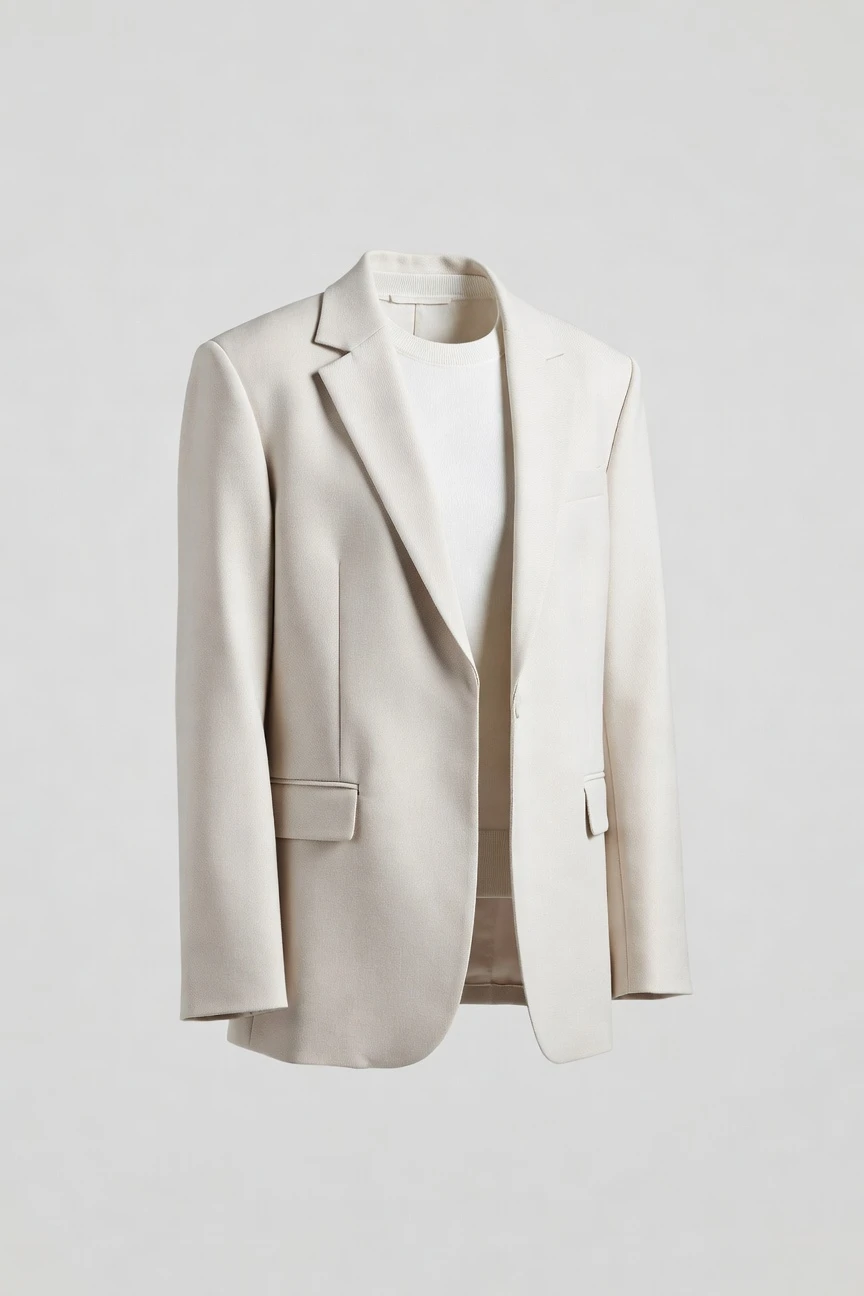
Show structure, neckline, sleeve shape, hems, and fabric behavior in polished invisible mannequin visuals. Keep the garment central while adapting crops and finishes to commerce channels.


Browse 150+ visual styles →
Comparison
RAWSHOT vs category tools vs DIY prompting
Three lenses on every dimension — what you optimize for in RAWSHOT versus typical category tools and blank-box AI workflows.
01
Interface
RAWSHOT
Click-driven controls for lens, framing, lighting, ratio, and product focusCategory tools + DIY
Often mix presets with limited text-led controls and less predictable repeatability. DIY prompting: You type instructions, revise repeatedly, and chase usable output through trial and error02
Garment fidelity
RAWSHOT
Engineered around the garment so cut, color, logo, and drape stay groundedCategory tools + DIY
Can favor mood and styling over strict apparel accuracy. DIY prompting: Garments drift, logos get invented, patterns change, and proportions wander between outputs03
Consistency across SKUs
RAWSHOT
Reuse the same setup across a full catalog for aligned PDP presentationCategory tools + DIY
Consistency improves, but often varies by workflow tier or preset depth. DIY prompting: Each generation behaves like a fresh guess, so catalogs end up visually uneven04
Invisible mannequin suitability
RAWSHOT
Supports garment-first framing that highlights shape without mannequin prepCategory tools + DIY
Often optimized for on-model storytelling before clean product presentation. DIY prompting: Requires repeated instruction and still may add unwanted bodies, props, or styling noise05
Provenance and labelling
RAWSHOT
C2PA-signed, AI-labelled, and watermarked with visible and cryptographic layersCategory tools + DIY
Disclosure practices vary and provenance is not always embedded per image. DIY prompting: No dependable provenance metadata, weak labelling, and unclear traceability after export06
Commercial rights
RAWSHOT
Full commercial rights to every output, permanent and worldwideCategory tools + DIY
Rights are usually broader than hobby tools but can depend on plan terms. DIY prompting: Rights clarity varies by model, platform, and training context, which slows approvals07
Pricing transparency
RAWSHOT
About $0.55 per image, tokens never expire, one-click cancelCategory tools + DIY
May add seat limits, volume tiers, or sales-led packaging. DIY prompting: Pricing seems cheap at first, but iteration waste and unusable generations add up08
Catalog scale
RAWSHOT
Same engine in browser GUI and REST API, ready for nightly SKU pipelinesCategory tools + DIY
Scale features may sit behind separate enterprise packaging. DIY prompting: No reliable garment pipeline, weak batch structure, and heavy manual review overhead
Prompting does not scale
Stop writing essays. Direct the shoot.
Most AI photo tools start with a blank text box. Rawshot turns the shoot into repeatable controls, so creative teams can produce consistent fashion imagery without prompt syntax or one-off hacks.
Category norm
ManualCreate a premium editorial fashion photograph of a model wearing the exact navy oversized wool coat from SKU-1842, full-body crop, realistic hands, consistent facial identity, clean e-commerce lighting, subtle Paris street background, 85mm lens, no logo distortion, no fabric hallucination, same pose as last campaign, repeatable for all colorways...
A prompt can describe one image. It cannot become a shared production system for hundreds of products, models, angles and markets.
Rawshot
ClicksSaved shoot recipe
Apply to 1 SKU or 10,000 via GUI, CSV or REST API.
Rawshot makes creative direction visible: buttons, presets and sliders instead of hidden prompt craft. The result is easier to teach, faster to approve and built for repeat production.
Use cases
Where Invisible Mannequin Output Opens Access
Operator archetypes and how click-directed, garment-first output fits the way they actually work.
- 01
Indie Fashion Labels
Launch polished PDP imagery before you can justify a full studio schedule, and keep the garment central in every frame.
Confidence · high
- 02
DTC Basics Brands
Show tees, knits, denim, and essentials in consistent invisible mannequin-style visuals that make fit cues clearer across the catalog.
Confidence · high
- 03
Marketplace Sellers
Create clean product images in the ratios marketplaces demand, without hand-styling mannequins for every listing.
Confidence · high
- 04
Factory-Direct Manufacturers
Turn flat garment files into buyer-ready visuals for wholesale lines, preorder decks, and fast-moving assortment updates.
Confidence · high
- 05
Resale and Vintage Operators
Standardize mixed inventory with garment-first images that reduce visual clutter and make condition and silhouette easier to read.
Confidence · high
- 06
Kidswear Brands
Present product shape and construction clearly while keeping the focus on the clothing, color, and fabric details.
Confidence · high
- 07
Adaptive Fashion Teams
Use clean apparel imagery to highlight closures, openings, and garment function without losing brand presentation quality.
Confidence · high
- 08
Lingerie and Intimates DTC
Produce controlled, respectful product visuals that emphasize structure, materials, and finish details for commerce pages.
Confidence · high
- 09
Crowdfunded Apparel Projects
Publish campaign visuals before large physical shoot budgets exist, and test presentation styles while the collection is still taking shape.
Confidence · high
- 10
Private Label Retail Teams
Roll out consistent invisible mannequin photography across many SKUs so PDPs look aligned even as assortments change quickly.
Confidence · high
- 11
Merchandising Agencies
Give clients clean apparel visuals fast, then reuse setups across multiple categories without rebuilding each shot from scratch.
Confidence · high
- 12
Catalog Operations at Scale
Move from single-item browser work to API-driven batches when you need thousands of garment-first images on a repeatable schedule.
Confidence · high
— Principle
Honest is better than perfect.
Invisible mannequin imagery still needs clear disclosure and traceability. RAWSHOT signs outputs with C2PA provenance, applies visible and cryptographic watermarking, and labels the work as AI-assisted. That gives commerce teams a cleaner approval path when garment visuals move from production to publication.
Rights & provenance
Full commercial rights. Forever.
- C2PA-signed on every image — EU AI Act Article 50 compliant
- 28-attribute synthetic models — real-person likeness statistically impossible
- Full commercial rights to every generation — no recurring licensing fees
- Tokens never expire · One-click cancel · Transparent pricing
EU AI Act
C2PA
Commercial use
Pricing
~$0.55 per image.
~30–40 seconds per generation. Tokens never expire. Cancel in one click.
- 01The cancel button is on the pricing page.
- 02No per-seat gates. No 'contact sales' walls for core features.
- 03Failed generations refund their tokens.
- 04Full commercial rights to every output, permanent, worldwide.
FAQ
Practical answers on control, rights, pricing, scale, and compliant publishing.
Do I need to write prompts to use RAWSHOT?
Never—you direct every output with sliders, presets, and clicks on the garment, not typed prompts. That matters because apparel teams do not need another skill layer between merchandising and publishable imagery; they need a reliable interface that lets them choose framing, lens, lighting, ratio, and product focus without translating fashion decisions into chat syntax. RAWSHOT is built like an application, so the workflow stays consistent whether a buyer is generating one PDP image in the browser or an ops team is preparing a larger batch.
For commerce teams, reliability matters more than novelty. RAWSHOT keeps pricing, timings, refunds, rights, provenance, and output labeling explicit, with images around $0.55, generation times around 30–40 seconds, tokens that never expire, and refunded tokens on failed generations. The practical takeaway is simple: train your team on visual controls once, lock a repeatable setup, and generate garment-led images without building your process around text trial and error.
What does AI-assisted invisible mannequin photography change for SKU-scale catalogs?
It changes who gets access to clean apparel imagery and how consistently a catalog can be maintained. Instead of relying on mannequin prep, studio booking, and repeated post-production for every garment update, teams can generate garment-first visuals that show silhouette, neckline, sleeve shape, hem, and fabric behavior in a controlled format. That is especially useful when assortments are wide, refreshes are frequent, and the job is less about one hero shot than maintaining a stable, readable product grid across many SKUs.
RAWSHOT makes that operational rather than theoretical. You set lens, framing, background, style, aspect ratio, and resolution through the interface, then reuse those settings across products in the GUI or REST API. With 2K and 4K output, every aspect ratio, and full commercial rights included, the platform gives merchandising teams a repeatable way to publish more products with fewer visual inconsistencies. The result is not just speed; it is a catalog system that stays cleaner as volume grows.
Why skip reshooting every SKU when the season or assortment changes?
Because repeated reshoots are one of the main reasons smaller brands and lean commerce teams fall behind their own catalog needs. A seasonal color update, a new hem length, a changed logo placement, or a fresh marketplace crop can force another round of studio coordination even when the garment itself is already defined. For operators with constant assortment changes, the bottleneck is not creativity; it is the cost and logistics of making every update camera-ready in the old way.
RAWSHOT gives teams a more controlled path. You keep the garment central, preserve a consistent visual setup, and regenerate new stills in about 30–40 seconds per image instead of rebuilding a shoot day. That works well for refreshes, A/B crops, channel-specific formats, and collection expansion. In practice, teams use the platform to maintain continuity across product pages while avoiding the stop-start rhythm of booking, shipping, styling, and retouch cycles every time the assortment moves.
How do we turn flat garments into catalogue-ready imagery without prompting?
You start with the garment and direct the output through interface controls rather than written instructions. In RAWSHOT, you choose lens, framing, lighting, background, visual style, aspect ratio, and resolution as structured settings, then generate the result with the product remaining the anchor of the image. That is important for catalogue work because apparel imagery succeeds when shape, color, trim, and proportion are represented clearly, not when the system improvises around loosely interpreted text.
For invisible mannequin-style workflows, teams typically choose clean framing, controlled lighting, and product-first compositions that emphasize structure without adding unnecessary scene noise. RAWSHOT supports 2K and 4K stills, every major ratio, and commercial usage rights by default, so the output is ready for PDPs, marketplaces, and campaign support. The sensible operating pattern is to define a house setup once, test a few garments, and then reuse the exact same configuration across the line.
Why does garment-led control beat DIY prompting in ChatGPT, Midjourney, or generic image models for fashion PDPs?
Because product pages need reproducibility, not guesswork. Generic image systems are good at broad visual invention, but apparel commerce depends on stable garment representation, repeatable framing, and outputs that survive close review by merchandising, brand, and legal teams. When you rely on typed instructions, small wording changes can alter silhouette, add or remove details, shift logo placement, or introduce background noise that makes a PDP feel inconsistent from one SKU to the next.
RAWSHOT replaces that uncertainty with purpose-built controls and fashion-specific structure. The garment is the brief, every adjustment is handled in the UI, and the outputs include C2PA provenance, watermarking, and AI labeling rather than loose files with unclear traceability. Teams also get clearer rights framing and a direct route from one-off browser work to REST API scale. The operational advantage is straightforward: less time wrestling the tool, more time standardizing imagery that actually fits catalog publishing rules.
Can we use an ai invisible mannequin photography generator for commercial ecommerce work?
Yes, if the platform is explicit about rights, labeling, and output governance. Commercial teams need more than a pretty image; they need confidence that the file can be published to PDPs, marketplaces, ads, and lookbooks without unclear license terms or weak disclosure practices. That is why rights language, provenance support, and traceable generation records matter just as much as image quality when a brand is deciding what belongs in production.
RAWSHOT includes full commercial rights to every output, permanent and worldwide. It also applies visible and cryptographic watermarking, labels outputs as AI-assisted, and supports C2PA-signed provenance metadata with a per-image audit trail. For operators, that means approvals do not rely on hand-waving or hidden assumptions. The best practice is to fold those labeling and provenance signals into your normal review flow so brand, legal, and ecommerce teams are aligned before publication.
What quality checks should a merch team run before publishing invisible mannequin images?
Start with the garment itself. Check that silhouette, seam placement, neckline, sleeve length, color, pattern scale, trims, and logo details match the source garment, then confirm that the crop and ratio fit the intended channel. After that, review the image as a commerce asset: is the product clearly legible, is the visual setup consistent with the rest of the catalog, and does the image support comparison across adjacent SKUs rather than calling attention to stylistic drift.
RAWSHOT adds a second layer of checks that generic tools often leave vague. Teams should verify that outputs retain their AI labeling, watermarking cues, and provenance record, and that the correct resolution and aspect ratio were generated for the destination surface. Because the platform is designed for repeatable settings, good QA usually means locking one approved setup and testing deviations deliberately, rather than letting every product generation become a new creative experiment.
How much does still-image generation cost, and what happens to tokens if a generation fails?
Still images in RAWSHOT cost about $0.55 each, and most generations complete in around 30–40 seconds. That pricing model is meant to stay readable for both small brands and larger catalog teams, which is why tokens never expire and there is no penalty for waiting between projects. Instead of forcing usage into a fixed monthly sprint, the platform lets operators buy capacity and use it when assortments, launch calendars, or campaign timing actually demand it.
Just as important, failed generations refund their tokens. That matters in production because finance and operations teams need predictable behavior when testing ratios, styles, or new garment categories. RAWSHOT also keeps the cancel control visible on the pricing page and avoids per-seat gates or core-feature sales walls. The practical takeaway is that teams can budget image production in a straightforward way, test controlled variations, and avoid paying for outputs that never successfully arrive.
Can the ai invisible mannequin photography generator plug into Shopify-scale or ERP-linked workflows?
Yes. RAWSHOT is built for two modes of work: direct generation in the browser for smaller creative tasks and REST API access for catalog-scale pipelines. That split matters for modern commerce teams because the same brand often has both needs at once: a merchandiser may want to test a few hero crops manually, while operations needs a repeatable route for processing larger SKU sets overnight or in sync with product data systems.
The platform is ready for API-led expansion, including PLM-integration readiness and a signed audit trail per image. Because the same core engine, models, pricing logic, and output standards apply across UI and API usage, teams do not have to relearn the product when volume increases. A sensible implementation pattern is to validate a visual standard in the GUI, then map those approved settings into structured API jobs so catalog production stays consistent as throughput rises.
What does scale look like when one team works in the browser and another runs batch production through the API?
Scale works best when creative direction and operations share the same underlying system. In RAWSHOT, a designer, merchandiser, or founder can define the visual rules in the browser by selecting lens, framing, lighting, style, and ratio, then the operations side can extend that exact logic into API-driven generation for larger product sets. That keeps the aesthetic stable while removing the usual handoff friction between exploratory image work and production rollout.
The important point is that RAWSHOT does not split smaller users and bigger teams into different products with different quality levels. One shoot or ten thousand uses the same engine, the same per-image pricing, and the same rights and provenance posture. For brands, that means scale is not a separate promise waiting behind a sales call; it is the direct continuation of the workflow you already tested. Define the standard once, document it, and let teams generate against it consistently across channels.