
— Editorial · Studio Lighting · 150+ styles · 4K
Direct your next drop with the AI Studio Editorial Fashion Photography Generator.
Create campaign-ready fashion imagery around the garment, not around a text box. Select lens, framing, ratio, lighting, and style with buttons and presets, then generate studio editorial output that stays faithful to cut, colour, pattern, and drape. No studio. No samples. No prompts.
- ~$0.55 per image
- ~30–40s per generation
- 150+ styles
- 2K or 4K
- Every aspect ratio
- Full commercial rights
7-day free trial • 50 tokens (10 images) • Cancel anytime

Direct the shoot. Zero prompts.
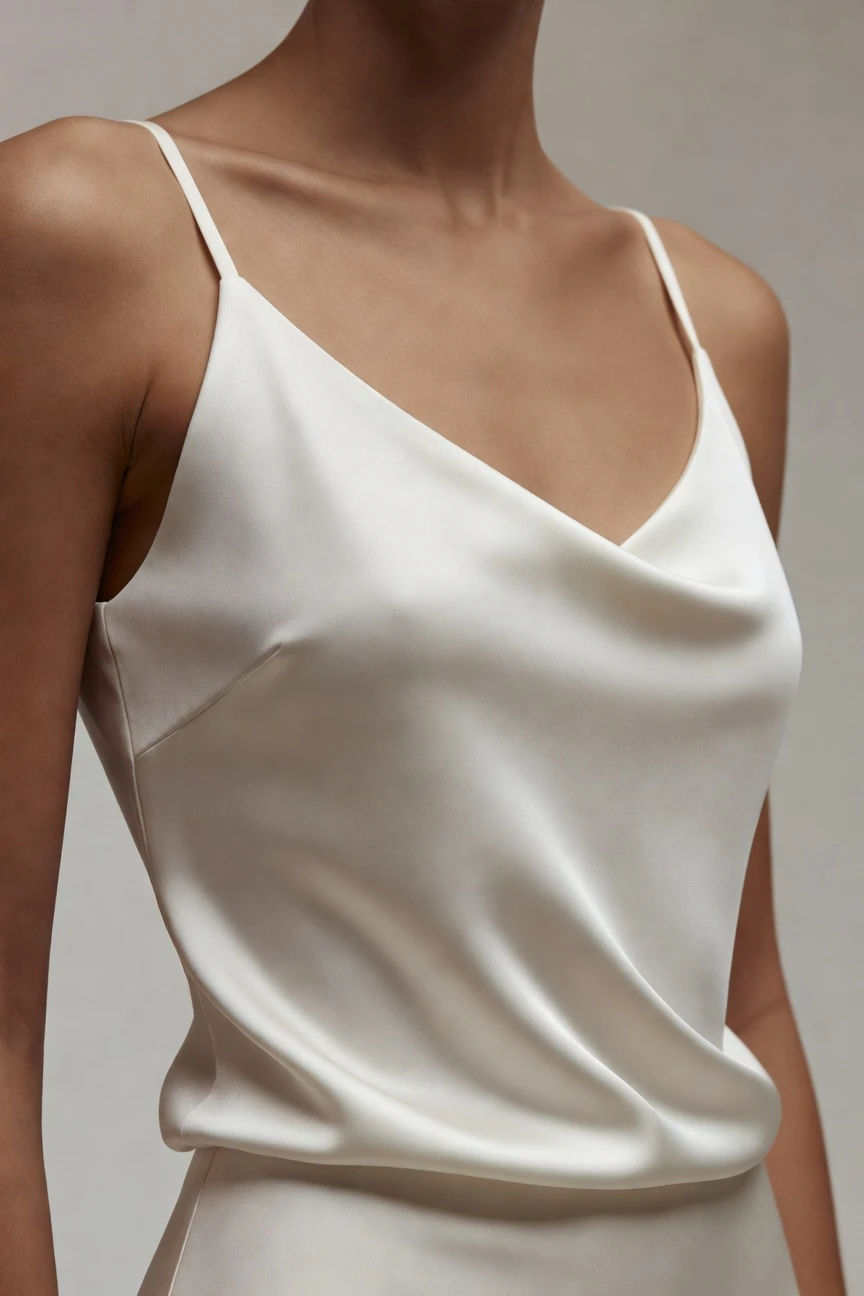
This setup starts from an editorial studio look: 85mm lens, half-body framing, 4:5 crop, and 4K output. You click into a polished campaign frame, then adjust mood, lighting, and product focus without writing a line. ~$0.55 per image · ~30-40s
- 4 clicks · 0 keystrokes
- app.rawshot.ai / new_shoot
How it works
Build Studio Editorial Shots in Clicks
Move from garment file to campaign-ready imagery with visual controls, faithful product rendering, and the same workflow from one look to full catalog scale.
- Step 01
Set the Editorial Frame
Choose the lens, framing, aspect ratio, and resolution that match your campaign or PDP need. The interface starts from fashion-native controls, so the shot is directed visually from the first click.
- Step 02
Tune the Look Around the Garment
Adjust pose, lighting, background, mood, and visual style while keeping the product at the center. RAWSHOT is engineered to represent the cut, colour, pattern, logo, and drape of the actual garment.
- Step 03
Generate and Scale the Output
Create a single studio image in the browser or run the same setup across a larger catalog through the API. Every output carries labelled provenance, watermarking, and a signed audit trail per image.
Spec sheet
Proof for Editorial Teams and Catalog Ops
These twelve surfaces show how RAWSHOT keeps studio polish, garment accuracy, and operational clarity in the same product.
- 01
Synthetic Models by Design
Each model is built from 28 body attributes with 10+ options each. Accidental real-person likeness is statistically negligible by design, not left to chance.
- 02
Every Setting Is a Click
Lens, angle, framing, lighting, mood, and product focus live in buttons, sliders, and presets. You direct the shoot in an application, not a chat box.
- 03
Garment-Led Representation
RAWSHOT is built around the product itself. Cut, colour, pattern, logo, fabric, drape, and proportion stay central instead of being bent by generic image behavior.
- 04
Diverse Model Coverage
Use a broad range of synthetic bodies for editorial, catalog, and brand work. The system is designed for fashion teams that need representation without casting overhead.
- 05
Consistency Across SKUs
Keep the same face, framing logic, and visual direction across a full range. That means fewer retakes, cleaner merchandising, and more coherent collection pages.
- 06
150+ Editorial Looks
Move from catalog clean to campaign gloss, noir, street flash, film grain, and more. Style presets let you shape brand tone without rebuilding the shoot each time.
- 07
2K, 4K, and Any Ratio
Generate stills in 2K or 4K across square, portrait, landscape, and platform-native crops. One product setup can serve PDPs, social, paid, and lookbooks.
- 08
Labelled and Compliant
Outputs are C2PA-signed, AI-labelled, and protected with visible plus cryptographic watermarking. RAWSHOT is built for EU-hosted compliance, including EU AI Act Article 50 and California SB 942 requirements.
- 09
Signed Audit Trail per Image
Every image carries provenance metadata that records what it is. That gives teams a clear asset trail for governance, publishing review, and partner distribution.
- 10
GUI to REST API
Use the browser for one-off art direction or connect the REST API for catalog-scale production. The same engine serves indie shoots and 10,000-SKU workflows without feature gating.
- 11
Fast, Clear Image Economics
Images run about $0.55 each and usually generate in 30–40 seconds. Tokens never expire, and failed generations refund their tokens automatically.
- 12
Worldwide Commercial Rights
Every output includes full commercial rights, permanent and worldwide. You can publish across ecommerce, campaigns, marketplaces, and social without unclear licensing gaps.
Outputs
Studio Editorial without the studio day
See polished fashion stills shaped for campaigns, lookbooks, and PDPs. The thread across every image is the same: garment-first representation, controlled art direction, and labelled output.


Browse 150+ visual styles →
Comparison
RAWSHOT vs category tools vs DIY prompting
Three lenses on every dimension — what you optimize for in RAWSHOT versus typical category tools and blank-box AI workflows.
01
Interface
RAWSHOT
Click-driven controls for lens, framing, light, style, and product focusCategory tools + DIY
Often mix presets with shorter text inputs and less direct shot control. DIY prompting: Typed instructions, retries, and manual wording changes drive every variation02
Garment fidelity
RAWSHOT
Engineered around cut, colour, pattern, logo, fabric, and drapeCategory tools + DIY
May stylize garments well but can soften detail or alter branding. DIY prompting: Garment drift, invented logos, and changed proportions appear across attempts03
Model consistency
RAWSHOT
Same synthetic model can stay consistent across many SKU outputsCategory tools + DIY
Consistency tools vary and may drift between scenes or collections. DIY prompting: Faces and body presentation shift from image to image unpredictably04
Provenance and labelling
RAWSHOT
C2PA-signed, AI-labelled, with visible and cryptographic watermarkingCategory tools + DIY
Labelling support is uneven and provenance metadata is often limited. DIY prompting: No dependable provenance metadata or platform-level asset labelling trail05
Commercial rights
RAWSHOT
Full permanent worldwide commercial rights on every outputCategory tools + DIY
Rights may be clear for outputs but vary by plan or workflow. DIY prompting: Rights clarity depends on model, platform, and usage context06
Pricing transparency
RAWSHOT
Same per-image pricing, no per-seat gates, one-click cancelCategory tools + DIY
Feature walls, seat limits, or plan tiers can shape access. DIY prompting: Token use is hard to predict because retries and rewrites pile up07
Catalog scale
RAWSHOT
Browser GUI and REST API use the same engine and output logicCategory tools + DIY
Scale workflows may require separate enterprise paths or custom access. DIY prompting: No fashion-native batch pipeline for repeatable SKU production08
Operational overhead
RAWSHOT
Teams click through repeatable settings and reuse proven shot setupsCategory tools + DIY
Some workflow support exists but often with less garment-specific structure. DIY prompting: Prompt-engineering overhead slows reviews, approvals, and merchandising handoff
Prompting does not scale
Stop writing essays. Direct the shoot.
Most AI photo tools start with a blank text box. Rawshot turns the shoot into repeatable controls, so creative teams can produce consistent fashion imagery without prompt syntax or one-off hacks.
Category norm
ManualCreate a premium editorial fashion photograph of a model wearing the exact navy oversized wool coat from SKU-1842, full-body crop, realistic hands, consistent facial identity, clean e-commerce lighting, subtle Paris street background, 85mm lens, no logo distortion, no fabric hallucination, same pose as last campaign, repeatable for all colorways...
A prompt can describe one image. It cannot become a shared production system for hundreds of products, models, angles and markets.
Rawshot
ClicksSaved shoot recipe
Apply to 1 SKU or 10,000 via GUI, CSV or REST API.
Rawshot makes creative direction visible: buttons, presets and sliders instead of hidden prompt craft. The result is easier to teach, faster to approve and built for repeat production.
Use cases
Who Uses Studio Editorial Output
Operator archetypes and how click-directed, garment-first output fits the way they actually work.
- 01
Indie Designer Launching a First Drop
Build a polished editorial campaign around a small collection before you can justify a traditional shoot budget.
Confidence · high
- 02
DTC Brand Refreshing Seasonal Creative
Update homepage, paid social, and email visuals with new lighting and art direction while keeping the garment line consistent.
Confidence · high
- 03
Marketplace Seller Upgrading PDPs
Turn flat garment inputs into cleaner on-model fashion imagery that makes listings look intentional, not improvised.
Confidence · high
- 04
Lookbook Team Working Pre-Sample
Photograph garments before production samples travel, so wholesale decks and press previews move earlier.
Confidence · high
- 05
Editorial Brand Testing New Visual Codes
Compare noir, gloss, minimal, or street-led styling across the same products without rebuilding the entire shoot.
Confidence · high
- 06
Catalog Manager Standardizing Collection Pages
Keep the same model logic, crop behavior, and framing across many SKUs so the range reads as one system.
Confidence · high
- 07
Kidswear or Niche Label Needing Access
Create studio-led fashion imagery in a category often priced out of recurring set builds and casting days.
Confidence · high
- 08
Adaptive Fashion Team Showing Fit Clearly
Use controlled studio framing to highlight closures, layers, and garment function with cleaner product emphasis.
Confidence · high
- 09
Resale Seller Elevating Curated Drops
Present one-off pieces with editorial polish that helps vintage and archive items feel collected rather than random.
Confidence · high
- 10
Agency Building Fast Visual Pitches
Mock up campaign directions for client approval with controllable fashion stills before a larger production decision.
Confidence · high
- 11
Factory-Direct Manufacturer Serving Buyers
Give wholesale partners and private-label clients cleaner garment-led imagery for range reviews and line sheets.
Confidence · high
- 12
Enterprise Merch Team Running Nightly Batches
Use the same creative logic from the browser in API pipelines when thousands of product images need consistent output.
Confidence · high
— Principle
Honest is better than perfect.
Editorial polish means more when teams can prove what an image is. Every RAWSHOT output is AI-labelled, C2PA-signed, and protected with visible plus cryptographic watermarking, giving fashion brands a clear provenance record instead of aesthetic ambiguity. For studio editorial imagery, that matters across publishing, partner delivery, and internal review just as much as the look itself.
Rights & provenance
Full commercial rights. Forever.
- C2PA-signed on every image — EU AI Act Article 50 compliant
- 28-attribute synthetic models — real-person likeness statistically impossible
- Full commercial rights to every generation — no recurring licensing fees
- Tokens never expire · One-click cancel · Transparent pricing
EU AI Act
C2PA
Commercial use
Pricing
~$0.55 per image.
~30–40 seconds per generation. Tokens never expire. Cancel in one click.
- 01The cancel button is on the pricing page.
- 02No per-seat gates. No 'contact sales' walls for core features.
- 03Failed generations refund their tokens.
- 04Full commercial rights to every output, permanent, worldwide.
FAQ
Practical answers on control, rights, pricing, scale, and compliant publishing.
Do I need to write prompts to use RAWSHOT?
Never—you direct every output with sliders, presets, and clicks on the garment, not typed prompts. That UI control is consistent across GUI and REST API payloads, which is why ecommerce teams onboard buyers without rewriting creative briefs as chat threads. Instead of translating fashion intent into syntax, you select lens, framing, angle, lighting, background, aspect ratio, visual style, and product focus in a structured interface built for apparel imagery.
For catalog teams, reliability matters more than model cleverness; RAWSHOT keeps tokens, timings, refund rules, commercial rights framing, provenance signalling, watermarking cues, REST surface, and SKU-scale batch patterns explicit so operations can rehearse PDP launches without hallucinated garment inventions. The practical takeaway is simple: if your team can choose a crop, a look, and a product emphasis, it can run production inside RAWSHOT without adding a prompt specialist to the workflow.
What does AI-assisted fashion photography change for SKU-scale catalogs?
It changes who can publish consistent on-model imagery at all, and how repeatably they can do it. Traditional shoots demand budgets, calendars, shipping, casting, and retouch loops that many catalog teams cannot sustain for every colorway, refresh, or late-added SKU. RAWSHOT moves that work into a click-driven system where the garment stays central and the shot logic can be reused across an entire range.
For SKU-scale operations, the value is not novelty. It is controlled repetition with clear economics: about $0.55 per image, around 30–40 seconds per generation, tokens that never expire, and refunded tokens when generations fail. Add REST API access, signed provenance metadata, and the same model consistency across browser and pipeline workflows, and merchandising teams can standardize imagery without opening a separate enterprise track just to get operational stability.
Why skip reshooting every SKU for seasonal creative updates?
Because seasonal change usually affects art direction faster than it changes the garment itself. If your product line already exists, you should be able to test a tighter crop, a different background, a cleaner studio setup, or a more editorial mood without booking another physical day just to restage the same item. RAWSHOT lets teams revise visual direction with controls for framing, style, lighting, and ratio while keeping the product representation grounded in the garment.
That matters for commerce teams working across homepage, PDP, paid social, and seasonal landing pages. One collection can be rendered into catalog-clean imagery, then pushed into sharper editorial treatments for campaign use, all while maintaining labelled output, commercial rights clarity, and a per-image cost structure that does not punish iteration. Operationally, it means seasonal creative becomes a controllable layer, not a full logistical reset.
How do we turn flat garments into catalogue-ready imagery without prompting?
You start with the garment and direct the result through interface controls rather than open-ended text. Choose a model setup, lens, framing, lighting, aspect ratio, and visual style, then generate an image designed to keep the product readable for commerce use. The important shift is that the garment is the brief: the system is engineered to preserve cut, colour, pattern, logo, and drape instead of improvising around vague language.
That workflow is especially useful when teams need multiple outputs from one source garment. A buyer can create a clean PDP image, then switch to a closer crop for detail marketing or a more polished editorial frame for campaign placements, all without changing tools or retraining staff on prompt syntax. In practice, catalogue-ready output comes from repeatable shot settings, not from writing longer instructions and hoping a generic model interprets apparel correctly.
Why does garment-led control beat ChatGPT, Midjourney, or generic image tools for fashion PDPs?
Because fashion PDPs fail when the garment changes. Generic image systems are built to satisfy broad visual requests, which often means they drift on logos, simplify patterns, alter proportions, or swap details between attempts. They also rely on typed instructions and repeated trial runs, so teams spend time steering wording instead of validating the product. RAWSHOT reverses that setup by giving you fashion-native controls and an engine designed around the item being sold.
For commerce operations, that difference shows up in reproducibility and governance. RAWSHOT adds C2PA-signed provenance, visible and cryptographic watermarking, explicit commercial rights, and API-ready workflows that fit catalog production instead of one-off experimentation. If your team is publishing apparel imagery to sell real SKUs, garment-led control is the safer operational choice because it reduces drift, keeps review criteria concrete, and turns image creation into a repeatable production task.
Are RAWSHOT images labelled, watermarked, and safe for commercial use?
Yes. Every output is AI-labelled, C2PA-signed, and protected with multi-layer watermarking that includes visible and cryptographic signals. RAWSHOT also provides full commercial rights to every output, permanent and worldwide, so brands can use the imagery across ecommerce, campaigns, marketplaces, and social channels without vague licensing gaps. That combination matters because trust is not only a legal question; it is part of brand operations and partner confidence.
For fashion teams, commercial safety also means knowing what the model layer is. RAWSHOT uses diverse synthetic models built from 28 body attributes with 10+ options each, which keeps the system transparent by design and makes accidental real-person likeness statistically negligible. The practical publishing rule is straightforward: use the asset with its provenance intact, keep your review process tied to garment accuracy, and distribute imagery with the assurance that the output is labelled and rights-clear.
What should a merch team check before publishing editorial fashion outputs?
Check the garment first, then the metadata. Review cut, colour, pattern, logo treatment, drape, and whether the selected framing actually supports the selling task, whether that is PDP clarity, homepage impact, or a closer campaign crop. After that, confirm the output is carrying the expected provenance and watermarking signals, because operational quality in fashion now includes knowing how the asset is labelled as well as how it looks.
In RAWSHOT, that means pairing creative review with compliance review in one pass. Teams should verify that the chosen model, lighting, background, aspect ratio, and style preset align with brand rules, then keep the C2PA-signed record and commercial-rights status attached to the file through handoff. The best publishing discipline is simple: approve assets only when both garment fidelity and attribution clarity meet the standard, so your image library stays consistent in look and in governance.
How much does an image workflow cost with the ai studio editorial fashion photography generator?
For still imagery, plan around about $0.55 per image, with most generations completing in roughly 30–40 seconds. Tokens never expire, failed generations refund their tokens, and cancellation is one click from the pricing page, which makes budgeting much easier than creative tooling that hides basic controls behind seat limits or sales conversations. For teams comparing stills with motion, remember that video uses more tokens per second and therefore costs more than images.
The useful way to think about cost is by output mix, not by abstract software access. A merch team can generate campaign-ready stills, tighter detail crops, and multiple aspect ratios from one controlled setup without reopening a physical production cycle. Because RAWSHOT does not add per-seat gates for core features, the economics stay readable as more buyers, marketers, and catalog operators enter the workflow, which makes it practical for both first launches and high-volume image programs.
Can we connect RAWSHOT to Shopify-scale or PLM-driven image pipelines through an API?
Yes. RAWSHOT offers a REST API for catalog-scale production, while the browser GUI covers single-shoot and art-direction work with the same underlying engine. That means teams can define a shot logic in the interface, validate garment fidelity and brand presentation, and then carry that structure into larger automated or semi-automated workflows without switching products. It is designed for one shoot or ten thousand, not for a small-demo workflow that breaks at production volume.
For Shopify-scale catalogs or PLM-linked environments, that consistency matters more than flashy tooling language. Operations teams need predictable pricing, output rights clarity, provenance metadata, and model consistency across repeated runs, especially when new SKUs enter nightly or seasonal updates hit at once. RAWSHOT gives that by keeping the controls, audit trail, and generation behavior aligned across manual and API use, so integration supports the merchandising process instead of creating a second one.
How do creative and catalog teams split work between the browser and API at scale?
The browser is where teams establish the visual system. Creative leads or merch operators set lens, framing, model direction, lighting, background, mood, and ratio until the garment reads correctly and the brand look is approved. Once that pattern is proven, the API carries the same logic into higher-volume production, so scale comes from reusing a validated setup rather than rebuilding decisions image by image.
This division of labor works because RAWSHOT does not separate small users from larger ones with a different core product. An indie designer can art direct a single drop in the GUI, and an enterprise catalog team can run thousands of images through the REST API with the same output expectations, pricing model, commercial rights, and provenance discipline. In practice, teams scale faster when creative approval happens once and operational production repeats that approved system cleanly.
Keep exploring