
— Surreal fashion imagery · 150+ styles · 4K
Direct surreal campaign imagery with the AI Surreal Fashion Photography Generator
Build surreal fashion visuals around the real garment, not around guesswork. Click lens, framing, light, background, and visual style to push the image from clean campaign to dreamlike editorial while keeping cut, colour, and branding in view. No studio. No samples. No prompts.
- ~$0.55 per image
- ~30–40s per generation
- 150+ styles
- 2K or 4K
- Every aspect ratio
- Full commercial rights
7-day free trial • 50 tokens (10 images) • Cancel anytime

Direct the shoot. Zero prompts.
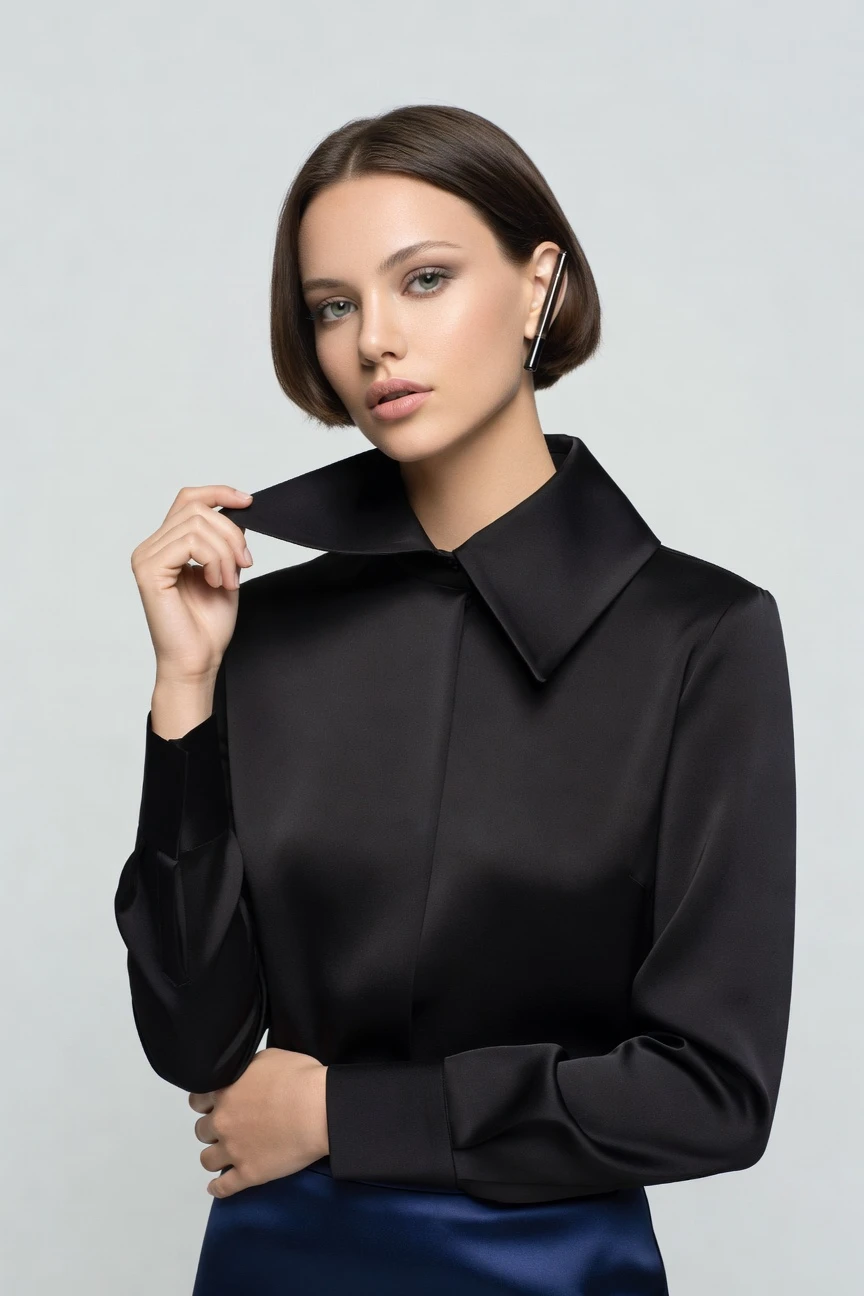
This setup starts with a half-body surreal fashion frame: 85mm lens, clean campaign mood, 4:5 crop, and 4K output. You click into strangeness through styling presets and framing choices while the garment stays the brief. ~$0.55 per image · ~30-40s
- 4 clicks · 0 keystrokes
- app.rawshot.ai / new_shoot
How it works
Build Surreal Fashion Images From Real Garments
The workflow stays product-first: upload the item, direct the visual world with controls, then generate campaign-ready outputs in the browser or API.
- Step 01
Upload the Garment
Start from the real product image. RAWSHOT reads the item as the center of the composition, so surreal styling choices build around cut, colour, pattern, logo, and proportion.
- Step 02
Dial In the Visual World
Select lens, framing, lighting, background, aspect ratio, and visual style with buttons and presets. You can push toward dreamlike campaign imagery without turning the workflow into a text experiment.
- Step 03
Generate and Scale
Render stills in about 30–40 seconds, review the result, and iterate with more clicks. Use the browser for one-off creative work or the REST API when the same visual system needs to cover an entire catalog.
Spec sheet
Proof for Surreal Fashion Workflows
These twelve proof points show how RAWSHOT turns surreal art direction into an operational system for fashion teams, without losing product truth.
- 01
Synthetic Models by Design
Every model is a synthetic composite built from 28 body attributes with 10+ options each, making accidental real-person likeness statistically negligible by design.
- 02
Every Setting Is a Click
Lens, angle, framing, pose, expression, light, background, and style live in the interface. You direct the shoot through controls, not typed instructions.
- 03
Garment-Led Image Building
RAWSHOT is engineered around the product, so surreal styling does not need to flatten logos, bend seams, or drift away from the actual item.
- 04
Diverse Bodies for Bold Concepts
Cast across a broad range of synthetic bodies and looks while keeping the same interface and the same garment-first approach for every composition.
- 05
Consistency Across Variants
Keep the same face, framing logic, and visual system across many SKUs. That matters when a surreal campaign still needs catalog discipline underneath it.
- 06
150+ Style Presets
Move from clean campaign gloss to noir, Y2K, film grain, street flash, and other stylised looks with preset-based direction built for fashion imagery.
- 07
2K, 4K, and Every Crop
Generate in 2K or 4K and choose the aspect ratio that fits your channel, from square social cuts to vertical storytelling and wide campaign layouts.
- 08
Labelled and Compliant Output
Every output is AI-labelled, watermarked, and aligned with EU AI Act Article 50, California SB 942, and GDPR expectations for transparent use.
- 09
Signed Audit Trail per Image
Each asset carries C2PA-signed provenance metadata and a per-image record. That gives brand, legal, and platform teams evidence instead of ambiguity.
- 10
GUI to REST API
Use the browser for art direction and the REST API for scale. The same engine supports single-look experimentation and nightly catalog pipelines.
- 11
Predictable Speed and Pricing
Still images cost about $0.55 and generate in around 30–40 seconds. Tokens never expire, and failed generations refund their tokens.
- 12
Worldwide Commercial Rights
Every output includes full commercial rights, permanent and worldwide. Teams can publish, sell, syndicate, and archive without a separate licensing maze.
Outputs
Surreal Fashion Outputs, kept operational
See dreamlike fashion directions that still respect the garment. The mood can go strange, glossy, noir, or cinematic while the workflow stays controlled and repeatable.


Browse 150+ visual styles →
Comparison
RAWSHOT vs category tools vs DIY prompting
Three lenses on every dimension — what you optimize for in RAWSHOT versus typical category tools and blank-box AI workflows.
01
Interface
RAWSHOT
Click-driven controls for lens, framing, light, style, and product focusCategory tools + DIY
Often mix limited controls with text-led creative steering. DIY prompting: Typed instructions in a chat box, then repeated edits to chase the shot02
Garment fidelity
RAWSHOT
Built around the real garment’s cut, colour, pattern, drape, and logoCategory tools + DIY
Can prioritise atmosphere over accurate product representation. DIY prompting: Garment drift, invented trims, changed colours, and missing brand details are common03
Model consistency
RAWSHOT
Same model logic can stay consistent across many SKUs and variantsCategory tools + DIY
Consistency may vary across outputs and workflows. DIY prompting: Faces and body proportions shift between generations with little control04
Provenance
RAWSHOT
C2PA-signed metadata, visible watermarking, cryptographic watermarking, AI labellingCategory tools + DIY
Transparency signals are often partial or absent. DIY prompting: No native provenance metadata and no reliable asset-level audit record05
Commercial rights
RAWSHOT
Full commercial rights to every output, permanent and worldwideCategory tools + DIY
Rights terms may vary by plan or workflow. DIY prompting: Usage clarity depends on model terms and leaves teams checking legal edge cases06
Pricing transparency
RAWSHOT
About $0.55 per image, tokens never expire, one-click cancelCategory tools + DIY
Plans may add seats, tiers, or gated access. DIY prompting: Usage costs are harder to map to finished fashion assets and retake volume07
Catalog scale
RAWSHOT
Browser GUI and REST API use the same engine and pricing logicCategory tools + DIY
Scale features often sit behind separate enterprise packaging. DIY prompting: No reliable garment workflow for batch SKU production or auditability08
Iteration reliability
RAWSHOT
Adjust one control at a time and regenerate predictable fashion variantsCategory tools + DIY
Iteration can depend on narrower styling knobs. DIY prompting: Each rewrite can change multiple variables at once and break the product brief
Prompting does not scale
Stop writing essays. Direct the shoot.
Most AI photo tools start with a blank text box. Rawshot turns the shoot into repeatable controls, so creative teams can produce consistent fashion imagery without prompt syntax or one-off hacks.
Category norm
ManualCreate a premium editorial fashion photograph of a model wearing the exact navy oversized wool coat from SKU-1842, full-body crop, realistic hands, consistent facial identity, clean e-commerce lighting, subtle Paris street background, 85mm lens, no logo distortion, no fabric hallucination, same pose as last campaign, repeatable for all colorways...
A prompt can describe one image. It cannot become a shared production system for hundreds of products, models, angles and markets.
Rawshot
ClicksSaved shoot recipe
Apply to 1 SKU or 10,000 via GUI, CSV or REST API.
Rawshot makes creative direction visible: buttons, presets and sliders instead of hidden prompt craft. The result is easier to teach, faster to approve and built for repeat production.
Use cases
Who Uses Surreal Fashion Imagery Well
Operator archetypes and how click-directed, garment-first output fits the way they actually work.
- 01
Indie Designer Launching a First Drop
Build a surreal hero campaign around one core look before you can afford a studio day, while keeping the garment recognisable for preorders.
Confidence · high
- 02
DTC Brand Testing New Creative Direction
Compare dreamlike campaign concepts against cleaner ecommerce visuals without reshooting samples every time the brand mood shifts.
Confidence · high
- 03
Lookbook Team Building Seasonal Narrative
Use stylised lighting and framing to create a stronger seasonal story while preserving the silhouette and fabric cues buyers need to see.
Confidence · high
- 04
Streetwear Label Releasing Limited Capsules
Push bold, strange, high-attitude imagery for a small capsule drop and keep the same face and visual logic across every item.
Confidence · high
- 05
Jewellery Brand Adding Surreal Editorial Frames
Wrap accessories in a more unexpected visual world while still directing close crops, clean lighting choices, and product-focused compositions.
Confidence · high
- 06
Footwear Seller Mixing PDPs and Campaign Assets
Generate polished surreal fashion photography for launch assets, then switch to cleaner variants for commerce channels using the same product base.
Confidence · high
- 07
Marketplace Seller Needing Stronger Brand Presence
Stand apart from flat listings with stylised on-model imagery that still shows the real item clearly enough for conversion-focused pages.
Confidence · high
- 08
Crowdfunded Fashion Project Proving the Vision
Show backers a full visual language before production scales, using surreal compositions to communicate brand identity around the actual garment.
Confidence · high
- 09
Vintage Curator Turning One-Off Pieces Into Stories
Give singular garments a richer editorial frame without inventing a whole new product, helping rare pieces feel collectible and specific.
Confidence · high
- 10
Kidswear Brand Crafting Imaginative Campaigns
Create playful, stylised worlds that feel elevated and distinct while staying grounded in fit, colour, and item-level accuracy.
Confidence · high
- 11
Factory-Direct Manufacturer Pitching New Lines
Present concepts to buyers with expressive imagery that feels brand-ready, then extend the same workflow into broad SKU coverage.
Confidence · high
- 12
Creative Team Building Social Crops Fast
Generate square, vertical, and campaign-ready surreal stills from one garment setup so launch assets stay visually coherent across channels.
Confidence · high
— Principle
Honest is better than perfect.
Surreal fashion imagery needs more transparency, not less. Every RAWSHOT output is AI-labelled, carries visible and cryptographic watermarking, and includes C2PA-signed provenance metadata so teams can publish stylised work without hiding what it is. That matters for brand trust, marketplace compliance, and internal approval just as much as it matters for regulation.
Rights & provenance
Full commercial rights. Forever.
- C2PA-signed on every image — EU AI Act Article 50 compliant
- 28-attribute synthetic models — real-person likeness statistically impossible
- Full commercial rights to every generation — no recurring licensing fees
- Tokens never expire · One-click cancel · Transparent pricing
EU AI Act
C2PA
Commercial use
Pricing
~$0.55 per image.
~30–40 seconds per generation. Tokens never expire. Cancel in one click.
- 01The cancel button is on the pricing page.
- 02No per-seat gates. No 'contact sales' walls for core features.
- 03Failed generations refund their tokens.
- 04Full commercial rights to every output, permanent, worldwide.
FAQ
Practical answers on control, rights, pricing, scale, and compliant publishing.
Do I need to write prompts to use RAWSHOT?
Never—you direct every output with sliders, presets, and clicks on the garment, not typed prompts. That matters because fashion teams do not need another tool that turns a buyer, merchandiser, or designer into a syntax specialist before anything useful appears. In RAWSHOT, camera, angle, framing, pose, lighting, background, visual style, aspect ratio, and product focus are all explicit controls, so the workflow behaves like an application rather than a chat experiment.
For commerce teams, reliable control beats clever wording every time. The same no-text logic works in the browser GUI for one-off creative work and in REST API payloads for SKU-scale production, which makes onboarding easier across design, ecommerce, and catalog roles. You also keep the operational facts clear: about $0.55 per image, around 30–40 seconds per generation, tokens that never expire, refunded tokens on failed generations, C2PA-signed provenance, and full commercial rights. The practical takeaway is simple: your team can direct stylised fashion imagery by clicking settings, not by rewriting guesses.
What does ai surreal fashion photography generator actually change for catalog and campaign teams?
It changes who gets access to art direction, and how consistently that direction can be repeated. Traditional fashion shoots demand money, samples, scheduling, locations, and a lot of coordination before a single usable frame exists. Generic image tools remove some production overhead, but then push the creative burden into a text box and often drift away from the garment. RAWSHOT changes the operating model by making stylised imagery something a fashion team can direct through controls while keeping the product at the center.
For catalog and campaign teams, that means surreal or dreamlike visuals stop being a special-case production event and start becoming a repeatable workflow. You can set lens, framing, light, background, style preset, crop, and resolution, then generate labelled outputs in 2K or 4K with per-image provenance and commercial rights already clear. The result is not just faster image making; it is a cleaner system for producing expressive assets that still work inside approval flows, ecommerce planning, and brand governance.
Why skip reshooting every SKU when the season mood changes?
Because a new creative direction should not force a full production reset just to make the same garments feel current again. Seasonal storytelling changes quickly, especially when brands test different moods across wholesale, direct-to-consumer, social, and marketplace channels. Reshooting every SKU means more scheduling, more logistics, more sample movement, and more waiting. RAWSHOT lets teams shift the visual world around the product with controls for style, lighting, framing, and crop while keeping the garment as the brief.
That makes seasonal adaptation practical for operators who were priced out of repeated shoots in the first place. You can move from cleaner campaign gloss to darker noir or other stylised looks with preset-based direction, generate outputs in around 30–40 seconds, and keep the same rights and provenance structure on every asset. The operational advantage is that merchandising and creative teams can test and update visual language without rebuilding the entire production calendar around each mood change.
How do we turn flat garments into catalogue-ready imagery without prompting?
You begin with the real product image and then direct the output through interface controls. RAWSHOT is built around garment representation, so the system reads the item as the center of the composition rather than treating it as a loose suggestion. From there, your team selects lens, framing, pose, camera angle, lighting, background, visual style, aspect ratio, resolution, and product focus. That is how a flat garment becomes on-model imagery without asking staff to translate apparel decisions into chat syntax.
For catalog work, the important point is repeatability. Buyers and ecommerce managers can establish a visual recipe for a category, save that logic in process, and apply it again across more SKUs without losing track of what changed between versions. Outputs arrive labelled, watermarked, and backed by C2PA-signed provenance metadata, with failed generations refunded and tokens kept active until you use them. In practice, teams should treat RAWSHOT like a digital shoot interface: upload the item, lock the visual rules, generate, review, and scale.
Why does RAWSHOT beat ChatGPT, Midjourney, or generic image AI for fashion PDPs?
Because product pages need control, consistency, and accountability more than they need open-ended image invention. Generic models are good at making something visually interesting, but fashion teams are not publishing abstract ideas; they are selling specific garments with specific colours, cuts, logos, and proportions. Once the workflow depends on typed instructions, small wording changes can alter the entire result and introduce garment drift, invented details, or inconsistent faces across a set. That is a poor fit for PDPs, where predictability matters.
RAWSHOT approaches the task from the opposite direction. The interface is click-driven, the garment is the brief, and the output layer includes commercial-rights clarity, visible and cryptographic watermarking, AI labelling, and C2PA-signed provenance per image. You can run one look in the browser or scale the same logic through the API without moving into a separate tool category. For fashion teams, the takeaway is straightforward: use an application designed for garment-led production, not a general-purpose image engine with fashion pasted on top.
Can we publish labelled surreal fashion images commercially, and who owns the rights?
Yes. RAWSHOT gives full commercial rights to every output, permanent and worldwide, which means brands can use the assets across ecommerce, marketing, social, marketplaces, and archived brand materials without negotiating a separate usage layer for each file. Just as important, the outputs are not hidden or disguised. They are AI-labelled, carry visible and cryptographic watermarking, and include C2PA-signed provenance metadata so your brand can be explicit about what the asset is.
That transparency matters for both trust and operations. Legal teams need a clear chain of information, marketplace teams need compliant assets, and brand teams need to avoid vague ownership or origin questions after publication. RAWSHOT is built to support that by design, not as an afterthought. If your team wants stylised imagery with a surreal edge, the best practice is to publish it honestly, preserve the metadata in your workflow, and keep the asset record attached from generation through distribution.
What should our team check before publishing stylised on-model outputs?
Start with the garment itself. Confirm that cut, colour, pattern, branding, and overall proportion match the real item, then review whether the chosen framing and visual style still support commerce goals for the channel where the image will appear. Stylised imagery can be dramatic without becoming confusing, but that only happens when the product remains legible. Teams should also confirm crop choices, channel fit, and whether the selected model and pose stay consistent with the rest of the set.
Then review the trust layer. Make sure the asset remains AI-labelled, the watermarking is preserved, and the C2PA-signed provenance metadata is retained through export and handoff. In RAWSHOT, those signals are part of the system, alongside commercial-rights clarity and an audit trail per image. The practical workflow is to build QA around both product truth and disclosure discipline: if the garment is accurate and the provenance stays intact, the image is ready to work for brand and commerce together.
How much does surreal fashion image generation cost per still, and what happens to unused tokens?
For still images, the working number is about $0.55 per image, with generation times around 30–40 seconds. Tokens never expire, so your team does not need to rush usage into an arbitrary billing window just to avoid waste. That is useful for fashion brands because image demand is uneven: some weeks are campaign-heavy, other weeks are mostly revision and planning. A non-expiring balance makes that rhythm easier to manage.
RAWSHOT also keeps the pricing rules explicit in ways operations teams appreciate. Failed generations refund their tokens, core features are not hidden behind per-seat gates, and cancellation is one click with the button placed on the pricing page. If your team is budgeting stills alongside video or synthetic model generation, you can map those workloads separately instead of guessing around a bundled enterprise quote. The practical advice is to cost each image stream by output type, then scale only where the assets are performing.
Can RAWSHOT plug into Shopify-scale or PLM-driven image pipelines through an API?
Yes. RAWSHOT supports a REST API for teams that need to move beyond manual one-off generation and into repeatable catalog workflows. That matters when a brand wants the same visual logic applied across hundreds or thousands of SKUs, or when image production needs to sit closer to existing product systems rather than inside a standalone creative tool. The API uses the same engine as the browser interface, so quality, model behavior, and pricing logic stay aligned between exploratory work and scaled production.
Operationally, that means teams can art-direct a look in the GUI, translate the approved settings into a structured workflow, and then run those rules across larger product sets. RAWSHOT is PLM-integration ready and provides a signed audit trail per image, which helps technical, legal, and commerce stakeholders work from the same evidence. The right way to implement it is to treat visual rules as production settings, not as loose inspiration, then connect those settings to your merchandising and publishing pipeline.
Can one team use the browser while another scales the same ai surreal fashion photography generator through the API?
Yes, and that shared workflow is one of the core advantages. RAWSHOT is designed so an individual designer or marketer can direct a single shoot in the browser while a catalog or platform team scales the same visual logic through the REST API. There is no separate engine for smaller customers and no hidden enterprise edition for larger ones. The same models, the same quality level, and the same per-image pricing apply whether you are making one hero asset or running a large nightly batch.
That structure helps teams divide responsibilities without breaking consistency. Creative can establish the look, ecommerce can validate garment representation and channel crops, and operations can automate volume production with auditability already attached per image. Because tokens never expire and failed generations refund tokens, the handoff between experimentation and scale is easier to govern financially as well. The practical result is that one product supports both direction and throughput, which is exactly what fast-moving fashion teams need.