
— Urban style · 150+ styles · 4K
Direct street-ready campaigns with the AI Urban Fashion Photography Generator
Generate urban fashion imagery that keeps the garment clear, the styling intentional, and the finish ready for product pages or launch assets. Select lens, framing, aspect ratio, and visual style with buttons, sliders, and presets in a real application built for fashion teams. No studio. No samples. No prompts.
- ~$0.55 per image
- ~30–40s per generation
- 150+ styles
- 2K or 4K
- Every aspect ratio
- Full commercial rights
7-day free trial • 50 tokens (10 images) • Cancel anytime

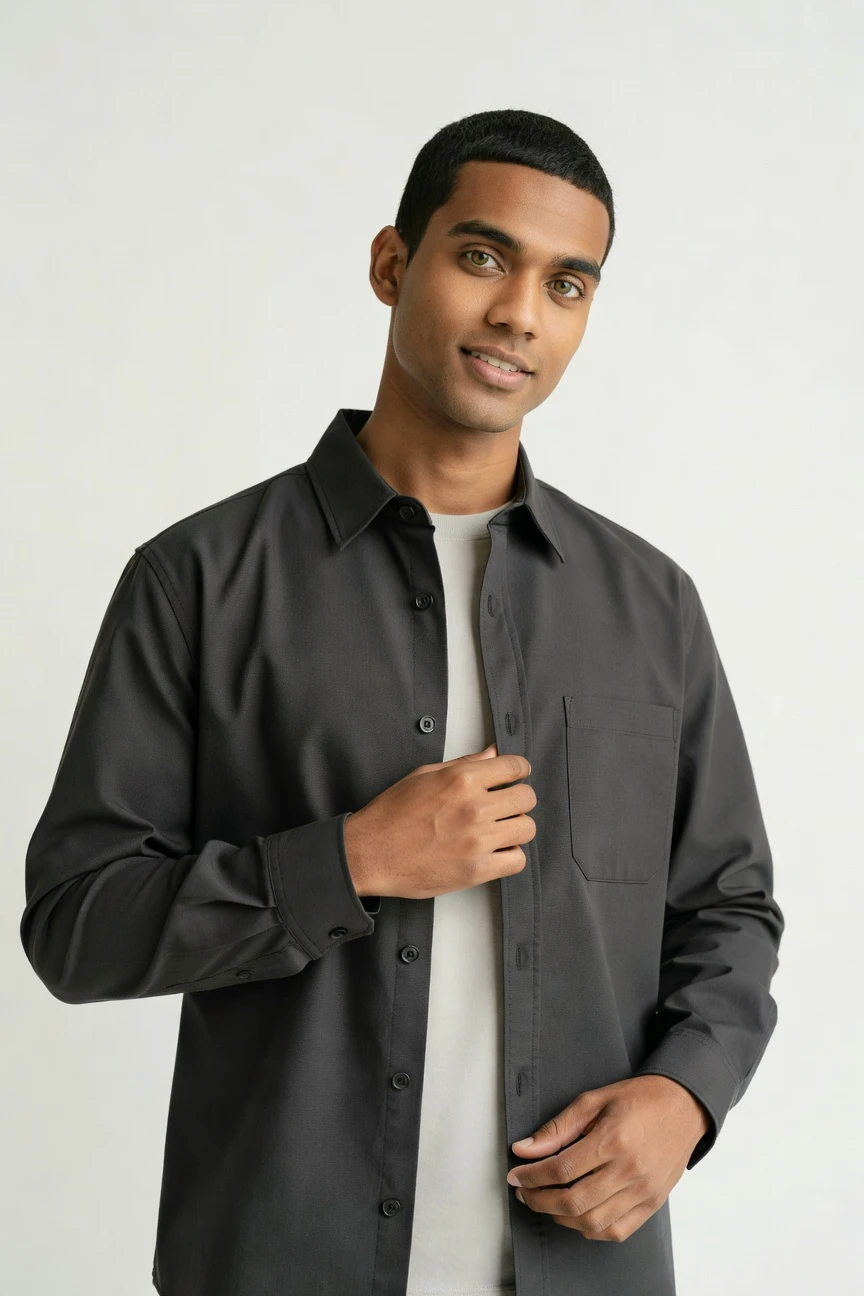
Direct the shoot. Zero prompts.
This setup starts from a clean urban portrait frame: 85mm lens, half-body crop, 4:5 ratio, and 4K output. You click into a street-ready result while keeping the garment readable for ecommerce and campaign use. ~$0.55 per image · ~30-40s
- 4 clicks · 0 keystrokes
- app.rawshot.ai / new_shoot
How it works
Build Urban Shoots Around the Garment
A streetwear image should still sell the product, so the workflow begins with garment fidelity and ends with repeatable output.
- Step 01
Upload the Garment
Start with the product, not a blank text box. Your garment becomes the anchor for cut, colour, pattern, logo, and proportion.
- Step 02
Set the Urban Direction
Choose lens, crop, lighting, background, and visual style from clear controls. You shape a street-led image with clicks, not syntax.
- Step 03
Generate and Scale
Produce single images in the browser or run the same logic across large assortments through the API. The workflow stays consistent from one look to ten thousand.
Spec sheet
Proof for Urban Fashion Teams
These twelve points show how RAWSHOT keeps street-led imagery controllable, transparent, and operationally useful beyond a one-off visual.
- 01
Synthetic Models by Design
Every model is built from 28 body attributes with 10+ options each. Accidental real-person likeness is statistically negligible by design.
- 02
Every Setting Is a Click
Lens, framing, pose, light, background, and style live in the interface. You direct the shoot inside an application, not a chat box.
- 03
Garment-Led Urban Imagery
The garment stays central as you generate street-ready visuals. Cut, colour, pattern, logo, fabric, and drape are represented with the product as the brief.
- 04
Diverse Model Options
Build visuals across a wide range of synthetic bodies for different brand audiences. Diversity is available as a control surface, not a casting bottleneck.
- 05
Consistency Across SKUs
Keep the same face, framing logic, and visual direction across a whole drop. That means fewer retakes and cleaner collection pages.
- 06
150+ Style Presets
Move from clean catalog to street flash, editorial noir, Y2K, or campaign gloss without rebuilding the workflow. Visual experimentation stays fast and legible.
- 07
2K, 4K, and Every Ratio
Generate for PDPs, marketplaces, socials, lookbooks, and launch banners in the frame you actually need. Resolution and aspect ratio are built into the controls.
- 08
Labelled and Compliant Output
Every output is AI-labelled, watermarked, and C2PA-signed. RAWSHOT is designed for EU AI Act Article 50, California SB 942, and GDPR-aligned operations.
- 09
Per-Image Audit Trail
Each image carries a signed provenance record. Teams get a durable trace for review, publishing, and downstream governance.
- 10
GUI for One-Offs, API for Scale
Style one launch image in the browser or run nightly catalog batches through REST. The same engine serves both creative and operations teams.
- 11
Fast, Clear, and Token-Stable
Images cost about $0.55 and generate in around 30–40 seconds. Tokens never expire, and failed generations refund automatically.
- 12
Commercial Rights Included
Every output comes with full commercial rights, permanent and worldwide. You can publish across ecommerce, ads, socials, and marketplaces without extra licensing layers.
Outputs
Urban Outputs, garment first.
Street-led does not have to mean vague or chaotic. These outputs keep editorial energy while preserving the product information commerce teams need.


Browse 150+ visual styles →
Comparison
RAWSHOT vs category tools vs DIY prompting
Three lenses on every dimension — what you optimize for in RAWSHOT versus typical category tools and blank-box AI workflows.
01
Interface
RAWSHOT
Click-driven controls for lens, crop, light, style, and product focusCategory tools + DIY
Usually mix templates with lighter controls and less directorial precision. DIY prompting: Requires typed instructions, retries, and manual wording to steer each output02
Garment fidelity
RAWSHOT
Built around the garment so logos, colour, cut, and drape stay centralCategory tools + DIY
Often stylise quickly but can soften product-specific details. DIY prompting: Garments drift, logos get invented, and product details change between attempts03
Model consistency
RAWSHOT
Same synthetic model logic can stay consistent across a full collectionCategory tools + DIY
Continuity varies between sessions and across larger sets. DIY prompting: Faces and bodies shift between generations with little reliable repeatability04
Provenance and labelling
RAWSHOT
C2PA-signed, visibly watermarked, cryptographically watermarked, and AI-labelledCategory tools + DIY
Labelling and provenance are often partial or absent. DIY prompting: No dependable provenance metadata or consistent downstream labelling standard05
Commercial rights
RAWSHOT
Full commercial rights to every output, permanent and worldwideCategory tools + DIY
Rights are often framed by plan level or narrower terms. DIY prompting: Rights clarity depends on model terms and can stay ambiguous for commerce use06
Pricing transparency
RAWSHOT
Same per-image pricing, no per-seat gates, tokens never expireCategory tools + DIY
Can add seat limits, gated tiers, or sales-led access. DIY prompting: Usage costs vary by tool, retries, and manual iteration overhead07
Catalog scale
RAWSHOT
Browser GUI for one shoot and REST API for 10,000-SKU pipelinesCategory tools + DIY
Some support scale but split features across plans or products. DIY prompting: No clean catalog workflow, weak repeatability, and heavy manual handling08
Auditability
RAWSHOT
Signed per-image audit trail supports review and publishing governanceCategory tools + DIY
Review records are often lighter and less explicit per asset. DIY prompting: Little structured audit history beyond scattered chat or generation logs
Prompting does not scale
Stop writing essays. Direct the shoot.
Most AI photo tools start with a blank text box. Rawshot turns the shoot into repeatable controls, so creative teams can produce consistent fashion imagery without prompt syntax or one-off hacks.
Category norm
ManualCreate a premium editorial fashion photograph of a model wearing the exact navy oversized wool coat from SKU-1842, full-body crop, realistic hands, consistent facial identity, clean e-commerce lighting, subtle Paris street background, 85mm lens, no logo distortion, no fabric hallucination, same pose as last campaign, repeatable for all colorways...
A prompt can describe one image. It cannot become a shared production system for hundreds of products, models, angles and markets.
Rawshot
ClicksSaved shoot recipe
Apply to 1 SKU or 10,000 via GUI, CSV or REST API.
Rawshot makes creative direction visible: buttons, presets and sliders instead of hidden prompt craft. The result is easier to teach, faster to approve and built for repeat production.
Use cases
Who Uses Urban Fashion Imagery Like This
Operator archetypes and how click-directed, garment-first output fits the way they actually work.
- 01
Indie Streetwear Labels
Launch a new drop with urban campaign images before a full studio production is even possible.
Confidence · high
- 02
DTC Denim Brands
Show jeans, jackets, and layered looks in city-framed imagery that still keeps fit and wash visible.
Confidence · high
- 03
Sneaker and Footwear Sellers
Pair footwear with full-body or lower-body styling to give street context without losing product focus.
Confidence · high
- 04
Marketplace Fashion Operators
Create differentiated urban visuals for listings while keeping outputs consistent across many SKUs.
Confidence · high
- 05
Crowdfunded Fashion Projects
Publish campaign-ready images for preorders and launch pages without waiting for expensive shoot days.
Confidence · high
- 06
Resale and Vintage Stores
Give one-off pieces a sharper visual language that fits street culture and still reads as the actual item.
Confidence · high
- 07
On-Demand Clothing Brands
Generate streetwear-style imagery for products that do not justify a traditional shoot one by one.
Confidence · high
- 08
Accessories Labels
Place bags, sunglasses, and jewelry into urban compositions that feel styled instead of isolated.
Confidence · high
- 09
Lookbook Teams on Tight Timelines
Build a city-led editorial direction quickly when the collection needs mood as well as merchandise clarity.
Confidence · high
- 10
Social Commerce Managers
Generate 4:5, 1:1, and 9:16 assets that keep a consistent urban brand look across channels.
Confidence · high
- 11
Factory-Direct Manufacturers
Present garments in a stronger fashion context for buyers and wholesale outreach without arranging castings.
Confidence · high
- 12
Catalog Operations Teams
Run the same street-led visual language across hundreds or thousands of products through the API.
Confidence · high
— Principle
Honest is better than perfect.
Urban fashion imagery moves fast, but trust still matters when assets hit product pages, ads, and marketplaces. Every RAWSHOT output is AI-labelled, watermarked, and C2PA-signed with a per-image audit trail, so teams can publish bold visuals without hiding what they are. We would rather give you labelled infrastructure for commerce than a vague illusion of perfection.
Rights & provenance
Full commercial rights. Forever.
- C2PA-signed on every image — EU AI Act Article 50 compliant
- 28-attribute synthetic models — real-person likeness statistically impossible
- Full commercial rights to every generation — no recurring licensing fees
- Tokens never expire · One-click cancel · Transparent pricing
EU AI Act
C2PA
Commercial use
Pricing
~$0.55 per image.
~30–40 seconds per generation. Tokens never expire. Cancel in one click.
- 01The cancel button is on the pricing page.
- 02No per-seat gates. No 'contact sales' walls for core features.
- 03Failed generations refund their tokens.
- 04Full commercial rights to every output, permanent, worldwide.
FAQ
Practical answers on control, rights, pricing, scale, and compliant publishing.
Do I need to write prompts to use RAWSHOT?
Never—you direct every output with sliders, presets, and clicks on the garment, not typed prompts. That UI control is consistent across GUI and REST API payloads, which is why ecommerce teams onboard buyers without rewriting creative briefs as chat threads. You choose practical settings such as lens, framing, aspect ratio, visual style, and product focus, then generate from a workflow that behaves like production software rather than a conversation.
For catalog teams, reliability matters more than model cleverness; RAWSHOT keeps tokens, timings, refund rules, commercial rights framing, provenance signalling, watermarking cues, REST surface, and SKU-scale batch patterns explicit so operations can rehearse PDP launches without hallucinated garment inventions. The takeaway is simple: if your team can click through a shoot setup, it can run RAWSHOT without learning syntax first.
What does AI Urban Fashion Photography Generator actually deliver for catalog and campaign teams?
It delivers street-led fashion imagery that stays usable for commerce, not just visually interesting on first glance. Teams can generate on-model assets with urban styling, editorial framing, and brand-fit mood while keeping the garment readable enough for product pages, launch pages, paid social, and marketplace creative. That matters because fashion operators usually need one system to serve both storytelling and sell-through, rather than a separate workflow for every channel.
In RAWSHOT, the practical output is controlled through preset-based direction: camera choice, crop, lighting, background, aspect ratio, and visual style all live in the interface. You can generate in 2K or 4K, use every aspect ratio, apply one of 150+ visual styles, and keep rights and provenance clear from the start. For commerce teams, that means an urban look can become a repeatable operating standard instead of a one-off moodboard exercise.
Why skip reshooting every SKU when the season mood shifts to a more urban look?
Because seasonal visual direction changes faster than most production calendars, and reshooting every SKU is usually the slowest and most expensive way to respond. A brand may need the same jacket collection presented with a more street-led tone for a launch, a marketplace push, or a social campaign, but the underlying garment facts have not changed. In that case, the smarter move is to direct new imagery around the existing product rather than rebuild the whole shoot operation.
RAWSHOT lets teams apply a new visual direction through controls and presets while keeping the garment as the brief. That means you can change framing, visual style, and channel format without losing consistency or walking back into studio-day budgets. Operationally, this is useful for capsule drops, region-specific campaigns, and quick assortment refreshes where speed and product clarity matter at the same time.
How do we turn flat garments into catalogue-ready imagery without prompting?
You start with the garment asset, then set the shot through interface controls instead of typed instructions. Teams choose framing, lens, lighting, background, aspect ratio, and product focus, then generate on-model imagery that is designed to represent the product faithfully. That flow is easier for buyers, merchandisers, and ecommerce managers because it mirrors a shoot setup rather than a chat workflow.
RAWSHOT is built for both single-image direction in the browser and repeatable production through the API, so the same operating logic can move from one hero SKU to a large collection. You can output 2K or 4K stills, keep a consistent model logic across assortments, and publish with full commercial rights plus clear provenance metadata. For teams trying to convert flat product information into usable catalog images, the key is to standardise settings that can be reused across categories and channels.
Why does garment-led control beat ChatGPT, Midjourney, or generic image tools for fashion PDPs?
Because product detail is not a side note on a PDP; it is the whole reason the image exists. Generic image tools are built to satisfy broad visual instructions, so they often bend the garment to fit the scene, leading to changed logos, softened trims, drifting proportions, or inconsistent faces across a set. That may be acceptable for rough concepting, but it creates unnecessary review work when the goal is sellable fashion imagery tied to a real SKU.
RAWSHOT reverses that logic and begins with the garment itself. The controls are built around commerce realities, the outputs are AI-labelled and C2PA-signed, and the workflow scales from browser use to REST API without switching products or rewriting directions. If your team needs repeatability, rights clarity, and auditability alongside strong visuals, garment-led generation is the safer operating model for production assets.
Can we use RAWSHOT output commercially for ads, PDPs, and marketplaces?
Yes. Every RAWSHOT output includes full commercial rights that are permanent and worldwide, so teams can use the assets across ecommerce, paid media, social channels, lookbooks, and marketplace listings. That clarity matters because fashion assets rarely stay in one place; the same image often travels from a PDP to a launch email, an ad set, and a wholesale deck within days. Clear rights remove friction from publishing and approval workflows.
RAWSHOT pairs those rights with explicit transparency measures rather than treating compliance as a hidden footnote. Outputs are AI-labelled, carry visible and cryptographic watermarking, and include C2PA-signed provenance metadata with a per-image audit trail. For operators, that combination means you can publish commercially while maintaining a documented record of what the asset is and how it should be handled.
What quality checks should a buyer or ecommerce lead run before publishing urban fashion images?
Start with garment fidelity. Check that colour, pattern, logo placement, silhouette, and product focus match the source material, and confirm that the framing supports the selling task for the channel where the image will appear. For an urban fashion visual, it is easy to overvalue mood and under-check the item itself, so a disciplined review should always put the product before the atmosphere.
Then confirm the operational signals: make sure the image carries the expected label, watermarking cues, and provenance record, and verify the selected aspect ratio and resolution for the destination channel. RAWSHOT supports 2K and 4K output, every aspect ratio, and per-image auditability, which gives teams a practical checklist before publishing. The best workflow is to treat review as both a creative pass and a governance pass, not one or the other.
How much does an ai urban fashion photography generator cost per image on RAWSHOT?
For still images, the working price is about $0.55 per image, and a generation usually completes in around 30–40 seconds. Tokens never expire, failed generations refund their tokens, and the cancel control is available directly on the pricing page. That makes budgeting much easier for brands that need to test a few hero assets first and then scale once the visual direction is approved.
RAWSHOT keeps pricing simple across team sizes because there are no per-seat gates and no core-feature wall hidden behind a sales call. Video and model generation are priced separately because they use different token loads, but for urban still photography the image economics stay clear and usable from one product to a large assortment. For operators, the practical benefit is predictable planning without worrying that experimentation will be punished by expiring credits.
Can we connect this workflow to Shopify-scale catalogs or internal product systems?
Yes. RAWSHOT supports browser-based direction for smaller creative tasks and a REST API for larger catalog workflows, so teams can move from manual selection to automated production without switching engines. That matters when imagery has to follow a real merchandising calendar, with assortments, launches, and replenishment cycles tied to the same source systems that already manage product data.
The API-ready setup is especially useful for operators handling high SKU counts, regional channel differences, or recurring nightly jobs. Because the same product logic, model consistency, and output standards apply across GUI and API usage, teams can establish one imaging rule set and apply it broadly. In practice, that means the workflow can fit Shopify-scale storefronts, marketplace feeds, and internal catalog operations with much less rework.
How far can a small team scale urban fashion output through the UI before needing the API?
A small team can go a long way in the browser because the interface is built for direct control, fast iteration, and repeatable selection rather than one-off experimentation. Buyers, founders, and ecommerce managers can set visual direction, generate assets, and refine channel-specific crops without waiting for a technical team to translate creative intent into another system. For many launch cycles, that is enough to keep production moving quickly.
The API becomes valuable when volume, scheduling, or system integration turns image generation into a continuous operation rather than a periodic task. RAWSHOT is designed so that the same engine, pricing logic, output quality, and provenance standards carry across both modes. That gives teams a clean progression: start with clicked direction in the UI, then operationalise the same rules at catalog scale when throughput demands it.
Keep exploring