
— On-model athleisure · 150+ styles · 4K
Launch campaign-ready activewear imagery with the Athleisure AI Product Photography Generator
Generate clean campaign, catalog, and social-ready athleisure imagery built around your real garment. Select lens, framing, pose, lighting, background, and visual style with buttons and presets, then keep the same look across every colorway and SKU. No studio. No samples shipped. No prompts.
- ~$0.55 per image
- ~30–40s per generation
- 150+ styles
- 2K or 4K
- Every aspect ratio
- Full commercial rights
7-day free trial • 50 tokens (10 images) • Cancel anytime

Direct the shoot. Zero prompts.
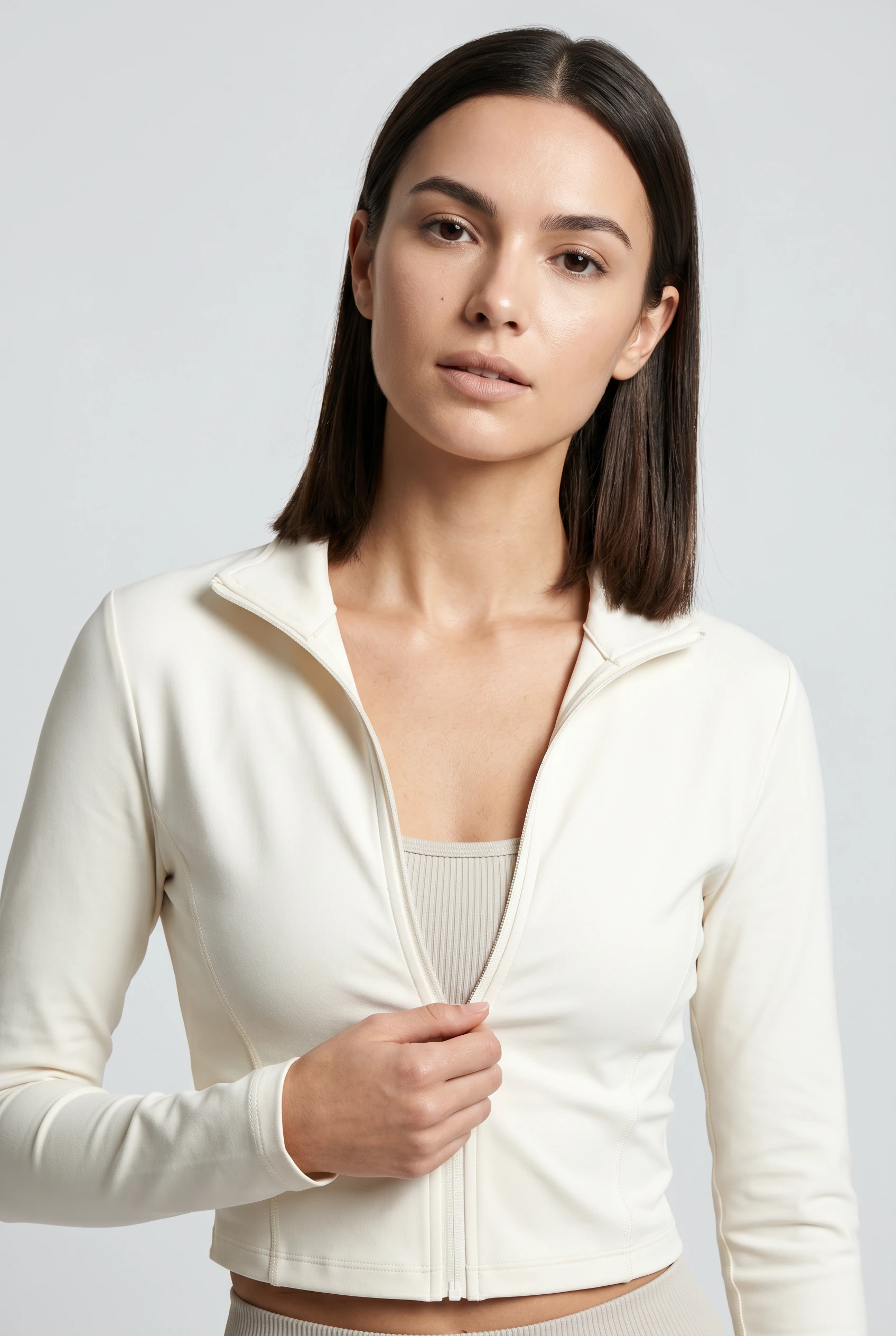
Pre-set for athleisure: an 85mm lens, half-body framing, studio softbox lighting, and a clean campaign finish that keeps focus on fit, fabric, and silhouette. You click into a 4:5 4K frame for PDPs, paid social, and launch creative without rewriting anything. 5 tokens · ~34s per image
- 6 clicks · 0 keystrokes
- app.rawshot.ai / new_shoot
How it works
Build Athleisure Sets Like a Real Shoot
From a single launch look to a full activewear catalog, the workflow stays garment-led, click-driven, and consistent.
- Step 01
Upload the Garment
Start with the real athleisure piece or look. RAWSHOT builds the image around your product so cut, color blocking, logo placement, and fabric behavior stay central.
- Step 02
Set the Shoot With Clicks
Choose camera, crop, pose, lighting, background, and style from visual controls. You direct campaign polish or catalog clarity through the interface, not an empty text field.
- Step 03
Generate and Scale the Set
Create hero shots, PDP frames, and launch variants in the browser, then repeat the same setup across colorways and SKUs. The same engine also supports catalog-scale runs through the REST API.
Spec sheet
Proof for Fast-Moving Athleisure Teams
These twelve surfaces show why click-directed fashion imagery works for activewear launches, PDP updates, and SKU-scale operations.
- 01
Synthetic Models by Design
Every model is built from 28 body attributes with 10+ options each. Accidental real-person likeness is statistically negligible by design, not left to chance.
- 02
Every Setting Is a Click
Lens, framing, pose, expression, lighting, background, and style live in controls. You direct the shoot in an application made for fashion teams, not a chat box.
- 03
Garment-Led Representation
Athleisure depends on fit, panel lines, waistband height, seam placement, and logo discipline. RAWSHOT is engineered to represent the real garment rather than bend it around guesswork.
- 04
Diverse Synthetic Casts
Select from broad body variation for the audience you actually serve. That matters for activewear, where proportion, coverage, and fit communication drive conversion.
- 05
Consistency Across Colorways
Keep the same face, framing, and shoot logic across matching sets, leggings, bras, jackets, and outer layers. Your catalog reads as one brand system instead of a pile of near-matches.
- 06
150+ Visual Styles
Move from clean studio catalog to street, editorial, vintage, noir, or campaign gloss without changing tools. One garment can serve PDPs, launch pages, and paid creative from the same source.
- 07
2K, 4K, and Any Ratio
Generate square, portrait, landscape, marketplace, and social crops without rebuilding the shoot. Output stays usable across PDPs, lookbooks, emails, and ad placements.
- 08
Labelled and Compliant
Outputs are AI-labelled, watermarked, and aligned with EU AI Act Article 50, California SB 942, and GDPR expectations. Honesty is built into the product, not buried in legal text.
- 09
Signed Audit Trail per Image
Each asset carries C2PA provenance metadata and a traceable record. That gives brand, compliance, and marketplace teams a clear chain of custody for every published image.
- 10
GUI to REST API
Use the browser for one-off drops and creative selection, then move the same logic into catalog-scale pipelines. There is no separate enterprise product for serious volume.
- 11
Clear Economics and Speed
Stills run about $0.55 per image and usually generate in 30–40 seconds. Tokens never expire, failed generations refund tokens, and you can cancel in one click.
- 12
Rights Included Worldwide
Every output comes with full commercial rights, permanent and worldwide. That means your athleisure campaign assets are ready for ecommerce, paid media, retail, and marketplaces.
Outputs
Athleisure Outputs, ready to publish
See the same garment system move from clean PDP coverage to launch imagery and social crops. The point is not novelty. The point is usable fashion photography with brand control.


Browse 150+ visual styles →
Comparison
RAWSHOT vs category tools vs DIY prompting
Three lenses on every dimension — what you optimize for in RAWSHOT versus typical category tools and blank-box AI workflows.
01
Interface
RAWSHOT
Click-driven controls for camera, crop, light, pose, and styleCategory tools + DIY
Often mix limited presets with text-heavy setup and looser directorial control. DIY prompting: You type instructions repeatedly and hope the model interprets fashion language correctly02
Garment fidelity
RAWSHOT
Built around the real garment’s cut, color, logo, and drapeCategory tools + DIY
Can hold broad silhouette but often soften details under style effects. DIY prompting: Garments drift, logos mutate, and trim details get invented between outputs03
Model consistency across SKUs
RAWSHOT
Same model logic across sets, colors, and full catalog runsCategory tools + DIY
Consistency varies by workflow and often needs manual rescue across batches. DIY prompting: Faces and body proportions shift from image to image with little control04
Provenance and labelling
RAWSHOT
C2PA-signed, visibly watermarked, cryptographically watermarked, and AI-labelledCategory tools + DIY
Labelling and provenance support is often partial or absent. DIY prompting: No native provenance metadata and no reliable publication-ready labelling layer05
Commercial rights
RAWSHOT
Full commercial rights to every output, permanent and worldwideCategory tools + DIY
Rights terms may depend on plan, tier, or feature access. DIY prompting: Rights clarity depends on the model and platform, often with uncertainty for teams06
Pricing transparency
RAWSHOT
Per-image pricing, no seat gates, no core feature sales wallCategory tools + DIY
Seats, volume tiers, or gated access can complicate planning. DIY prompting: Cheap to try, expensive in labor when iterations and misses pile up07
Catalog scale
RAWSHOT
Browser GUI and REST API use the same engine and output logicCategory tools + DIY
Enterprise workflows may be separated from self-serve product paths. DIY prompting: No dependable SKU pipeline, audit trail, or reproducible batch operation for commerce08
Iteration overhead
RAWSHOT
Adjust one control, regenerate fast, and keep the setup reproducibleCategory tools + DIY
Iterations can still require workarounds to preserve consistency. DIY prompting: Prompt-engineering overhead slows every revision and creates version-control chaos
Prompting does not scale
Stop writing essays. Direct the shoot.
Most AI photo tools start with a blank text box. Rawshot turns the shoot into repeatable controls, so creative teams can produce consistent fashion imagery without prompt syntax or one-off hacks.
Category norm
ManualCreate a premium editorial fashion photograph of a model wearing the exact navy oversized wool coat from SKU-1842, full-body crop, realistic hands, consistent facial identity, clean e-commerce lighting, subtle Paris street background, 85mm lens, no logo distortion, no fabric hallucination, same pose as last campaign, repeatable for all colorways...
A prompt can describe one image. It cannot become a shared production system for hundreds of products, models, angles and markets.
Rawshot
ClicksSaved shoot recipe
Apply to 1 SKU or 10,000 via GUI, CSV or REST API.
Rawshot makes creative direction visible: buttons, presets and sliders instead of hidden prompt craft. The result is easier to teach, faster to approve and built for repeat production.
Use cases
Where Athleisure Teams Put It to Work
Operator archetypes and how click-directed, garment-first output fits the way they actually work.
- 01
Indie activewear labels
Launch your first collection with on-model imagery that shows fit and finish before a studio day was ever in budget.
Confidence · high
- 02
DTC leggings and set brands
Keep bras, tops, shorts, and leggings visually consistent across matching colorways and seasonal refreshes.
Confidence · high
- 03
Crowdfunded fitness drops
Show campaign-ready visuals for preorders without waiting for samples to cross continents.
Confidence · high
- 04
Marketplace athleisure sellers
Generate clean product photography in the aspect ratios marketplaces and PDP templates actually need.
Confidence · high
- 05
Catalog teams with fast SKU turnover
Push activewear variants through repeatable browser and API workflows without changing quality standards.
Confidence · high
- 06
Performance fabric startups
Highlight seam lines, compression zones, and technical construction with controlled framing and lighting.
Confidence · high
- 07
Studio-priced-out founders
Get brand-grade launch visuals when traditional fashion photography day rates would stop the project before it starts.
Confidence · high
- 08
Social commerce teams
Turn one athleisure setup into square, portrait, and vertical assets for PDPs, ads, and platform-native posts.
Confidence · high
- 09
Retail buyers building line sheets
Create consistent on-model references that make silhouette, length, and assortment decisions easier upstream.
Confidence · high
- 10
Adaptive activewear brands
Represent products on diverse synthetic models with honest labelling and garment-first control.
Confidence · high
- 11
Factory-direct manufacturers
Move from sample images to sellable catalog imagery without adding a separate creative bottleneck.
Confidence · high
- 12
Resale and vintage sportswear curators
Standardize mixed inventory into a coherent visual system that still keeps the garment itself central.
Confidence · high
— Principle
Honest is better than perfect.
Athleisure imagery often travels across ecommerce, marketplaces, paid social, and retail decks, so provenance cannot be an afterthought. Every RAWSHOT output is AI-labelled, carries visible and cryptographic watermarking, and includes C2PA-signed metadata. We are EU-hosted, GDPR-compliant, and built for transparent synthetic-model use rather than ambiguity.
Rights & provenance
Full commercial rights. Forever.
- C2PA-signed on every image — EU AI Act Article 50 compliant
- 28-attribute synthetic models — real-person likeness statistically impossible
- Full commercial rights to every generation — no recurring licensing fees
- Tokens never expire · One-click cancel · Transparent pricing
EU AI Act
C2PA
Commercial use
Pricing
~$0.55 per image.
~30–40 seconds per generation. Tokens never expire. Cancel in one click.
- 01The cancel button is on the pricing page.
- 02No per-seat gates. No 'contact sales' walls for core features.
- 03Failed generations refund their tokens.
- 04Full commercial rights to every output, permanent, worldwide.
FAQ
Practical answers on control, rights, pricing, scale, and compliant publishing.
Do I need to write prompts to use RAWSHOT?
Never—you direct every output with sliders, presets, and clicks on the garment, not typed prompts. That UI control is consistent across GUI and REST API payloads, which is why ecommerce teams onboard buyers without rewriting creative briefs as chat threads. Instead of translating fashion intent into syntax, you select lens, framing, pose, lighting, background, aspect ratio, and visual style in a structured interface built for apparel work.
For catalog teams, reliability matters more than model cleverness; RAWSHOT keeps tokens, timings, refund rules, commercial rights framing, provenance signalling, watermarking cues, REST surface, and SKU-scale batch patterns explicit so operations can rehearse PDP launches without hallucinated garment inventions. The practical takeaway is simple: your team spends time directing athleisure imagery, not troubleshooting wording.
What does an athleisure ai product photography generator actually change for ecommerce teams?
It changes who gets access to on-model fashion imagery and how quickly that imagery becomes publishable. For athleisure teams, the pain is rarely one hero image; it is the repeat work of colorways, matching sets, seasonal updates, marketplace crops, and fit communication across many SKUs. RAWSHOT gives you a click-driven system to generate those assets around the real garment, so the product stays central while your team keeps visual consistency.
In practice, that means you can generate 2K or 4K stills in about 30–40 seconds per image, choose from 150+ visual styles, and keep the same directorial setup across catalog variants without a studio calendar. Because outputs are AI-labelled, watermarked, C2PA-signed, and covered by full commercial rights, the images are easier to move through brand, compliance, and publishing workflows. The operational shift is not novelty; it is dependable access to fashion photography for teams that need it every week.
Why skip reshooting every SKU when a season or color story changes?
Because the expensive part of fashion imagery is not just the first shoot day; it is the constant return trip when assortments evolve. Athleisure brands update palettes, fabrics, trims, and coordinated sets fast, and traditional reshoots turn every commercial change into a scheduling, shipping, and budget problem. RAWSHOT lets you preserve a stable visual system while regenerating the assets you actually need for the new assortment.
That matters when you want the same face, crop logic, and lighting behavior across a leggings family, a bra update, or a new outer layer added to a set. You can keep browser-based art direction for selective launches or move repeat patterns into the REST API for larger catalogs, all under the same pricing model. Instead of treating each seasonal revision as another production event, teams can treat it as controlled image generation around the revised garment.
How do we turn flat garments into catalogue-ready athleisure imagery without prompting?
You start with the product and set the shoot in the interface. Choose the framing that fits the selling task, pick the lens that suits the silhouette, set pose and camera angle, then lock lighting, background, aspect ratio, resolution, and visual style. For athleisure, those controls are especially useful because shoppers notice compression, rise, leg length, paneling, and logo placement quickly, and those details need deliberate handling rather than vague interpretation.
Once the look is set, RAWSHOT can generate repeatable outputs for PDPs, launch pages, email, and paid media without changing the underlying directorial logic. Teams often use cleaner campaign or catalog presets for core product pages, then branch into more expressive styles for marketing while keeping the garment itself stable. The result is a practical workflow: direct once, generate many, and publish with less manual rescue.
Why does garment-led control beat ChatGPT, Midjourney, or generic image models for fashion PDPs?
Generic image models are good at broad visual suggestion, but fashion commerce needs repeatability, product truth, and clean operational boundaries. When you rely on DIY text-based workflows, garments drift, logos get invented, proportions change, and faces vary between supposedly matching outputs. That creates extra review rounds and makes it hard to trust a full PDP set, especially for athleisure where fit lines and technical details matter commercially.
RAWSHOT solves that by replacing text guessing with structured controls and by engineering the system around the garment. You click camera, crop, pose, light, background, and style inside a fashion-specific application, then carry that setup across SKUs in the GUI or API. Add C2PA provenance, visible and cryptographic watermarking, explicit AI labelling, and clear worldwide commercial rights, and the difference becomes operational as much as visual. The better workflow is the one your merchandising team can repeat without prompt roulette.
Can I use these images commercially for ads, PDPs, and marketplaces?
Yes. RAWSHOT includes full commercial rights to every output, permanent and worldwide, so teams can publish across ecommerce, paid media, social, marketplaces, retail decks, and brand sites without treating each asset as a separate licensing puzzle. That clarity matters for athleisure brands because one product image often needs to travel across many channels and partners within days of launch.
RAWSHOT also pairs usage rights with transparent provenance rather than asking teams to choose one or the other. Outputs are AI-labelled, carry visible and cryptographic watermarking, and include C2PA-signed metadata, which supports honest disclosure and downstream traceability. For brand and legal teams, the practical benefit is straightforward: you are not just getting an image file, you are getting a publishable asset with rights and labelling discipline already built in.
What quality checks should a buyer or ecommerce lead run before publishing activewear images?
Start with garment truth. Check silhouette, seam placement, logo accuracy, coverage, waistband height, hem length, fabric behavior, and whether the crop actually supports the buying decision for that SKU. Athleisure shoppers are sensitive to fit communication, so the image needs to help them understand compression, proportion, and styling without accidental distortion from the setup.
Then check governance. Confirm the output is using the intended model and style, verify the ratio and resolution fit the destination channel, and make sure provenance and labelling remain intact for publication workflows. RAWSHOT helps by keeping these variables explicit in the interface and by attaching C2PA metadata plus visible and cryptographic watermarking to each image. A strong QA routine is not complicated: verify the garment, verify the context, verify the proof, then publish with confidence.
What does athleisure AI product photography generator pricing look like in day-to-day use?
For still imagery, RAWSHOT runs at about $0.55 per image, with most generations completing in roughly 30–40 seconds. Tokens never expire, failed generations refund their tokens, and you can cancel in one click from the pricing page. That pricing model is useful for athleisure teams because demand is uneven: some weeks you need a handful of launch assets, other weeks you need dozens of colorway and ratio variations.
The key point is that the economics stay understandable as you scale. There are no per-seat gates and no core workflow hidden behind a sales wall, so the same product works for a founder directing one drop and a catalog team running larger batches. If you also need video or synthetic model generation, those have separate pricing, but for still product photography the daily planning math remains simple and transparent.
Can RAWSHOT plug into a Shopify-scale catalog or internal DAM workflow?
Yes. RAWSHOT supports browser-based work for creative selection and one-off shoots, plus a REST API for larger catalog operations. That split is practical for commerce teams because not every image job starts the same way: a merchandiser may want to dial in the look visually in the GUI, while operations later need to apply that same logic across many SKUs, colorways, or destination channels.
For Shopify-scale or internal asset workflows, the value is consistency rather than technical theater. The same engine, the same output rules, and the same rights and provenance posture apply whether you are making a small activewear launch or a broad assortment refresh. With signed audit trails per image and predictable image economics, teams can build repeatable publishing steps around RAWSHOT instead of treating generation as an isolated creative experiment.
How far can a small team scale athleisure shoots in the browser before moving to the API?
Farther than most teams expect, because the browser workflow already exposes the controls that matter: lens, framing, pose, angle, lighting, background, style, ratio, resolution, and product focus. A founder, buyer, or marketer can direct a usable activewear set without handing the task to a specialist in text workflows, and that alone covers a large share of launch, merchandising, and campaign work for lean brands.
When volume grows, the API does not introduce a new product philosophy; it extends the same one. You keep the garment-led setup, the same synthetic model logic, the same provenance and labelling standards, and the same pricing shape while moving into higher-throughput catalog operations. That continuity matters because scale is not only about more images. It is about making sure every role, from creative to ecommerce ops, can work from one reproducible system.
Keep exploring