
— Jewellery imagery · 150+ styles · 4K
Show pendant detail with the Pendant AI Product Photography Generator
Generate clean, campaign-ready pendant imagery that keeps the piece at the centre. Select framing, lens, crop, backdrop, and output format with buttons, sliders, and presets built for product work. No studio. No samples. No prompts.
- ~$0.55 per image
- ~30–40s per generation
- 150+ styles
- 2K or 4K
- Every aspect ratio
- Full commercial rights
7-day free trial • 50 tokens (10 images) • Cancel anytime

Direct the shoot. Zero prompts.
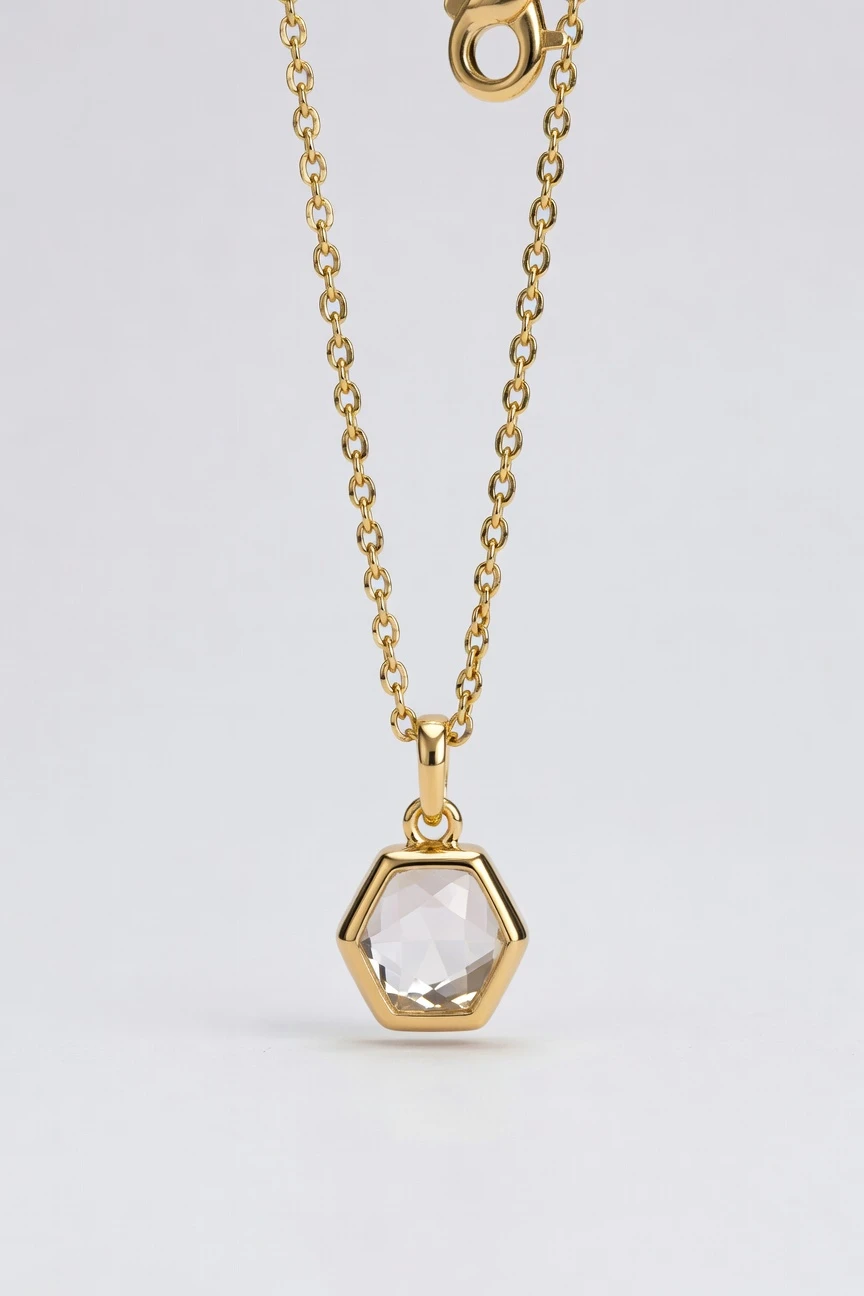
This setup is tuned for pendant product photography: an 85mm lens, close framing, a clean seamless background, a square-to-portrait commerce crop, and 4K output so chain, clasp, stone, and finish stay readable. ~$0.55 per image · ~30-40s
- 11 clicks · 0 keystrokes
- app.rawshot.ai / new_shoot
How it works
Build Pendant Imagery From Product Controls
From hero close-ups to clean PDP assets, the workflow stays click-driven, garment-led, and ready for both single shoots and scaled catalog runs.
- Step 01
Upload the Pendant
Start with the real product image. RAWSHOT builds the shoot around the jewellery itself, so finish, shape, scale, and visible design details stay central.
- Step 02
Set the Product View
Choose lens, crop, lighting, background, visual style, and aspect ratio from the interface. Every decision is a control, so your team can direct close-ups, detail shots, and clean commerce frames without typed instructions.
- Step 03
Generate and Reuse
Create ready-to-publish stills in about 30–40 seconds, then repeat the same setup across collections. Use the browser for one-off creative work or the API for SKU-scale jewellery pipelines.
Spec sheet
Proof That the Product Stays in Charge
These twelve points show how RAWSHOT handles jewellery detail, control, compliance, scale, and rights without turning creative work into chat syntax.
- 01
Synthetic Models by Design
Our model system is built from 28 body attributes with 10+ options each, making accidental real-person likeness statistically negligible by design.
- 02
Every Setting Is a Click
You direct lens, framing, lighting, backdrop, aspect ratio, and visual style from the UI. It works like an application for commerce teams, not a blank text box.
- 03
Pendant Detail Comes First
RAWSHOT is engineered around the product, so shape, metal finish, stone placement, engraving, and proportion are represented faithfully instead of bending around generic image logic.
- 04
Diverse Synthetic Casting
Choose from diverse synthetic models when you want on-model jewellery imagery, or keep the focus on the product for clean accessory-first compositions.
- 05
Repeatable Across Collections
Keep the same visual setup from one pendant to the next. That consistency matters when you are launching matching families, seasonal drops, or large SKU groups.
- 06
150+ Jewellery-Ready Styles
Move from catalog clean to campaign gloss, noir, flash, vintage, or beauty-led close-up looks with visual presets tuned for fashion and accessory work.
- 07
2K, 4K, and Every Ratio
Generate square, portrait, landscape, and platform-specific crops in 2K or 4K. Use one engine for PDPs, paid media, email, social, and wholesale decks.
- 08
Labelled and Compliant Output
Every output is AI-labelled, watermarked, and designed for EU AI Act Article 50, California SB 942, and GDPR-conscious operations.
- 09
Signed Audit Trail per Image
Each file carries C2PA-signed provenance metadata, giving your team a verifiable record of what the image is and how it should be handled.
- 10
GUI for One Shoot, API for Ten Thousand
Use the browser for creative selection and the REST API for high-volume product pipelines. The indie jewellery label and the enterprise catalog team use the same system.
- 11
Fast, Clear Image Economics
Stills run about $0.55 per image and usually generate in 30–40 seconds. Tokens never expire, and failed generations refund their tokens.
- 12
Commercial Rights Stay Simple
Every output includes full commercial rights, permanent and worldwide. That clarity matters when jewellery assets move across PDPs, ads, marketplaces, and print.
Outputs
Pendant Outputs, Directed by Clicks
From tight detail crops to polished campaign frames, you can generate pendant imagery that stays clean, consistent, and ready for commerce use.


Browse 150+ visual styles →
Comparison
RAWSHOT vs category tools vs DIY prompting
Three lenses on every dimension — what you optimize for in RAWSHOT versus typical category tools and blank-box AI workflows.
01
Interface
RAWSHOT
Buttons, sliders, and presets built for fashion and product directionCategory tools + DIY
Often mix lightweight controls with open text input for key decisions. DIY prompting: Typed instructions in a chat flow, then repeated edits to chase the shot02
Garment fidelity
RAWSHOT
Product-led generation that keeps pendant shape, finish, and visible details centralCategory tools + DIY
Can stylise attractively but may smooth small jewellery features. DIY prompting: Common garment drift, invented logos, altered clasps, and missing product details03
Model consistency
RAWSHOT
Consistent synthetic casting and repeatable setup across many jewellery SKUsCategory tools + DIY
Some consistency tools, but reuse can vary across outputs. DIY prompting: Faces, styling, and product presentation drift from image to image04
Provenance
RAWSHOT
C2PA-signed files with AI labelling and layered watermarkingCategory tools + DIY
Labelling standards vary and provenance metadata is not always present. DIY prompting: Usually no provenance metadata and no signed audit trail on export05
Commercial rights
RAWSHOT
Full commercial rights to every output, permanent and worldwideCategory tools + DIY
Rights may depend on plan level or platform-specific terms. DIY prompting: Rights clarity is often uncertain across model, platform, and asset chain06
Pricing transparency
RAWSHOT
Same per-image pricing, no per-seat gates, tokens never expireCategory tools + DIY
Plan complexity, seats, or volume rules can change core access. DIY prompting: Low entry cost but high operator time spent iterating and correcting results07
Iteration speed
RAWSHOT
New pendant variants in about 30–40 seconds with saved controlsCategory tools + DIY
Fast drafts, but control handoff can stay partial. DIY prompting: Fast first drafts, slow reliable iteration because each change restarts the conversation08
Catalog scale
RAWSHOT
Browser GUI and REST API support one item or large nightly batchesCategory tools + DIY
Scale features may sit behind higher plans or sales processes. DIY prompting: No dependable SKU pipeline, weak reproducibility, and manual handholding per output
Prompting does not scale
Stop writing essays. Direct the shoot.
Most AI photo tools start with a blank text box. Rawshot turns the shoot into repeatable controls, so creative teams can produce consistent fashion imagery without prompt syntax or one-off hacks.
Category norm
ManualCreate a premium editorial fashion photograph of a model wearing the exact navy oversized wool coat from SKU-1842, full-body crop, realistic hands, consistent facial identity, clean e-commerce lighting, subtle Paris street background, 85mm lens, no logo distortion, no fabric hallucination, same pose as last campaign, repeatable for all colorways...
A prompt can describe one image. It cannot become a shared production system for hundreds of products, models, angles and markets.
Rawshot
ClicksSaved shoot recipe
Apply to 1 SKU or 10,000 via GUI, CSV or REST API.
Rawshot makes creative direction visible: buttons, presets and sliders instead of hidden prompt craft. The result is easier to teach, faster to approve and built for repeat production.
Use cases
Who Uses This for Pendant Imagery
Operator archetypes and how click-directed, garment-first output fits the way they actually work.
- 01
Indie Jewellery Designers
Launch pendant collections with polished product imagery before a full studio budget exists, while keeping the piece itself at the centre.
Confidence · high
- 02
DTC Necklace Brands
Generate consistent PDP, email, and paid-social assets for pendant ranges without rebuilding the look for every new drop.
Confidence · high
- 03
Crowdfunded Product Launches
Show pendant concepts, colourways, and close-up detail early so backers can understand the design before large-scale production.
Confidence · high
- 04
Marketplace Sellers
Create clean pendant images for product listings in the right aspect ratios, with white-background and detail variants ready to publish.
Confidence · high
- 05
Wholesale Catalog Teams
Produce line-sheet and trade-ready pendant photography that stays visually consistent across metal finishes, sizes, and collections.
Confidence · high
- 06
Resale and Vintage Operators
Present one-off pendant pieces with controlled close-ups that make engraving, chain style, and material condition easier to read.
Confidence · high
- 07
Studio-Lite Boutique Teams
Keep jewellery campaigns moving between launches by generating fresh pendant visuals without booking another full-day shoot.
Confidence · high
- 08
Factory-Direct Manufacturers
Turn product development images into sales-ready pendant assets for buyers, distributors, and private-label presentations.
Confidence · high
- 09
Gift and Occasion Brands
Build seasonal pendant product photography for holidays, launches, and personalisation pushes with reusable visual setups.
Confidence · high
- 10
Merchandising Managers
Standardise pendant crops, backgrounds, and detail views across a large assortment so the catalog feels coherent at every touchpoint.
Confidence · high
- 11
Creative Students and Makers
Develop professional-looking jewellery portfolios and product pages when access to models, studios, and post-production is limited.
Confidence · high
- 12
Agency Commerce Teams
Deliver pendant assets for multiple client channels fast, while keeping provenance, rights, and approval trails clear for every file.
Confidence · high
— Principle
Honest is better than perfect.
Jewellery imagery needs trust as much as polish. Every RAWSHOT output is AI-labelled, carries visible and cryptographic watermarking, and includes C2PA-signed provenance metadata so your pendant assets stay clear about what they are. We are EU-built, EU-hosted, GDPR-conscious, and designed for teams that would rather publish labelled work than vague perfection.
Rights & provenance
Full commercial rights. Forever.
- C2PA-signed on every image — EU AI Act Article 50 compliant
- 28-attribute synthetic models — real-person likeness statistically impossible
- Full commercial rights to every generation — no recurring licensing fees
- Tokens never expire · One-click cancel · Transparent pricing
EU AI Act
C2PA
Commercial use
Pricing
~$0.55 per image.
~30–40 seconds per generation. Tokens never expire. Cancel in one click.
- 01The cancel button is on the pricing page.
- 02No per-seat gates. No 'contact sales' walls for core features.
- 03Failed generations refund their tokens.
- 04Full commercial rights to every output, permanent, worldwide.
FAQ
Practical answers on control, rights, pricing, scale, and compliant publishing.
Do I need to write prompts to use RAWSHOT?
Never—you direct every output with sliders, presets, and clicks on the garment, not typed prompts. That matters for product teams because pendant imagery is usually not blocked by imagination; it is blocked by repeatability, accuracy, and speed across many small asset decisions. In RAWSHOT, your team sets lens, framing, lighting, background, crop, visual style, and resolution from the interface, so creative direction stays operational instead of turning into text experiments.
For commerce teams, reliability matters more than novelty. RAWSHOT keeps timings, pricing, token rules, failed-generation refunds, commercial rights, provenance signalling, and output labelling explicit, so buyers, merchandisers, and marketers can work from a shared system. The same click-driven logic also carries into the REST API, which means you can move from one pendant hero image in the browser to repeatable SKU-scale production without changing how the shoot is directed.
What does a pendant ai product photography generator actually change for ecommerce teams?
It changes who gets access to polished product imagery and how consistently that imagery is produced. Instead of treating every pendant shoot like a separate studio event, your team can build repeatable views for close-ups, white-background commerce frames, campaign crops, and channel-specific aspect ratios inside one system. That is especially useful for jewellery, where small details such as chain texture, stone placement, and finish variation need to stay legible from PDP to paid media.
With RAWSHOT, the product is the brief. You upload the real item, choose the visual setup with controls, and generate stills in about 30–40 seconds at roughly $0.55 per image. Because outputs are AI-labelled, watermarked, and C2PA-signed, operations teams also gain a cleaner record for approvals and asset handling. The practical result is less waiting for studio availability and more dependable launch readiness across catalogs, collection pages, and campaigns.
Why skip reshooting every pendant SKU when seasons or campaigns change?
Because most seasonal changes are art-direction changes, not product changes. A pendant may need a new crop, a darker backdrop, a brighter PDP version, or a campaign treatment that fits a launch, but that does not always justify another physical production cycle. Rebooking studios, preparing samples, and coordinating turnaround for every update slows merchandising and leaves smaller teams without options.
RAWSHOT lets you keep the same product and rework the presentation through saved controls and visual presets. You can generate a clean commerce image, then move to an editorial close-up, then create a marketplace-ready crop without re-staging the entire production process. For operators managing broad assortments or frequent drops, that means seasonal refreshes become an asset workflow rather than a calendar problem, while rights, provenance, and output labelling remain explicit on every file.
How do we turn flat product assets into catalogue-ready pendant imagery without prompting?
You start with the real product image and then direct the output through the interface. Choose the lens, set a close-up or detail framing, pick the background, control the lighting, choose a visual style, and select the aspect ratio and resolution that match your channel. Because those controls are discrete and repeatable, your team can standardise pendant imagery for PDPs, marketplaces, email modules, and campaign pages without relying on open-ended text instructions.
That workflow matters in jewellery because small inconsistencies become obvious quickly. RAWSHOT is built to keep the product central, so visible design details carry through the image-making process instead of being treated as secondary decoration. Once a setup works, you can reuse it across other pendants or collections in the browser and extend it through the REST API for larger runs. The operational takeaway is simple: define the view once, then scale it cleanly.
Why does garment-led control beat ChatGPT, Midjourney, or generic image AI for fashion PDPs?
Generic image systems are usually strong at mood and weak at dependable commerce control. For pendant and jewellery work, that gap shows up as altered shapes, invented engravings, inconsistent chain behaviour, unclear material rendering, and repeated trial-and-error in a text interface. Even when a single image looks attractive, reproducing the same standards across a full catalog is difficult because the workflow is not designed around product fidelity and repeatable asset production.
RAWSHOT takes a different route. The product sits at the centre, and the decisions your team makes are expressed as controls rather than conversational guesswork. You also get clear commercial rights, C2PA-signed provenance metadata, AI labelling, visible and cryptographic watermarking, and a browser-plus-API setup that works for both one-off launches and large batch operations. For fashion and accessory teams, that means fewer surprises and a much cleaner path from asset creation to publishing.
Can I use pendant imagery from RAWSHOT in ads, PDPs, marketplaces, and print?
Yes. RAWSHOT provides full commercial rights to every output, permanent and worldwide, which is the baseline most commerce teams need before they place assets into paid media, product pages, retailer portals, social formats, or printed collateral. That rights clarity matters because jewellery assets often travel across agencies, marketplace teams, wholesalers, and internal marketing stakeholders, and uncertainty slows everything down.
RAWSHOT also treats trust signals as part of the product, not a legal footnote. Outputs are AI-labelled, carry visible and cryptographic watermarking, and include C2PA-signed provenance metadata so teams can keep usage and attribution handling clear. For operators, the practical step is to build publication workflows around those labelled assets from the start, rather than trying to retrofit disclosure and approval logic after campaign files are already moving between channels.
What quality checks should we run before publishing AI-assisted pendant product images?
Check the product first, then the file. For pendant imagery, review whether the visible shape, chain proportion, finish, stone placement, clasp logic, engraving, and overall scale still match the source item. After that, confirm the crop, background, lighting treatment, and channel fit so the image serves the placement it was generated for rather than just looking pleasing in isolation.
RAWSHOT gives teams additional trust checks that generic image tools often leave vague. Each output is AI-labelled, watermarked, and C2PA-signed, so provenance can be reviewed alongside visual accuracy. Because the workflow is control-based, you can also rerun a known setup instead of rebuilding it from scratch when one detail needs adjustment. The best practice is to make those product, publication, and provenance checks part of the same approval pass before assets go live.
How much does a pendant AI product photography generator cost per image?
For still photography, RAWSHOT runs at about $0.55 per image, and most generations complete in roughly 30–40 seconds. Tokens never expire, failed generations refund their tokens, and cancellation is one click from the pricing page. That makes budgeting more straightforward for teams that need to estimate asset creation by SKU, by collection, or by campaign channel without being trapped in expiring credits or seat-based access rules.
The broader cost logic is equally important. RAWSHOT does not put core product access behind per-seat gates or a forced sales process, so a small jewellery label and a larger catalog team work from the same pricing model. If you also need motion, video pricing is separate because it uses more tokens per second than stills. For pendant image work specifically, the useful planning assumption is simple: count the views you need, not the people on your team.
Can RAWSHOT plug into Shopify-scale jewellery catalogs or internal asset pipelines?
Yes. RAWSHOT is built for both browser-based creative work and REST API-driven production, so teams can move from individual pendant shoots to larger commerce pipelines without switching systems. That matters when your workflow spans merchandising, ecommerce operations, and downstream publishing into storefronts, PIM layers, DAMs, or internal review tools. The same engine, quality level, and pricing logic carry across those modes.
For jewelry and accessory teams, the main benefit is repeatability. Once a product view or channel crop is defined, those settings can be reused across many SKUs rather than manually reconstructed for every pendant. RAWSHOT is also PLM-integration ready and maintains a signed audit trail per image, which helps teams keep asset creation accountable as volume grows. The practical takeaway is to standardise the view set you need, then automate around it.
Can one team handle both one-off pendant launches and large batch production in the same tool?
Yes, and that is one of the clearest reasons to use RAWSHOT. A creative lead can refine a single pendant hero image in the browser with direct controls, while an operations or catalog team uses the same system to process broader assortments through the API. The product does not split into a lightweight self-serve version for small brands and a different hidden version for scale; the same engine supports both ends of the workload.
That continuity matters because jewellery teams often move between campaign moments and catalog maintenance in the same week. RAWSHOT keeps the per-image pricing, rights model, provenance handling, and click-driven logic consistent whether you are publishing five launch images or scheduling thousands of assets in batch. In practice, that lets teams define standards once, assign work by role, and keep production moving without rebuilding process every time volume changes.
Keep exploring