
— On-model streetwear · 150+ styles · 4K
Direct your next drop with the Streetwear AI Product Photography Generator.
Generate campaign-ready streetwear imagery built around the garment, from clean PDP frames to gritty editorial selects. Click lens, framing, pose, light, background, aspect ratio, and style presets in a real interface designed for fashion teams. No studio. No samples. No prompts.
- ~$0.55 per image
- ~30–40s per generation
- 150+ styles
- 2K or 4K
- Every aspect ratio
- Full commercial rights
7-day free trial • 50 tokens (10 images) • Cancel anytime

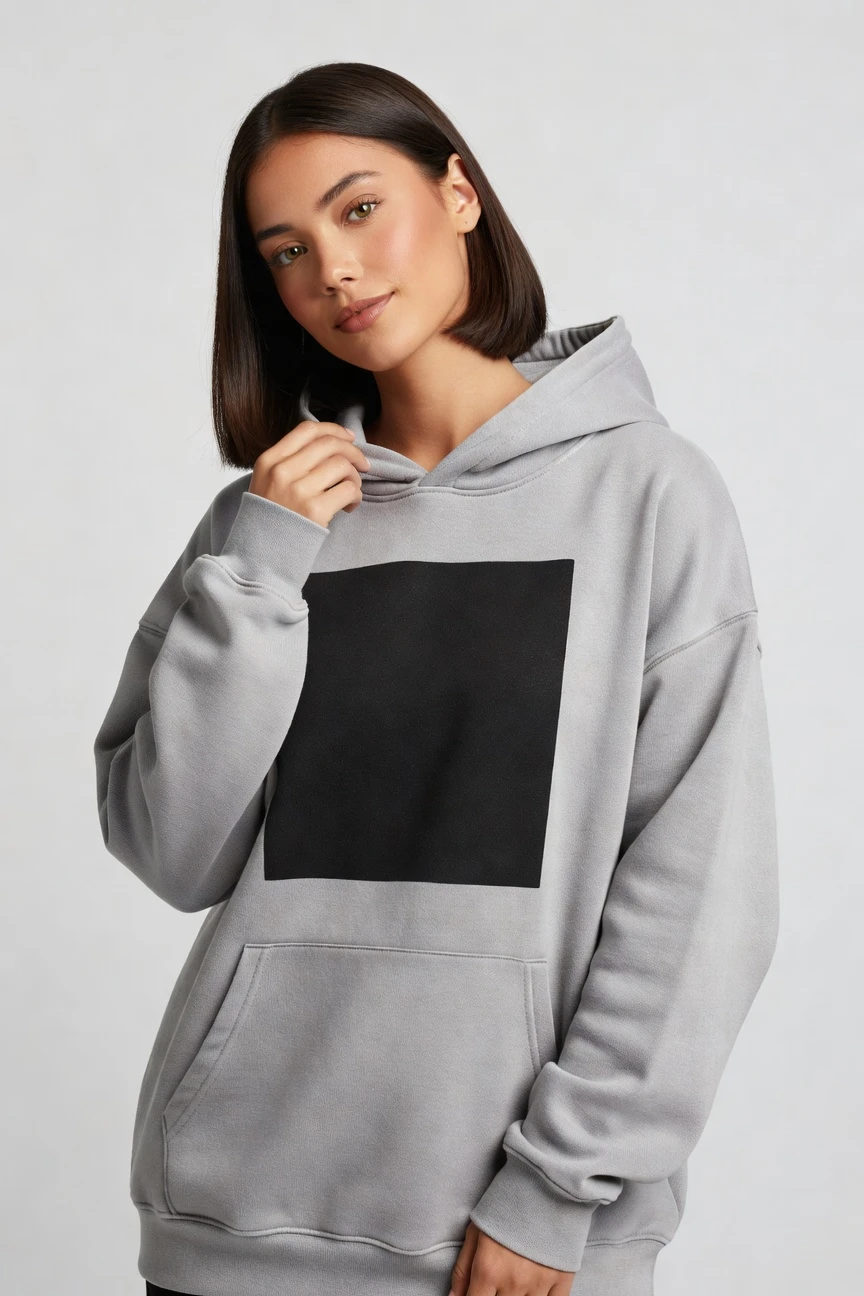
Direct the shoot. Zero prompts.
This setup starts from a half-body streetwear frame with an 85mm lens, 4:5 crop, and 4K output so hoodies, outerwear, and graphic details read cleanly on feed and PDP. You adjust the garment-facing decisions with clicks, then generate. ~$0.55 per image · ~30-40s
- 4 clicks · 0 keystrokes
- app.rawshot.ai / new_shoot
How it works
Build Streetwear Shots in Three Clicked Steps
From one drop preview to a catalog-wide refresh, the workflow stays garment-led, controllable, and ready for browser or API use.
- Step 01
Upload the Garment
Start with the real product, not a blank text box. RAWSHOT reads the cut, colour, pattern, logo, and proportion so the garment stays the brief from the first click.
- Step 02
Set the Visual Direction
Choose lens, framing, pose, lighting, background, aspect ratio, and style presets for the streetwear outcome you need. You direct the shoot through controls that feel like an application, not a chat.
- Step 03
Generate and Scale
Create single images in the browser or push the same logic through the REST API for large catalogs. The price per image, output quality, and model consistency stay the same whether you need one hero shot or ten thousand SKU variants.
Spec sheet
Proof for Streetwear Teams Under Pressure
These twelve surfaces show why the workflow holds up in campaign, catalog, and high-variant apparel operations.
- 01
Synthetic Models by Design
Every RAWSHOT model is built from 28 body attributes with 10+ options each. Accidental real-person likeness is statistically negligible by design, not by disclaimer.
- 02
Every Setting Is a Click
Lens, angle, framing, pose, light, background, expression, style, and product focus live in buttons, sliders, and presets. You direct the image without learning syntax.
- 03
The Garment Stays Central
Streetwear depends on fit, graphics, washes, trims, and proportion reading correctly. RAWSHOT is engineered to represent the actual product rather than bend it around generic image logic.
- 04
Diverse Synthetic Cast
Build imagery across different body configurations without booking talent for every size run or audience segment. That gives smaller labels access to representation that usually starts with a production budget.
- 05
Consistency Across Drops
Keep the same model presence, framing logic, and visual system across hoodies, cargos, tees, and outerwear. You get a coherent catalog instead of near-matches that trigger retakes.
- 06
150+ Streetwear-Ready Looks
Move from catalog clean to flash-heavy editorial, vintage texture, noir mood, or Y2K digital with presets built for fashion output. The visual language changes without losing product clarity.
- 07
2K, 4K, and Every Crop
Generate square, portrait, landscape, feed, PDP, campaign, or marketplace-ready imagery in the same workflow. Output format follows the channel instead of forcing one crop onto every use.
- 08
Labelled and Compliant Output
Every image is AI-labelled, watermarked, and designed for EU AI Act Article 50, California SB 942, and GDPR-aligned operations. Honest output is part of the product, not a legal footnote.
- 09
Signed Audit Trail per Image
Each asset carries C2PA-linked provenance and a traceable record of what it is. That gives commerce teams clearer review, approval, and publishing discipline.
- 10
GUI for One Look, API for 10,000
Use the browser for directorial work on a single drop or connect the REST API for nightly catalog pipelines. The same engine powers both without per-seat gates for core features.
- 11
Fast, Clear Token Economics
Still images run at about $0.55 each and usually generate in 30–40 seconds. Tokens never expire, and failed generations refund their tokens.
- 12
Rights Stay Simple
Every output includes full commercial rights, permanent and worldwide. That matters when the same asset needs to move from PDP to paid social to wholesale deck without rights confusion.
Outputs
From PDP Clean to drop energy
Generate streetwear imagery that can hold a product page, a campaign grid, and a social launch in the same system. Keep the garment clear while the styling shifts around it.


Browse 150+ visual styles →
Comparison
RAWSHOT vs category tools vs DIY prompting
Three lenses on every dimension — what you optimize for in RAWSHOT versus typical category tools and blank-box AI workflows.
01
Interface
RAWSHOT
Click-driven controls for lens, framing, light, style, and product focusCategory tools + DIY
Often mix lightweight controls with text-first workflows and softer directorial precision. DIY prompting: You type instructions repeatedly, then rewrite them when outputs drift02
Garment fidelity
RAWSHOT
Built around the uploaded garment's cut, colour, logo, and drapeCategory tools + DIY
Can stylise well but may smooth over construction details or branding. DIY prompting: Generic models often invent logos, alter graphics, or drift on silhouette03
Model consistency across SKUs
RAWSHOT
Same synthetic model logic can stay stable across large product runsCategory tools + DIY
Consistency varies across sessions and may need manual correction. DIY prompting: Faces, body proportions, and pose logic shift from image to image04
Provenance and labelling
RAWSHOT
C2PA-signed, AI-labelled, and watermarked with visible and cryptographic layersCategory tools + DIY
Labelling and provenance support are often partial or absent. DIY prompting: Usually no provenance metadata and no structured disclosure trail05
Commercial rights
RAWSHOT
Full commercial rights for every output, permanent and worldwideCategory tools + DIY
Rights terms differ by plan, seat, or feature access. DIY prompting: Rights clarity depends on platform terms and can stay operationally vague06
Pricing transparency
RAWSHOT
About $0.55 per image, tokens never expire, one-click cancelCategory tools + DIY
Can add seat limits, usage tiers, or sales-gated feature access. DIY prompting: Usage economics are hard to forecast because retries and rewrites pile up07
Iteration speed per variant
RAWSHOT
Generate new angles, crops, and style variants in about 30–40 secondsCategory tools + DIY
Iteration is faster than studio work but often less reproducible. DIY prompting: Time goes into prompt rewrites, failed attempts, and sorting inconsistent sets08
Catalog scale
RAWSHOT
Browser GUI and REST API use the same engine and output standardCategory tools + DIY
Enterprise scale may require separate contracts or gated editions. DIY prompting: No apparel-native pipeline, no audit trail, and weak batch reproducibility
Prompting does not scale
Stop writing essays. Direct the shoot.
Most AI photo tools start with a blank text box. Rawshot turns the shoot into repeatable controls, so creative teams can produce consistent fashion imagery without prompt syntax or one-off hacks.
Category norm
ManualCreate a premium editorial fashion photograph of a model wearing the exact navy oversized wool coat from SKU-1842, full-body crop, realistic hands, consistent facial identity, clean e-commerce lighting, subtle Paris street background, 85mm lens, no logo distortion, no fabric hallucination, same pose as last campaign, repeatable for all colorways...
A prompt can describe one image. It cannot become a shared production system for hundreds of products, models, angles and markets.
Rawshot
ClicksSaved shoot recipe
Apply to 1 SKU or 10,000 via GUI, CSV or REST API.
Rawshot makes creative direction visible: buttons, presets and sliders instead of hidden prompt craft. The result is easier to teach, faster to approve and built for repeat production.
Use cases
Who Streetwear Access Actually Helps
Operator archetypes and how click-directed, garment-first output fits the way they actually work.
- 01
Indie Streetwear Labels
Launch a first drop with on-model imagery before a full production budget exists, using clicks to direct a coherent brand look.
Confidence · high
- 02
DTC Hoodie and Tee Brands
Turn graphic tops, heavyweight blanks, and layered outfits into clean PDP and campaign assets without booking repeated shoots.
Confidence · high
- 03
Crowdfunded Capsule Projects
Show the product clearly while pre-orders are still being won, so backers see the vision before studio production begins.
Confidence · high
- 04
On-Demand Print Brands
Test new graphic directions fast and keep the garment readable across many SKUs without rebuilding a shoot each time.
Confidence · high
- 05
Marketplace Streetwear Sellers
Standardise imagery across mixed inventory so listings look intentional instead of stitched together from inconsistent sources.
Confidence · high
- 06
Resale and Vintage Operators
Present one-off jackets, denim, and archive pieces with more polish than flat seller photos and more consistency than ad hoc editing.
Confidence · high
- 07
Factory-Direct Manufacturers
Show buyers campaign-style apparel imagery alongside line-sheet clarity without waiting for imported shoot logistics.
Confidence · high
- 08
Footwear and Accessory Brands
Pair sneakers, bags, caps, and jewellery into up-to-four-product compositions that feel merchandised, not improvised.
Confidence · high
- 09
Student Designers
Build a serious streetwear portfolio with labelled synthetic models and full commercial rights, even when cash and time are tight.
Confidence · high
- 10
Catalog Teams Refreshing Seasonal Drops
Swap lighting, crop, and visual style across the same product base to update merchandising without reshooting every style.
Confidence · high
- 11
Creative Directors Testing Visual Systems
Compare clean campaign, gritty flash, Y2K digital, and film-textured routes before committing the brand to one release language.
Confidence · high
- 12
API-First Commerce Teams
Run the same streetwear image logic through nightly pipelines when assortments, channels, and aspect-ratio demands keep multiplying.
Confidence · high
— Principle
Honest is better than perfect.
Streetwear moves fast, which makes clear attribution more important, not less. Every RAWSHOT image is AI-labelled, C2PA-signed, and watermarked with visible and cryptographic layers so your team can publish with traceable provenance. We are EU-built, EU-hosted, GDPR-compliant, and designed for the disclosure standards commerce teams need.
Rights & provenance
Full commercial rights. Forever.
- C2PA-signed on every image — EU AI Act Article 50 compliant
- 28-attribute synthetic models — real-person likeness statistically impossible
- Full commercial rights to every generation — no recurring licensing fees
- Tokens never expire · One-click cancel · Transparent pricing
EU AI Act
C2PA
Commercial use
Pricing
~$0.55 per image.
~30–40 seconds per generation. Tokens never expire. Cancel in one click.
- 01The cancel button is on the pricing page.
- 02No per-seat gates. No 'contact sales' walls for core features.
- 03Failed generations refund their tokens.
- 04Full commercial rights to every output, permanent, worldwide.
FAQ
Practical answers on control, rights, pricing, scale, and compliant publishing.
Do I need to write prompts to use RAWSHOT?
Never—you direct every output with sliders, presets, and clicks on the garment, not typed prompts. That matters because fashion teams do not need another tool that turns a buyer, merchandiser, or designer into a syntax specialist before they can get a usable image. In RAWSHOT, lens, framing, pose, lighting, background, aspect ratio, visual style, and product focus are explicit controls, so the workflow reads like production software instead of a chat experiment.
For catalog and campaign teams, reliability beats clever wording every time. The same click-led structure holds in the browser GUI for one-off shoots and in REST API payloads for larger pipelines, which makes approvals, repeatability, and handoffs much easier to manage. Tokens, generation timing, refund rules for failed outputs, commercial rights, and provenance labelling are all clearly stated, so operations can plan real launches rather than guess how a black-box tool will behave.
What does AI-assisted fashion photography change for SKU-scale catalogs?
It changes who can produce consistent on-model imagery at all. Traditional apparel photography still depends on budgets, scheduling, talent coordination, samples, and repeat studio days, which is why many smaller labels and fast-moving catalog teams end up with uneven visual coverage across SKUs. RAWSHOT gives those teams a way to create product-led imagery from the garment itself, with consistent framing logic, synthetic model continuity, and repeatable visual systems across large assortments.
In practice, that means you can keep a hoodie, trouser, jacket, or accessory range inside one visual standard without rebuilding the entire production setup every time a new style lands. You choose the controls, generate in roughly 30–40 seconds per still, and scale the same logic through the browser or API depending on workload. The result is not just speed; it is access to a catalog discipline many brands never had budget to build in the first place.
Why skip reshooting every SKU for season updates?
Because season changes rarely require rebuilding the whole production stack from zero. Most teams are trying to update mood, crop, channel format, or campaign emphasis while keeping the product itself clear, and a full reshoot is an expensive way to solve what is often a directional problem. RAWSHOT lets you adjust those variables directly through controls, so you can change framing, visual style, lighting character, and output ratio without sending garments back through a traditional studio cycle.
That is especially useful for streetwear brands managing repeated drops, restocks, or regional channel needs. One product can move from a clean PDP image to a tougher editorial treatment or social crop while staying anchored to the same garment logic and model consistency. Teams keep budget and time for the moments that truly need custom production, while using RAWSHOT to extend coverage, test options, and keep seasonal refreshes operationally sane.
How do we turn flat garments into catalogue-ready imagery without prompting?
You start with the actual garment asset, then direct the image through interface controls that map to real production decisions. Choose the lens, framing, pose, camera angle, lighting setup, background, mood, visual style, aspect ratio, resolution, and product focus, and RAWSHOT generates the output around that structure. The workflow is built so merchandisers and creative teams can review settings directly instead of translating apparel goals into text and hoping the model interprets them correctly.
For commerce use, that clarity matters because catalogue-ready means more than a nice picture. The image has to hold product details, fit the channel, stay consistent with adjacent SKUs, and be simple to reproduce when new inventory arrives. RAWSHOT supports 2K and 4K stills, every aspect ratio, browser-based one-off work, and REST API scaling, so teams can move from single look creation to repeatable catalog production without changing tools or retraining everyone on a new workflow style.
Why does garment-led control beat DIY prompting in ChatGPT, Midjourney, or generic image models for fashion PDPs?
Because a fashion PDP lives or dies on product truth, not on whether an image looked impressive for one generation. Generic image tools are built to interpret broad instructions, which is why they often drift on logos, graphics, trim placement, fabric behaviour, and silhouette even when the overall vibe seems close. They also make reproducibility hard, since each retry can change the face, pose logic, garment detail, or framing in ways that create more cleanup work than they save.
RAWSHOT is built around the garment as the brief and around explicit controls as the interface. That means teams can review concrete settings, keep outputs consistent across a range, and publish assets with clearer provenance and rights framing. When the goal is apparel commerce rather than open-ended image play, garment-led control wins because it gives operators fewer surprises, cleaner approvals, and a workflow other team members can actually repeat.
Can I use a streetwear ai product photography generator for paid ads, PDPs, and lookbooks with clear rights?
Yes. RAWSHOT gives full commercial rights to every output, permanent and worldwide, which means the same asset can move from PDP to paid social, email, wholesale deck, or lookbook without a separate rights tangle around each use. That simplicity matters for growing brands, because channel expansion usually fails on operational friction long before it fails on creative ambition.
RAWSHOT also treats trust as part of the deliverable. Outputs are AI-labelled, C2PA-signed, and watermarked through visible and cryptographic layers, so teams are not left improvising disclosure practices after the campaign is already live. For apparel brands, the practical takeaway is straightforward: publish with a clear internal approval path, keep the provenance signal attached to the asset, and use the same rights-safe output across every channel that needs the image.
What should our team check before publishing on-model AI apparel imagery?
Check the garment first, because that is what the customer is actually buying. Review cut, colour, logo placement, graphics, fabric behaviour, proportion, and any small details that matter to conversion or compliance, then confirm the framing and crop match the intended channel. After that, verify that the output is labelled appropriately for your publishing context and that your internal team understands how the asset was produced and approved.
With RAWSHOT, you can also treat provenance as a quality checkpoint rather than an afterthought. Each image carries C2PA-linked signalling and watermarking layers, and the platform is designed around synthetic models with statistically negligible accidental real-person likeness by design. Operationally, the best habit is simple: review product fidelity, check your brand format, confirm provenance handling, and only then push the asset into PDP, campaign, or marketplace distribution.
How much does a streetwear ai product photography generator cost per image?
For still images in RAWSHOT, the working figure is about $0.55 per image, and most generations complete in roughly 30–40 seconds. Tokens never expire, failed generations refund their tokens, and you can cancel in one click from the pricing page, which gives buyers and operators a much clearer cost model than a tool that hides meaningful usage rules behind vague credits or sales conversations. For teams comparing stills with motion, remember that video uses more tokens per second and therefore costs more than photo work.
That pricing structure is useful because it scales cleanly from a small drop test to a much larger catalog need. You do not need to recalculate around seat gates or wonder whether core features disappear behind an enterprise wall once the team grows. The practical result is that planners can budget image coverage by SKU, test variants without fear of expiring balances, and keep production math close to the real work being asked of the team.
Can RAWSHOT plug into Shopify-scale or PLM-led image pipelines through API?
Yes. RAWSHOT offers a REST API for catalog-scale production, so teams can move beyond one-off browser sessions and build repeatable workflows around product data, approvals, and publishing schedules. That matters for operators managing large assortments, because the real challenge is rarely making one hero image; it is maintaining visual consistency across hundreds or thousands of products while keeping auditability and timing under control.
The platform is built so the same engine and output standard apply whether you are generating a single look in the GUI or running a nightly pipeline at scale. That keeps pricing logic, model behaviour, commercial rights framing, and provenance expectations aligned across both modes of use. For implementation teams, the takeaway is to treat RAWSHOT as production infrastructure: test your visual rules in the interface, then formalise them in API-driven catalog operations.
How do creative, ecommerce, and ops teams share one workflow from single shoot to 10,000-SKU rollout?
They share the same product instead of splitting across separate “creative” and “enterprise” versions. A creative lead can set the look in the browser, selecting lens, framing, style, and product focus for the visual standard, while ecommerce and operations teams carry that logic into repeatable generation patterns for larger runs. Because there are no per-seat gates for core features, the handoff is easier to manage and less likely to get blocked by licensing friction.
This matters most when brands are growing out of ad hoc production habits but are not ready to build a full custom image stack. RAWSHOT lets one team establish the image language and another team execute it at volume, with the same pricing model, the same rights structure, and the same provenance expectations. In practice, that means fewer mismatches between concept and rollout, and far less time wasted rebuilding a workflow every time the catalog gets bigger.
Keep exploring