
— Vintage apparel · 150+ styles · 4K
Direct your next resale drop with the Vintage Clothing AI Product Photography Generator.
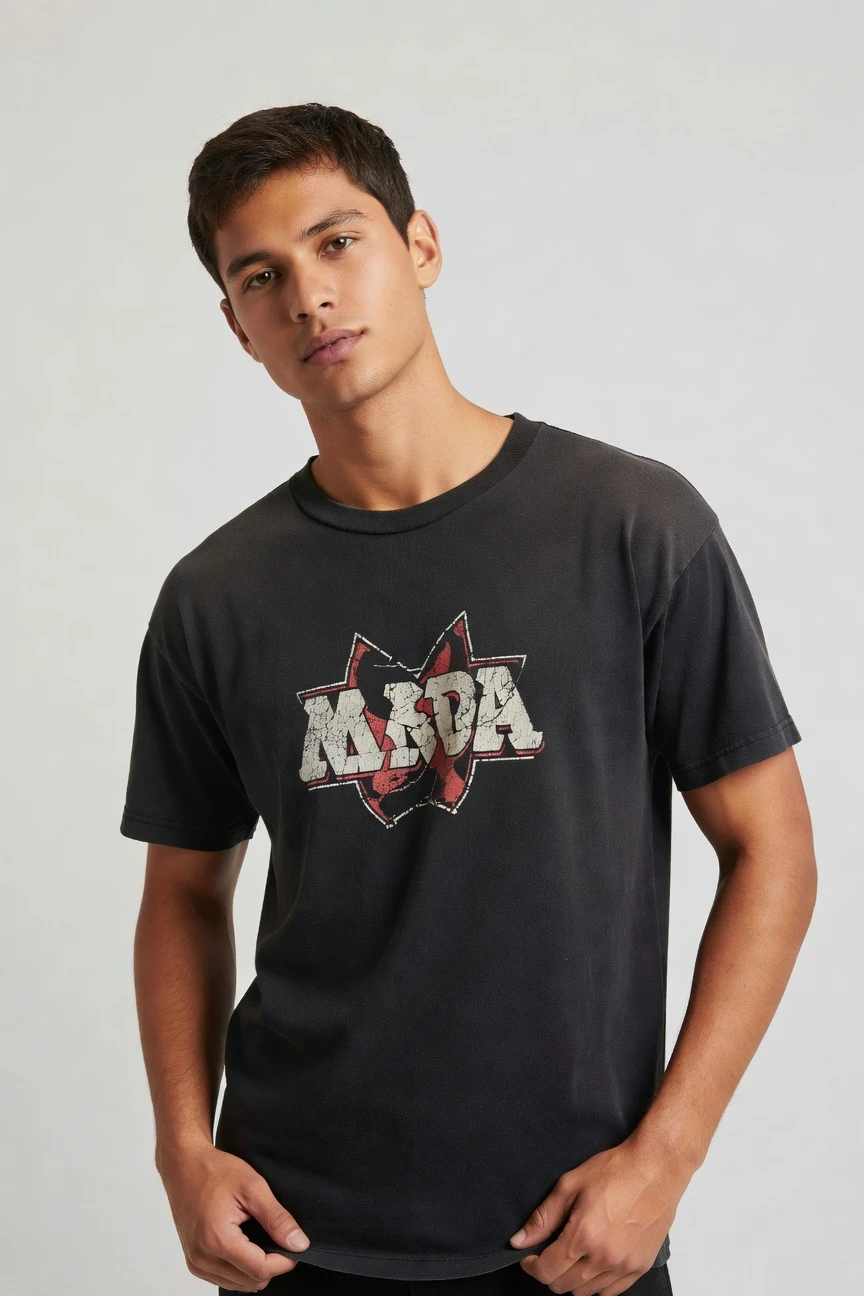
Generate on-model imagery that keeps the character of vintage garments clear, from washed denim to faded prints and one-off details. Select lens, framing, aspect ratio, resolution, and product focus in a click-driven interface built for fashion teams. No studio. No sample shipping. No prompts.
- ~$0.55 per image
- ~30–40s per generation
- 150+ styles
- 2K or 4K
- Every aspect ratio
- Full commercial rights
7-day free trial • 50 tokens (10 images) • Cancel anytime

Direct the shoot. Zero prompts.
This setup frames a vintage garment for resale and catalog use with an 85mm lens, half-body crop, 4:5 composition, and 4K output. You click into a clean, product-first image that keeps attention on cut, wash, texture, and era-specific details. ~$0.55 per image · ~30-40s
- 4 clicks · 0 keystrokes
- app.rawshot.ai / new_shoot
How it works
Turn Vintage Pieces Into Product Images
From one-off archive finds to repeatable reseller workflows, the process stays garment-led, click-driven, and ready for catalog operations.
- Step 01
Upload the Garment
Start with the product you actually sell. RAWSHOT builds the image around the garment so vintage washes, trims, logos, and proportions stay central to the result.
- Step 02
Set the Shoot in Clicks
Choose lens, framing, angle, light, background, style, and output shape with controls made for fashion work. You direct the image visually, without writing instructions into a text box.
- Step 03
Generate and Scale
Create a single hero image or repeat the same direction across a full resale catalog. Use the browser for one-off shoots or the REST API for larger vintage inventories.
Spec sheet
Proof for Vintage Fashion Teams
These twelve points show what matters in practice: garment fidelity, operational control, commercial clarity, and honest labelling at any scale.
- 01
Built to Avoid Real-Person Likeness
Every RAWSHOT model is a synthetic composite built from 28 body attributes with 10+ options each. That structure is designed to keep accidental resemblance statistically negligible.
- 02
Every Setting Is a Click
Camera, framing, light, background, expression, and style live in buttons, sliders, and presets. The interface behaves like production software, not a chat window.
- 03
The Garment Stays the Brief
Vintage depends on specifics: fading, hardware, stitching, print wear, drape, and proportion. RAWSHOT is engineered to represent the actual piece instead of bending it around generic image logic.
- 04
Diverse Synthetic Models
Cast from a broad range of synthetic model options that suit different brand directions and customer contexts. You stay in control of who presents the garment without relying on ad hoc generation luck.
- 05
Consistency Across One-Off SKUs
Resale and vintage teams often work with unique items that still need a unified storefront. Keep the same face, framing logic, and visual system across hundreds of mismatched pieces.
- 06
Vintage Mood Without Guesswork
Pick from 150+ visual style presets, from clean catalog to film-grain editorials and Y2K digital looks. You can match era, channel, and brand tone without rebuilding the shoot each time.
- 07
Every Ratio, 2K or 4K
Generate square PDP images, taller marketplace crops, campaign formats, and detailed close frames in 2K or 4K. The same garment can be directed for every channel from one workflow.
- 08
Labelled and Compliance-Ready
Outputs are AI-labelled, watermarked, and aligned with EU AI Act Article 50, California SB 942, and GDPR expectations. Transparency is built into the product, not bolted on later.
- 09
Signed Audit Trail per Image
Each output carries C2PA-signed provenance metadata and a per-image record. That gives teams a clear chain of origin when they publish, archive, review, or hand off assets.
- 10
GUI for One Shoot, API for Scale
Use the browser interface for a single drop or plug into the REST API for nightly catalog work. The same engine supports indie resale operators and enterprise fashion pipelines.
- 11
Fast, Predictable Generation Economics
Stills run at about $0.55 per image and usually generate in around 30–40 seconds. Tokens never expire, and failed generations return their tokens.
- 12
Clear Commercial Rights
Every output includes full commercial rights, permanent and worldwide. That matters when vintage imagery moves across PDPs, paid social, lookbooks, marketplaces, and wholesale decks.
Outputs
Vintage Outputs, directed in clicks
From clean reseller imagery to styled editorial frames, you can keep the garment central while adapting the look to each channel. The piece stays recognisable; the presentation changes around it.


Browse 150+ visual styles →
Comparison
RAWSHOT vs category tools vs DIY prompting
Three lenses on every dimension — what you optimize for in RAWSHOT versus typical category tools and blank-box AI workflows.
01
Interface
RAWSHOT
Click-driven controls for camera, framing, light, style, and output formatCategory tools + DIY
Often mix presets with thin text-based direction and limited garment-first controls. DIY prompting: Relies on typed prompts, retries, and manual wording changes to steer each image02
Garment fidelity
RAWSHOT
Engineered around cut, colour, pattern, logos, fabric texture, and drapeCategory tools + DIY
Can produce attractive fashion scenes with less dependable product specificity. DIY prompting: Garments drift, trims change, logos mutate, and era details get invented03
Model consistency
RAWSHOT
Keep the same synthetic model logic across repeated vintage SKU outputsCategory tools + DIY
Consistency varies by workflow and usually weakens across larger batches. DIY prompting: Faces shift between generations, making catalog continuity hard to maintain04
Provenance and labelling
RAWSHOT
C2PA-signed, visibly watermarked, cryptographically watermarked, and AI-labelled by defaultCategory tools + DIY
Labelling and provenance support are often partial or absent. DIY prompting: Usually ships without provenance metadata or clear origin signalling05
Commercial rights
RAWSHOT
Full commercial rights on every output, permanent and worldwideCategory tools + DIY
Rights terms differ by plan, provider, or contract tier. DIY prompting: Rights clarity depends on model, platform, and changing terms of use06
Pricing transparency
RAWSHOT
Same per-image pricing, no per-seat gates, tokens never expireCategory tools + DIY
May add seats, tiers, usage caps, or sales-gated access. DIY prompting: Costs are hard to predict across retries, edits, and external cleanup07
Catalog scale
RAWSHOT
Browser GUI for one shoot and REST API for large vintage inventoriesCategory tools + DIY
Scale features often split into separate enterprise workflows. DIY prompting: No dependable SKU pipeline, audit trail, or production-safe batch structure08
Iteration reliability
RAWSHOT
Adjust one control and regenerate with clear operational repeatabilityCategory tools + DIY
Iteration depends on narrower controls and less stable garment carryover. DIY prompting: Small wording changes can cause major visual shifts and wasted rounds
Prompting does not scale
Stop writing essays. Direct the shoot.
Most AI photo tools start with a blank text box. Rawshot turns the shoot into repeatable controls, so creative teams can produce consistent fashion imagery without prompt syntax or one-off hacks.
Category norm
ManualCreate a premium editorial fashion photograph of a model wearing the exact navy oversized wool coat from SKU-1842, full-body crop, realistic hands, consistent facial identity, clean e-commerce lighting, subtle Paris street background, 85mm lens, no logo distortion, no fabric hallucination, same pose as last campaign, repeatable for all colorways...
A prompt can describe one image. It cannot become a shared production system for hundreds of products, models, angles and markets.
Rawshot
ClicksSaved shoot recipe
Apply to 1 SKU or 10,000 via GUI, CSV or REST API.
Rawshot makes creative direction visible: buttons, presets and sliders instead of hidden prompt craft. The result is easier to teach, faster to approve and built for repeat production.
Use cases
Where Vintage Sellers Need More Than Flat Lays
Operator archetypes and how click-directed, garment-first output fits the way they actually work.
- 01
Vintage Marketplace Sellers
Turn one-off pieces into clean on-model listings that look consistent across a mixed inventory of sizes, eras, and categories.
Confidence · high
- 02
Archive Fashion Stores
Show rare garments with editorial restraint while keeping fabric age, construction, and collectible details clear for buyers.
Confidence · high
- 03
Resale Apps and Platforms
Standardise imagery across thousands of seller-fed items with a workflow that can move from browser shoots to API pipelines.
Confidence · high
- 04
Curated Thrift Boutiques
Give secondhand drops a sharper visual identity than hanger shots without needing weekly studio bookings.
Confidence · high
- 05
Deadstock Retailers
Present unworn older inventory with fresh styling while preserving the original product character that makes it valuable.
Confidence · high
- 06
Vintage Denim Specialists
Highlight wash, wear, leg shape, rise, and fit cues in framing choices built around the garment, not generic styling noise.
Confidence · high
- 07
Retro Sportswear Sellers
Keep logos, panel lines, and color blocking readable across catalog imagery for collectors and everyday buyers alike.
Confidence · high
- 08
Y2K Fashion Drops
Switch between clean PDP presentation and era-leaning campaign looks using presets that fit the product and channel.
Confidence · high
- 09
Jewelry and Accessory Resellers
Mix garments with watches, bags, sunglasses, or layered accessories in compositions of up to four products.
Confidence · high
- 10
Social-First Vintage Brands
Generate square, vertical, and campaign-ready assets from the same product setup for storefronts, ads, and content calendars.
Confidence · high
- 11
Factory-Direct Archive Reissues
Photograph heritage-inspired pieces before broad distribution, keeping visual consistency from launch pages to wholesale materials.
Confidence · high
- 12
Small Fashion Teams Testing Demand
Validate styling and merchandising decisions on vintage-inspired pieces before committing to larger buying or production moves.
Confidence · high
— Principle
Honest is better than perfect.
Vintage fashion trades on trust: condition, provenance, rarity, and accurate presentation all matter. RAWSHOT keeps that standard visible with C2PA-signed metadata, visible and cryptographic watermarking, and AI-labelled outputs, so your imagery is clear about what it is while staying commercially usable.
Rights & provenance
Full commercial rights. Forever.
- C2PA-signed on every image — EU AI Act Article 50 compliant
- 28-attribute synthetic models — real-person likeness statistically impossible
- Full commercial rights to every generation — no recurring licensing fees
- Tokens never expire · One-click cancel · Transparent pricing
EU AI Act
C2PA
Commercial use
Pricing
~$0.55 per image.
~30–40 seconds per generation. Tokens never expire. Cancel in one click.
- 01The cancel button is on the pricing page.
- 02No per-seat gates. No 'contact sales' walls for core features.
- 03Failed generations refund their tokens.
- 04Full commercial rights to every output, permanent, worldwide.
FAQ
Practical answers on control, rights, pricing, scale, and compliant publishing.
Do I need to write prompts to use RAWSHOT?
Never—you direct every output with sliders, presets, and clicks on the garment, not typed prompts. That matters for fashion teams because consistency comes from repeatable controls, not from hoping the next text variation lands closer to the product. In RAWSHOT, you choose lens, framing, camera angle, lighting, background, visual style, aspect ratio, resolution, and product focus inside the interface, so buyers, merchandisers, and ecommerce operators can work in a production tool instead of a chat workflow.
For catalog teams, reliability matters more than novelty. RAWSHOT keeps token pricing, generation times, refund rules, commercial rights, provenance metadata, and watermarking explicit, so teams can plan launches without hidden workflow drift. The same click-driven logic also carries into REST API use, which means a one-off browser shoot and a larger SKU pipeline follow the same operational model. In practice, that lets you train teams on one clear system: select the product, set the controls, generate, review, and publish.
What does AI-assisted product photography change for vintage and resale catalogs?
It changes who gets access to styled, on-model imagery in the first place. Vintage and resale catalogs often deal with one-off garments, uneven sizing, fragile stock, and tight margins, which makes traditional studio scheduling hard to justify for every item. RAWSHOT gives those teams a way to produce product images around the actual garment without booking a full shoot day, shipping stock between locations, or rebuilding creative direction each time a new piece arrives.
Operationally, that means more coverage across more SKUs, not just cheaper versions of work already being done. You can standardise framing for PDPs, switch to a different visual preset for campaign assets, and keep outputs labelled with C2PA-signed provenance and watermarking from the start. With 2K and 4K stills, every aspect ratio, and browser plus API workflows, teams can move from single-drop styling to repeatable catalog production while keeping the garment central. The practical result is better visibility for inventory that otherwise would stay under-photographed.
Why skip reshooting every SKU when a seasonal vintage edit goes live?
Because seasonal updates usually need new presentation more than new logistics. A vintage store may want cleaner spring PDPs, darker autumn mood shots, or marketplace-specific crops without rehiring crew, recalling stock, and rebuilding a set around garments that have already been selected for sale. RAWSHOT lets you redirect the same product with different lenses, framings, style presets, backgrounds, and aspect ratios in a controlled interface, so the update happens in software instead of in a booked studio calendar.
That matters even more when pieces are unique or already distributed across storage, retail, or seller networks. With about 30–40 seconds per image, transparent per-image pricing, and no expiring tokens, teams can refresh merchandising quickly while preserving product focus. The value is not just speed; it is the ability to treat imagery as an operational layer that can adapt with the season. For commerce teams, the sensible workflow is to keep a reusable visual system and regenerate only what the channel or collection now needs.
How do we turn flat garments into catalogue-ready imagery without prompting?
You start with the garment and then direct the presentation through the interface. In RAWSHOT, the product remains the anchor while you choose the lens, crop, body framing, light, background, visual style, and output shape that best suit the sales channel. That workflow is especially useful when a team begins with flat product assets, intake photography, or supplier references and needs consistent on-model imagery for PDPs, social commerce, and merchandising review.
The important distinction is that you are not translating visual intent into chat-style wording. You are making concrete production choices in a sequence that apparel teams already understand: what should be shown, how close, in what light, and for which channel. Once a setup works, you can reuse that direction across related items and keep outputs in 2K or 4K with full commercial rights. For operators, the practical takeaway is to define a few repeatable presets by category—denim, dresses, knitwear, accessories—and run generation as part of normal catalog prep.
Why does garment-led control beat ChatGPT, Midjourney, or generic image models for fashion PDPs?
Because fashion PDPs fail when the garment stops being trustworthy. Generic image systems are built to satisfy broad visual intent, so they often drift on the details commerce teams actually need to preserve: a print shifts, a zipper changes, a wash becomes cleaner than the product, or a logo appears altered between attempts. RAWSHOT is built around apparel decisions instead, with controls for framing, lens, style, lighting, and output format that keep the work tied to the item rather than to improvised text experiments.
The difference is operational as much as visual. DIY tools usually produce inconsistent faces across outputs, weak provenance signalling, and unclear rights handling across platforms, which makes review and publishing harder for real teams. RAWSHOT includes C2PA-signed metadata, visible and cryptographic watermarking, AI labelling, and full commercial rights on every output, alongside a GUI and REST API built for repeatability. For fashion operators, garment-led control is the safer production choice because it turns image generation into a managed workflow instead of prompt roulette.
Can I use a vintage clothing ai product photography generator for commercial resale listings and ads?
Yes—RAWSHOT outputs come with full commercial rights that are permanent and worldwide, which covers the practical needs of resale listings, PDPs, paid social, lookbooks, and marketplace distribution. That rights clarity matters because vintage sellers often publish the same asset across multiple channels and need confidence that the image can move with the product wherever demand appears. RAWSHOT also labels outputs clearly, so commercial use does not depend on hiding how the image was made.
Trust is part of the commercial answer. Every image includes provenance support through C2PA-signed metadata plus visible and cryptographic watermarking, and the platform is built for GDPR-aware, EU-hosted operation with compliance considerations aligned to EU AI Act Article 50 and California SB 942. That combination gives teams a straightforward policy: publish with transparency, keep your records, and use labelled synthetic imagery where it improves access to photography. In day-to-day operations, that means legal, brand, and ecommerce teams can work from one clear standard rather than ad hoc exceptions.
What should a buyer or merchandiser check before publishing AI-labelled vintage product images?
First, verify garment fidelity. Check that silhouette, colour, wash, logos, hardware, hems, and visible wear read as the actual piece being sold, especially for vintage categories where value often lives in nuance. Then confirm the crop, aspect ratio, and styling suit the channel, whether that is a clean PDP, a marketplace listing, or a campaign asset. The image should help the product sell without introducing confusion about fit cues or collectible details.
Second, verify the trust layer. RAWSHOT outputs are AI-labelled and carry C2PA-signed provenance metadata plus visible and cryptographic watermarking, so teams should keep those signals in their review process instead of treating them as legal afterthoughts. Confirm that the image aligns with your merchandising standards, archive the asset record, and publish only once the product team agrees the garment remains accurately represented. A good operating rule is simple: if the visual direction is strong but the item itself is no longer clear, regenerate and correct the controls before launch.
How much does still-image generation cost for a vintage clothing ai product photography generator workflow?
For stills, RAWSHOT runs at about $0.55 per image, with most generations completing in roughly 30–40 seconds. Tokens never expire, failed generations refund their tokens, and cancellation is handled in one click from the pricing page, which gives smaller teams predictable economics instead of forcing them into time-limited usage. For vintage and resale operators, that predictability matters because volume is often irregular: one week may need twenty garments, another may need hundreds.
The broader budget picture is that you are paying per usable output inside a fashion-specific workflow rather than absorbing the hidden cost of retries, cleanup, and inconsistent direction in generic tools. There are no per-seat gates and no contact-sales wall for core features, so buyers, founders, and ecommerce managers can all work in the same system. The practical approach is to set a target image count per SKU, standardise a few shoot presets, and budget generation as part of catalog operations instead of as a special production event.
Can RAWSHOT plug into our Shopify-scale catalog or reseller pipeline through an API?
Yes. RAWSHOT supports a browser GUI for single-shoot work and a REST API for larger catalog pipelines, so a team can move from manual creative direction to structured batch operations without changing products. That is useful for vintage and resale businesses that start with curated drops but eventually need repeatable asset generation across marketplaces, owned ecommerce, and internal merchandising systems. The same core engine, model system, and pricing logic carry across both modes.
From an operations standpoint, the value is consistency. A team can define how denim, outerwear, dresses, jewelry, or accessories should be framed and styled, then apply those decisions systematically rather than relying on different people to improvise outputs one by one. Because each image also carries provenance support and clear commercial rights, generated assets fit better into QA, publishing, and archival workflows. The sensible implementation path is to validate presets in the GUI first, then connect the API once your review rules and product mappings are stable.
How do small teams and large catalog operations use the same vintage product image workflow?
They use the same RAWSHOT engine with different levels of throughput. A founder, merchandiser, or marketplace seller can direct a single garment in the browser with clicks, while a larger catalog team can run the same visual logic across broad inventories through the REST API. The key point is that RAWSHOT does not split core capability behind per-seat gates or a separate enterprise-only image engine, so the workflow stays coherent as the business grows.
That continuity is important for training and governance. Teams can align on the same controls, the same rights posture, the same provenance standard, and the same expectations around garment fidelity whether they are handling ten products or ten thousand. With clear per-image pricing, non-expiring tokens, refunded failures, 2K and 4K outputs, and permanent worldwide commercial rights, planning stays straightforward across both creative and operational roles. In practice, small teams begin by setting a visual standard, and larger teams scale that standard rather than replacing the system that established it.