
— Catalog · Studio Clean · 150+ styles · 4K
Direct consistent SKU imagery with the AI Catalogue Generator
Generate catalogue-ready fashion images that stay consistent across your product range. Select lens, framing, pose, light, background, and style through a click-driven interface built around the garment. No studio. No samples. No prompts.
- ~$0.55 per image
- ~30–40s per generation
- 150+ styles
- 2K or 4K
- Every aspect ratio
- REST API ready
7-day free trial • 50 tokens (10 images) • Cancel anytime

Direct the shoot. Zero prompts.
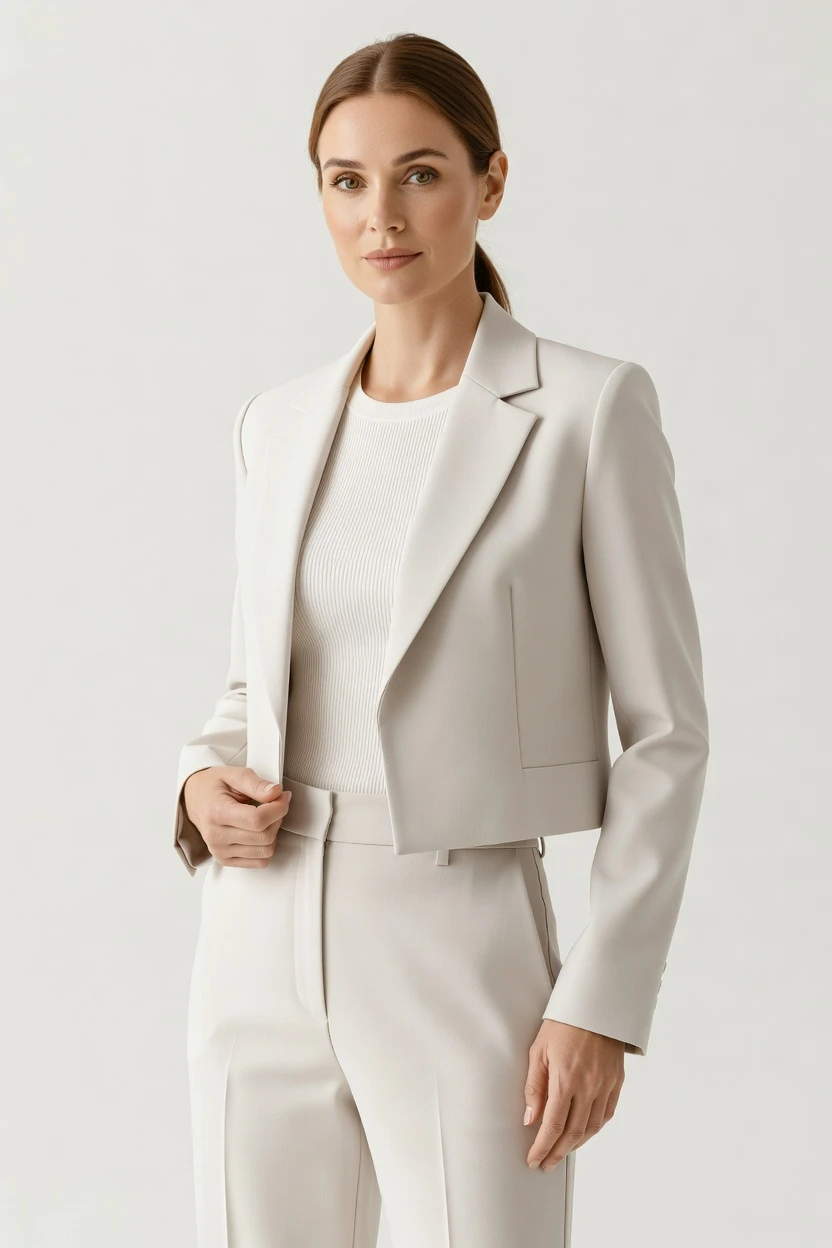
Pre-set for clean catalogue output: 85mm lens, half-body framing, studio softbox, light grey seamless, and full-outfit focus. You click through product-first controls to keep garments readable, consistent, and ready for repeatable SKU production. 5 tokens · ~34s per image
- 6 clicks · 0 keystrokes
- app.rawshot.ai / new_shoot
How it works
From Garment Upload to Catalog Output
Built for commerce teams that need repeatable imagery, clean controls, and consistent results across a handful of products or thousands of SKUs.
- Step 01
Upload the Garment
Start with the product, not a blank text box. Your garment becomes the source for cut, colour, pattern, logo, and proportion.
- Step 02
Set the Catalog Controls
Choose lens, framing, pose, angle, lighting, background, aspect ratio, and visual style with clicks. The interface behaves like a real fashion tool, not a chat window.
- Step 03
Generate at SKU Scale
Create a single image in the browser or run full catalog batches through the API. The same model, the same controls, and the same quality carry across every SKU.
Spec sheet
Proof for Catalog Teams, Not Demos
These twelve surfaces show how RAWSHOT keeps fashion catalog production controlled, labelled, and scalable without studio budgets or typed instructions.
- 01
Built to Avoid Real-Person Likeness
Every synthetic model is assembled from 28 body attributes with 10+ options each. Accidental real-person likeness is statistically negligible by design.
- 02
Every Setting Is a Click
Camera, crop, pose, expression, lighting, background, and style live in buttons, sliders, and presets. You direct the output through the interface, never syntax.
- 03
The Garment Stays Central
RAWSHOT is engineered around the product itself, so cut, colour, pattern, logo, fabric, drape, and proportion remain the brief. That matters when catalog accuracy drives returns, trust, and conversion.
- 04
Diverse Synthetic Models, Clearly Labelled
You work with diverse synthetic models designed for fashion presentation and transparently labelled as such. Honest output beats ambiguity when brand trust is on the line.
- 05
Same Face Across Every SKU
Save a model once and reuse it across your full product range. The face and body stay consistent from item to item, with no drift between shoots.
- 06
150+ Styles for One Catalog System
Move from catalog clean to campaign gloss, street, vintage, noir, and more without changing tools. One platform covers the visual range a growing brand actually needs.
- 07
2K, 4K, and Every Ratio
Generate stills in 2K or 4K and frame for 1:1, 4:5, PDP crops, marketplace requirements, or social placements. The same product can be republished without rebuilding the shoot.
- 08
Labelled, Signed, and Compliance-Ready
Outputs carry C2PA-signed provenance, AI labelling, and watermarking layers. RAWSHOT is built for EU AI Act Article 50, California SB 942, and GDPR-aligned operation.
- 09
Signed Audit Trail per Image
Each image carries a signed record that supports traceability and internal review. Catalog teams get operational proof, not just a file dropped into a folder.
- 10
Browser for Shoots, API for Scale
Use the GUI for single looks and approvals, then move the same production logic into the REST API for batch workflows. One product serves both startup operators and enterprise catalog teams.
- 11
Predictable Speed and Price
Still images run at about ~$0.55 per image and ~30–40 seconds per generation, with tokens that never expire. Failed generations refund tokens, which keeps testing practical.
- 12
Commercial Rights Stay Clear
Every output includes full commercial rights, permanent and worldwide. That clarity matters when catalog imagery moves across PDPs, marketplaces, ads, and retail partners.
Outputs
Catalog Output, directed by clicks
From clean PDP-ready frames to branded merchandising sets, the garment stays readable and the catalog stays consistent. You can scale one style system across every product line.


Browse 150+ visual styles →
Comparison
RAWSHOT vs category tools vs DIY prompting
Three lenses on every dimension — what you optimize for in RAWSHOT versus typical category tools and blank-box AI workflows.
01
Interface
RAWSHOT
Click-driven controls for camera, framing, light, pose, and styleCategory tools + DIY
Often lighter controls with less directorial depth and more hidden constraints. DIY prompting: Typed instructions and trial-and-error iterations before anything usable appears02
Garment fidelity
RAWSHOT
Built around the garment so cut, colour, pattern, and logos holdCategory tools + DIY
Can soften garment-specific detail or simplify product features across variants. DIY prompting: Garment drift and invented logos are common across repeated generations03
Model consistency across SKUs
RAWSHOT
Same saved model reused across the full catalog without face driftCategory tools + DIY
Consistency can weaken across larger product runs or separate shoots. DIY prompting: Faces change between outputs, breaking catalog continuity and brand presentation04
Provenance + labelling
RAWSHOT
C2PA-signed, AI-labelled, watermarked, and traceable per imageCategory tools + DIY
Provenance and labelling are often partial or absent. DIY prompting: No C2PA, no dependable labelling, and no signed provenance metadata05
Commercial rights
RAWSHOT
Full commercial rights to every output, permanent and worldwideCategory tools + DIY
Rights terms vary and can be harder for teams to audit. DIY prompting: Rights clarity is often unclear for commerce teams publishing at scale06
Pricing transparency
RAWSHOT
Flat per-image pricing with tokens that never expire and one-click cancelCategory tools + DIY
Per-seat plans, volume tiers, or sales-gated upgrades are common. DIY prompting: No clean production cost model when iteration time and retries keep expanding07
Iteration speed per variant
RAWSHOT
New catalog variants generated in about 30–40 seconds eachCategory tools + DIY
Reasonably fast, but less predictable when controls are limited. DIY prompting: Slow because you keep reworking typed instructions to fix output errors08
Catalog API
RAWSHOT
Browser GUI and REST API use the same production logicCategory tools + DIY
Some tools focus on manual use and lighter integration paths. DIY prompting: No structured catalog pipeline for reliable nightly SKU generation
Prompting does not scale
Stop writing essays. Direct the shoot.
Most AI photo tools start with a blank text box. Rawshot turns the shoot into repeatable controls, so creative teams can produce consistent fashion imagery without prompt syntax or one-off hacks.
Category norm
ManualCreate a premium editorial fashion photograph of a model wearing the exact navy oversized wool coat from SKU-1842, full-body crop, realistic hands, consistent facial identity, clean e-commerce lighting, subtle Paris street background, 85mm lens, no logo distortion, no fabric hallucination, same pose as last campaign, repeatable for all colorways...
A prompt can describe one image. It cannot become a shared production system for hundreds of products, models, angles and markets.
Rawshot
ClicksSaved shoot recipe
Apply to 1 SKU or 10,000 via GUI, CSV or REST API.
Rawshot makes creative direction visible: buttons, presets and sliders instead of hidden prompt craft. The result is easier to teach, faster to approve and built for repeat production.
Use cases
Twelve Catalog Operators We Arm
Operator archetypes and how click-directed, garment-first output fits the way they actually work.
- 01
Indie Designer Launching a First Drop
Build a polished product catalog before a traditional shoot budget exists, then keep the look consistent as new styles arrive.
Confidence · high
- 02
DTC Apparel Team Refreshing PDPs
Update seasonal catalog images across core styles without reopening studio logistics for every colourway and size run.
Confidence · high
- 03
Marketplace Seller Managing Many Listings
Generate clean, repeatable product imagery that fits platform ratios and keeps the same visual system across hundreds of listings.
Confidence · high
- 04
Factory-Direct Manufacturer Publishing Fast
Turn incoming garment files into on-model catalog assets quickly enough to support direct sales without building an in-house studio.
Confidence · high
- 05
Resale Operator Standardising Mixed Inventory
Create consistent on-model catalogue imagery across one-off items so the storefront feels cohesive even when stock is not.
Confidence · high
- 06
Kidswear Brand Releasing Frequent Capsules
Keep the catalog readable and unified across rapid launches, with garment detail front and center instead of improvised styling workarounds.
Confidence · high
- 07
Adaptive Fashion Team Showing Fit Clearly
Produce catalog imagery that represents closures, proportions, and function with product-first framing rather than generic fashion outputs.
Confidence · high
- 08
Lingerie DTC Brand Needing Controlled Presentation
Direct clean, consistent product imagery with clear composition choices and labelled synthetic models suited to sensitive categories.
Confidence · high
- 09
Crowdfunding Creator Prepping a Launch Page
Show a full range of catalog-ready visuals before committing to a studio day, so backers see the line with confidence.
Confidence · high
- 10
Student Brand Building a Lookbook-to-Catalog Bridge
Move from a few hero images into a usable product catalog without changing tools, workflows, or the visual language of the collection.
Confidence · high
- 11
Accessories Label Merchandising Multiple Lines
Shoot handbags, jewelry, watches, and sunglasses in one system while preserving category-specific framing and ratio needs.
Confidence · high
- 12
Enterprise Catalog Team Running Batch Production
Push thousands of SKUs through the REST API with the same model logic, audit trail, and rights structure used in the browser.
Confidence · high
— Principle
Honest is better than perfect.
Catalog imagery gets reused everywhere: PDPs, marketplaces, wholesale decks, and paid media. That is why every RAWSHOT output is AI-labelled, C2PA-signed, and backed by visible plus cryptographic watermarking, with a signed audit trail per image. For catalog teams, honesty is not a footnote; it is the operational standard that keeps attribution, review, and publishing clean.
Rights & provenance
Full commercial rights. Forever.
- C2PA-signed on every image — EU AI Act Article 50 compliant
- 28-attribute synthetic models — real-person likeness statistically impossible
- Full commercial rights to every generation — no recurring licensing fees
- Tokens never expire · One-click cancel · Transparent pricing
EU AI Act
C2PA
Commercial use
Pricing
~$0.55 per image.
~30–40 seconds per generation. Tokens never expire. Cancel in one click.
- 01The cancel button is on the pricing page.
- 02No per-seat gates. No 'contact sales' walls for core features.
- 03Failed generations refund their tokens.
- 04Full commercial rights to every output, permanent, worldwide.
FAQ
Practical answers on control, rights, pricing, scale, and compliant publishing.
Do I need to write prompts to use RAWSHOT?
Never. You direct every output with sliders, presets, and clicks on the garment, not typed prompts. That matters for fashion teams because catalog production depends on repeatable decisions like lens, framing, background, lighting, crop, and model consistency, not on whoever happens to be best at phrasing instructions into a chat box. RAWSHOT is designed like a real application, so a buyer, merchandiser, or content lead can work inside a controlled interface instead of translating visual intent into guesswork.
For commerce operations, reliability beats cleverness. RAWSHOT keeps pricing, timings, commercial rights, provenance, watermarking, and generation controls explicit, whether you are using the browser for one look or the REST API for a larger catalog run. The result is a workflow teams can standardise, QA, and hand across roles without retraining everyone on text syntax or accepting avoidable garment errors.
What does an AI catalogue generator actually change for SKU-scale fashion catalogs?
It changes who gets access to catalog imagery and how repeatable that production becomes. Instead of booking a studio day for every range update, you can generate on-model images for individual SKUs or whole assortments with the same model, framing logic, and visual system. For fashion teams, that means launches are less constrained by sample traffic, model availability, and reshoot timing, while still keeping the garment central to the final image.
RAWSHOT makes that practical by combining a click-driven interface with product-first controls, 2K and 4K output, every aspect ratio, and the option to move from browser work into REST API pipelines. Because tokens never expire, failed generations refund tokens, and pricing stays flat per image, teams can test variants without introducing a separate commercial negotiation every time the catalog grows. Operationally, that lets you treat catalog imagery as infrastructure rather than a one-off event.
Why skip reshooting every SKU when seasons, colourways, or merchandising pages change?
Because most catalog updates are not creative reinventions; they are operational refreshes. When a collection rolls into a new season, teams usually need the same presentation logic across new colours, revised assortments, alternate crops, and new channel requirements. Rebooking physical shoots for every one of those changes is slow, expensive, and often unrealistic for growing brands that never had regular studio access in the first place.
RAWSHOT lets you keep the model, visual style, framing, and output format consistent while swapping in the garment details that actually changed. You can regenerate for 1:1 marketplaces, 4:5 PDPs, or higher-resolution assets without rebuilding the whole production chain. That means your team spends less time coordinating logistics and more time controlling a consistent catalog system around the product itself.
How do we turn flat garments into catalogue-ready imagery without prompting?
You start with the garment and then set the shoot through interface controls. In RAWSHOT, you choose lens, framing, pose, camera angle, lighting, background, visual style, product focus, aspect ratio, and resolution through buttons and presets. That gives merchandisers and content teams a stable production method for turning product assets into on-model catalog imagery without relying on freeform text or ad hoc creative interpretation.
The workflow is built for apparel reality. A clean catalog setup might use an 85mm lens, half-body framing, studio softbox light, light grey seamless background, and a saved model carried across a product family. Because the same control structure works in the GUI and the REST API, you can test a look manually, approve it, and then apply the same production logic across broader SKU batches without losing consistency between pilot and scale.
Why does RAWSHOT beat ChatGPT, Midjourney, or generic image models for fashion PDP work?
Because fashion PDPs need control over the garment, not a guessing game around text interpretation. Generic image tools commonly produce garment drift, invented logos, inconsistent faces, and weak repeatability across a catalog. Even when an image looks acceptable at first glance, the operational problem appears later: you cannot reliably keep the same model, preserve product details, or prove provenance across hundreds of assets meant for commerce use.
RAWSHOT is built around click-driven fashion production instead. You save a model, keep the face and body stable, control the shot with explicit settings, and receive C2PA-signed, AI-labelled outputs with clear commercial rights. For a team publishing apparel imagery at scale, that difference is practical, not philosophical. It means fewer avoidable QA failures, cleaner approvals, and a catalog system you can trust from first test image to full SKU rollout.
Can we use these catalog images commercially across PDPs, marketplaces, and paid media?
Yes. RAWSHOT gives you full commercial rights to every output, permanent and worldwide. That matters because fashion catalog assets rarely stay in one place; a single image often moves from the product page to marketplaces, email, social crops, retail decks, and paid acquisition. Teams need a rights position they can understand quickly and apply consistently across channels without legal ambiguity slowing publication.
RAWSHOT also pairs those rights with transparent provenance practices. Outputs are AI-labelled, C2PA-signed, and protected with visible plus cryptographic watermarking, while each image carries a signed audit trail. For brand and commerce teams, the takeaway is simple: you can publish with a clear rights framework and a clean attribution standard, rather than choosing between usable output and honest disclosure.
What should our team check before publishing AI-labelled fashion catalog images?
Check the things that affect commerce trust first. Confirm the garment reads correctly in cut, colour, pattern, logo placement, fabric behaviour, and proportion, then verify the selected model, framing, and crop fit the destination channel. Teams should also confirm that the output is labelled as AI, that provenance is intact, and that the image aligns with the visual system used across the rest of the catalog. Good QA is about product accuracy and operational consistency, not only about whether the picture looks polished.
RAWSHOT supports that review process with C2PA-signed provenance, visible and cryptographic watermarking, a signed audit trail per image, and stable controls that can be reproduced across runs. Because the system is built around saved settings and repeatable model choices, reviewers are checking a controlled workflow rather than a one-off surprise. That makes approval faster and more defensible when many SKUs need to go live at once.
How much does still-image catalog generation cost, and what happens if a generation fails?
For still images, RAWSHOT runs at about ~$0.55 per image, with generation typically taking around 30–40 seconds. Tokens never expire, which matters for merchandising teams working around launch calendars instead of fixed monthly usage windows. If a generation fails, the tokens are refunded, so testing and iteration stay commercially sane instead of turning every failed attempt into wasted budget.
The pricing model is intentionally straightforward. There are no per-seat gates and no requirement to move into a sales-led plan just to access core product capability. The cancel button is on the pricing page, and teams can keep using the same platform whether they are generating a handful of PDP images or building a larger catalog workflow. That predictability is what lets operators plan output, not just experiment with it.
Can RAWSHOT plug into our Shopify-scale catalog workflow through an API?
Yes. RAWSHOT includes a REST API for catalog-scale production alongside the browser GUI used for individual shoots and approvals. That means teams can establish a visual standard in the interface, then carry the same logic into automated or semi-automated workflows that support broader assortments, batch operations, or downstream commerce systems. The value is consistency: the catalog pipeline does not become a different product just because the volume increases.
For operators working at Shopify scale or beyond, that opens a cleaner path from merchandising decisions to published imagery. You can align model choice, framing, style, and output requirements with your internal catalog rules, while keeping signed audit trails, provenance signals, and rights clarity attached to each image. In practice, that helps content, engineering, and merchandising teams work from one production standard rather than juggling disconnected tools.
Can one team use the browser while another runs batch production through the API?
Yes, and that is one of the main operational advantages of the platform. A creative or merchandising lead can use the browser GUI to establish the look, approve framing, select the saved model, and confirm garment presentation, while a technical or catalog operations team uses the REST API to scale the exact same setup across larger SKU volumes. That handoff matters because most fashion teams are cross-functional; image direction and image throughput rarely sit with the same person.
RAWSHOT keeps those roles aligned by using one engine, one control model, one quality standard, and the same per-image economics whether you are making one image or ten thousand. There are no separate feature gates that punish growth, and there is no need to reinterpret a successful setup when moving from manual testing to production scale. The practical result is fewer breakdowns between creative approval and catalog delivery.
Keep exploring