
— Campaign · Editorial · 150+ styles · 4K
Direct your next drop's campaign with the AI Editorial Image Generator.
Generate campaign-ready fashion imagery with editorial lighting, controlled framing, and faithful garment detail. Click through lens, pose, light, background, and style presets instead of wrestling with a text box. No studio. No samples. No prompts.
- ~$0.55 per image
- ~30–40s per generation
- 150+ styles
- 2K or 4K
- Every aspect ratio
- Full commercial rights
7-day free trial • 50 tokens (10 images) • Cancel anytime

Direct the shoot. Zero prompts.
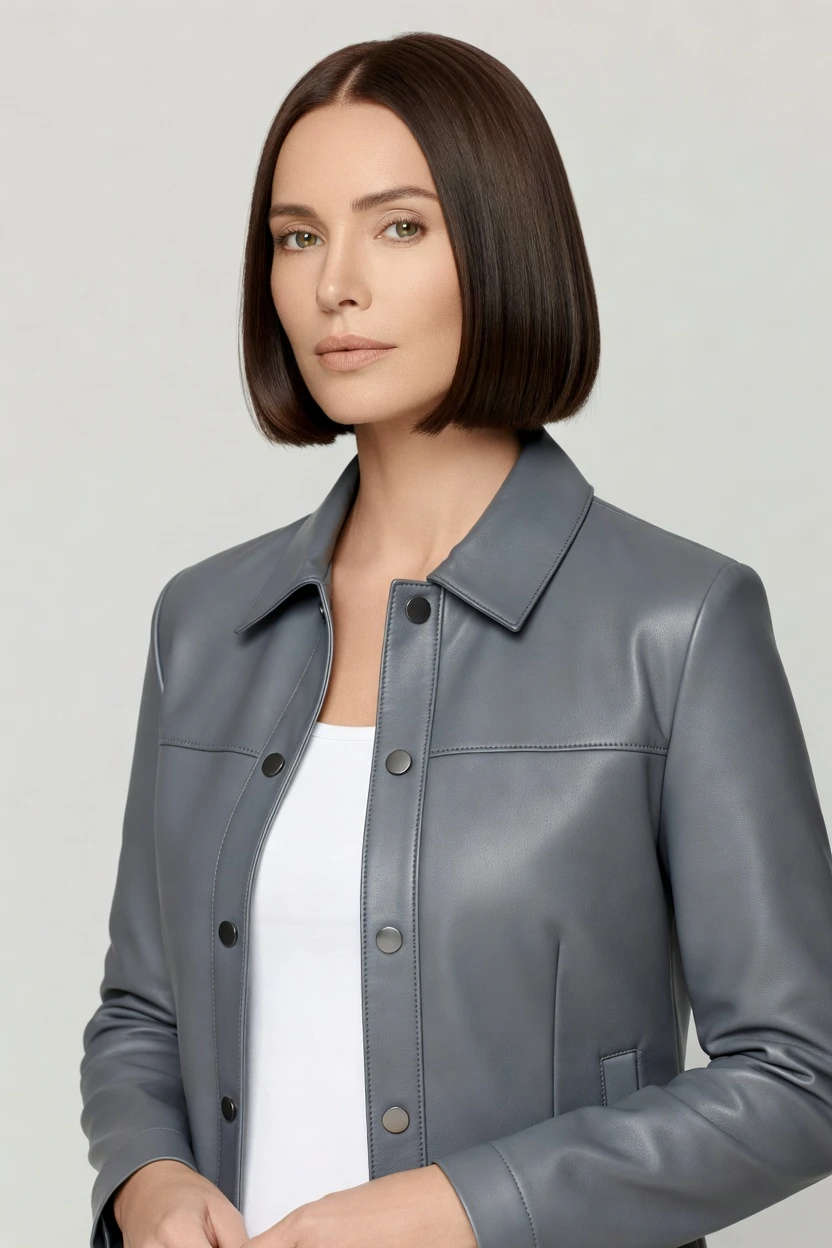
Built for editorial stills: an 85mm lens, half-body framing, studio softbox light, and a campaign gloss finish. You set the mood, crop, and product focus with clicks, then generate a polished fashion frame around the garment. 5 tokens · ~34s per image
- 6 clicks · 0 keystrokes
- app.rawshot.ai / new_shoot
How it works
Build Editorial Frames Without the Studio
Move from garment to campaign still in three clear steps: choose the setup, direct the frame, then generate consistent variants.
- Step 01
Select the Editorial Setup
Choose the lens, framing, lighting, background, and aspect ratio that fit your campaign channel. The interface behaves like a shoot plan, with visual controls instead of a blank text field.
- Step 02
Adjust Around the Garment
Set pose, mood, and product focus so the styling supports the item rather than mutating it. RAWSHOT is engineered to represent cut, colour, pattern, logo, and drape faithfully.
- Step 03
Generate and Scale the Series
Create the hero frame, then spin out variants for socials, PDP crops, and seasonal edits in the same system. The same workflow runs in the browser for one look or through the REST API for large catalogs.
Spec sheet
Proof That Editorial Control Is Click-Driven
These twelve surfaces show what fashion teams actually need: faithful garments, transparent provenance, consistent outputs, and scale without extra gates.
- 01
Built to Avoid Real-Person Likeness
Each synthetic model is assembled from 28 body attributes with 10+ options each. Accidental real-person likeness is statistically negligible by design.
- 02
Every Setting Is a Click
Lens, angle, pose, facial expression, light, background, and style live in buttons, sliders, and presets. You direct the shoot in an application, not a chat box.
- 03
The Garment Stays the Brief
RAWSHOT is engineered around the real product, so cut, colour, pattern, logo, fabric, and drape remain central. Editorial styling serves the garment instead of bending it.
- 04
Diverse Synthetic Models, Labelled Clearly
Use diverse synthetic models that are transparently labelled as synthetic outputs. Honest labelling is part of the product, not an afterthought.
- 05
Same Face Across the Whole Story
Save a model once and reuse it across every look, drop, or SKU. You get continuity across campaign variants without face drift between outputs.
- 06
150+ Visual Styles for Editorial Range
Move from clean campaign gloss to noir, flash, film grain, street, or vintage in a few clicks. Style variety is built in for seasonal direction and platform-specific art direction.
- 07
2K, 4K, and Every Aspect Ratio
Generate stills in 2K or 4K and crop for 1:1, 4:5, 9:16, 16:9, and more. One shoot setup can feed PDPs, lookbooks, ads, and social placements.
- 08
Signed, Labelled, and Compliance-Ready
Outputs carry C2PA-signed provenance, visible and cryptographic watermarking, and AI labelling. RAWSHOT is built for EU AI Act Article 50, California SB 942, and GDPR-conscious teams.
- 09
Per-Image Audit Trail
Every image carries a signed audit trail so teams can trace what was produced and how it was labelled. That matters when editorial assets move through approvals, retail partners, and archives.
- 10
Browser for One Shoot, API for Scale
Use the GUI when a creative lead wants to direct a single editorial series. Use the REST API when the same brand language has to roll across a large catalog pipeline.
- 11
Fast, Flat Pricing for Each Still
Stills run at about $0.55 per image and usually generate in 30–40 seconds. Tokens never expire, and failed generations refund their tokens.
- 12
Commercial Rights Stay Clear
Every output includes full commercial rights, permanent and worldwide. That gives marketing, ecommerce, and marketplace teams a clean usage story from day one.
Outputs
Editorial Outputs, Ready to Publish
From campaign hero frames to channel-specific crops, the same garment can be directed into multiple editorial looks without losing consistency. Generate polished stills for launch pages, paid media, and social placements from one interface.


Browse 150+ visual styles →
Comparison
RAWSHOT vs category tools vs DIY prompting
Three lenses on every dimension — what you optimize for in RAWSHOT versus typical category tools and blank-box AI workflows.
01
Interface
RAWSHOT
Click-driven controls for lens, light, pose, background, and framing.Category tools + DIY
Often mix limited presets with shallower controls and less directorial precision. DIY prompting: You type instructions into a text box and keep revising until something usable appears.02
Garment fidelity
RAWSHOT
Engineered around the garment so cut, colour, logo, and drape stay intact.Category tools + DIY
Can style attractively, but product details often slip under broader image effects. DIY prompting: Garment drift appears between outputs, and logos or trims can be invented.03
Model consistency across SKUs
RAWSHOT
Save one model and reuse the same face and body across every look.Category tools + DIY
Consistency exists in parts, but often weakens across bigger product sets. DIY prompting: Faces change across outputs, so campaign and catalog continuity quickly breaks.04
Provenance + labelling
RAWSHOT
C2PA-signed outputs with visible and cryptographic watermarking and AI labelling.Category tools + DIY
Many tools stop at basic export without signed provenance metadata. DIY prompting: No C2PA, no audit trail, and no reliable labelling layer for downstream teams.05
Commercial rights
RAWSHOT
Full commercial rights to every output, permanent, worldwide.Category tools + DIY
Rights can be less explicit or tied to plan structure and platform terms. DIY prompting: Usage terms are often unclear for commerce teams that need clean approvals.06
Pricing transparency
RAWSHOT
Flat per-image pricing with tokens that never expire and one-click cancel.Category tools + DIY
Per-seat plans, volume tiers, or gated enterprise pricing are common. DIY prompting: Costs look indirect, but time spent iterating and fixing unusable outputs adds up.07
Iteration speed per variant
RAWSHOT
Generate editorial still variants in about 30–40 seconds from fixed controls.Category tools + DIY
Iteration can be quick, but less predictable when controls are thinner. DIY prompting: Prompt-edit loops slow teams down because each change can break the image.08
Catalog API
RAWSHOT
Same engine in browser GUI and REST API for single shoots or pipelines.Category tools + DIY
API access is often gated or separated from normal creative workflows. DIY prompting: No fashion-specific catalog API, just manual experimentation and inconsistent files.
Prompting does not scale
Stop writing essays. Direct the shoot.
Most AI photo tools start with a blank text box. Rawshot turns the shoot into repeatable controls, so creative teams can produce consistent fashion imagery without prompt syntax or one-off hacks.
Category norm
ManualCreate a premium editorial fashion photograph of a model wearing the exact navy oversized wool coat from SKU-1842, full-body crop, realistic hands, consistent facial identity, clean e-commerce lighting, subtle Paris street background, 85mm lens, no logo distortion, no fabric hallucination, same pose as last campaign, repeatable for all colorways...
A prompt can describe one image. It cannot become a shared production system for hundreds of products, models, angles and markets.
Rawshot
ClicksSaved shoot recipe
Apply to 1 SKU or 10,000 via GUI, CSV or REST API.
Rawshot makes creative direction visible: buttons, presets and sliders instead of hidden prompt craft. The result is easier to teach, faster to approve and built for repeat production.
Use cases
Who Uses Editorial Imagery Without Studio Access
Operator archetypes and how click-directed, garment-first output fits the way they actually work.
- 01
Indie Fashion Labels
Launch a new drop with polished editorial stills before a traditional studio day is even possible.
Confidence · high
- 02
DTC Campaign Teams
Create hero images for product launches, landing pages, and paid social with one consistent visual system.
Confidence · high
- 03
Crowdfunded Brands
Show the collection with campaign-grade frames while the business is still validating demand and timing.
Confidence · high
- 04
Lookbook Creators
Build seasonal stories across multiple garments, crops, and moods without losing the product's actual shape.
Confidence · high
- 05
Marketplace Sellers
Add elevated editorial shots beside plain PDP assets to make listings feel like a real brand world.
Confidence · high
- 06
Resale and Vintage Shops
Give one-off pieces stronger storytelling with controlled fashion imagery that still respects item-specific details.
Confidence · high
- 07
Factory-Direct Manufacturers
Present samples in launch-ready brand style before retail buyers request a full physical shoot.
Confidence · high
- 08
Adaptive Fashion Teams
Direct inclusive editorial imagery with diverse synthetic models and transparent labelling built in.
Confidence · high
- 09
Lingerie DTC Brands
Produce clean, controlled stills with precise framing and garment focus for sensitive categories.
Confidence · high
- 10
Accessories Labels
Use close framing, lighting, and editorial crops to highlight handbags, eyewear, watches, and jewelry.
Confidence · high
- 11
Students and Graduates
Build portfolio-quality campaign imagery around original garments without renting a studio or crew.
Confidence · high
- 12
In-House Brand Marketers
Refresh seasonal creative fast, then keep the same visual language across ecommerce, email, and social.
Confidence · high
— Principle
Honest is better than perfect.
Editorial imagery carries brand risk as well as brand value, so provenance cannot be a hidden legal footnote. RAWSHOT signs outputs with C2PA metadata, applies visible and cryptographic watermarking, and labels synthetic content clearly so campaign teams can publish with a cleaner chain of trust. That matters when assets move from creative review to retail partners, marketplaces, and paid media.
Rights & provenance
Full commercial rights. Forever.
- C2PA-signed on every image — EU AI Act Article 50 compliant
- 28-attribute synthetic models — real-person likeness statistically impossible
- Full commercial rights to every generation — no recurring licensing fees
- Tokens never expire · One-click cancel · Transparent pricing
EU AI Act
C2PA
Commercial use
Pricing
~$0.55 per image.
~30–40 seconds per generation. Tokens never expire. Cancel in one click.
- 01The cancel button is on the pricing page.
- 02No per-seat gates. No 'contact sales' walls for core features.
- 03Failed generations refund their tokens.
- 04Full commercial rights to every output, permanent, worldwide.
FAQ
Practical answers on control, rights, pricing, scale, and compliant publishing.
Do I need to write prompts to use RAWSHOT?
Never. You direct every output with sliders, presets, and clicks on the garment rather than typed instructions, so teams can work in the language of lenses, framing, lighting, background, and product focus. That matters for fashion operations because buyers, marketers, and founders already know how they want the product to look; they should not have to translate that into syntax before they can ship imagery. RAWSHOT keeps the interface consistent across single-shoot browser work and larger production workflows, which makes it easier to brief internally and repeat what worked.
For commerce teams, reliability beats improvisation. RAWSHOT makes pricing, generation times, token behavior, refunds on failed generations, rights, and provenance explicit, so the workflow behaves like infrastructure instead of experimentation. You can rehearse campaign outputs, review garment fidelity, and scale winning settings into repeatable production without a text-box bottleneck slowing down the team.
What does an AI editorial image generator actually change for fashion campaign teams?
It changes who gets access to editorial imagery in the first place. Traditional fashion photography can put a campaign day far out of reach for smaller brands, and generic image tools often replace that budget wall with an interface wall that still keeps useful output inaccessible. RAWSHOT removes both barriers by giving teams a click-driven application for fashion imagery, where you choose the visual language directly and generate publishable stills around the garment.
For campaign teams, that means faster concept testing, easier channel adaptation, and more consistent brand presentation across landing pages, email, paid social, and retail submissions. You can select an 85mm crop, controlled studio light, a campaign gloss style, and a 4:5 frame, then generate a still in roughly 30–40 seconds at about $0.55 per image. The practical shift is simple: more brands get to art-direct their products instead of waiting until they can afford a full shoot day.
Why skip reshooting every SKU when the season, channel, or campaign mood changes?
Because a new season often needs a new visual treatment, not a new logistics project. When brands need different crops, lighting setups, or editorial moods for a launch, the old path means rescheduling talent, shipping samples, booking space, and hoping the new images still align with the original product story. RAWSHOT lets teams keep the garment at the center while changing the surrounding direction through visual controls, so a winter campaign, a paid social cutdown, and an email header can all come from the same production logic.
This matters especially when collections move quickly or stock levels are uneven. You can preserve continuity in model choice, framing logic, and brand tone while generating fresh variants in 2K or 4K for different placements and deadlines. Instead of treating every update like a fresh production event, teams can treat imagery as an accessible, repeatable layer of the merchandising workflow.
How do we turn flat garments into catalogue-ready editorial stills without a text-box workflow?
You start with the garment and direct the frame around it. In RAWSHOT, you choose the lens, framing, pose, camera angle, lighting, background, visual style, aspect ratio, and product focus through interface controls that feel like a shot list. That means the team can make concrete creative decisions quickly and review them in a structured way, rather than chasing output through loosely worded trial and error.
For editorial stills, that usually means selecting a campaign or noir style, pairing it with a clean seamless or studio black background, and deciding whether the item needs full-outfit framing, a half-body crop, or a close product detail. Because the system is built around garment fidelity, the styling supports the product instead of rewriting it. The operational takeaway is clear: merch, creative, and ecommerce can align on settings they can repeat, approve, and scale.
Why does RAWSHOT beat DIY image making in ChatGPT, Midjourney, or other generic models for fashion PDPs and campaigns?
Because fashion teams need reproducibility, not roulette. Generic tools can produce interesting pictures, but they often drift on the thing that matters most: the garment itself. Product details mutate, logos appear that do not belong to the brand, and the face or body can shift across outputs, which makes it hard to build a coherent campaign or trustworthy PDP set. On top of that, rights and provenance are often less explicit, leaving marketing and commerce teams to clean up uncertainty later.
RAWSHOT is different because the interface is built for directing fashion imagery rather than improvising around a general-purpose model. You click through camera, framing, lighting, style, and product focus, then generate assets with signed provenance metadata, transparent labelling, and full commercial rights to every output. That gives teams a system they can actually standardize, review, and scale instead of a creative side quest that breaks under production pressure.
Can we use RAWSHOT editorial outputs in ads, ecommerce, and retail channels with a clear rights story?
Yes. RAWSHOT gives full commercial rights to every output, permanent and worldwide, so the usage position is straightforward for campaigns, PDPs, marketplaces, and paid media. That clarity matters because fashion assets do not stay in one place; they move through agencies, channel managers, retail partners, and archived campaign libraries. Teams need to know they can publish, crop, and redistribute without guessing where the boundaries are.
RAWSHOT also pairs rights clarity with transparent labelling and provenance. Outputs carry C2PA-signed metadata and visible plus cryptographic watermarking, which helps teams document what the asset is while maintaining a usable chain of trust. In practice, that means legal, brand, and channel teams can approve faster because the image comes with both a commercial usage story and a traceable provenance layer.
What should our team check before publishing synthetic editorial stills on product pages or paid social?
Start with garment fidelity. Review cut, colour, pattern, logo placement, trim, and drape first, because those are the details that make an image commercially useful rather than merely attractive. Then check the framing, pose, and lighting against the purpose of the asset, whether that is a PDP hero, a campaign crop, or a paid social variation. The point is not abstract visual taste alone; it is whether the image tells the truth about the item while serving the channel.
After that, confirm the provenance and labelling layer. RAWSHOT outputs are C2PA-signed and include visible and cryptographic watermarking, so teams should preserve those trust signals in their workflow and archive the signed file trail with approvals. A good publishing checklist treats visual review and compliance review as the same operation, which is how brands protect both conversion quality and brand credibility.
How much does an editorial still cost in RAWSHOT, and what happens to tokens if a generation fails?
A still costs about $0.55 per image and usually generates in around 30–40 seconds, which makes budgeting straightforward for campaign tests, landing page variants, and product-page upgrades. Tokens never expire, so teams can buy capacity without worrying that unused balance disappears at the end of a billing cycle. The cancel flow is simple as well, with a one-click cancel option available on the pricing page rather than hidden behind a sales or support process.
If a generation fails, the tokens for that failed generation are refunded. That matters operationally because production teams need predictable economics when they are comparing multiple styles, crops, or model setups before approving a final direction. The broader takeaway is that RAWSHOT behaves like a usable production tool: flat image pricing, explicit timing, no seat gates, and no wasted spend when the system does not return a valid output.
Can we plug RAWSHOT into our catalog or Shopify-scale workflow through an API?
Yes. RAWSHOT supports a browser GUI for single-shoot creative work and a REST API for larger-scale catalog operations, so brands do not have to choose between experimentation and structured production. That matters when a team wants to establish a visual standard in the interface first, then apply the same logic across a broader catalog pipeline. The same product is designed to serve both the founder directing a few campaign frames and the operations team managing many SKUs.
For ecommerce workflows, the practical value is consistency. Once your team has validated a model, crop logic, lighting setup, and style direction, those choices can be carried into batch-oriented processes without switching platforms or entering a gated enterprise tier for core functionality. That makes RAWSHOT useful as infrastructure, not just as a one-off creative tool for isolated hero images.
How do small teams and larger catalog teams use the same editorial workflow without losing quality control?
They use the same engine and the same controls, then apply them at different scales. A small team might direct one hero image in the browser, compare a few style options, and publish the winning frame the same day. A larger team might define the same visual rules once and push them through a broader pipeline for repeated use across product groups, campaigns, and seasonal refreshes. The important part is that quality does not depend on upgrading into a different product.
RAWSHOT keeps pricing per image, output rights, provenance handling, and model consistency aligned whether you are generating one still or a high-volume series. That gives creative, ecommerce, and operations teams a shared standard for what a publishable image looks like and how it is documented. In practice, scale becomes a planning question rather than a platform switch, which is exactly how production infrastructure should work.
Keep exploring