
— Carousel campaigns · 150+ styles · 4K
Direct your next fashion carousel with the AI Facebook Carousel Generator.
Generate campaign-ready fashion imagery built for swipeable ad sequences and product-first storytelling. Click camera, framing, light, background, style, and aspect ratio in a real interface, then keep every panel visually aligned across the set. No studio. No samples. No prompts.
- ~$0.55 per image
- ~30–40s per generation
- 150+ styles
- 2K or 4K
- 4:5 and 1:1
- Full commercial rights
7-day free trial • 50 tokens (10 images) • Cancel anytime

Direct the shoot. Zero prompts.
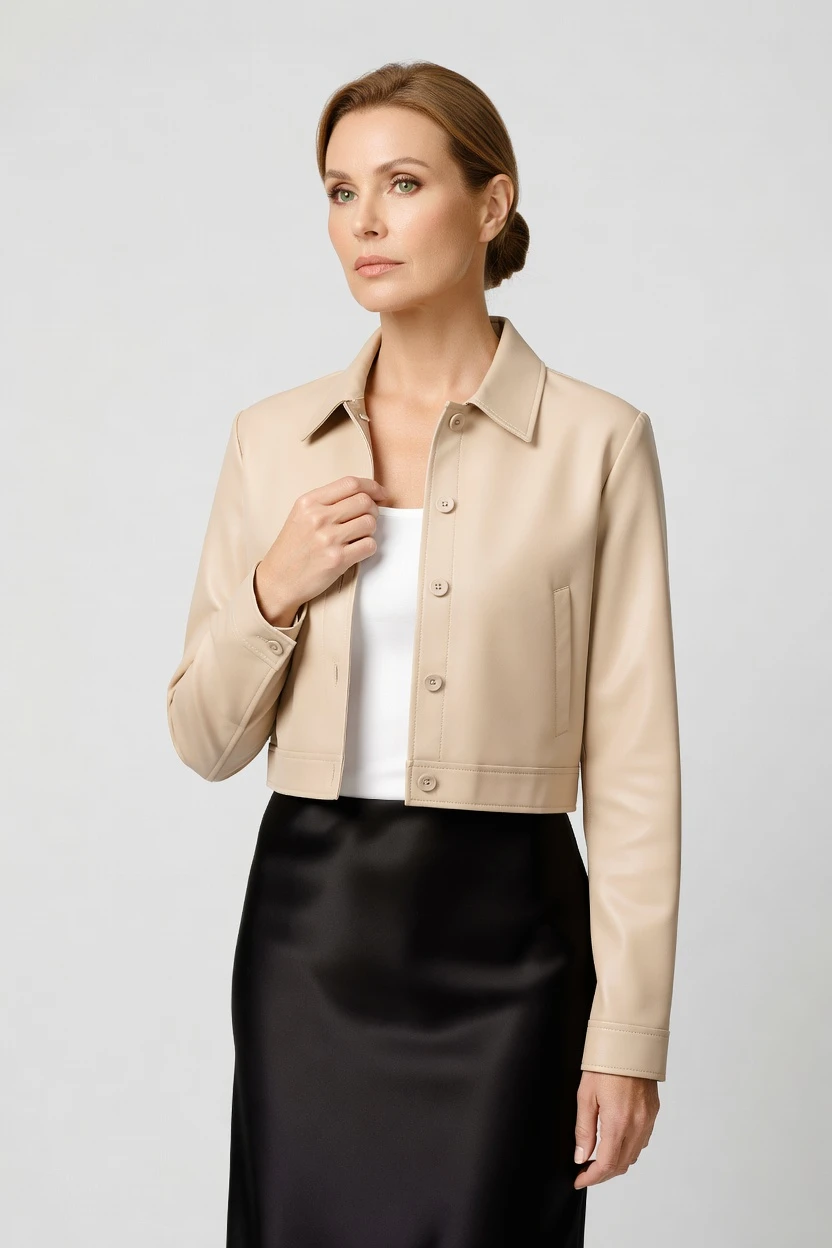
Pre-set for Facebook carousel creative: 4:5 framing, studio softbox light, clean campaign mood, and a gloss visual style that keeps each card consistent across the sequence. You click through the look, lock the product focus, and generate matched ad-ready panels around the garment. 5 tokens · ~34s per image
- 6 clicks · 0 keystrokes
- app.rawshot.ai / new_shoot
How it works
Build Scroll-Stopping Carousel Sets
From the first hero panel to the closing product card, each frame stays directed, consistent, and ready for paid social.
- Step 01
Set the Carousel Frame
Choose the aspect ratio, framing, lens, and lighting for the first card. Your visual direction starts with clicks, so the ad set begins from a controlled baseline instead of an empty text box.
- Step 02
Keep the Garment Central
Adjust pose, angle, and product focus around the piece you are selling. RAWSHOT is engineered around the garment, so cut, colour, pattern, logo, and drape stay the brief.
- Step 03
Generate Matched Variants
Create multiple panels for hooks, benefits, detail shots, and closing frames while keeping the campaign visually aligned. Use the browser for one-off ad builds or carry the same logic into batch workflows through the API.
Spec sheet
Proof for Paid Social Fashion Teams
These twelve surfaces show why carousel operators need more than image output; they need control, fidelity, provenance, and scale.
- 01
Built to Avoid Real-Person Likeness
Synthetic models are assembled from 28 body attributes with 10+ options each. Accidental real-person likeness is statistically negligible by design.
- 02
Every Decision Is a Click
Camera, pose, expression, light, background, and style live in buttons, sliders, and presets. You direct the shoot in an application built for fashion teams.
- 03
The Garment Stays the Brief
RAWSHOT is engineered to represent cut, colour, pattern, logo, fabric, and drape faithfully. The imagery follows the product instead of bending the product around generic image behavior.
- 04
Diverse Synthetic Models, Clearly Labelled
You work with diverse synthetic models that are transparently labelled as such. That gives growing brands access to on-model imagery without borrowing trust from real identities.
- 05
One Face Across Every Card
Keep the same model and brand look across carousel panels, product drops, and retargeting sets. No drift between outputs and no 'close enough' continuity fixes.
- 06
150+ Visual Styles for Ad Creative
Move from catalog clean to editorial, campaign, street, vintage, noir, and more. You can match prospecting, retargeting, and seasonal creative without rebuilding the workflow.
- 07
Sized for Every Placement
Generate in 2K or 4K and choose every aspect ratio, including 1:1 and 4:5 for social placements. The same garment can be directed into multiple channel formats from one interface.
- 08
Labelled, Signed, and Compliant
Outputs carry C2PA-signed provenance, AI labelling, and watermarking layers. RAWSHOT is built for EU AI Act Article 50, California SB 942, GDPR, and EU-hosted operations.
- 09
A Signed Audit Trail per Image
Each image carries a signed record that supports internal review and downstream governance. That matters when ads move through brand, legal, marketplace, and agency checkpoints.
- 10
One Tool for Shoots and Pipelines
Use the browser GUI when you are building a single campaign by hand, then scale the same production logic through the REST API. Indie teams and enterprise catalog ops use the same core product.
- 11
Fast, Flat, and Transparent
Images cost about $0.55 each and generate in roughly 30–40 seconds. Tokens never expire, failed generations refund tokens, and pricing does not punish growth.
- 12
Rights Stay Clear
Full commercial rights come with every output, permanent and worldwide. That gives paid social teams a clean path from concept to launch without rights ambiguity.
Outputs
Carousel Outputs, Ready to Launch
Build a sequence, not a one-off image. Generate hero frames, detail panels, offer cards, and closing shots that hold together as one fashion campaign.


Browse 150+ visual styles →
Comparison
RAWSHOT vs category tools vs DIY prompting
Three lenses on every dimension — what you optimize for in RAWSHOT versus typical category tools and blank-box AI workflows.
01
Interface
RAWSHOT
Click-driven controls for camera, framing, light, pose, and styleCategory tools + DIY
Usually mix shorter controls with narrower direction and less precise shoot handling. DIY prompting: You type instructions manually and keep reworking wording before results become usable02
Garment fidelity
RAWSHOT
Garment-led generation preserves cut, colour, pattern, logo, and drapeCategory tools + DIY
Often lose smaller product details under stronger style bias. DIY prompting: Garment drift and invented logos appear across outputs, especially in multi-image sets03
Model consistency across SKUs
RAWSHOT
Same face and body can stay locked across every campaign panelCategory tools + DIY
Consistency exists but often weakens across larger product runs. DIY prompting: Faces change from output to output, breaking catalog and ad continuity04
Provenance + labelling
RAWSHOT
C2PA-signed, AI-labelled, visibly and cryptographically watermarked outputsCategory tools + DIY
Many provide image files without strong provenance records or clear labelling. DIY prompting: Missing provenance metadata, no signed record, and no dependable labelling trail05
Commercial rights
RAWSHOT
Full commercial rights to every output, permanent and worldwideCategory tools + DIY
Rights terms vary by plan, usage tier, or platform conditions. DIY prompting: Rights are often unclear for advertising, resale, and scaled brand use06
Pricing transparency
RAWSHOT
Flat per-image pricing, tokens never expire, failed generations refundCategory tools + DIY
Per-seat plans and volume tiers can change economics as teams grow. DIY prompting: Low entry cost hides iteration waste, manual retries, and approval friction07
Iteration speed per variant
RAWSHOT
Generate matched carousel variants in about 30–40 seconds eachCategory tools + DIY
Variant generation exists but often with weaker repeatability between cards. DIY prompting: Every variation means another manual rewrite and another round of uncertain outputs08
Catalog API
RAWSHOT
Browser GUI for one shoot, REST API for catalog-scale productionCategory tools + DIY
API access is commonly gated or separated from core workflows. DIY prompting: No clean catalog API pattern for consistent apparel production at scale
Prompting does not scale
Stop writing essays. Direct the shoot.
Most AI photo tools start with a blank text box. Rawshot turns the shoot into repeatable controls, so creative teams can produce consistent fashion imagery without prompt syntax or one-off hacks.
Category norm
ManualCreate a premium editorial fashion photograph of a model wearing the exact navy oversized wool coat from SKU-1842, full-body crop, realistic hands, consistent facial identity, clean e-commerce lighting, subtle Paris street background, 85mm lens, no logo distortion, no fabric hallucination, same pose as last campaign, repeatable for all colorways...
A prompt can describe one image. It cannot become a shared production system for hundreds of products, models, angles and markets.
Rawshot
ClicksSaved shoot recipe
Apply to 1 SKU or 10,000 via GUI, CSV or REST API.
Rawshot makes creative direction visible: buttons, presets and sliders instead of hidden prompt craft. The result is easier to teach, faster to approve and built for repeat production.
Use cases
Where Fashion Carousel Creative Wins
Operator archetypes and how click-directed, garment-first output fits the way they actually work.
- 01
Indie DTC Launches
Build a four-card Facebook carousel for a new drop without booking a studio day, while keeping the product central in every frame.
Confidence · high
- 02
Retargeting Teams
Generate matched follow-up panels that move from full look to detail shot to offer card without breaking brand continuity.
Confidence · high
- 03
Crowdfunding Brands
Show concept-stage garments in campaign-ready social sequences before samples travel across suppliers and studios.
Confidence · high
- 04
Marketplace Sellers
Create clean carousel creatives that turn catalog assets into swipeable ads for seasonal promotions and bundle pushes.
Confidence · high
- 05
Kidswear Labels
Direct bright, controlled ad sets with labelled synthetic models and keep the tone consistent across parent-targeted placements.
Confidence · high
- 06
Adaptive Fashion Lines
Present function, fit, and garment detail in a card-by-card story that respects the product instead of stylizing past it.
Confidence · high
- 07
Lingerie DTC Teams
Produce polished carousel campaigns with clear rights, transparent labelling, and repeatable visual control across launches.
Confidence · high
- 08
Vintage and Resale Sellers
Turn one-off pieces into structured social sequences that spotlight texture, condition, and standout details fast.
Confidence · high
- 09
Factory-Direct Manufacturers
Generate Facebook carousel creative for buyer outreach, private-label pitches, and product testing across many SKUs.
Confidence · high
- 10
In-House Paid Social Buyers
Spin up fresh ad variants by adjusting framing, background, and style rather than restarting creative from scratch.
Confidence · high
- 11
Agency Creative Ops
Keep multiple client campaigns moving with one interface that handles single shoots in-browser and larger runs through the API.
Confidence · high
- 12
Student Designers and Makers
Launch polished social storytelling around your garments even if traditional photography never fit the budget.
Confidence · high
— Principle
Honest is better than perfect.
Facebook carousel creative moves through ad reviewers, brand teams, and customers who increasingly expect clear disclosure. RAWSHOT outputs are AI-labelled, C2PA-signed, and watermarked with visible and cryptographic layers, so your campaign assets carry provenance with them. That is not a legal footnote for us; it is part of making synthetic fashion imagery usable in real commerce.
Rights & provenance
Full commercial rights. Forever.
- C2PA-signed on every image — EU AI Act Article 50 compliant
- 28-attribute synthetic models — real-person likeness statistically impossible
- Full commercial rights to every generation — no recurring licensing fees
- Tokens never expire · One-click cancel · Transparent pricing
EU AI Act
C2PA
Commercial use
Pricing
~$0.55 per image.
~30–40 seconds per generation. Tokens never expire. Cancel in one click.
- 01The cancel button is on the pricing page.
- 02No per-seat gates. No 'contact sales' walls for core features.
- 03Failed generations refund their tokens.
- 04Full commercial rights to every output, permanent, worldwide.
FAQ
Practical answers on control, rights, pricing, scale, and compliant publishing.
Do I need to write prompts to use RAWSHOT?
Never. You direct every output with sliders, presets, and clicks on the garment, not typed instructions. That matters for fashion teams because ad production breaks when image generation depends on one person knowing the right wording tricks. In RAWSHOT, camera, framing, angle, pose, lighting, background, product focus, aspect ratio, and visual style are all explicit controls, so buyers, marketers, and creative leads can work inside the same predictable interface.
For commerce operations, reliability beats guesswork. The same click-driven logic works in the browser GUI for one-off campaign builds and in REST API workflows for larger catalogs, which means teams can standardize how carousel assets are produced across roles. You also keep transparent pricing, non-expiring tokens, refunded tokens on failed generations, provenance signalling, and clear commercial-rights framing visible from the start, so launching social creative feels like operating software rather than negotiating with a chat box.
What does an AI Facebook Carousel Generator change for fashion ad teams?
It changes who gets to produce campaign imagery at all. Traditional shoots can run from €8,000 to €30,000 per day, which shuts many operators out before the first ad concept is even tested. RAWSHOT gives paid social teams a way to build swipeable fashion sequences around the actual garment, so the hero frame, detail card, and closing CTA can share one visual system without requiring studio access or a specialist operator.
The practical shift is control. Instead of treating every card like a separate creative gamble, you set the lens, framing, background, lighting, style, and aspect ratio through interface controls, then generate matched outputs in 2K or 4K with full commercial rights. For a buyer or growth team, that means you can test more hooks, preserve product accuracy, and move from concept to launch with labelled, signed assets that fit real approval workflows.
Why skip reshooting every SKU when a season or offer changes?
Because social commerce moves faster than studio calendars. When your offer changes from new arrival to bundle, gift edit, or markdown, the garment usually stays the same while the creative wrapper changes. RAWSHOT lets you rework the campaign presentation around that product with new framing, styling, and backgrounds without rebuilding the asset pipeline from scratch.
That is especially useful for Facebook carousel planning, where one sequence may need multiple variants for prospecting, retargeting, and regional merchandising. You can hold the same model, product focus, and campaign tone across iterations while adjusting the card order and visual treatment to match the message. For operations teams, the outcome is simple: fewer production bottlenecks, faster seasonal refreshes, and cleaner continuity between paid ads, PDPs, and landing pages.
How do we turn flat garments into catalogue-ready carousel imagery without prompting?
You start by selecting the product, then directing the output through interface controls that mirror a real shoot workflow. Choose the lens, camera angle, framing, pose, lighting system, background, visual style, aspect ratio, and product focus, then generate the first image and build the rest of the sequence from that approved base. Because the garment is the brief, the software is tuned to preserve cut, colour, pattern, logo, fabric, and drape rather than improvising around them.
For ad teams, that means a flat source asset can become a structured carousel set with a hero card, detail frame, alternate angle, and closing CTA-ready image. You do not need to translate brand intent into fragile text instructions or hope a generic model understands apparel construction. The workflow is direct: click the creative controls, review the garment, generate variants, and publish the frames that meet merchandising and brand standards.
Why does RAWSHOT beat DIY image generation in ChatGPT, Midjourney, or other generic tools for fashion PDPs and ads?
Because fashion workflows fail on details that generic image tools do not protect. In DIY systems, the product can drift between outputs, logos can be invented, faces can change across the set, and there is usually no clean provenance record attached to the final file. That creates approval risk for paid social, where continuity across multiple cards matters and every visible product error weakens trust.
RAWSHOT is built around the garment and the production workflow, not around open-ended image behavior. You click through camera, framing, lighting, style, and composition in a controlled interface, keep the same model across SKUs, and receive outputs that are AI-labelled, C2PA-signed, and backed by a signed audit trail per image. The result is not just faster iteration; it is a production system a commerce team can repeat without turning one marketer into a full-time prompt wrangler.
Can we use RAWSHOT carousel outputs in paid ads with clear rights and disclosure?
Yes. Every output comes with full commercial rights, permanent and worldwide, which gives marketing teams a clear route into paid distribution. Just as important, the files are not presented as ambiguous media; RAWSHOT labels outputs as AI, applies visible and cryptographic watermarking, and attaches C2PA-signed provenance metadata so the origin of the asset is carried with it.
That combination matters for brands running ads across multiple markets and approval layers. Legal, brand, agency, and marketplace stakeholders increasingly want media that is both usable and honestly attributed, especially when synthetic models are involved. RAWSHOT was built around that expectation, with EU-hosted infrastructure, GDPR alignment, and compliance positioning for the disclosure standards commerce teams now need to operationalize rather than bolt on later.
What should our team check before publishing synthetic fashion carousel ads?
Check the same things you would review in any commerce image set, but do it with garment accuracy and attribution in mind. Confirm that the cut, colour, logo, pattern, and drape are represented faithfully, that the chosen framing supports the product story on each card, and that continuity holds across the whole sequence. A good carousel should feel intentionally directed from first frame to last, not assembled from unrelated outputs.
Then review the trust layer. Make sure the final files retain their AI labelling, provenance signals, and watermarking cues, and confirm that the rights status is appropriate for the intended media buy. RAWSHOT makes those checks easier because the system is explicit about commercial rights, provenance, and audit trail per image. In practice, teams should approve carousel assets the same way they approve priced media inventory: product-correct, channel-fit, and clearly attributable.
How much does a fashion still cost when we use RAWSHOT for carousel production?
Photo generation is about $0.55 per image and usually completes in around 30 to 40 seconds. Tokens never expire, failed generations refund their tokens, and cancellation is one click from the pricing page, so the economics stay visible instead of hiding behind seat licenses or volume gates. For carousel production, that gives teams a straightforward way to estimate the cost of testing multiple hooks, detail cards, and closing panels before launch.
The key is that stills, video, and model generation are priced differently because they use different amounts of compute. If you only need static ad cards, the still workflow is the right baseline; video costs more per second, and model generation is a separate saved asset you can reuse across the catalog. For social teams, the takeaway is simple: plan image-heavy testing around flat per-image pricing, then layer other formats only when the campaign needs them.
Can we connect this to Shopify-scale catalog workflows through an API?
Yes. RAWSHOT supports a browser GUI for single-shoot work and a REST API for catalog-scale pipelines, so you do not have to choose between hands-on creative control and operational throughput. That matters when one team is building ad concepts manually while another is preparing large product assortments for scheduled launches, channel syncs, or merchandising updates.
The practical advantage is consistency. The same model logic, product focus, pricing logic, rights framing, and provenance layer carry across both modes, so a campaign approved in the interface can inform structured production at larger scale. For brands operating Shopify stores or similar commerce stacks, that means the paid social team and the catalog team can work from one production system instead of stitching together disconnected image tools with different standards.
How do small teams and enterprise catalog ops both use the same AI Facebook Carousel Generator workflow?
They use the same core product, just at different production volumes. A small brand can open the browser interface, direct a handful of carousel cards for a launch, and publish them without needing extra seats, enterprise gating, or a sales-led setup. An enterprise team can take the same logic into REST API workflows for larger assortments while preserving the same model consistency, rights coverage, provenance layer, and image quality expectations.
That matters because scale should not change the rules of the system. RAWSHOT keeps per-image pricing flat, tokens non-expiring, and core capabilities available whether you are building one campaign or thousands of SKU-linked assets. The result is infrastructure rather than privilege: the indie designer and the catalog operations lead both get access to directed fashion photography, with the same controls, the same auditability, and the same garment-first production logic.
Keep exploring