
— Neck profile · Catalog consistency · Save once
AI Neck Model Generator — with click-driven control over every attribute.
When neck shape and neckline interaction matter, you need a model built for collars, jewelry, scarves, and close framing. You select across 28 body attributes with 10+ options each, save the model once, and reuse the same face and body across your whole catalog. Every model is a synthetic composite, transparently labelled, with accidental real-person likeness statistically negligible by design.
- ~$0.99 per generation
- ~50–60s
- 28 attributes × 10+ options each
- Save once, reuse across catalog
- 150+ styles
- 2K or 4K
7-day free trial • 50 tokens (10 images) • Cancel anytime

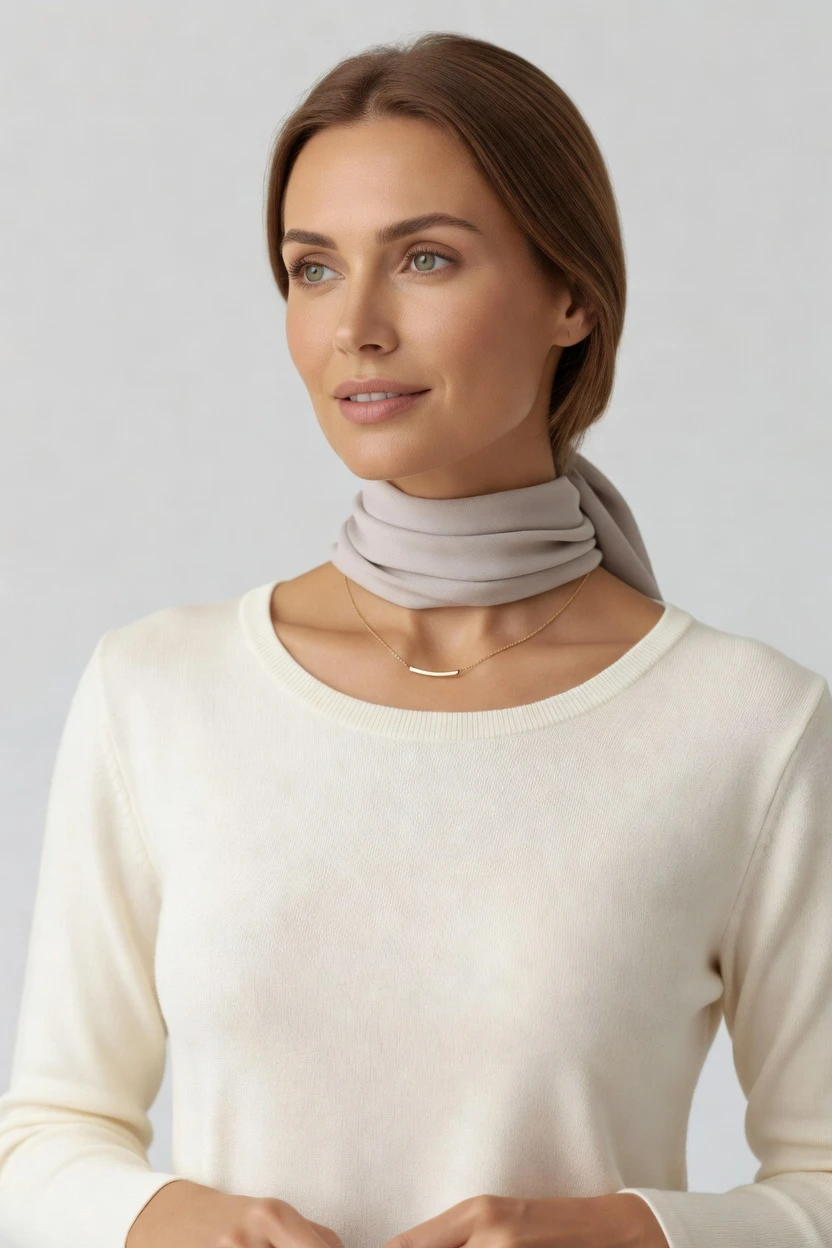
Saved model setup
Female · 26–35 · Dark brown · 175cm
Build a model. Zero prompts.
Start from neck-led casting needs, then click through skin tone, age, body type, hair, and expression until the model fits your product line. Save it once and reuse the same model for every collar, pendant, scarf, or upper-body SKU. 28 attributes · 10+ options each
- 6 clicks · 0 keystrokes
- app.rawshot.ai / build_model
How it works
Build Once, Reuse Across Every Neckline
A neck-led model workflow for jewelry, collars, scarves, and upper-body products that need repeatable casting across every SKU.
- Step 01
Set the Neck-Led Model
Choose the neck profile, then adjust skin tone, age, body type, hair, and expression with clicks. You start from the attribute that matters to necklines, jewelry, and close crops, not from an empty text box.
- Step 02
Save It to Your Library
Generate the model and keep it as a reusable casting asset. The same face and body stay available for every new SKU, so collar height, pendant drop, and scarf styling stay consistent.
- Step 03
Reuse Across the Catalog
Apply the saved model in the browser for one-off shoots or at scale through the API. The same model identity carries through product pages, lookbooks, and seasonal refreshes without drift.
Spec sheet
Proof for Neck-Led Catalog Casting
These twelve proof points show why a saved synthetic model works better for fashion operations than generic image tools or studio-only workflows.
- 01
Negligible by Design
Every RAWSHOT model is a synthetic composite built from 28 body attributes with 10+ options each. Accidental real-person likeness is statistically negligible by design.
- 02
Every Setting Is a Click
You direct neck profile, expression, body traits, and styling choices with buttons, sliders, and presets. No prompts. Ever.
- 03
Garment-Led Neckline Fit
Collars, chains, pendants, scarf wraps, lapels, and neck openings are represented around the garment. The product stays the brief.
- 04
Diverse Synthetic Models
Build transparently labelled synthetic models across age, body type, skin tone, and presentation. That gives brands broader casting access without leaning on real-person likeness.
- 05
Same Model Across Every SKU
Save one model and reuse it everywhere. The same face, neck profile, and body stay consistent across tops, accessories, and seasonal edits.
- 06
150+ Visual Styles
Move from clean catalog to editorial, campaign, street, noir, vintage, and studio looks with presets. The model stays consistent while the brand expression changes.
- 07
2K, 4K, Every Ratio
Generate outputs in 2K or 4K and crop for the destination you publish to. Close neck crops, half-body frames, and vertical campaign assets all run from the same system.
- 08
Labelled and Compliant
Outputs are C2PA-signed, AI-labelled, and watermarked with visible and cryptographic layers. RAWSHOT is built for EU AI Act Article 50, California SB 942, GDPR, and EU hosting.
- 09
Signed Audit Trail per Image
Each image carries a signed audit trail so teams can trace what was generated and published. That matters when approvals, marketplaces, and compliance reviews get involved.
- 10
GUI for One Shoot, API for Scale
Use the browser GUI when a buyer wants to direct one neckwear shoot by hand. Use the REST API when hundreds or thousands of SKUs need the same saved model overnight.
- 11
Clear Speed and Pricing
Photo generation runs around ~$0.55 per image in ~30–40 seconds, and tokens never expire. That makes iterative catalog work practical instead of budget-gated.
- 12
Commercial Rights Included
Full commercial rights to every output, permanent, worldwide. You are not left guessing what can go live on PDPs, marketplaces, campaigns, or retail channels.
Outputs
Built for neck-led fashion work
From high collars to pendant close-ups, saved models keep the same identity across every product family. That consistency matters when the neck area is where the product lives.


Browse all 600+ models →
Comparison
RAWSHOT vs category tools vs DIY prompting
Three lenses on every dimension — what you optimize for in RAWSHOT versus typical category tools and blank-box AI workflows.
01
Interface
RAWSHOT
Click-driven controls for casting, styling, framing, and model reuseCategory tools + DIY
Often mix shorter controls with limited presets and thinner workflow depth. DIY prompting: You type instructions, revise wording, and chase usable outputs through trial and error02
Garment fidelity
RAWSHOT
Built around collars, jewelry, scarves, and neckline interaction with the productCategory tools + DIY
Can handle apparel broadly but often soften neckline-specific product detail. DIY prompting: Garment drift appears quickly, especially around necklines, chains, and layered styling03
Model consistency across SKUs
RAWSHOT
Save one model once and reuse the same face and body everywhereCategory tools + DIY
Consistency exists but is often weaker or gated by higher plans. DIY prompting: Faces shift between outputs, so catalogs lose continuity across product pages04
Provenance + labelling
RAWSHOT
C2PA-signed, AI-labelled, watermarked, with signed audit trail per imageCategory tools + DIY
Labelling and provenance are often partial, unclear, or absent. DIY prompting: No clean provenance metadata, no audit trail, and no standard labelling record05
Commercial rights
RAWSHOT
Full commercial rights to every output, permanent and worldwideCategory tools + DIY
Rights terms may vary by plan, usage, or contract layer. DIY prompting: Rights clarity is often uncertain, especially for marketplace and campaign publication06
Pricing transparency
RAWSHOT
Flat model pricing, no per-seat gates, tokens never expireCategory tools + DIY
Per-seat pricing and volume tiers can punish growth. DIY prompting: Tool access seems simple, but iteration time and failed attempts create hidden cost07
Iteration speed per variant
RAWSHOT
Generate a reusable model in ~50–60 seconds with direct controlsCategory tools + DIY
Fast enough for variants, but controls may require more backtracking. DIY prompting: Iterations slow down because wording changes replace visual control and repeatability08
Catalog API
RAWSHOT
Same engine in browser GUI and REST API for catalog pipelinesCategory tools + DIY
API access may sit behind enterprise tiers or sales gating. DIY prompting: No dependable catalog API for consistent fashion production at SKU scale
Prompting does not scale
Stop writing essays. Direct the shoot.
Most AI photo tools start with a blank text box. Rawshot turns the shoot into repeatable controls, so creative teams can produce consistent fashion imagery without prompt syntax or one-off hacks.
Category norm
ManualCreate a premium editorial fashion photograph of a model wearing the exact navy oversized wool coat from SKU-1842, full-body crop, realistic hands, consistent facial identity, clean e-commerce lighting, subtle Paris street background, 85mm lens, no logo distortion, no fabric hallucination, same pose as last campaign, repeatable for all colorways...
A prompt can describe one image. It cannot become a shared production system for hundreds of products, models, angles and markets.
Rawshot
ClicksSaved shoot recipe
Apply to 1 SKU or 10,000 via GUI, CSV or REST API.
Rawshot makes creative direction visible: buttons, presets and sliders instead of hidden prompt craft. The result is easier to teach, faster to approve and built for repeat production.
Use cases
Where Neck-Led Models Win in Commerce
Operator archetypes and how click-directed, garment-first output fits the way they actually work.
- 01
Jewelry DTC teams
Build one neck-led model for chains, pendants, chokers, and layered sets so every PDP keeps the same branded casting.
Confidence · high
- 02
Shirt and blouse brands
Keep collar shape, button stance, and neckline presentation consistent across size runs, colors, and fabric updates.
Confidence · high
- 03
Scarf and hijab labels
Direct neck and shoulder framing for wrap styles that need stable presentation across every collection drop.
Confidence · high
- 04
Outerwear merchandisers
Show lapels, zips, funnels, and stand collars on the same saved model instead of reshooting each seasonal revision.
Confidence · high
- 05
Adaptive fashion operators
Present neck closures, easy-access fastenings, and comfort-driven upper-body details with clear, repeatable casting.
Confidence · high
- 06
Marketplace sellers
Standardize neck-area presentation across mixed suppliers so listings feel coherent even when inventory changes weekly.
Confidence · high
- 07
Vintage and resale curators
Reuse one synthetic model to present one-off blouses, coats, and accessories without assembling a new shoot for every item.
Confidence · high
- 08
Accessories founders
Launch capsule lines of ties, neck scarves, and statement jewelry with one saved model that carries brand identity throughout.
Confidence · high
- 09
Crowdfunding creators
Test upper-body product visuals before committing to physical samples, then keep the same model through launch assets.
Confidence · high
- 10
Kidswear brand marketers
Plan parent-facing concept work for bibs, collars, and layered tops with clear labelling and consistent presentation.
Confidence · high
- 11
Catalog teams with APIs
Run neckwear, shirt, and jewelry assortments through batch pipelines while preserving the same model profile across thousands of SKUs.
Confidence · high
- 12
Editorial commerce teams
Move the same neck-led model from clean product pages to campaign crops and social ratios without recasting the work.
Confidence · high
— Principle
Honest is better than perfect.
When products live at the neck, close crops matter, and so does trust. Every RAWSHOT output is C2PA-signed, AI-labelled, and watermarked with visible and cryptographic layers, with a signed audit trail per image. That gives commerce teams a clear record for review, publishing, and brand governance instead of pretending synthetic fashion imagery needs to hide.
Rights & provenance
Full commercial rights. Forever.
- C2PA-signed on every image — EU AI Act Article 50 compliant
- 28-attribute synthetic models — real-person likeness statistically impossible
- Full commercial rights to every generation — no recurring licensing fees
- Tokens never expire · One-click cancel · Transparent pricing
EU AI Act
C2PA
Commercial use
Pricing
~$0.99 per model generation.
~50–60 seconds per generation. Save the model once, reuse it across your entire catalog.
- 01Tokens never expire. Cancel in one click.
- 02Same face, same body, every SKU — no drift between shoots.
- 03No per-seat gates. No 'contact sales' walls for core features.
- 04Failed generations refund their tokens.
FAQ
Practical answers on control, rights, pricing, scale, and compliant publishing.
Do I need to write prompts to use RAWSHOT?
Never—you direct every output with sliders, presets, and clicks on the garment, not typed prompts. That UI control is consistent across GUI and REST API payloads, which is why ecommerce teams onboard buyers without rewriting creative briefs as chat threads.
For catalog teams, reliability matters more than model cleverness; RAWSHOT keeps tokens, timings, refund rules, commercial rights framing, provenance signalling, watermarking cues, REST surface, and SKU-scale batch patterns explicit so operations can rehearse PDP launches without hallucinated garment inventions.
What does a neck-led synthetic model workflow change for catalog and ecommerce teams?
It changes the part of the workflow that usually breaks first: consistency around products worn at the neck. Collars, pendants, scarves, lapels, and neck openings all need the same model proportions if a catalog is going to read as one brand instead of a patchwork of disconnected shoots. RAWSHOT lets you build that model once, save it to the library, and reuse it across every relevant SKU so buyers, merchandisers, and creative teams are not recasting the same problem every week.
For operations, that means faster review cycles and fewer debates about whether one image still belongs next to the rest of the range. You keep click-driven control over attributes, publish in 2K or 4K, and preserve a signed record through C2PA provenance, watermarking, and per-image audit trails. The practical takeaway is simple: define the model standard once, then scale product imagery around it.
Why skip reshooting every SKU when only the collar, chain, or neckline changes?
Because repeating full shoots for small upper-body changes wastes time while still failing to guarantee continuity. If the real job is to show how a new collar height, necklace drop, or scarf wrap sits on a stable model, the more useful approach is to keep the model fixed and change only the product variables that matter. RAWSHOT is built for that logic, so the model becomes reusable infrastructure instead of a one-day casting decision.
That matters to fashion teams working through seasonal refreshes, color extensions, and marketplace updates where volume is high but visual variation is narrow. You can save one model, keep the same face and body across the full range, and generate outputs with labelled provenance and worldwide commercial rights already defined. In practice, teams stop paying the reset cost of every minor update and start treating continuity as a system requirement.
How do we turn flat garments into catalogue-ready neck and upper-body imagery without prompting?
You start by building the model inside a click-driven interface, choosing the neck-led attributes and adjacent traits that matter for the product line. Then you save that model to your library and apply it across the garments that need upper-body presentation, whether that is a blouse collection, a scarf range, or a jewelry set. The workflow is direct because every decision lives in controls, presets, and structured fields rather than in typed guesswork.
For commerce teams, that matters because repeatability beats improvisation. You can direct framing, style, lighting, and product focus in the browser GUI for single shoots, then move the same logic into the REST API for larger catalogs. The useful habit is to treat the saved model as your casting base layer and build every product page from that shared standard.
Why does RAWSHOT beat DIY work in ChatGPT, Midjourney, or generic image models for fashion PDPs?
Because fashion product work fails in specific ways that generic image tools do not control well. Necklines drift, jewelry proportions mutate, logos get invented, and the face often changes between outputs, which breaks catalog continuity the moment products sit side by side on a collection page. RAWSHOT is built around the garment and the reusable model, so you are working with direct controls and a saved identity instead of trying to steer a general-purpose engine back toward the same result over and over.
The difference is not only visual; it is operational. RAWSHOT gives you C2PA-signed provenance, visible and cryptographic watermarking, a signed audit trail per image, and full commercial rights to every output. The practical decision for commerce teams is to choose the system that keeps the product stable, the model consistent, and the publishing record clear from the start.
Can we publish neck-model outputs commercially, and how are they labelled?
Yes. RAWSHOT gives full commercial rights to every output, permanent and worldwide, so teams can publish on product pages, marketplaces, campaigns, and social channels without a separate rights puzzle hanging over the work. Every output is also AI-labelled and watermarked with visible and cryptographic layers, which means the honesty is built into the asset rather than buried in policy language.
That clear labelling matters for brands that care about trust as much as speed. RAWSHOT is designed for C2PA provenance, signed audit trails per image, EU hosting, GDPR compliance, and the disclosure direction required by current synthetic media rules. The useful operating standard is to treat labelled synthetic imagery as a brand asset, not as something that should look undocumented.
What should buyers and QA teams check before publishing close-crop neck imagery?
First, check that the product itself is represented faithfully: neckline shape, pendant scale, chain placement, collar edge, fabric drape, and any visible logo or pattern should match the garment you are selling. Then confirm that the model remains the intended saved identity across the series, especially when several related SKUs appear together on collection pages. Finally, make sure provenance and labelling are present so the file enters your publishing workflow with the right compliance signals attached.
RAWSHOT supports that process with a garment-led system, consistent saved models, C2PA-signed outputs, visible and cryptographic watermarking, and a signed audit trail per image. Teams should build QA around those facts rather than around subjective guesses about whether the result feels close enough. If a close crop is driving conversion, treat product fidelity and publishing traceability as mandatory checks, not optional polish.
How much does an AI Neck Model Generator cost for reusable catalog casting?
RAWSHOT model generation runs at about ~$0.99 per model generation and typically completes in ~50–60 seconds. That pricing is clear because the model is the reusable asset: once saved, you can apply the same face and body across your catalog instead of regenerating identity from scratch for every launch. Tokens never expire, failed generations refund their tokens, and cancel is available in one click, which keeps the economics readable for small teams and large catalogs alike.
It also helps to separate model cost from still and video production cost. Stills run at about ~$0.55 per image, while video is priced separately because motion uses more tokens per second than stills. The smart workflow is to build the casting base first, save it, and then spread that model across the catalog where consistency matters most.
Can we plug saved models into Shopify-scale or PLM-connected catalog pipelines through the API?
Yes. RAWSHOT supports browser-based work for individual shoots and a REST API for catalog-scale pipelines, so the same saved model can move from creative testing into structured production without changing tools. That matters for teams managing Shopify-scale assortments, marketplace feeds, or PLM-linked asset flows where consistency and traceability need to survive beyond the design phase. The point is not to split small-team and large-team workflows into different products; it is to keep the same engine available at every stage.
Operationally, that means buyers can validate the model in the GUI while engineering or operations teams automate downstream generation against the same saved identity. With per-image audit trails and clear provenance signals, the assets are easier to route through approvals and publishing systems. The best practice is to define your model library once, then connect it to the systems already handling catalog movement.
How do teams scale from one neckwear test shoot to thousands of upper-body SKUs without losing consistency?
They start by treating the saved model as a standard, not a one-off experiment. A buyer or creative lead can build the model in the GUI, verify how collars, scarves, jewelry, or upper-body garments sit on that identity, and lock it into the library for reuse. Once that standard is approved, the same model can drive broader production runs so the catalog expands without face drift or casting resets.
RAWSHOT supports that path because the same interface logic carries across one-off work and API-scale production, with no per-seat gate blocking core features as volume grows. The practical outcome is that small brands and enterprise teams can work from the same system, the same pricing logic, and the same compliance posture. The winning habit is to approve once at the model level, then scale imagery through process instead of re-arguing casting on every SKU.
Keep exploring