
— Height control · Catalog consistency · Save once
AI Tall Model Generator — with click-driven control over every attribute.
When height is part of the fit story, you need a model setup that stays consistent from first SKU to the thousandth. Select from 28 body attributes with 10+ options each, save the model once, and reuse the same face and body across your whole catalog. Every model is a transparently labelled synthetic composite with C2PA-signed outputs and no real-person likeness by design.
- ~$0.99 per generation
- ~50–60s
- 150+ styles
- 2K and 4K
- Every aspect ratio
- Save once, reuse across catalog
7-day free trial • 50 tokens (10 images) • Cancel anytime

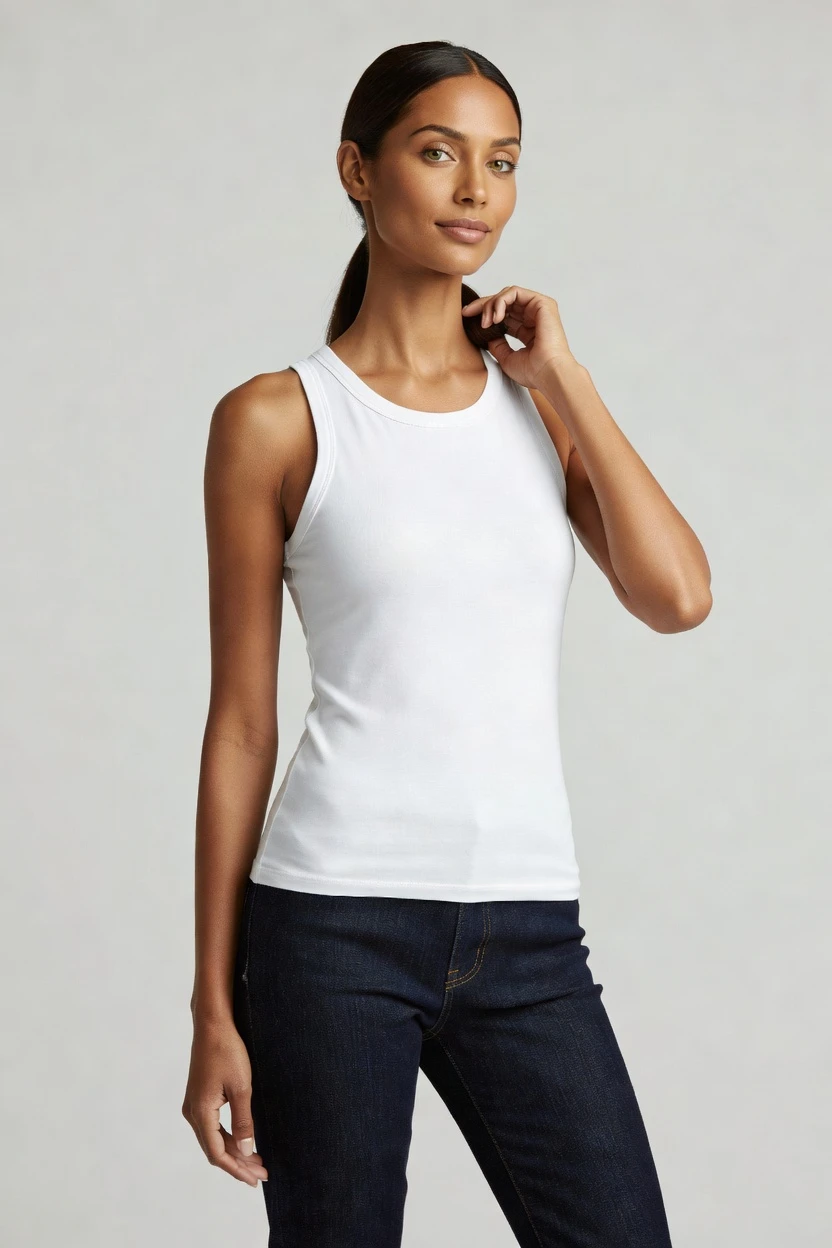
Saved model setup
Female · 26–35 · Dark brown · 185cm
Build a model. Zero prompts.
Set height as the lead attribute, then refine face, body, hair, and expression with clicks. Save the tall model to your library and reuse the same identity across every product page. 28 attributes · 10+ options each
- 6 clicks · 0 keystrokes
- app.rawshot.ai / build_model
How it works
Build Once, Reuse Across the Catalog
Height is the entry point, but the workflow is built for repeatable identity, clean fit storytelling, and SKU-scale consistency.
- Step 01
Set Height and Body Attributes
Choose tall proportions first, then refine age range, body type, face, hair, and expression with UI controls. Every setting is visible, repeatable, and easy to adjust.
- Step 02
Save the Model to Your Library
Once the model matches your brand's fit story, save it as a reusable asset. The same face and body stay locked across future shoots and SKU batches.
- Step 03
Reuse Across Every Garment
Apply the saved model in the browser for one-off shoots or through the API for catalog scale. Your tall fit remains consistent while the garment changes from product to product.
Spec sheet
Proof for Tall Model Workflows
These twelve surfaces show how RAWSHOT keeps tall-model imagery controlled, labelled, scalable, and faithful to the garment.
- 01
No Real-Person Likeness
Every model is a synthetic composite built from 28 body attributes with 10+ options each. Accidental real-person likeness is statistically negligible by design.
- 02
Click-Driven Model Building
You select height, body shape, face, hair, and expression with buttons, sliders, and presets. It behaves like an application for fashion teams, not a text box.
- 03
Garment-Led Fit Representation
Tall proportions only matter if the clothing still reads correctly. RAWSHOT keeps cut, colour, pattern, logo, fabric, and drape anchored to the product.
- 04
Diverse Synthetic Models
Build tall models across different genders, ages, skin tones, and heritage options. Every model is transparently labelled as synthetic output.
- 05
Same Model Across SKUs
Save one tall model and reuse it through your whole assortment. The same face and body stay consistent from denim to outerwear to knitwear.
- 06
150+ Visual Styles
Once your model is set, place them in catalog, editorial, campaign, studio, street, vintage, noir, and other visual systems without rebuilding identity.
- 07
2K, 4K, Every Ratio
Generate outputs for PDPs, lookbooks, paid social, marketplaces, and retail screens. Stills support 2K and 4K across every aspect ratio.
- 08
Labelled and Compliant
Outputs are C2PA-signed, AI-labelled, and designed for EU AI Act Article 50 and California SB 942 compliance. Honesty is built into the file, not bolted on later.
- 09
Per-Image Audit Trail
Each output carries a signed audit trail for traceability. That matters when teams need reviewable records for publishing, approvals, and downstream distribution.
- 10
GUI for Singles, API for Scale
Use the browser interface for one shoot or connect the REST API for batch catalog work. The same tall model logic carries across both workflows.
- 11
Fast and Price-Clear
Photo generations run around ~$0.55 per image in ~30–40 seconds, and tokens never expire. Failed generations refund their tokens instead of becoming sunk cost.
- 12
Full Commercial Rights
Every output comes with full commercial rights, permanent and worldwide. Rights are clear whether you publish one campaign asset or an entire catalog.
Outputs
Built Tall. Kept consistent.
A saved tall model can move from clean catalog framing to campaign-ready styling without identity drift. The garment changes, the model stays locked.


Browse all 600+ models →
Comparison
RAWSHOT vs category tools vs DIY prompting
Three lenses on every dimension — what you optimize for in RAWSHOT versus typical category tools and blank-box AI workflows.
01
Interface
RAWSHOT
Buttons, sliders, and presets control every model attribute directly.Category tools + DIY
Mixed UI depth, often thinner controls and less exact attribute handling. DIY prompting: You type instructions, revise wording, and translate creative intent into trial-and-error text.02
Model consistency across SKUs
RAWSHOT
Save one tall model and reuse the same face and body.Category tools + DIY
Consistency exists, but often weakens across larger SKU runs or tool modes. DIY prompting: Inconsistent faces across outputs force retakes, reselection, and manual compromise.03
Garment fidelity
RAWSHOT
Garment structure, logo, colour, and drape stay anchored to the product.Category tools + DIY
Outputs can soften product specifics when styling or pose complexity rises. DIY prompting: Garment drift and invented logos appear when generic models improvise missing structure.04
Provenance + labelling
RAWSHOT
C2PA-signed, AI-labelled output with visible and cryptographic watermarking.Category tools + DIY
Labelling and provenance are often partial, unclear, or absent. DIY prompting: Missing provenance metadata leaves no clean audit trail for commerce teams.05
Commercial rights
RAWSHOT
Full commercial rights to every output, permanent and worldwide.Category tools + DIY
Rights may be narrower, gated by plan, or less explicit. DIY prompting: Unclear rights create avoidable risk when assets move into paid commerce channels.06
Pricing transparency
RAWSHOT
Flat model pricing, tokens never expire, one-click cancel, refunds on failures.Category tools + DIY
Per-seat plans, volume tiers, and gated access complicate forecasting. DIY prompting: Cost looks cheap at first, but iteration waste and retries hide the real spend.07
Catalog API
RAWSHOT
Browser GUI and REST API use the same product logic at any scale.Category tools + DIY
API access is commonly limited to higher plans or sales-gated tiers. DIY prompting: No garment-specific catalog API; teams stitch together brittle image workflows manually.08
Iteration speed per variant
RAWSHOT
Adjust height, expression, and styling quickly without rebuilding from scratch.Category tools + DIY
Variants are possible, but controls may require more reset work between outputs. DIY prompting: Prompt-engineering overhead slows every variant before usable results appear.
Prompting does not scale
Stop writing essays. Direct the shoot.
Most AI photo tools start with a blank text box. Rawshot turns the shoot into repeatable controls, so creative teams can produce consistent fashion imagery without prompt syntax or one-off hacks.
Category norm
ManualCreate a premium editorial fashion photograph of a model wearing the exact navy oversized wool coat from SKU-1842, full-body crop, realistic hands, consistent facial identity, clean e-commerce lighting, subtle Paris street background, 85mm lens, no logo distortion, no fabric hallucination, same pose as last campaign, repeatable for all colorways...
A prompt can describe one image. It cannot become a shared production system for hundreds of products, models, angles and markets.
Rawshot
ClicksSaved shoot recipe
Apply to 1 SKU or 10,000 via GUI, CSV or REST API.
Rawshot makes creative direction visible: buttons, presets and sliders instead of hidden prompt craft. The result is easier to teach, faster to approve and built for repeat production.
Use cases
Where Tall Models Matter Most
Operator archetypes and how click-directed, garment-first output fits the way they actually work.
- 01
Indie denim brands
Show inseam, rise, and silhouette on a consistent tall model so shoppers understand proportion before they buy.
Confidence · high
- 02
DTC womenswear labels
Build one tall brand face for dresses, tailoring, and knitwear, then reuse it across every seasonal drop.
Confidence · high
- 03
Menswear catalog teams
Standardise tall fit representation for jackets, trousers, and shirts without reshooting every SKU in studio.
Confidence · high
- 04
Marketplace sellers
Create cleaner on-model tall imagery for listings that need fast turnover and repeatable presentation.
Confidence · high
- 05
Factory-direct manufacturers
Test different tall model configurations before physical samples are ready, then keep the winning identity through launch.
Confidence · high
- 06
Adaptive fashion lines
Use taller body proportions where fit communication matters, while keeping the garment itself central and readable.
Confidence · high
- 07
Crowdfunded apparel projects
Present a polished tall model setup early, before budget exists for a full production day.
Confidence · high
- 08
Lookbook creators
Carry one tall synthetic model through an entire edit so the collection reads as one coherent story.
Confidence · high
- 09
Private-label retailers
Keep one approved tall model library for repeat category launches across tops, bottoms, and outerwear.
Confidence · high
- 10
Resale and vintage operators
Use tall on-model presentation to give mixed inventory a more consistent visual system across listings.
Confidence · high
- 11
Kidswear parent brands
Plan future teen or adult extension lines with saved taller proportions and the same interface your team already knows.
Confidence · high
- 12
Student fashion makers
Access tall model imagery for portfolio work and launch pages without studio budgets or specialist retouch workflows.
Confidence · high
— Principle
Honest is better than perfect.
Tall-model imagery changes buying context, so provenance cannot be an afterthought. RAWSHOT labels outputs, signs them with C2PA metadata, and keeps visible plus cryptographic watermarking in the system because commerce teams need assets they can publish and defend. Every model is a synthetic composite, built to avoid real-person likeness and to keep trust clear when reused across a full catalog.
Rights & provenance
Full commercial rights. Forever.
- C2PA-signed on every image — EU AI Act Article 50 compliant
- 28-attribute synthetic models — real-person likeness statistically impossible
- Full commercial rights to every generation — no recurring licensing fees
- Tokens never expire · One-click cancel · Transparent pricing
EU AI Act
C2PA
Commercial use
Pricing
~$0.99 per model generation.
~50–60 seconds per generation. Save the model once, reuse it across your entire catalog.
- 01Tokens never expire. Cancel in one click.
- 02Same face, same body, every SKU — no drift between shoots.
- 03No per-seat gates. No 'contact sales' walls for core features.
- 04Failed generations refund their tokens.
FAQ
Practical answers on control, rights, pricing, scale, and compliant publishing.
Do I need to write prompts to use RAWSHOT?
Never—you direct every output with sliders, presets, and clicks on the garment, not typed prompts. That UI control is consistent across GUI and REST API payloads, which is why ecommerce teams onboard buyers without rewriting creative briefs as chat threads. You choose attributes like height, body type, hair, expression, framing, lighting, background, and visual style in the interface, then save the result as a reusable model for future shoots.
For catalog teams, reliability matters more than model cleverness; RAWSHOT keeps tokens, timings, refund rules, commercial rights framing, provenance signalling, watermarking cues, REST surface, and SKU-scale batch patterns explicit so operations can rehearse PDP launches without hallucinated garment inventions. The practical takeaway is simple: if your team can work inside a merchandiser-friendly app, you can build and reuse consistent fashion models without teaching anyone text syntax first.
What does an AI tall model generator actually change for ecommerce teams?
It changes fit communication and catalog consistency. A tall-model workflow lets your team show how longer proportions affect drape, hem position, sleeve balance, rise, and silhouette without organizing a new physical shoot every time a range expands. For shoppers, that makes product pages clearer; for operators, it reduces the visual mismatch that happens when each SKU ends up with a different body setup.
RAWSHOT makes that useful because the model is not a one-off output. You build the tall synthetic model once through attribute controls, save it to your library, and reuse the same face and body across the entire assortment. That means denim, dresses, coats, and basics can all be shown on the same approved identity, with C2PA-signed provenance, transparent labelling, and full commercial rights attached to the outputs your team publishes.
Why skip reshooting every SKU when the season changes?
Because the expensive part of a traditional workflow is not only the camera day; it is the repeated coordination around casting, samples, timing, approvals, and post-production every time the assortment shifts. Seasonal drops, size extensions, colour refreshes, and marketplace updates all create new asset demand, but not every brand has the budget or calendar space for another studio day. Teams priced out of repeat photography often end up with inconsistent stopgaps instead of a real visual system.
RAWSHOT gives you a reusable tall model setup that can carry from launch to refresh without changing identity between shoots. You keep the same face and body, change the garment and styling direction, and produce new outputs in the browser or via the API with the same controls and pricing logic. That makes seasonal iteration operational instead of chaotic, while keeping provenance, rights, and audit records clear enough for commerce use.
How do we turn flat garments into catalogue-ready imagery with a tall model in RAWSHOT?
You start by building the model around height and proportion, then refine the supporting attributes that matter for brand fit: age range, body type, hair, expression, and related presentation choices. Once the model is saved, your team uses it as a stable base for garment outputs, selecting framing, camera, lighting, background, and style presets depending on whether the asset is for PDP, marketplace, or campaign use. The result is a repeatable workflow where the garment remains the brief and the model stays consistent.
That matters because catalog production is rarely one image at a time. Buyers need close-ups, full-body frames, detail crops, and different aspect ratios across channels, all while keeping the fit story coherent. RAWSHOT supports 2K and 4K stills, every aspect ratio, and up to four products per composition, so a tall-model setup can move through multiple merchandising surfaces without changing tools or rebuilding identity from scratch.
Why does RAWSHOT beat generic image tools like ChatGPT or Midjourney for fashion PDPs?
The difference is control and reproducibility. Generic image tools ask the operator to translate fashion intent into open-ended text, then hope the model preserves the garment, keeps the face consistent, and avoids inventing details that were never in the product. That is where teams hit the familiar failure modes: garment drift, invented logos, inconsistent faces, unclear rights, and no clean provenance trail for published commerce assets.
RAWSHOT is built around the garment and the workflow of apparel teams. You direct attributes, framing, style, and output settings through a click-driven interface, then carry the same logic into the REST API when scale demands it. Because outputs are labelled, C2PA-signed, and tied to an audit trail, the asset is easier to approve, easier to track, and easier to reuse than something produced through generic image experimentation.
Can we publish these tall-model outputs in ads, PDPs, and marketplaces with clear rights?
Yes. RAWSHOT gives you full commercial rights to every output, permanent and worldwide, which is the baseline commerce teams need before assets move into paid media, product pages, marketplaces, and retail collateral. That clarity matters because imagery is rarely confined to one channel; the same approved asset often travels from PDP to social placement to wholesale deck, and operators need a clean rights position before they scale distribution.
RAWSHOT also treats trust as part of the product, not a legal footnote. Outputs are AI-labelled, carry C2PA-signed provenance metadata, and are supported by visible plus cryptographic watermarking and a signed audit trail per image. For teams building a tall-model library they plan to reuse broadly, that combination of rights clarity and transparent labelling makes publishing decisions far easier to standardise across departments.
What should our team check before publishing a saved tall model across the catalog?
Check the same things you would review in any fashion image system, but do it with more discipline because consistency is the point. Confirm that height and body proportions still support the intended fit story, that the garment reads accurately in cut, colour, logo, pattern, and drape, and that framing matches the destination channel. Also verify that the chosen style preset supports the product rather than overpowering it, especially when one saved model is used across multiple categories.
RAWSHOT adds a second layer of review that generic tools often cannot provide cleanly: provenance, labelling, and traceability. Teams should confirm the output carries the expected AI labelling, C2PA signature, and audit-trail integrity, and that watermarking cues align with the publishing workflow. In practice, that means building a simple approval checklist so buyers and marketers sign off on both visual fidelity and asset honesty before distribution.
How much does a tall synthetic model workflow cost in RAWSHOT?
For model creation, the cost is straightforward: ~$0.99 per model generation, with generation time around ~50–60 seconds. Tokens never expire, failed generations refund their tokens, and cancellation is available in one click, which makes budgeting easier for teams that test several body setups before locking an approved tall model. That price structure matters because experimentation is normal in brand-building, especially when height is central to the fit story.
Once the model is saved, you reuse it across the catalog rather than paying to recreate identity from scratch for every garment. If your workflow expands into stills, photo generations run at about ~$0.55 per image with ~30–40 second generation times, using the same saved model logic across categories. The operational benefit is that finance and production teams can forecast spend by outputs, not by seats, hidden tiers, or sales-call-only access.
Can we connect a saved tall model workflow to Shopify-scale catalog operations?
Yes. RAWSHOT supports a browser GUI for single-shoot work and a REST API for catalog-scale pipelines, so teams can begin with manual approvals and move into batch production without switching products. That matters for Shopify-scale or marketplace-heavy operations where asset volume rises quickly and consistency becomes an operational requirement, not a nice-to-have. A saved tall model becomes a controlled library asset that the API can reuse repeatedly across changing product data.
The practical advantage is continuity. Merchandising, creative, and engineering teams are not working in disconnected systems with different model logic or different rights assumptions; the same product, the same controls, and the same provenance posture carry through. For operators planning large SKU updates, that makes integration easier to standardise and reduces the risk of catalog drift between pilot work and scaled deployment.
How do small teams and enterprise catalog crews both scale the same tall-model system?
They scale it by using the same underlying product in different modes, not by graduating into a separate enterprise edition. A small brand can build and approve a tall model in the browser, reuse it across a compact assortment, and keep decisions close to the merchandiser or founder. A larger catalog team can take that same logic into the REST API, automate recurring output patterns, and maintain the same visual identity standard across thousands of SKUs.
That continuity is important because scale usually breaks creative systems at the handoff between teams. RAWSHOT keeps pricing unit clarity, token behavior, rights, provenance, audit records, and consistency controls aligned from one shoot to ten thousand, without per-seat gates for core functionality. The result is a workflow that works for rebels who are just getting access and for large operations that need repeatable tall-model infrastructure every day.
Keep exploring