
— On-model imagery · 150+ styles · 4K
Direct your next drop with the Clothing Product Photography Generator.
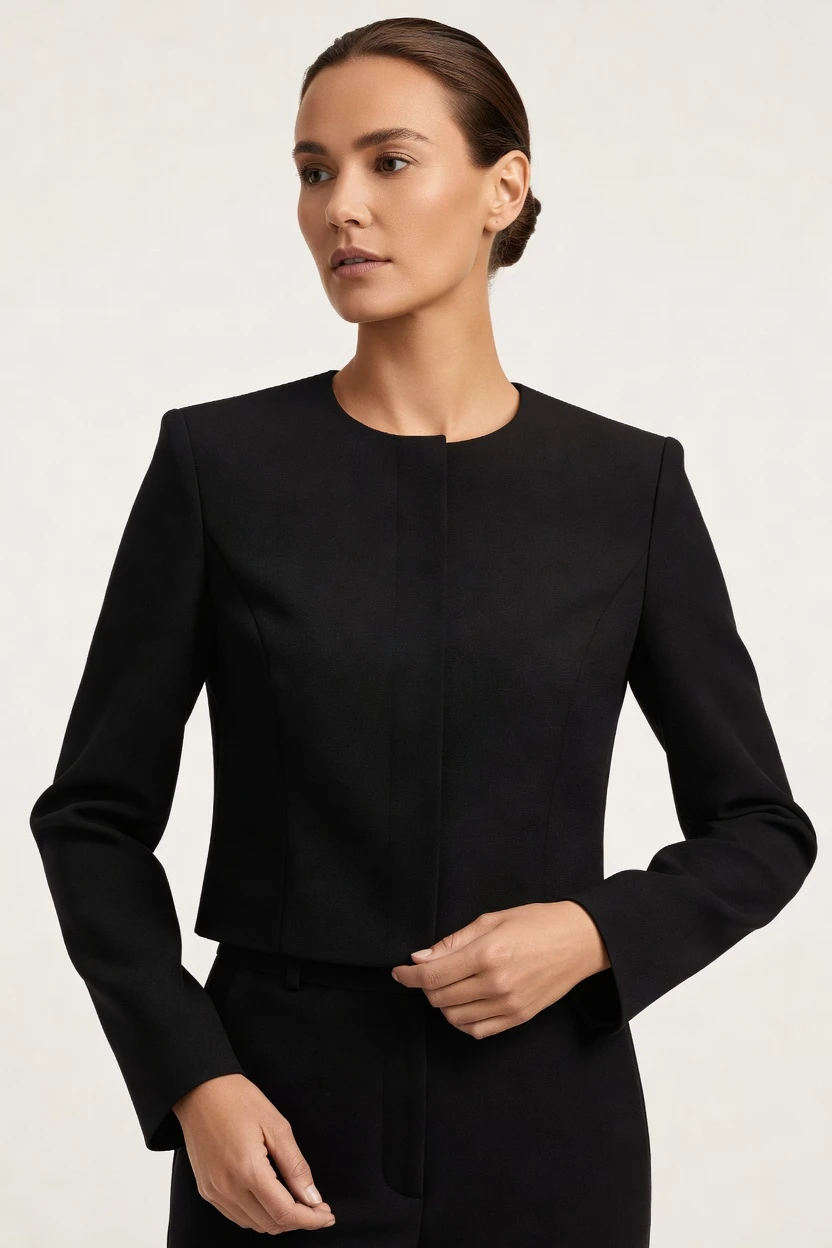
Generate on-model fashion imagery built around the garment, from clean catalog crops to campaign-ready frames. Click lens, framing, pose, light, background, and style in a real interface built for apparel teams. No studio. No samples. No prompts.
- ~$0.55 per image
- ~30–40s per generation
- 150+ styles
- 2K or 4K
- Every aspect ratio
- Full commercial rights
7-day free trial • 50 tokens (10 images) • Cancel anytime

Direct the shoot. Zero prompts.
Preload a clean on-model clothing setup for PDP, lookbook, or paid social. The garment stays central while you click camera, crop, pose, light, background, and visual style for the exact output you need. 5 tokens · ~34s per image
- 6 clicks · 0 keystrokes
- app.rawshot.ai / new_shoot
How it works
From Garment Upload to Publish-Ready Frames
A clothing workflow should start with the product, not a blank text field, and end in consistent imagery teams can actually ship.
- Step 01
Upload the Garment
Start from the real product so the garment leads the output. RAWSHOT is built to represent cut, colour, pattern, logo, fabric, and drape without bending the brief around a text box.
- Step 02
Click the Creative Decisions
Select lens, framing, pose, camera angle, lighting, background, aspect ratio, and style with buttons and presets. You direct the shoot like software, not a chat thread.
- Step 03
Generate and Reuse at Scale
Create stills in around 30–40 seconds, keep the winners, and repeat across every SKU. Use the browser for one look or the REST API for catalog pipelines with the same engine and pricing.
Spec sheet
Proof for Product-Led Fashion Imagery
These twelve surfaces show how RAWSHOT keeps clothing central while giving operators control, compliance, speed, and scale.
- 01
No-Likeness by Design
Every model is a synthetic composite built from 28 body attributes with 10+ options each. Accidental real-person likeness is statistically negligible by design.
- 02
Every Setting Is a Click
Lens, angle, distance, pose, expression, lighting, background, and style live in buttons, sliders, and presets. You direct the result without learning syntax.
- 03
The Garment Is the Brief
RAWSHOT is engineered around apparel fidelity so cut, colour, pattern, logo, fabric texture, drape, and proportion stay faithful to the product you uploaded.
- 04
Synthetic Models, Clearly Labelled
Use diverse synthetic models designed for fashion presentation and transparently labelled as such. Honesty is built into the output, not added as a footnote.
- 05
Same Model Across Every SKU
Save a model once and reuse the same face and body through your full catalog. That consistency keeps PDPs, collections, and reshoots from drifting out of sync.
- 06
150+ Visual Style Presets
Move from catalog clean to editorial, campaign, street, noir, vintage, or Y2K with preset visual systems. You change the presentation without rebuilding the workflow.
- 07
2K, 4K, and Every Ratio
Generate stills in 2K or 4K across square, portrait, landscape, and platform-ready crops. Tight torso crops and full looks live in the same shoot setup.
- 08
Provenance and Compliance Built In
Outputs are C2PA-signed, AI-labelled, and aligned with EU AI Act Article 50 and California SB 942 requirements. Visible and cryptographic watermarking support honest publishing.
- 09
Signed Audit Trail per Image
Each image carries a signed record that supports review, handoff, and governance. That matters when creative, ecommerce, and compliance teams all touch the same asset.
- 10
Browser GUI and REST API
Direct single shoots in the browser or run high-volume catalog production through the API. The indie operator and the enterprise catalog team use the same product surface.
- 11
Fast, Flat, and Transparent
Stills run at about ~$0.55 per image and typically generate in 30–40 seconds. Tokens never expire, failed generations refund tokens, and growth is not punished by volume tiers.
- 12
Commercial Rights Stay Clear
Every output includes full commercial rights, permanent and worldwide. You can publish to PDPs, paid social, marketplaces, and campaign channels without rights ambiguity.
Outputs
From PDP Crops to Campaign Frames
Generate on-model clothing imagery that stays product-led across commerce and brand surfaces. Tight detail crops, clean catalog frames, and styled hero images all come from the same interface.


Browse 150+ visual styles →
Comparison
RAWSHOT vs category tools vs DIY prompting
Three lenses on every dimension — what you optimize for in RAWSHOT versus typical category tools and blank-box AI workflows.
01
Interface
RAWSHOT
Click-driven controls for camera, pose, light, framing, and styleCategory tools + DIY
Often mix limited presets with weaker directorial control and shorter control depth. DIY prompting: Typed instructions and constant rewriting before you get anything usable02
Garment fidelity
RAWSHOT
Built around the uploaded clothing so cut, colour, logo, and drape stay centralCategory tools + DIY
Garment handling is broader and often less precise on apparel details. DIY prompting: Garment drift and invented logos appear between outputs, even on simple variants03
Model consistency across SKUs
RAWSHOT
Save one model and reuse the same face and body across the catalogCategory tools + DIY
Consistency exists in parts but often varies by workflow or pricing tier. DIY prompting: Faces change across outputs, breaking continuity across PDPs and seasonal drops04
Provenance + labelling
RAWSHOT
C2PA-signed, AI-labelled, watermarked, with compliance-minded output handlingCategory tools + DIY
Provenance and labelling are often lighter or absent altogether. DIY prompting: Missing provenance metadata, no clear labelling layer, no signed audit trail05
Commercial rights
RAWSHOT
Full commercial rights to every output, permanent and worldwideCategory tools + DIY
Rights may be narrower, less explicit, or tied to plan structure. DIY prompting: Rights are often unclear for commerce publishing and marketplace use06
Pricing transparency
RAWSHOT
Flat per-image pricing, no per-seat gates, tokens never expireCategory tools + DIY
Per-seat pricing and volume tiers can penalize growth. DIY prompting: Tool costs seem cheap until iteration time and unusable variants stack up07
Iteration speed per variant
RAWSHOT
New variants arrive in around 30–40 seconds with reusable settingsCategory tools + DIY
Variant loops can be slower and less predictable across tools. DIY prompting: Each change means retyping instructions and hoping the garment stays intact08
Catalog API
RAWSHOT
Same engine in browser GUI and REST API for one shoot or ten thousandCategory tools + DIY
API access is more likely to sit behind enterprise packaging. DIY prompting: No catalog-native pipeline, no structured handoff, and poor reproducibility at scale
Prompting does not scale
Stop writing essays. Direct the shoot.
Most AI photo tools start with a blank text box. Rawshot turns the shoot into repeatable controls, so creative teams can produce consistent fashion imagery without prompt syntax or one-off hacks.
Category norm
ManualCreate a premium editorial fashion photograph of a model wearing the exact navy oversized wool coat from SKU-1842, full-body crop, realistic hands, consistent facial identity, clean e-commerce lighting, subtle Paris street background, 85mm lens, no logo distortion, no fabric hallucination, same pose as last campaign, repeatable for all colorways...
A prompt can describe one image. It cannot become a shared production system for hundreds of products, models, angles and markets.
Rawshot
ClicksSaved shoot recipe
Apply to 1 SKU or 10,000 via GUI, CSV or REST API.
Rawshot makes creative direction visible: buttons, presets and sliders instead of hidden prompt craft. The result is easier to teach, faster to approve and built for repeat production.
Use cases
Where Clothing Teams Need More Than a Shoot
Operator archetypes and how click-directed, garment-first output fits the way they actually work.
- 01
Indie Designers Launching a First Drop
Build polished on-model clothing imagery before a studio budget exists, then publish product pages and launch assets from the same workflow.
Confidence · high
- 02
DTC Apparel Brands Updating PDPs
Refresh product photography across bestsellers, new colourways, and seasonal edits without rebuilding your entire visual system.
Confidence · high
- 03
Crowdfunded Fashion Projects
Show backers the garment on-body early, with campaign-ready frames that communicate fit, silhouette, and brand direction.
Confidence · high
- 04
Marketplace Sellers Expanding Listings
Turn inconsistent supplier assets into consistent on-model imagery that reads cleaner across Amazon, Zalando, Etsy, and marketplace grids.
Confidence · high
- 05
Resale and Vintage Operators
Standardize one-off inventory into a repeatable clothing presentation style so every listing looks intentional, even when stock is unique.
Confidence · high
- 06
Factory-Direct Manufacturers
Photograph garments before global sample logistics slow the line, then hand clean imagery to buyers, reps, and commerce teams faster.
Confidence · high
- 07
Kidswear Labels Releasing Collections
Present outfits with controlled framing and styling while keeping the garment details readable across catalog, email, and launch pages.
Confidence · high
- 08
Adaptive Fashion Brands
Show fit and construction with more clarity through product-led on-model imagery, not generic fashion outputs that ignore functional details.
Confidence · high
- 09
Lingerie and Intimates DTC Teams
Create consistent, labelled fashion imagery with tight control over crop, pose, lighting, and commercial usage from the start.
Confidence · high
- 10
Students Building Graduate Collections
Assemble lookbook and ecommerce-ready clothing images without studio access, while keeping your visual direction intact.
Confidence · high
- 11
Catalog Managers Running SKU Updates
Reuse the same saved model and visual setup across hundreds of garments so the assortment reads as one coherent system.
Confidence · high
- 12
Brand Teams Testing Paid Social Crops
Generate 4:5, 1:1, and other product-led formats from the same shoot setup to match each publishing destination without reshooting.
Confidence · high
— Principle
Honest is better than perfect.
Clothing imagery for commerce needs more than visual polish. RAWSHOT labels outputs, applies visible and cryptographic watermarking, and signs provenance metadata with C2PA so teams can publish with a clear record of what the asset is. That transparency supports brand trust, marketplace governance, and internal approval flows at the same time.
Rights & provenance
Full commercial rights. Forever.
- C2PA-signed on every image — EU AI Act Article 50 compliant
- 28-attribute synthetic models — real-person likeness statistically impossible
- Full commercial rights to every generation — no recurring licensing fees
- Tokens never expire · One-click cancel · Transparent pricing
EU AI Act
C2PA
Commercial use
Pricing
~$0.55 per image.
~30–40 seconds per generation. Tokens never expire. Cancel in one click.
- 01The cancel button is on the pricing page.
- 02No per-seat gates. No 'contact sales' walls for core features.
- 03Failed generations refund their tokens.
- 04Full commercial rights to every output, permanent, worldwide.
FAQ
Practical answers on control, rights, pricing, scale, and compliant publishing.
Do I need to write prompts to use RAWSHOT?
Never. You direct every output with sliders, presets, and clicks on the garment, not typed instructions. That matters for apparel teams because creative intent in commerce is usually operational: choose the lens, crop the frame, lock the pose, keep the product central, and move fast enough to ship pages on time. RAWSHOT turns those decisions into interface controls instead of asking buyers, designers, or catalog managers to translate visual goals into command language.
Inside the product, you select camera, framing, angle, lighting, background, aspect ratio, product focus, and visual style in a fixed workflow built for fashion imagery. The same logic carries into the browser GUI for one-off shoots and the REST API for larger pipelines, so teams do not have to reinvent process as they scale. For day-to-day operations, that means fewer unusable variants, clearer handoff between creative and ecommerce, and more reliable output anchored to the garment itself.
What does a clothing product photography generator actually change for ecommerce teams?
It changes who gets access to publishable fashion imagery and how reliably teams can produce it. Instead of waiting for a full studio day, shipping samples, coordinating talent, and then triaging which looks made the cut, teams can generate on-model frames directly from the garment and iterate the presentation in software. That is especially useful when catalogs move faster than traditional production windows, or when a brand has enough SKU churn that reshooting every variant is operationally unrealistic.
With RAWSHOT, ecommerce teams can move from a clean PDP crop to a more styled campaign frame using the same saved product setup, the same model, and the same interface. Output arrives in about 30–40 seconds per still, at roughly ~$0.55 per image, with tokens that never expire and refunds for failed generations. The practical result is not just speed; it is a steadier asset pipeline that gives smaller operators and large catalog teams alike a way to publish more consistent, garment-led imagery.
Why skip reshooting every SKU when a season, colourway, or merch story changes?
Because many clothing updates are presentation changes, not product redesigns. A new season often needs a different crop, a cleaner catalog treatment, a revised background, or a tighter brand style rather than a brand-new studio production cycle. When every adjustment requires rescheduling photography, small teams get pushed into compromise and large teams get buried in backlog. A software-led workflow lets you revise the visual treatment while keeping the garment itself stable.
RAWSHOT is useful here because the product remains the brief: cut, colour, pattern, logo, fabric, and drape are the center of the output, while camera, pose, lighting, and style stay adjustable by click. Teams can reuse saved models across multiple SKUs to keep face and body consistency intact, generate in 2K or 4K, and publish under full commercial rights. In practice, that means you can update launches, refresh PDPs, or adapt campaign framing without restarting the entire production machine.
How do we turn flat garments into catalogue-ready imagery without prompting?
You start with the garment and then direct the presentation in the interface. In RAWSHOT, the apparel team selects framing, lens, angle, pose, lighting, background, aspect ratio, and product focus as discrete controls, which is closer to running a shoot than chatting with a model. That structure matters because commerce teams need repeatability: the same settings should produce a coherent set of assets, not a pile of loosely related experiments.
Once the first output is approved, you can keep the model, crop logic, and visual style stable while applying the workflow across additional SKUs. That is how a brand moves from isolated garment files to on-model catalogue imagery that looks consistent across product pages, collection pages, and paid placements. The key operational takeaway is simple: lock the visual system in clicks, review for garment fidelity, and then scale the same setup through the browser or API.
Why does RAWSHOT beat DIY prompting in ChatGPT, Midjourney, or generic image models for fashion PDPs?
Because apparel commerce needs control over the product, not just a visually pleasing image. Generic models tend to drift: hems change, proportions soften, logos mutate, fabrics lose their character, and the face can shift between outputs even when the surrounding styling feels close. They also rely on typed instructions, which means every iteration adds more trial and error before the team even learns whether the garment will survive the process. That is a poor fit for product pages where consistency and accuracy are the real job.
RAWSHOT is built around fashion-specific controls and a garment-led workflow, so the product stays central while creative decisions remain explicit and repeatable. It also brings clearer commerce infrastructure: C2PA-signed provenance, AI labelling, visible and cryptographic watermarking, audit trails, and full commercial rights to every output. For a buyer or catalog lead, the practical win is less guesswork, fewer unusable variants, and a workflow that can be trusted beyond a one-off experiment.
Can we use RAWSHOT images commercially on PDPs, ads, and marketplaces?
Yes. Every RAWSHOT output includes full commercial rights, permanent and worldwide, which gives teams a clean publishing position across product pages, social ads, marketplaces, email, and campaign surfaces. That clarity matters because fashion teams often move assets across channels quickly, and unclear rights can create hesitation long after the image has already entered the workflow. A commerce tool should make that status explicit up front.
RAWSHOT also pairs rights clarity with transparent labelling and provenance rather than treating trust as an afterthought. Outputs are AI-labelled, carry C2PA-signed metadata, and use visible plus cryptographic watermarking, which helps internal reviewers and external platforms understand what the asset is. For day-to-day operations, the best practice is straightforward: review garment fidelity, confirm the chosen crop and style, then publish with confidence knowing the rights and provenance story is already in place.
What should our team check before publishing AI-assisted clothing imagery?
Start with the garment itself. Confirm that cut, colour, pattern, logo placement, fabric texture, drape, and overall proportion match the product you intend to sell, because those are the details that influence return risk and shopper trust. Then review the framing choices: make sure the crop supports the selling task, the pose does not hide key construction, and the lighting clarifies rather than stylizes away important information. Good review is not abstract; it is a product accuracy pass followed by a merchandising pass.
With RAWSHOT, teams should also verify the governance layer before publishing. Check that the output remains properly labelled, that provenance metadata and watermarking are preserved in your asset handling process, and that the selected model and visual style stay consistent with the rest of the catalog. Treat the final approval as both a creative sign-off and a trust sign-off, and the image pipeline becomes much easier to scale without surprises.
How much does still-image generation cost for fashion teams using RAWSHOT?
Photo generation runs at about ~$0.55 per image, and a still usually arrives in around 30–40 seconds. Tokens never expire, failed generations refund their tokens, and cancellation is one click with the cancel button placed directly on the pricing page. Those details matter because apparel teams often work in bursts around launches, replenishment cycles, and campaign deadlines; flexible usage is more practical than forcing spend into rigid windows.
For still photography workflows, RAWSHOT keeps the economics legible. There are no per-seat gates for core features, and the same product can serve a solo founder building a first collection page or a larger catalog team producing variants at scale. The operational takeaway is to budget by image need and approval standard, not by fear of token expiry or hidden access tiers, then expand volume only after the visual system is locked.
Can RAWSHOT plug into a Shopify-scale catalog or existing product pipeline?
Yes. RAWSHOT is built for both browser-based single shoots and REST API workflows, so teams can start manually and then move into structured catalog production without switching tools. That matters for apparel businesses because product imagery is rarely a standalone task; it sits inside merchandising, QA, publishing, and often PLM or feed-based operations. A useful system needs to fit those realities instead of forcing everyone back into one-off creative sessions.
On the practical side, the same engine, models, and pricing apply whether you are generating a handful of hero images or running a larger SKU pipeline. Teams can keep model consistency across products, preserve a signed audit trail per image, and maintain provenance handling as assets move downstream. The best rollout pattern is to validate one category in the GUI, lock approvals, and then expand the exact setup through the API for repeatable scale.
How do creative and ecommerce teams split work between the browser and API at scale?
The browser is where teams establish the visual system. Creative leads or merchandisers can choose the model, set the crop logic, dial in lighting, select the visual style, and approve a look that properly represents the garment. Once that operating standard is clear, the API becomes the production lane for larger batches, letting catalog teams apply the same logic across many products without rebuilding decisions one image at a time. That division keeps judgment where it belongs and automation where it actually helps.
RAWSHOT supports that split because it does not reserve the real product for one audience and the scalable product for another. The same core engine serves one shoot or ten thousand, with the same per-image pricing, the same provenance posture, and the same commercial-rights clarity. For operations, the lesson is simple: use the GUI to define taste and accuracy, then use the API to repeat that standard at production volume.
Keep exploring