
— Flat lay imagery · 150+ styles · 4K
Direct cleaner product storytelling with the Flat Lay Clothing Photography Generator.
Generate polished flat lay imagery that keeps the garment front and center for PDPs, launches, and campaign cutdowns. Select framing, angle, lighting, background, aspect ratio, and visual style through buttons, sliders, and presets in a real application built for fashion teams. No studio. No samples. No prompts.
- ~$0.55 per image
- ~30–40s per generation
- 150+ styles
- 2K or 4K
- Every aspect ratio
- Full commercial rights
7-day free trial • 50 tokens (10 images) • Cancel anytime

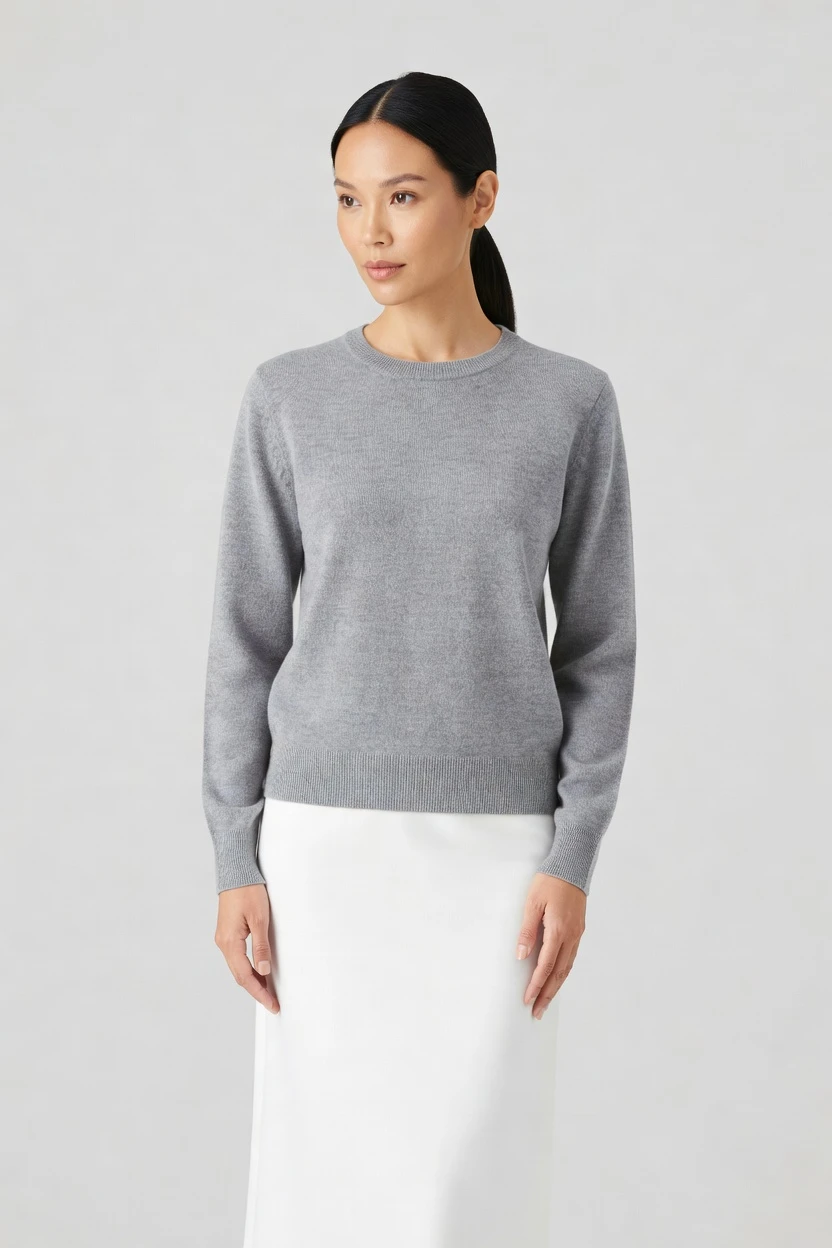
Direct the shoot. Zero prompts.
Start with a top-down product-first setup for folded or laid-out garments, then click through lighting, background, ratio, and visual style until the composition fits your PDP or campaign slot. The workflow stays garment-led, so the product remains the brief from first click to final export. 5 tokens · ~34s per image
- 6 clicks · 0 keystrokes
- app.rawshot.ai / new_shoot
How it works
Build Flat Lay Sets Without Studio Friction
From one product page image to a full assortment refresh, the workflow stays click-driven, garment-led, and ready for repeatable operations.
- Step 01
Upload the Garment
Start from the real product so the item, not a text box, anchors the image. Flat lay is especially useful when you need clean shape, color, logo, and trim visibility before moving into wider brand systems.
- Step 02
Set the Scene by Click
Choose flat lay framing, top-down angle, lighting, background, ratio, and visual style with interface controls. You direct the image like an application workflow, not a chat thread.
- Step 03
Generate and Reuse at Scale
Create single hero images in the browser or run repeated variants across large assortments through the REST API. The same engine handles one launch look or ten thousand SKUs with the same pricing logic.
Spec sheet
Proof for Product-First Image Operations
These twelve proof points show why RAWSHOT works for flat lay workflows that need control, trust, and repeatability.
- 01
No-Likeness by Design
Every RAWSHOT model is a synthetic composite built from 28 body attributes with 10+ options each, making accidental real-person likeness statistically negligible by design.
- 02
Every Setting Is a Click
Camera, angle, framing, light, background, style, and product focus live in buttons, sliders, and presets. You direct the result through the interface, not typed syntax.
- 03
The Garment Stays the Brief
Cut, colour, pattern, logo, fabric, and drape stay central to the output. RAWSHOT is engineered around the product, which is why flat lay imagery reads clean instead of improvised.
- 04
Diverse Synthetic Models
When you move beyond tabletop or flat product framing, you can use diverse synthetic models that are transparently labelled. The system stays honest about what the output is.
- 05
Consistency Across Every SKU
Save a model once and reuse the same face and body across your catalog with no drift between shoots. That consistency matters when collections expand across colors, fits, and seasonal drops.
- 06
150+ Visual Style Presets
Switch between catalog, campaign, editorial, studio, vintage, street, noir, and more without rebuilding the setup each time. Style variation is fast, but still anchored to the garment.
- 07
2K, 4K, and Every Ratio
Export stills in 2K or 4K and frame them for 1:1, 4:5, 3:4, 2:3, 16:9, or 9:16 placements. One product setup can serve PDPs, email, marketplace slots, and social crops.
- 08
Labelled and Compliance-Ready
Outputs are C2PA-signed, AI-labelled, and aligned with EU AI Act Article 50 and California SB 942 requirements. Visible and cryptographic watermarking support honest publishing practices.
- 09
Signed Audit Trail per Image
Each image carries a signed audit trail so teams can trace provenance instead of guessing where an asset came from. That matters for brand governance, approvals, and downstream distribution.
- 10
GUI for One Shoot, API for Scale
Use the browser for hands-on art direction or connect the REST API for high-volume catalog pipelines. The indie launch and the enterprise assortment use the same product foundation.
- 11
Clear Speed and Pricing
Images cost about $0.55 each and usually generate in 30–40 seconds. Tokens never expire, failed generations refund tokens, and there are no per-seat gates for core work.
- 12
Commercial Rights Stay Clear
Every output comes with full commercial rights, permanent and worldwide. That gives teams a direct path from generation to PDP, ad, marketplace listing, or campaign asset pack.
Outputs
See the Outputs. Keep the Garment Leading.
From clean white-background flats to more styled brand compositions, the product remains readable, consistent, and ready for commerce. Build one image for a PDP or a whole matrix for launches, seasonal edits, and marketplace requirements.


Browse 150+ visual styles →
Comparison
RAWSHOT vs category tools vs DIY prompting
Three lenses on every dimension — what you optimize for in RAWSHOT versus typical category tools and blank-box AI workflows.
01
Interface
RAWSHOT
Click-driven controls for camera, framing, light, background, and styleCategory tools + DIY
Often mix partial UI controls with thinner direction depth and less precise workflows. DIY prompting: You type instructions repeatedly and spend time steering wording instead of directing images02
Garment fidelity
RAWSHOT
Built around the real garment so cut, colour, logo, and drape holdCategory tools + DIY
Can look polished but often soften or reinterpret product details. DIY prompting: Garment drift is common, with changed seams, colors, trims, and invented logos03
Model consistency across SKUs
RAWSHOT
Save one model and reuse the same face and body across catalogsCategory tools + DIY
Consistency varies and often depends on plan limits or narrower tooling. DIY prompting: Faces change between outputs, so repeated SKU photography lacks stable continuity04
Provenance + labelling
RAWSHOT
C2PA-signed output with AI labelling and layered watermarking built inCategory tools + DIY
Provenance support is often limited or absent in the category. DIY prompting: Missing provenance metadata leaves no clean record of origin or labelling05
Commercial rights
RAWSHOT
Full commercial rights to every output, permanent and worldwideCategory tools + DIY
Rights terms can be narrower, tiered, or harder to interpret. DIY prompting: Rights clarity is often uncertain, especially across mixed models and external workflows06
Pricing transparency
RAWSHOT
Flat per-image pricing, no seat gates, tokens never expireCategory tools + DIY
Per-seat plans and volume tiers can raise costs as usage grows. DIY prompting: Tooling may seem cheap upfront, but iteration time and retries become the hidden cost07
Iteration speed per variant
RAWSHOT
Adjust a few controls and generate another approved commerce-ready variant quicklyCategory tools + DIY
Iterations are faster than studios but still limited by weaker control depth. DIY prompting: Each variation means another rewrite, more trial and error, and more prompt-engineering overhead08
Catalog API
RAWSHOT
Browser GUI and REST API share the same output engine and standardsCategory tools + DIY
API access is often restricted, upsold, or separated from core product tiers. DIY prompting: No reliable catalog pipeline, audit trail, or structured batch workflow for apparel teams
Prompting does not scale
Stop writing essays. Direct the shoot.
Most AI photo tools start with a blank text box. Rawshot turns the shoot into repeatable controls, so creative teams can produce consistent fashion imagery without prompt syntax or one-off hacks.
Category norm
ManualCreate a premium editorial fashion photograph of a model wearing the exact navy oversized wool coat from SKU-1842, full-body crop, realistic hands, consistent facial identity, clean e-commerce lighting, subtle Paris street background, 85mm lens, no logo distortion, no fabric hallucination, same pose as last campaign, repeatable for all colorways...
A prompt can describe one image. It cannot become a shared production system for hundreds of products, models, angles and markets.
Rawshot
ClicksSaved shoot recipe
Apply to 1 SKU or 10,000 via GUI, CSV or REST API.
Rawshot makes creative direction visible: buttons, presets and sliders instead of hidden prompt craft. The result is easier to teach, faster to approve and built for repeat production.
Use cases
Twelve Ways Teams Use Flat Lay Output
Operator archetypes and how click-directed, garment-first output fits the way they actually work.
- 01
Indie Designer Launching a First Drop
Create clean top-down product assets for a new collection before a full studio budget exists, then reuse the same visual system across launch day touchpoints.
Confidence · high
- 02
DTC Brand Refreshing PDP Images
Replace inconsistent product flats with repeatable garment-led imagery that keeps every category page cleaner and easier to scale.
Confidence · high
- 03
Marketplace Seller Standardizing Listings
Generate flat lay product images in the aspect ratios marketplaces expect, without rebuilding the workflow for every platform.
Confidence · high
- 04
Kidswear Team Showing Outfit Pairings
Arrange tops, bottoms, and accessories into a single composition so parents understand the full look at a glance.
Confidence · high
- 05
Lingerie Brand Managing Sensitive Styling
Use flat product compositions when the garment itself needs to do the selling, with clear visibility on trims, fabric, and silhouette.
Confidence · high
- 06
Resale Seller Cleaning Up Assorted Inventory
Turn uneven source photography into a more consistent storefront by standardizing backgrounds, framing, and output ratios item by item.
Confidence · high
- 07
Factory-Direct Manufacturer Building Sales Sheets
Generate orderly product-first visuals for wholesale outreach, line sheets, and buyer presentations without waiting for sample logistics.
Confidence · high
- 08
Crowdfunded Fashion Project Testing Demand
Publish polished flat lay assets early to validate interest, gather pre-orders, and present the collection clearly before larger production runs.
Confidence · high
- 09
Accessories Brand Combining Multiple Products
Place up to four items in one composition to build styled arrangements for gift guides, bundles, or cross-sell moments.
Confidence · high
- 10
Editorial Team Making Detail Crops
Start from a full flat composition, then generate close detail-led outputs for fabrics, prints, fasteners, and branded elements.
Confidence · high
- 11
Catalog Operator Running Seasonal Updates
Refresh assortments with new backgrounds, styles, and ratios while keeping product representation stable across thousands of SKUs.
Confidence · high
- 12
Student Portfolio Building Product Stories
Produce polished fashion flat lays for coursework, case studies, and brand concepts without renting a studio or learning chat-based image workflows.
Confidence · high
— Principle
Honest is better than perfect.
Flat lay product imagery is often used deep inside commerce systems, where files get copied, cropped, exported, and handed across teams. That is exactly why RAWSHOT signs outputs with C2PA metadata, applies visible and cryptographic watermarking, and keeps every image AI-labelled with a signed audit trail. We would rather give you clear provenance and a clean publishing record than pretend trust can be added later.
Rights & provenance
Full commercial rights. Forever.
- C2PA-signed on every image — EU AI Act Article 50 compliant
- 28-attribute synthetic models — real-person likeness statistically impossible
- Full commercial rights to every generation — no recurring licensing fees
- Tokens never expire · One-click cancel · Transparent pricing
EU AI Act
C2PA
Commercial use
Pricing
~$0.55 per image.
~30–40 seconds per generation. Tokens never expire. Cancel in one click.
- 01The cancel button is on the pricing page.
- 02No per-seat gates. No 'contact sales' walls for core features.
- 03Failed generations refund their tokens.
- 04Full commercial rights to every output, permanent, worldwide.
FAQ
Practical answers on control, rights, pricing, scale, and compliant publishing.
Do I need to write prompts to use RAWSHOT?
Never. You direct every output with sliders, presets, and clicks on the garment, not typed prompts. That matters for fashion teams because image production should behave like production software, not like a guessing game in a chat box. In RAWSHOT you select camera, angle, framing, lighting, background, aspect ratio, resolution, and visual style through the interface, so buyers, marketers, and ecommerce operators can work from the same controls without learning special syntax.
For catalog teams, reliability matters more than novelty. RAWSHOT keeps token usage, generation timing, refund rules, commercial rights, provenance signalling, watermarking, and workflow structure explicit across both the browser GUI and the REST API. That makes it easier to rehearse launches, maintain standards, and produce repeatable flat lay or on-model assets without the garment mutating because someone phrased an instruction differently.
What does a flat lay clothing photography generator actually change for ecommerce teams?
It changes who gets access to polished product imagery and how repeatably a team can produce it. Instead of waiting for sample shipping, studio coordination, and postproduction rounds, ecommerce teams can generate garment-led flat lay outputs directly in the browser and keep the product at the center of the frame. That is especially useful for PDPs, collection pages, marketplace listings, and launch assets where clarity, consistency, and speed matter more than elaborate production logistics.
With RAWSHOT, you also keep operational standards intact. You can export in 2K or 4K, choose the aspect ratio required by each destination, use one of 150+ visual style presets, and publish with C2PA-signed provenance and full commercial rights. The practical takeaway is simple: teams that were previously priced out of regular fashion photography can now build a dependable product image system instead of improvising one shoot at a time.
Why skip reshooting every SKU when the season changes?
Because seasonal change usually affects context more often than it affects the garment itself. Commerce teams often need new backgrounds, ratios, brand moods, and campaign treatments long before they need a full new studio day, especially when the underlying product details remain the same. Rebuilding every asset through traditional shoots creates delay, coordination work, and cost that many brands simply cannot absorb across large assortments.
RAWSHOT lets you keep the garment as the source of truth while updating the presentation around it. You can switch visual styles, crop for new channels, regenerate in 4K, and keep a signed record per image without changing your whole production model. For operators managing frequent drops or seasonal refreshes, the useful discipline is to treat image updates as controlled creative variants rather than full reshoots unless the product itself has materially changed.
How do we turn flat garments into catalogue-ready imagery without prompting?
You start with the product and then direct the scene through interface controls. For flat lay work, that usually means selecting a top-down angle, flat lay framing, a clean background, a commerce-friendly aspect ratio, and a visual style that matches the destination, whether that is a PDP, marketplace tile, email banner, or campaign crop. Because every setting is click-based, the workflow is easy to repeat across an assortment instead of being trapped in one operator's wording habits.
RAWSHOT supports 2K and 4K stills, every common aspect ratio, and product categories ranging from apparel to accessories, with up to four products in one composition. That makes it practical to build single-item flats, styled sets, or detail-led product stories from the same interface. The best operating pattern is to lock a few approved presets for brand teams, then reuse them across launches so the catalog stays consistent even as volume grows.
Why does RAWSHOT beat DIY image generation in ChatGPT, Midjourney, or other generic tools for fashion PDPs?
Because fashion commerce depends on product truth, repeatability, and rights clarity, not on one impressive image after fifty retries. Generic image tools tend to push teams into typed instructions and trial-and-error loops, which is where garment drift, invented logos, inconsistent styling, and missing provenance start to appear. That is frustrating for any creative workflow, but it is especially damaging for PDPs where the product must remain faithful across colorways, categories, and repeated updates.
RAWSHOT approaches the job as an application for fashion teams. You click through camera, framing, lighting, aspect ratio, and style; you keep a clear audit trail per image; you publish AI-labelled output with C2PA metadata; and you receive full commercial rights to every result. In operations terms, that means less time fighting unpredictability and more time approving assets that are actually usable in a catalog or campaign system.
Can we publish RAWSHOT images in ads, PDPs, and marketplaces with a clean rights story?
Yes. RAWSHOT gives you full commercial rights to every output, permanent and worldwide. That matters because fashion teams rarely create assets for a single destination; the same image often moves from PDP to paid social, marketplace listings, email, line sheets, and seasonal campaign edits. A clean rights position removes hesitation at the moment an approved asset needs to travel across channels.
RAWSHOT also pairs those rights with transparency rather than hiding the origin of the file. Outputs are AI-labelled, C2PA-signed, and watermarked through visible and cryptographic layers, with a signed audit trail per image. The practical lesson for brand teams is to treat usage rights and provenance as part of the same publishing standard: when both are clear upfront, approval cycles shorten and downstream teams do not need to reverse-engineer what they are allowed to ship.
What quality checks should a buyer or ecommerce lead run before publishing generated fashion imagery?
Start with the garment itself. Check that cut, colour, pattern, logo placement, trim, and fabric read correctly at the intended crop, then confirm the framing and background match the destination rather than merely looking attractive in isolation. For flat lay imagery, teams should also verify that folds, spacing, and product grouping make sense for the category, because the goal is not visual noise but product comprehension. Those checks are more valuable than abstract debates about whether an image looks impressive.
Then confirm the trust layer. RAWSHOT outputs carry AI labelling, C2PA provenance, watermarking signals, and a signed audit trail per image, so publishing teams can review both image quality and file integrity in the same process. The best operating habit is to formalize a short approval checklist that combines garment fidelity, destination fit, and provenance review before assets are pushed into PDPs, ads, or marketplace feeds.
How much does a still-image workflow cost for product flats, and what happens to unused tokens?
For photos, RAWSHOT runs at about $0.55 per image, with most still generations taking around 30–40 seconds. Tokens never expire, which matters for fashion teams whose production cadence is uneven across launches, seasonal updates, and ad hoc assortment fixes. You do not need to rush usage at the end of a billing window, and you are not punished for producing in bursts when the catalog actually needs attention.
The commercial terms stay straightforward in other useful ways too. Failed generations refund their tokens, the cancel button is on the pricing page, and there are no per-seat gates or contact-sales walls for core features. For operators managing flat lay production, that means you can budget by output volume rather than by software politics, then scale usage up or down as collections, marketplaces, and campaign calendars demand.
Can RAWSHOT plug into Shopify-scale catalogs or internal asset pipelines through an API?
Yes. RAWSHOT is built for both browser-led single shoots and REST API workflows at catalog scale, so teams do not have to choose between hands-on art direction and structured production throughput. That is important for apparel operations because one team may be shaping hero imagery manually while another needs repeatable batch generation for hundreds or thousands of SKUs moving through product systems and launch calendars.
The same engine underpins both modes, which keeps output standards, rights framing, provenance, and pricing logic aligned. In practice, teams can test a flat lay setup in the GUI, approve the combination of framing, background, and visual style, then translate that pattern into API-driven pipelines for broader assortments. The operational takeaway is to use the interface for creative validation and the API for sustained throughput rather than treating them as separate products.
How do small teams and large catalog operations use the same system without hitting enterprise gates?
RAWSHOT is designed so one shoot and ten thousand can run on the same product foundation. The indie designer working in the browser GUI, the brand marketer building launch assets, and the catalog operator running a nightly batch all use the same engine, the same model standards, and the same per-image pricing logic. That approach matters because image access should not disappear the moment a team grows or a workflow becomes operationally serious.
There are no per-seat gates for core features, no core-function contact-sales wall, and no token expiry pressure that forces artificial usage patterns. Add the signed audit trail per image, C2PA provenance, and full commercial rights, and the system becomes easier to govern across multiple roles, from creative to ecommerce to compliance. The practical move is to standardize approved settings early, then let teams generate through either GUI or API as volume and responsibility expand.
Keep exploring