
— Close-up fashion imagery · 150+ styles · 4K
Direct detail-led fashion imagery with the AI Close Up Shot Generator.
Generate clean, brand-ready close-up fashion images that hold onto fabric, trim, colour, and proportion. Adjust lens, framing, lighting, background, and visual style through buttons, sliders, and presets built for garment work. No studio. No samples. No prompts.
- ~$0.55 per image
- ~30–40s per generation
- 150+ styles
- 2K or 4K
- Every aspect ratio
- Full commercial rights
7-day free trial • 50 tokens (10 images) • Cancel anytime

Direct the shoot. Zero prompts.
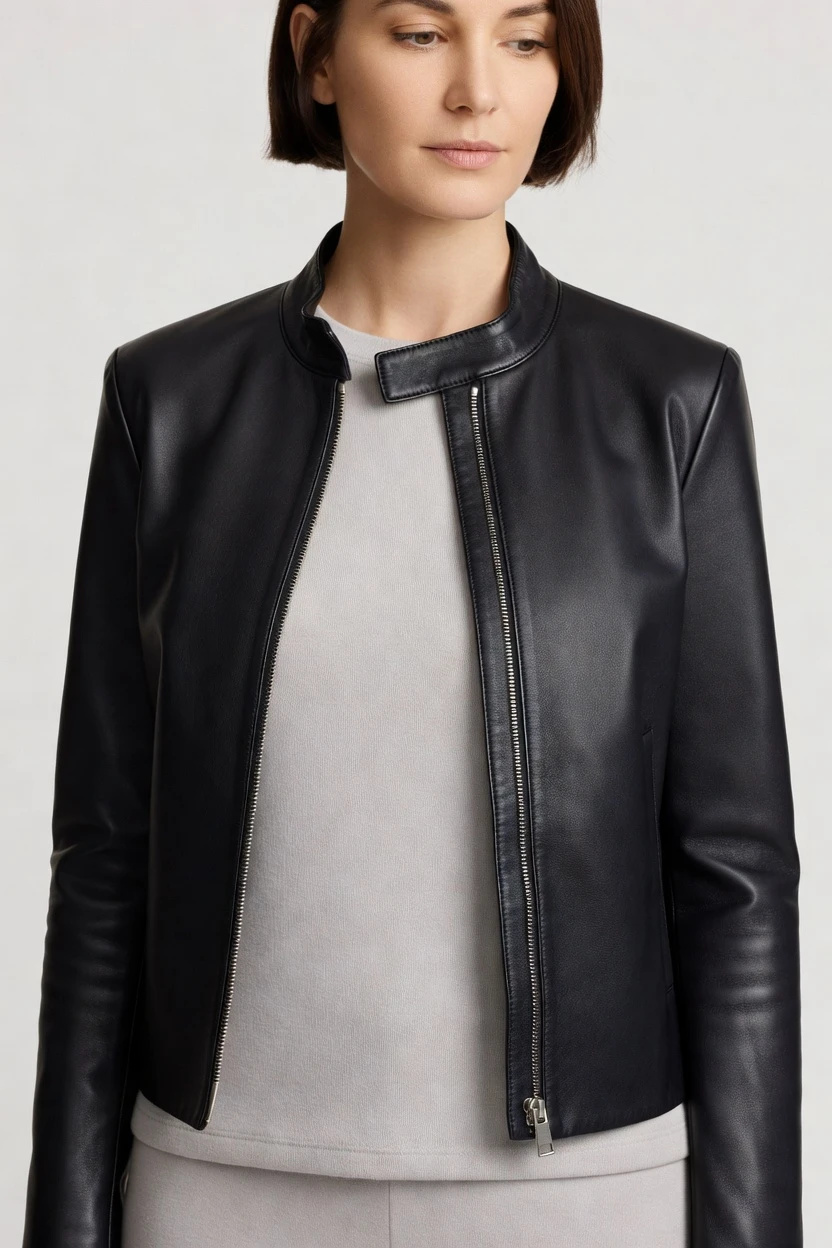
This setup is tuned for fashion close-ups: an 85mm lens, clean studio light, a tight crop, and a visual style that keeps texture and finish readable. You click into detail without turning the garment into generic beauty imagery. 5 tokens · ~34s per image
- 6 clicks · 0 keystrokes
- app.rawshot.ai / new_shoot
How it works
Dial In Fashion Close-Ups Fast
From lens choice to crop and lighting, each step is built to make small garment details publishable at brand scale.
- Step 01
Set the Frame
Choose a close crop, lens, camera angle, and lighting that suit the garment detail you need to show. You direct the composition with interface controls, not a text box.
- Step 02
Lock the Garment Read
Select the product focus, background, and visual style that keep trims, seams, fabric texture, and branding legible. RAWSHOT is built to represent the garment as the brief.
- Step 03
Generate and Reuse
Create output in around 30–40 seconds, then keep the same setup across variants, colourways, or full SKU runs. The same workflow works in the browser GUI or through the REST API.
Spec sheet
Proof for Detail-Led Fashion Imagery
These twelve surfaces show how RAWSHOT handles close framing, garment truth, governance, and scale without changing tools as you grow.
- 01
No-Likeness by Design
Every model is a synthetic composite built from 28 body attributes with 10+ options each. Accidental real-person likeness is statistically negligible by design.
- 02
Every Setting Is Click-Driven
Lens, crop, pose, angle, lighting, background, and style are all controlled through buttons, sliders, and presets. You direct the shot in an application, not a chat window.
- 03
Garment Detail Stays Central
Close-up output is engineered to hold onto cut, colour, pattern, logo placement, fabric texture, drape, and proportion. The garment is the brief.
- 04
Diverse Synthetic Models
Use transparently labelled synthetic models designed for fashion presentation across categories and styling needs. Diversity is built into the library, not treated as an afterthought.
- 05
Same Model Across Every SKU
Save the model and keep the same face, body, and presentation across your catalog. No drift between product lines, colour updates, or repeat shoots.
- 06
150+ Visual Styles
Move from clean catalog detail to campaign gloss, editorial drama, street flash, or beauty-led close crops. The style library lets you shift presentation without losing product readability.
- 07
2K, 4K, and Any Ratio
Generate in 2K or 4K and publish in square, portrait, landscape, or platform-native formats. Tight crops for PDPs and close social frames live in the same system.
- 08
Labelled and Compliant
Outputs are C2PA-signed, AI-labelled, and backed by visible and cryptographic watermarking. RAWSHOT is built for EU AI Act Article 50, California SB 942, GDPR, and EU hosting.
- 09
Signed Audit Trail per Image
Each output carries a signed record that supports internal review, publishing controls, and downstream governance. The proof travels with the image instead of living in a spreadsheet.
- 10
GUI for Shoots, API for Scale
Direct one close-up image in the browser or run high-volume product pipelines through the REST API. The indie label and the catalog team use the same engine.
- 11
Fast, Flat, and Transparent
Still images run at about $0.55 each and usually generate in around 30–40 seconds. Tokens never expire, and failed generations refund their tokens.
- 12
Rights Included by Default
Full commercial rights come with every output, permanent and worldwide. You publish with a clear rights line instead of a grey area.
Outputs
Close-Up Output, Garment First
See how detail-led framing holds trims, texture, finishes, and branding while still reading as fashion imagery. Tight crops stay commercially usable because the product remains legible.


Browse 150+ visual styles →
Comparison
RAWSHOT vs category tools vs DIY prompting
Three lenses on every dimension — what you optimize for in RAWSHOT versus typical category tools and blank-box AI workflows.
01
Interface
RAWSHOT
Click-driven controls for lens, crop, light, style, and product focusCategory tools + DIY
Often mix basic presets with thinner creative control and shorter setting ranges. DIY prompting: You type instructions, revise wording, and spend time steering generic outputs into shape02
Garment fidelity
RAWSHOT
Built around cut, colour, pattern, logo, fabric, drape, and proportionCategory tools + DIY
Can handle fashion scenes, but garment read is less dependable in detail crops. DIY prompting: Garment drift appears between takes, and invented logos can replace your actual branding03
Model consistency across SKUs
RAWSHOT
Save one model and reuse the same face and body across the catalogCategory tools + DIY
Consistency support varies and often weakens over long SKU runs. DIY prompting: Faces change across outputs, so close-up sets stop matching from product to product04
Provenance and labelling
RAWSHOT
C2PA-signed, AI-labelled, and watermarked with visible and cryptographic layersCategory tools + DIY
Provenance support is uneven, and many tools do not foreground labelling. DIY prompting: No clear provenance metadata, no C2PA record, and no signed audit trail05
Commercial rights
RAWSHOT
Full commercial rights to every output, permanent and worldwideCategory tools + DIY
Rights terms may vary by plan, seat, or contract structure. DIY prompting: Rights clarity is often unclear, especially for repeated brand and catalog use06
Iteration speed per variant
RAWSHOT
Adjust a control and regenerate another close crop in about 30–40 secondsCategory tools + DIY
Reasonably fast, but control changes can be less exact for garment detail work. DIY prompting: Iteration means rewriting instructions and hoping the model keeps the product stable07
Pricing transparency
RAWSHOT
Flat per-image pricing, tokens never expire, one-click cancel, refunds on failuresCategory tools + DIY
Per-seat plans, volume tiers, or gated sales conversations are more common. DIY prompting: Upfront cost can look simple, but time cost rises with trial-and-error direction08
Catalog scale
RAWSHOT
Same engine in browser GUI and REST API with signed audit trail per imageCategory tools + DIY
Scale features are often separated into higher plans or enterprise packaging. DIY prompting: No dependable catalog API for garment-led close-up pipelines at SKU scale
Prompting does not scale
Stop writing essays. Direct the shoot.
Most AI photo tools start with a blank text box. Rawshot turns the shoot into repeatable controls, so creative teams can produce consistent fashion imagery without prompt syntax or one-off hacks.
Category norm
ManualCreate a premium editorial fashion photograph of a model wearing the exact navy oversized wool coat from SKU-1842, full-body crop, realistic hands, consistent facial identity, clean e-commerce lighting, subtle Paris street background, 85mm lens, no logo distortion, no fabric hallucination, same pose as last campaign, repeatable for all colorways...
A prompt can describe one image. It cannot become a shared production system for hundreds of products, models, angles and markets.
Rawshot
ClicksSaved shoot recipe
Apply to 1 SKU or 10,000 via GUI, CSV or REST API.
Rawshot makes creative direction visible: buttons, presets and sliders instead of hidden prompt craft. The result is easier to teach, faster to approve and built for repeat production.
Use cases
Where Close Framing Actually Pays Off
Operator archetypes and how click-directed, garment-first output fits the way they actually work.
- 01
Indie Designers
Show stitching, texture, and finish on early drops without booking a studio day you cannot justify yet.
Confidence · high
- 02
DTC Apparel Brands
Build upper-body and detail crops for PDPs that keep trims, collars, fastenings, and fabric hand visible.
Confidence · high
- 03
Jewelry Labels
Direct tight product-led fashion shots that keep the accessory central while preserving styling context.
Confidence · high
- 04
Handbag Brands
Create close framing around hardware, straps, seams, and material texture for cleaner product storytelling.
Confidence · high
- 05
Footwear Sellers
Highlight uppers, laces, tread detail, and finish variations in crops made for retail pages and ads.
Confidence · high
- 06
Lingerie DTC Teams
Use controlled close-ups to present fabric, edge finish, and fit zones with more care and consistency.
Confidence · high
- 07
Adaptive Fashion Lines
Focus on closures, construction, and access points so the practical design is visible, not buried.
Confidence · high
- 08
Kidswear Brands
Capture prints, trims, and fabric detail in simple close shots that still feel like branded fashion imagery.
Confidence · high
- 09
Resale and Vintage Sellers
Show labels, weave, wear condition, and distinctive construction details that help buyers trust the listing.
Confidence · high
- 10
Marketplace Operators
Standardize close-up shots across mixed inventories without changing tools every time the category changes.
Confidence · high
- 11
Campaign Creative Teams
Cut beauty-led apparel crops for paid social and landing pages while keeping the garment readable in frame.
Confidence · high
- 12
Catalog Operations Teams
Run repeated close-up variants across large SKU sets through the API with consistent framing logic and governance.
Confidence · high
— Principle
Honest is better than perfect.
Close-up fashion imagery needs trust because the viewer is looking for proof in the details. RAWSHOT labels outputs, signs them with C2PA provenance, and applies visible plus cryptographic watermarking so your brand can publish tightly framed AI-assisted images without hiding what they are. That matters for ecommerce governance, marketplace acceptance, and internal review just as much as it matters for law.
Rights & provenance
Full commercial rights. Forever.
- C2PA-signed on every image — EU AI Act Article 50 compliant
- 28-attribute synthetic models — real-person likeness statistically impossible
- Full commercial rights to every generation — no recurring licensing fees
- Tokens never expire · One-click cancel · Transparent pricing
EU AI Act
C2PA
Commercial use
Pricing
~$0.55 per image.
~30–40 seconds per generation. Tokens never expire. Cancel in one click.
- 01The cancel button is on the pricing page.
- 02No per-seat gates. No 'contact sales' walls for core features.
- 03Failed generations refund their tokens.
- 04Full commercial rights to every output, permanent, worldwide.
FAQ
Practical answers on control, rights, pricing, scale, and compliant publishing.
Do I need to write prompts to use RAWSHOT?
Never—you direct every output with sliders, presets, and clicks on the garment, not typed prompts. That UI control is consistent across GUI and REST API payloads, which is why ecommerce teams onboard buyers without rewriting creative briefs as chat threads. You choose practical settings like lens, framing, camera angle, lighting, background, aspect ratio, and visual style, then generate from a workflow that behaves like software, not a guessing game.
For catalog teams, reliability matters more than model cleverness; RAWSHOT keeps tokens, timings, refund rules, commercial rights framing, provenance signalling, watermarking cues, REST surface, and SKU-scale batch patterns explicit so operations can rehearse PDP launches without hallucinated garment inventions. The result is simple to operationalize: your team learns one interface, saves reusable setups, and repeats them across product lines without becoming specialists in wording experiments.
What does an AI-assisted close-up fashion workflow change for ecommerce teams?
It changes who gets access to product imagery that actually sells the garment. Close-up fashion images are often where texture, trim, branding, stitching, and finish quality are proven, but traditional production makes that level of coverage expensive to repeat across every SKU and every seasonal refresh. RAWSHOT gives teams a click-driven way to produce those detail-led images on demand, with 2K and 4K output, every aspect ratio, and style controls that still keep the product readable.
For commerce teams, that means detail imagery stops being reserved for hero items only. Buyers can create upper-body crops, accessory-focused frames, or fabric-led detail shots for the full catalog, then carry the same logic into batches through the REST API. When failed generations refund tokens and pricing stays flat per image, planning content coverage becomes an operations decision instead of a budget fight.
Why skip reshooting every SKU just to update seasonal close-up assets?
Because seasonal updates usually demand variation in framing, mood, and channel fit more often than they demand a full physical production cycle. If you already know the garment details you need to show—zipper hardware, knit texture, neckline finish, print scale, or branding placement—it is inefficient to rebuild a studio workflow each time the calendar changes. RAWSHOT lets you keep the garment central while swapping the presentation layer through controlled settings like crop, light, background, aspect ratio, and visual style.
That matters when campaign timing and PDP maintenance collide. You can keep a clean catalog close-up for retail pages, then generate a sharper editorial crop for launch creative without changing tools or losing rights clarity. Teams end up with a repeatable content system: same product logic, new presentation, faster review, and no dependency on one-off reshoots for every merchandise update.
How do we turn flat garments into catalogue-ready imagery without prompting?
You start by selecting the visual decisions that matter to apparel teams: product focus, framing, lens, lighting, background, and style. RAWSHOT is engineered around garment representation, so the workflow is built to preserve cut, colour, pattern, logo placement, fabric, drape, and proportion rather than letting generic image logic invent around them. For close-up work, teams usually lock an 85mm or 105mm lens, a controlled crop, clean light, and a background that keeps edges and finish legible.
From there, the process is operational rather than speculative. A buyer or creative producer can generate a close image in around 30–40 seconds, review the garment read, adjust a few controls, and save the setup for the next SKU or colourway. The same settings logic can be lifted into the REST API when the workflow moves from a handful of products to a full catalog run.
Why does RAWSHOT beat DIY prompting in ChatGPT, Midjourney, or generic image tools for fashion PDP close-ups?
Because fashion detail imagery fails when the product stops being dependable. Generic image tools often introduce garment drift, alter trim positions, hallucinate branding, or change the face and styling logic between outputs, which makes close-up assets hard to trust on product pages. They also put the burden on your team to keep rewriting instructions, while RAWSHOT gives you direct controls for composition and garment-led output without turning buyers into text wranglers.
RAWSHOT also gives commerce teams the operational layers that DIY tools usually do not: clear commercial rights, C2PA-signed provenance, visible and cryptographic watermarking, transparent token economics, and a signed audit trail per image. That combination matters when close frames are being reviewed by ecommerce, brand, legal, and marketplace teams, because the output is not just visually usable—it is governable and repeatable.
Can I use an ai close up shot generator for paid ads, PDPs, and marketplace listings with clear rights?
Yes. RAWSHOT includes full commercial rights to every output, permanent and worldwide, which is the line commerce teams need when they are publishing across PDPs, paid social, marketplaces, landing pages, and email. That clarity is especially important for close-up images because they often get reused widely: detail blocks on product pages, cropped paid media assets, comparison modules, and channel-specific creative all pull from the same source material.
RAWSHOT also pairs those rights with labelling and provenance rather than asking brands to choose between usability and honesty. Outputs are AI-labelled, C2PA-signed, and watermarked with visible plus cryptographic layers, so teams can maintain internal governance while still moving quickly. In practice, that means your content pipeline can approve, export, and publish detail-led imagery with a documented rights and provenance story from the start.
What quality checks should our team run before publishing close-up fashion images?
Start with the garment itself. Check that cut lines, seam placement, trim shape, fabric texture, colour, print scale, logo treatment, and proportion all read correctly at the chosen crop. For close-up fashion content, those details are the selling surface, so any mismatch matters more than cinematic flair. Then confirm the framing and lighting are helping the product rather than turning the image into generic beauty content.
After visual review, run governance checks. Make sure the output carries the expected provenance and labelling standards, confirm watermarking is present as intended, and keep the signed audit trail attached to your asset review flow. RAWSHOT makes those checks easier because the rights line is explicit, the provenance record is built in, and the settings are reproducible, which means teams can publish with a documented process instead of subjective memory.
How much does the ai close up shot generator cost for still images, and what happens to unused tokens?
For still images, pricing is about $0.55 per image, and most generations complete in around 30–40 seconds. Tokens never expire, which matters for fashion teams whose workflows spike around launches, sample arrivals, or assortment reviews rather than following a constant monthly rhythm. If a generation fails, the tokens are refunded, so you are not paying for an output that never arrived.
That pricing model is useful because it stays operationally simple. There are no per-seat gates for core features, and cancelation is one click, with the cancel button on the pricing page. For close-up image work, where teams often generate multiple framing variants to compare detail readability across channels, predictable token behavior makes budgeting easier and removes the pressure to force every test into one session.
Can RAWSHOT plug into Shopify-scale catalogs or existing image pipelines through the API?
Yes. RAWSHOT is built for both single-shoot work in the browser and catalog-scale runs through the REST API, so teams do not have to switch products when volume increases. That matters for close-up imagery because detail crops are rarely one-off assets; they need to be repeated across colourways, categories, product updates, and channel-specific exports. The same engine, model logic, and pricing structure carry across both modes.
For operations teams, the advantage is consistency. You can define how close-up assets should look in the GUI, validate them with brand and merchandising, then translate that setup into an API-driven pipeline for larger assortments. With a signed audit trail per image and governance-friendly provenance, the output fits into review systems more cleanly than ad hoc image generation methods.
What happens when one buyer needs a single detail shot and the catalog team needs 10,000 of them?
The workflow stays in the same product. A buyer can open the browser interface, choose the crop, lens, light, and style for a single product detail image, and generate what they need without waiting on a technical handoff. When the catalog team needs the same visual logic across thousands of SKUs, they use the REST API without moving to a different engine, a different rights model, or a different quality tier.
That continuity is the point of RAWSHOT’s infrastructure approach. One shoot or ten thousand uses the same models, the same per-image economics, the same governance surfaces, and the same garment-led controls. For brands, it means experimentation at the small end and operational scale at the large end are connected, so the standards you set for one close-up asset can become the standard for the whole catalog.
Keep exploring