
— Hair color · Model consistency · Save once
AI Strawberry Blonde Hair Male Generator — with click-driven control over every attribute.
Strawberry blonde male models matter when hair color is part of the brand language, casting direction, or customer fit story. You set the look with 28 body attributes and 10+ options each, save the model once, and reuse the same identity across your entire catalog. Every model is a synthetic composite, transparently labelled and built for consistent commerce output.
- ~$0.99 per generation
- ~50–60s
- 28 attributes × 10+ options each
- Save once, reuse across catalog
- Synthetic composite
- C2PA-signed
7-day free trial • 50 tokens (10 images) • Cancel anytime

Saved model setup
Female · 26–35 · Dark brown · 175cm
Build a model. Zero prompts.
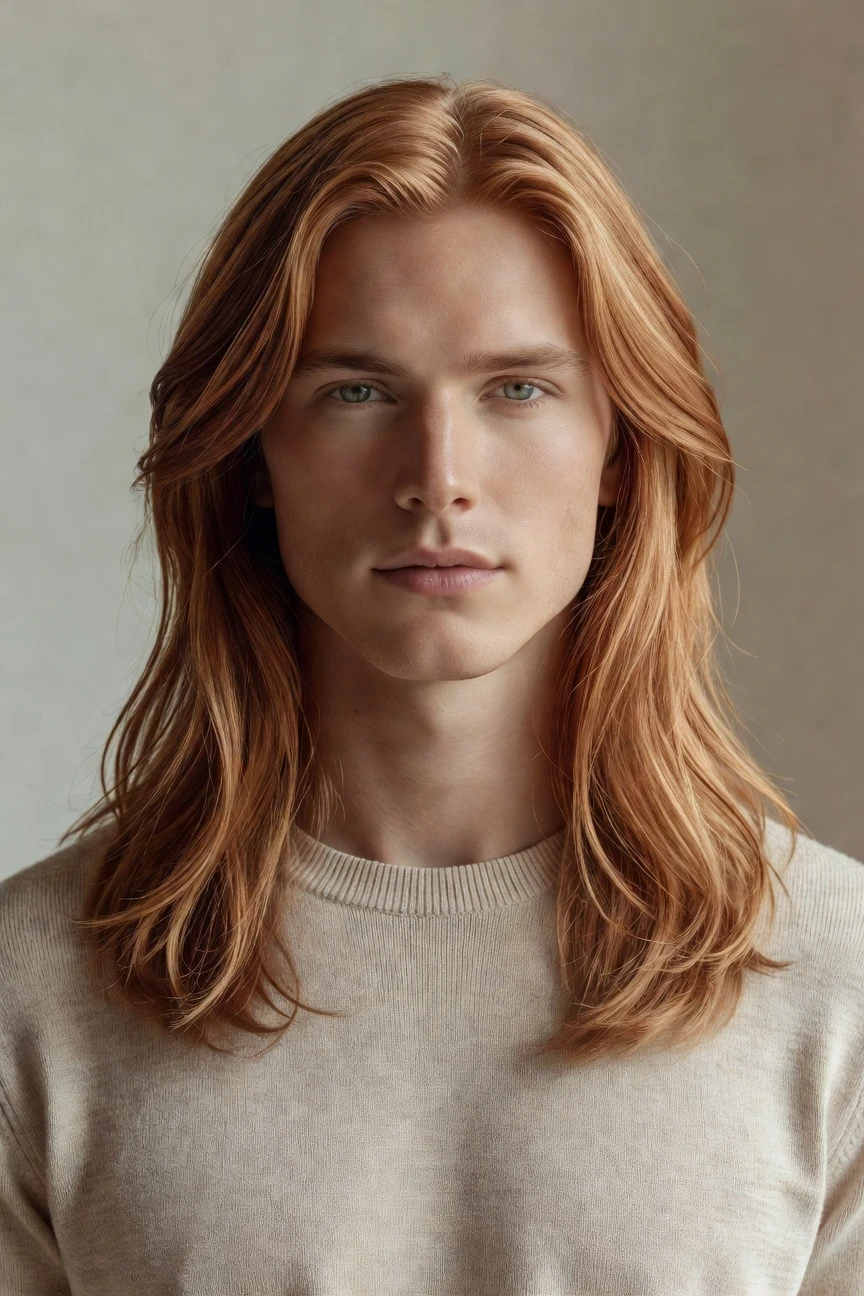
Start with a male presentation, age 26–35, average build, and long wavy hair as the base. Then set the hair tone toward a strawberry blonde direction, save the model, and keep the same identity steady across every SKU. 28 attributes · 10+ options each
- 5 clicks · 0 keystrokes
- app.rawshot.ai / build_model
How it works
Build the Model, Then Reuse It
Hair color is the entry point, but the workflow is built for full identity control and catalog-wide consistency.
- Step 01
Set the Model Attributes
Select gender presentation, age, build, height, hair direction, and expression with buttons and sliders. Hair color becomes one controlled attribute inside a saved model, not a fragile text guess.
- Step 02
Save the Identity Once
When the face, proportions, and hair read right for your brand, save the model to your library. That same identity stays available for future garments, seasons, and channels.
- Step 03
Reuse Across the Catalog
Apply the saved model in the browser for one-off shoots or through the REST API for SKU-scale production. You keep the same face and body while garments, framing, and styling change around it.
Spec sheet
Proof for Attribute-Led Model Control
These twelve surfaces show why saved synthetic models work better for fashion operations than loose one-off image generation.
- 01
28 Attributes, Built for Control
You shape identity through 28 body attributes with 10+ options each. That breadth reduces accidental likeness risk and gives teams repeatable model building.
- 02
Every Setting Is a Click
You direct the model with interface controls, not an empty text box. Buyers, marketers, and founders can work in the product without learning syntax.
- 03
Garment-Led Output
The garment stays the brief. Cut, color, pattern, logo, fabric, and proportion stay central while the saved model wears the product.
- 04
Diverse Synthetic Models
Build male-presenting models across age ranges, body types, skin tones, and heritage options. Diversity is a controlled system, not a lucky output.
- 05
Same Face Across SKUs
Save one strawberry blonde male identity and keep it stable across shirts, outerwear, denim, and accessories. No drift between product pages or campaign batches.
- 06
150+ Visual Styles
Move from clean catalog to editorial, campaign, street, vintage, or studio looks with presets. The model stays consistent while the art direction changes.
- 07
2K, 4K, Every Ratio
Generate assets for PDPs, social crops, lookbooks, and marketplace formats. Resolution and aspect ratio adapt to channel needs without rebuilding the model.
- 08
Labelled and Compliance-Ready
Outputs are AI-labelled, C2PA-signed, and watermarked with visible and cryptographic layers. RAWSHOT is built for EU-hosted, transparent fashion production.
- 09
Signed Audit Trail per Image
Each image carries provenance records teams can track and review. That matters when creative, legal, and marketplace operations need proof of origin.
- 10
GUI for One Shoot, API for Scale
Use the browser for directorial work or the REST API for catalog pipelines. The same engine serves single looks and nightly bulk production.
- 11
Fast, Predictable Model Building
Model generations run in about 50–60 seconds at roughly $0.99 each, with tokens that never expire. Failed generations refund their tokens automatically.
- 12
Full Commercial Rights Included
Every output comes with permanent, worldwide commercial rights. Teams can publish, test, syndicate, and archive assets without unclear licensing terms.
Outputs
Saved Identity, Many Outputs
One model build can anchor an entire product universe. Keep the same strawberry blonde male identity while styling, garments, and framing shift around the catalog.


Browse all 600+ models →
Comparison
RAWSHOT vs category tools vs DIY prompting
Three lenses on every dimension — what you optimize for in RAWSHOT versus typical category tools and blank-box AI workflows.
01
Interface
RAWSHOT
Click-driven model builder with visual controls for every core attributeCategory tools + DIY
Template-led fashion tools with narrower controls and less direct model editing. DIY prompting: Typed instructions in generic tools, with results depending on wording and repetition02
Model consistency across SKUs
RAWSHOT
Save one identity and reuse it across the whole catalogCategory tools + DIY
Some consistency support, often weaker across large multi-SKU runs. DIY prompting: Faces drift between outputs, so catalogs end up with near-matches not continuity03
Garment fidelity
RAWSHOT
Built around the garment, keeping cut, color, pattern, and logos centralCategory tools + DIY
Often stronger on mood than on exact apparel details. DIY prompting: Garments drift, logos get invented, and construction details change between versions04
Provenance + labelling
RAWSHOT
C2PA-signed, AI-labelled, with visible and cryptographic watermarkingCategory tools + DIY
Labelling varies and provenance records are often inconsistent. DIY prompting: Usually no provenance metadata, no signed records, and weak disclosure handling05
Commercial rights
RAWSHOT
Permanent worldwide commercial rights included with every outputCategory tools + DIY
Rights can depend on plan level or contract terms. DIY prompting: Rights clarity depends on platform terms and is often unclear for commerce teams06
Pricing transparency
RAWSHOT
Per-model pricing is clear, tokens never expire, cancel in one clickCategory tools + DIY
Feature gates, seat limits, or plan tiers can complicate rollout. DIY prompting: Costs look low until retries, failed iterations, and manual cleanup stack up07
Catalog scale
RAWSHOT
Browser GUI and REST API use the same engine and model libraryCategory tools + DIY
Scale options may require separate enterprise workflows or gated access. DIY prompting: No reliable catalog pipeline, weak repeatability, and heavy manual supervision08
Auditability
RAWSHOT
Signed audit trail per image supports review across teamsCategory tools + DIY
Asset history is often thinner and less portable. DIY prompting: Little traceability beyond saved chats or local files, which breaks approval workflows
Prompting does not scale
Stop writing essays. Direct the shoot.
Most AI photo tools start with a blank text box. Rawshot turns the shoot into repeatable controls, so creative teams can produce consistent fashion imagery without prompt syntax or one-off hacks.
Category norm
ManualCreate a premium editorial fashion photograph of a model wearing the exact navy oversized wool coat from SKU-1842, full-body crop, realistic hands, consistent facial identity, clean e-commerce lighting, subtle Paris street background, 85mm lens, no logo distortion, no fabric hallucination, same pose as last campaign, repeatable for all colorways...
A prompt can describe one image. It cannot become a shared production system for hundreds of products, models, angles and markets.
Rawshot
ClicksSaved shoot recipe
Apply to 1 SKU or 10,000 via GUI, CSV or REST API.
Rawshot makes creative direction visible: buttons, presets and sliders instead of hidden prompt craft. The result is easier to teach, faster to approve and built for repeat production.
Use cases
Where Consistent Male Hair Direction Matters
Operator archetypes and how click-directed, garment-first output fits the way they actually work.
- 01
Menswear DTC Launches
A new label builds one strawberry blonde male model and uses it across its first full drop without booking a studio day.
Confidence · high
- 02
Denim Brands Testing Fits
Merchants compare the same male identity across washes, rises, and leg shapes so customers read the product changes clearly.
Confidence · high
- 03
Outerwear Campaign Refreshes
Creative teams keep the same face while swapping coats, crops, and lighting for seasonal campaign updates.
Confidence · high
- 04
Marketplace Catalog Teams
Operators publish consistent male model imagery across hundreds of listings without recasting every product variation.
Confidence · high
- 05
Crowdfunded Apparel Concepts
Founders show pre-production garments on a saved model before samples are shipped anywhere.
Confidence · high
- 06
Private Label Manufacturers
Factories present multiple client collections on one controlled male identity for cleaner line-sheet storytelling.
Confidence · high
- 07
Streetwear Drops
Brands anchor a recognizable strawberry blonde look across tees, hoodies, and accessories to keep a tight visual signature.
Confidence · high
- 08
Resale and Vintage Sellers
Sellers standardize mixed inventory on one male-presenting model instead of relying on inconsistent sourced imagery.
Confidence · high
- 09
Accessories Merchandising
Teams pair bags, watches, and sunglasses with the same model so cross-sell pages feel authored, not patched together.
Confidence · high
- 10
Editorial Lookbook Builds
Art direction changes from clean studio to moody campaign while the saved male identity holds the story together.
Confidence · high
- 11
Student Fashion Portfolios
Emerging designers create repeatable casting for menswear collections without learning specialist production workflows.
Confidence · high
- 12
Retail Test Markets
Growth teams trial alternate visual directions on the same male model and isolate what changed in the assortment story.
Confidence · high
— Principle
Honest is better than perfect.
When hair color and identity are part of the brief, teams need clarity about what the model is. RAWSHOT labels outputs, signs provenance with C2PA, and adds visible plus cryptographic watermarking so synthetic fashion imagery stays transparent in review, publishing, and platform distribution. Our models are synthetic composites by design, built to support brand control without leaning on real-person likeness.
Rights & provenance
Full commercial rights. Forever.
- C2PA-signed on every image — EU AI Act Article 50 compliant
- 28-attribute synthetic models — real-person likeness statistically impossible
- Full commercial rights to every generation — no recurring licensing fees
- Tokens never expire · One-click cancel · Transparent pricing
EU AI Act
C2PA
Commercial use
Pricing
~$0.99 per model generation.
~50–60 seconds per generation. Save the model once, reuse it across your entire catalog.
- 01Tokens never expire. Cancel in one click.
- 02Same face, same body, every SKU — no drift between shoots.
- 03No per-seat gates. No 'contact sales' walls for core features.
- 04Failed generations refund their tokens.
FAQ
Practical answers on control, rights, pricing, scale, and compliant publishing.
Do I need to write prompts to use RAWSHOT?
Never—you direct every output with sliders, presets, and clicks on the garment, not typed prompts. That matters because fashion teams need repeatable decisions around model identity, framing, lighting, and product focus, not a chat workflow that changes every time someone words a request differently. In RAWSHOT, the interface is built like an application, so buyers, marketers, founders, and catalog operators can make the same decisions through controls and save them for reuse.
For commerce teams, reliability beats improvisation. RAWSHOT keeps model attributes, generation timings, token use, refunds, commercial rights, provenance signals, and output handling explicit across both the browser GUI and REST API. That means you can build a strawberry blonde male model once, reuse it across many garments, and run a publishing workflow with less guesswork, fewer retries, and a clearer approval trail.
What does an AI strawberry blonde hair male generator actually change for catalog teams?
It changes casting from a one-time production event into a reusable system. Instead of organizing a shoot every time you need a male model with a specific hair direction, you build that identity once through controlled attributes and save it to your library. That is especially useful when hair color is part of the visual brief, because catalog teams often need the same recognizable identity across multiple garments, updates, and channels.
RAWSHOT makes that operational rather than speculative. You set the model with click-driven controls, keep the same face and body across SKUs, and then switch garments, crops, and styles without losing continuity. Combined with permanent worldwide commercial rights, C2PA-signed provenance, and GUI or API access, the result is a cleaner workflow for PDPs, campaigns, and marketplace syndication.
Why skip reshooting every SKU when the model identity needs to stay the same?
Because reshooting for every assortment update slows the business long before it improves the imagery. If your goal is to keep one male identity stable while new products arrive, a saved synthetic model removes the need to recreate casting, scheduling, and studio conditions just to maintain continuity. Teams can keep one visual anchor across a season instead of hoping separate shoots still feel related.
RAWSHOT is built for that exact repeatability. You save the model once, then reuse it across tops, bottoms, outerwear, footwear, and accessories while changing the product, crop, background, or style preset around it. For operators, that means faster range refreshes, more consistent merchandising, and fewer catalog pages that look like they belong to different brands.
How do we turn flat garments into catalogue-ready imagery without prompting?
You start by uploading the real garment and selecting the output direction in the interface. Then you choose the saved model, framing, camera treatment, lighting, background, and style preset with controls that are already aligned to fashion workflows. Because the garment stays central in the system, the process is less about coaxing an image engine and more about directing a shoot through software.
In RAWSHOT, that same workflow works for one-off browser sessions and larger production runs. Teams can generate stills in 2K or 4K, keep the same model identity across the assortment, and move from product page imagery to campaign variants without rebuilding the cast each time. The practical takeaway is simple: standardize the model once, then let the garment drive the rest of the output.
Why does garment-led control beat ChatGPT, Midjourney, or generic image tools for fashion PDPs?
Because fashion PDPs need consistency, not clever one-offs. Generic tools are built around typed requests, so identity, garment details, logos, and proportions can shift as soon as wording changes or the model interprets a detail loosely. That creates extra review work, especially when a merchandising team needs the same face across many products and cannot afford garment drift or invented branding.
RAWSHOT is structured differently. Every meaningful decision sits in the interface, the garment is treated as the brief, and the saved model can be reused across SKUs without starting from scratch. Add C2PA provenance, visible and cryptographic watermarking, and clear commercial rights, and you get something much closer to a production tool than a general image sandbox.
Can we use these labelled synthetic models in paid commerce and campaign work?
Yes. RAWSHOT includes permanent, worldwide commercial rights for every output, which is what commerce teams need when assets move from product pages to ads, marketplaces, email, and wholesale decks. The platform is also transparent by design, so outputs are AI-labelled rather than disguised, which helps brands set internal standards that can hold up under legal and marketplace review.
That transparency is backed by product features, not vague claims. RAWSHOT adds C2PA-signed provenance metadata and multi-layer watermarking with visible and cryptographic signals, while the models themselves are synthetic composites engineered to avoid dependence on real-person likeness. For operators, that means you can publish with a clearer rights position and a cleaner disclosure posture from the start.
What should our team check before publishing a saved male model across a full assortment?
Check the same things you would in a disciplined studio workflow: garment accuracy, logo integrity, fit reading, identity consistency, and channel suitability. When the model identity is part of the brand language, also confirm that hair direction, expression, and framing stay aligned across product groups so the catalog reads as intentional rather than assembled from unrelated assets. Good review is about consistency of decisions, not chasing perfect novelty.
RAWSHOT supports that process with controlled attributes, repeatable presets, signed provenance metadata, and visible plus cryptographic watermarking. Teams should review one approved model build, lock it into the library, and then use that saved identity as the standard for later generations. That keeps approvals tighter and makes it easier for merchandising, creative, and legal stakeholders to sign off with confidence.
How much does a model build cost, and what happens if a generation fails?
A model generation is about $0.99 and usually completes in around 50–60 seconds. That pricing matters because model building is the foundation of repeatable catalog work: once the identity is right, you can reuse it across many garments instead of paying to rediscover the same face repeatedly. Tokens also never expire, so teams can build now and return later without losing prepaid value.
If a generation fails, the tokens are refunded automatically. RAWSHOT also keeps cancellation straightforward with a one-click cancel option, and it avoids per-seat gates or core-feature sales walls that complicate adoption. For budgeting, the practical move is to treat the model build as a reusable casting asset, not as a disposable one-off experiment.
Can we plug saved models into Shopify-scale or marketplace pipelines through the API?
Yes. RAWSHOT provides a REST API for catalog-scale workflows, so teams can use the same underlying engine and model library in automated pipelines as they do in the browser. That matters when a saved male identity needs to appear consistently across a large volume of SKUs, because the challenge is no longer image generation alone; it is repeatable production across many product records and deadlines.
In practice, teams build and approve the model in the GUI, then reference that identity in downstream catalog jobs. Because RAWSHOT also keeps provenance and auditability explicit, operations teams can connect creative output to review and publishing steps with less manual interpretation. The result is a more stable bridge between ecommerce systems and image production.
How do teams scale from one saved model in the browser to thousands of outputs across departments?
They start by agreeing on the model identity as a reusable brand asset. A founder, buyer, or creative lead can build the model in the browser, test it on a few garments, and approve the expression, proportions, and hair direction before wider rollout. Once that identity is stable, other teams can use it across merchandising, growth, and marketplace workflows without re-casting the visual language every time.
RAWSHOT supports that scale because the GUI and API run on the same product logic rather than separate editions. You keep the same model, the same pricing logic, the same rights position, and the same provenance structure whether you are producing one lookbook frame or a nightly catalog batch. For operations, that means access expands without the usual tool handoff friction.