
— 28 attributes · 10+ options each · Save once
AI Young Man Generator — with click-driven control over every attribute.
Build a younger male-presenting model when age, styling, and catalog continuity need to stay aligned from first look to final SKU. You set body traits, face, hair, height, and expression with buttons and sliders, save the model once, and reuse it across your whole catalog. Every model is a transparently labelled synthetic composite with statistically negligible real-person likeness risk by design.
- ~$0.99 per model
- ~50–60s per generation
- 150+ styles
- 28 attributes × 10+ options each
- Save once, reuse across catalog
- C2PA-signed
7-day free trial • 50 tokens (10 images) • Cancel anytime

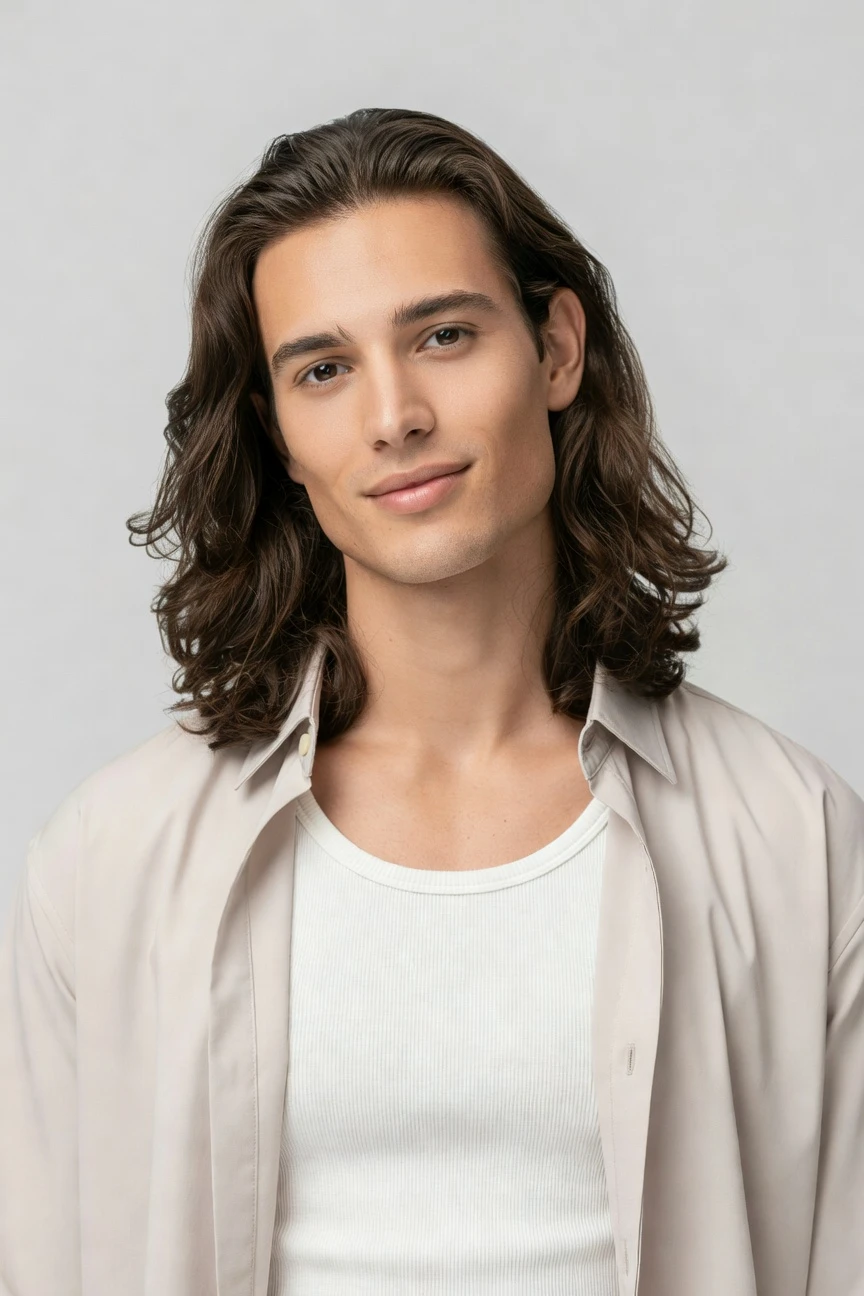
Saved model setup
Female · 26–35 · Dark brown · 175cm
Build a model. Zero prompts.
This setup starts from a young male-presenting base with a medium-height frame, average build, long wavy hair, dark brown hair colour, and a 26–35 age range. You click the attributes, save the model, and keep the same face and body consistent across every garment shoot. 28 attributes · 10+ options each
- 5 clicks · 0 keystrokes
- app.rawshot.ai / build_model
How it works
Build Once, Reuse Across Every SKU
Start with the model, save the identity, then apply the same young male presentation across campaigns, PDPs, and batch catalog work.
- Step 01
Set the Model Attributes
Choose age range, body type, height, hair, skin tone, and expression from visual controls. The model is built as a synthetic composite shaped for fashion use, not around a real person.
- Step 02
Save the Face and Body
Once the model looks right, save it to your library. That same identity can be reused across new garments, seasonal styling changes, and large catalog runs without face drift.
- Step 03
Deploy Across Shoots and Pipelines
Use the saved model in the browser for one-off shoots or send it through the REST API for SKU-scale production. The workflow stays the same whether you are styling one look or ten thousand.
Spec sheet
Proof for Young Male Model Workflows
These twelve surfaces show why model creation in RAWSHOT behaves like production software, not trial-and-error image generation.
- 01
28 Attributes, Built for Control
Shape the model through 28 body attributes with 10+ options each. The system is designed to make accidental real-person likeness statistically negligible by design.
- 02
Every Setting Is a Click
You direct age, body, hair, expression, framing, and styling through controls in the interface. No empty text field stands between you and a usable model.
- 03
Garment-Led Representation
The garment stays the brief. Cut, colour, logo, pattern, fabric, drape, and proportion are represented faithfully instead of being bent around guesswork.
- 04
Diverse Synthetic Young Men
Build male-presenting models across a broad range of body traits, tones, and visual identities. Diversity is available as a control surface, not a casting bottleneck.
- 05
Consistent Across the Catalog
Save a face and body once, then apply them to every new product. You get continuity across drops, reshoots, and category pages without starting from zero.
- 06
150+ Visual Style Presets
Move from clean catalog to street, editorial, campaign, noir, vintage, or Y2K looks in a few clicks. The model stays consistent while the visual direction changes.
- 07
2K, 4K, and Every Ratio
Generate assets for PDPs, marketplaces, social, lookbooks, and retail screens. Full-frame flexibility means the same saved model can serve every channel.
- 08
Labelled and Compliance-Ready
Outputs are C2PA-signed, watermarked, and AI-labelled. RAWSHOT is built for EU-hosted compliance workflows, including EU AI Act Article 50 and California SB 942 requirements.
- 09
Signed Audit Trail per Image
Each output carries provenance metadata tied to what it is. That gives legal, brand, and marketplace teams a record they can actually review and retain.
- 10
GUI for One Shoot, API for Scale
Build and save models in the browser, then push the same identities through the REST API for nightly catalog runs. Indie teams and enterprise ops use the same engine.
- 11
Fast, Clear Token Economics
Model generations run in about 50–60 seconds at roughly $0.99 each. Tokens never expire, failed generations refund tokens, and core access is not hidden behind seats.
- 12
Full Commercial Rights Included
Every output comes with permanent, worldwide commercial rights. That matters when a saved model needs to move from concept page to paid campaign without licensing friction.
Outputs
Saved Models, Ready for Production
Build a young male-presenting identity once, then deploy it across categories, channels, and visual styles without losing continuity. The gallery shows how one reusable model can stretch from clean commerce to brand storytelling.


Browse all 600+ models →
Comparison
RAWSHOT vs category tools vs DIY prompting
Three lenses on every dimension — what you optimize for in RAWSHOT versus typical category tools and blank-box AI workflows.
01
Interface
RAWSHOT
Click-driven controls for body traits, styling, camera, and output reuseCategory tools + DIY
Partial UI controls, often mixed with short text-based direction. DIY prompting: Typed instructions in generic image tools with inconsistent interpretation each run02
Model consistency
RAWSHOT
Save one young male identity and reuse it across the entire catalogCategory tools + DIY
Reference continuity varies between sessions and product sets. DIY prompting: Faces drift between outputs, making SKU continuity hard to maintain03
Garment fidelity
RAWSHOT
Engineered around cut, colour, drape, logos, and proportion of real garmentsCategory tools + DIY
Fashion-first visuals, but garment detail can soften under style changes. DIY prompting: Garment drift, invented logos, and altered trims appear across iterations04
Provenance
RAWSHOT
C2PA-signed outputs with visible and cryptographic watermarkingCategory tools + DIY
Labelling varies by vendor and is not always embedded per file. DIY prompting: No built-in provenance metadata and no standard audit trail05
Commercial rights
RAWSHOT
Permanent worldwide commercial rights on every outputCategory tools + DIY
Rights can depend on plan, seat, or negotiated terms. DIY prompting: Usage clarity depends on model, provider, and evolving platform terms06
Pricing transparency
RAWSHOT
Per-model pricing, tokens never expire, failed generations refund tokensCategory tools + DIY
Plan complexity, seats, and gated tiers can shape access. DIY prompting: Usage costs vary by tool and retries pile up during trial-and-error07
Catalog scale
RAWSHOT
Same product in browser GUI and REST API for single shoots or 10,000 SKUsCategory tools + DIY
Scale features may sit behind enterprise packaging or custom onboarding. DIY prompting: Manual repetition across chat sessions breaks repeatability and throughput08
Operational overhead
RAWSHOT
Buttons, sliders, presets, and saved models reduce training burdenCategory tools + DIY
Teams still learn tool-specific workarounds and mixed workflows. DIY prompting: Prompt-engineering overhead slows buyers, marketers, and merch teams
Prompting does not scale
Stop writing essays. Direct the shoot.
Most AI photo tools start with a blank text box. Rawshot turns the shoot into repeatable controls, so creative teams can produce consistent fashion imagery without prompt syntax or one-off hacks.
Category norm
ManualCreate a premium editorial fashion photograph of a model wearing the exact navy oversized wool coat from SKU-1842, full-body crop, realistic hands, consistent facial identity, clean e-commerce lighting, subtle Paris street background, 85mm lens, no logo distortion, no fabric hallucination, same pose as last campaign, repeatable for all colorways...
A prompt can describe one image. It cannot become a shared production system for hundreds of products, models, angles and markets.
Rawshot
ClicksSaved shoot recipe
Apply to 1 SKU or 10,000 via GUI, CSV or REST API.
Rawshot makes creative direction visible: buttons, presets and sliders instead of hidden prompt craft. The result is easier to teach, faster to approve and built for repeat production.
Use cases
Where Reusable Young Male Models Matter
Operator archetypes and how click-directed, garment-first output fits the way they actually work.
- 01
Menswear DTC Launches
A new brand can build one young male model, keep the identity steady, and present its first collection with on-model imagery from day one.
Confidence · high
- 02
Streetwear Drops
Drop-based labels can reuse the same male-presenting face across hoodies, tees, cargos, and outerwear so the release feels coherent.
Confidence · high
- 03
Marketplace Sellers
Sellers listing across multiple channels can standardize on one saved model and publish cleaner, more consistent product pages at volume.
Confidence · high
- 04
Crowdfunded Apparel Projects
Founders can show garments on a young male frame before large production runs, helping preorders move with stronger visual proof.
Confidence · high
- 05
Factory-Direct Catalog Teams
Manufacturers can connect saved models to high-SKU workflows and maintain the same presentation across continuous assortment updates.
Confidence · high
- 06
Student Fashion Collections
Design students can present graduate work on-model without hiring a studio, while keeping output labelled and commercially usable.
Confidence · high
- 07
Adaptive Menswear Concepts
Teams developing inclusive menswear can test presentation choices with controlled body attributes before committing to expensive shoot logistics.
Confidence · high
- 08
Outerwear Merchandising
Jackets, coats, and layered looks benefit from a repeatable young male identity that keeps fit storytelling aligned across the range.
Confidence · high
- 09
Denim and Basics Brands
High-repeat categories like denim, tees, and essentials need the same body and face across many SKUs to avoid visual noise.
Confidence · high
- 10
Editorial Capsule Stories
A brand can move one saved model through campaign, lifestyle, and studio presets without recasting the lead identity every time.
Confidence · high
- 11
Resale and Vintage Operators
Curators can give mixed inventory a consistent male-presenting model language, even when garments arrive one piece at a time.
Confidence · high
- 12
Global Catalog Refreshes
Larger teams can save approved models, route them through the API, and update seasonal imagery at scale without losing brand continuity.
Confidence · high
— Principle
Honest is better than perfect.
Young male-presenting model work often sits close to identity, likeness, and brand trust, so we treat provenance as product, not paperwork. Every output is AI-labelled, watermarked, and C2PA-signed, and every RAWSHOT model is a synthetic composite rather than a scan or replica of a real person. That gives fashion teams a cleaner foundation for approval, publishing, and marketplace review.
Rights & provenance
Full commercial rights. Forever.
- C2PA-signed on every image — EU AI Act Article 50 compliant
- 28-attribute synthetic models — real-person likeness statistically impossible
- Full commercial rights to every generation — no recurring licensing fees
- Tokens never expire · One-click cancel · Transparent pricing
EU AI Act
C2PA
Commercial use
Pricing
~$0.99 per model generation.
~50–60 seconds per generation. Save the model once, reuse it across your entire catalog.
- 01Tokens never expire. Cancel in one click.
- 02Same face, same body, every SKU — no drift between shoots.
- 03No per-seat gates. No 'contact sales' walls for core features.
- 04Failed generations refund their tokens.
FAQ
Practical answers on control, rights, pricing, scale, and compliant publishing.
Do I need to write prompts to use RAWSHOT?
Never—you direct every output with sliders, presets, and clicks on the garment, not typed prompts. That matters because fashion teams usually need repeatable decisions on body attributes, framing, lighting, and style, not a blank box that every buyer or marketer interprets differently. In RAWSHOT, the interface behaves like production software, so a merchandiser, founder, or catalog operator can make the same choices in a controlled way without learning syntax.
For commerce teams, reliability matters more than novelty. RAWSHOT keeps token pricing, timings, refund rules, commercial rights, provenance signals, watermarking, and model reuse explicit, which makes approvals easier and workflows easier to train across teams. The result is simple: you click the model settings once, save them, and build a repeatable system for product imagery instead of a one-off experiment.
What does an AI-assisted young male model builder change for catalog and ecommerce teams?
It changes who gets access to on-model imagery and how consistently they can produce it. Instead of arranging casting, shoot days, sample logistics, and reshoots just to maintain one male-presenting identity across a collection, teams can build that identity once and reuse it across categories, seasons, and channels. That is especially useful when continuity matters more than spectacle, such as PDP grids, marketplace listings, retailer line sheets, and always-on paid creative.
RAWSHOT is built around that operational need. You set age range, body type, height, hair, expression, styling, and visual direction through controls, save the model to the library, and deploy it again in the browser or through the REST API. Because outputs are labelled, watermarked, and C2PA-signed, catalog teams also get a cleaner trust layer for internal review and external publishing. The practical outcome is not hype; it is dependable model continuity that smaller brands and large catalog teams can both use.
Why skip reshooting every SKU when season updates only change styling and product mix?
Because most season updates do not require rebuilding the whole visual system from scratch. If your brand already knows the age range, body shape, and overall presentation it wants for a male-facing assortment, reshooting every SKU just to preserve the same identity is expensive, slow, and difficult to scale. The actual business need is usually consistency across refreshed garments, revised colorways, and new channels, not another round of studio coordination.
RAWSHOT lets you save the approved model once and reuse it as the collection evolves. You can change garments, camera setup, visual preset, crop, and background while keeping the face and body stable across the catalog. That gives marketing, merchandising, and ecommerce teams a way to update visuals quickly without losing continuity or re-educating every stakeholder on what the brand lead should look like. In practice, it turns seasonal refresh work into a controlled production step instead of a recurring logistics project.
How do we turn flat garments into catalogue-ready imagery without prompting?
You start with the product and the model controls, not a text box. Upload the garment, choose the saved young male-presenting model or build one from the attribute controls, then set camera, framing, lighting, background, and style through the interface. That keeps the workflow close to how fashion teams already think: pick the body, pick the look, pick the shot, then generate. There is no translation step where someone has to guess the right wording to get a usable result.
RAWSHOT is designed around garment representation, so cut, colour, logos, drape, and proportion remain the center of the workflow. Teams can produce upper-body, lower-body, full-outfit, footwear, and accessory imagery, and they can move from browser-based single shoots to API-driven batch runs when volume increases. The useful habit is to treat the garment as the brief and the interface as the direction layer. That makes catalogue output more repeatable and easier to review before publication.
Why does garment-led control beat ChatGPT, Midjourney, or generic image tools for fashion PDPs?
Because PDP work depends on repeatability, attribution, and product truth, not on broad visual suggestion. Generic tools are good at producing possibilities, but they often drift on fit, alter trims, invent logos, change faces between outputs, and leave teams guessing about how to recreate a usable result. That is a poor fit for apparel commerce, where one changed neckline, one inconsistent model face, or one missing provenance signal can create real publishing and approval problems.
RAWSHOT handles the work differently. The interface gives you dedicated controls for model attributes, garment presentation, camera decisions, style presets, and output format, while provenance and watermarking are built into the output layer. You also get clear commercial rights, token pricing that does not expire, and refund logic for failed generations. For fashion teams, that means less trial-and-error and more operational trust. The winning workflow is not clever wording; it is a controlled, repeatable system built around the garment and the catalog.
Can I use RAWSHOT outputs commercially, and how are they labelled?
Yes. RAWSHOT gives permanent, worldwide commercial rights to every output, which is essential when an image moves from PDP to paid media, lookbook, retailer deck, or marketplace listing. Just as important, the outputs are transparently labelled rather than hidden behind vague presentation. For brand and legal teams, that combination matters because usage clarity and disclosure standards are part of the publishing workflow, not an afterthought.
Each output carries visible and cryptographic watermarking plus C2PA provenance metadata, and the system is designed for compliance-oriented operations, including EU-hosted handling and GDPR-conscious workflows. RAWSHOT models are synthetic composites built from attribute combinations, not replicas of identifiable people, which lowers likeness risk by design. The practical takeaway is straightforward: teams can publish with a clearer record of what the asset is, who approved it, and where it can be used, which makes cross-channel rollout easier to govern.
What should our team check before publishing a saved young male model across the site?
Check the same things you would check in any serious fashion workflow: garment fidelity, fit representation, logo accuracy, body continuity, crop suitability, and whether the expression and styling match the channel. For model-driven pages, also confirm that the saved identity remains consistent from SKU to SKU so the category reads as intentional rather than stitched together from unrelated shoots. Publishing quality is not only visual; it is also operational, which means the asset should carry the right provenance and labelling signals before it goes live.
RAWSHOT supports that review discipline with saved model identities, style presets, 2K and 4K output options, and per-image provenance records. Teams should also verify watermarking cues, confirm that the chosen preset suits the garment type, and spot-check that detail crops still represent the product truthfully. A strong workflow is to review one approved reference set first, then scale the same settings through the browser or API. That keeps the QA standard stable as volume increases.
How much does an ai young man generator cost in RAWSHOT, and what happens to tokens?
Model creation in RAWSHOT runs at about $0.99 per generation and usually completes in roughly 50–60 seconds. Tokens never expire, failed generations refund their tokens, and cancellation is available in one click from the pricing page. That structure is useful for fashion teams because experimentation is part of model setup, especially when you are aligning age, body type, hair, and expression to a brand brief and do not want unused credits turning into wasted budget.
Once the model is approved, the economics improve further because you save the identity to your library and reuse it across many shoots instead of rebuilding from zero each time. There are no per-seat gates and no core-feature wall that forces a sales conversation just to scale up normal production. In operations terms, that means teams can budget model creation as a clear production input, then spread the value across every future garment that uses the saved identity.
Can we connect saved models to Shopify-scale or PLM-driven batch workflows through the API?
Yes. RAWSHOT provides a browser GUI for single-shoot work and a REST API for batch production, which means the same saved model can move from an art-directed setup to large-scale catalog automation without switching products. That matters for teams managing many SKUs, where approved model identities need to be linked to product data, publishing calendars, and image pipelines rather than recreated manually each week. The API route keeps those decisions structured and reusable.
Because the same engine powers both the interface and the programmatic flow, teams do not face an indie-versus-enterprise split where the scalable version is hidden behind a different edition. The system is also ready for audit-conscious operations with signed provenance per image, which helps when legal, brand, or marketplace teams need records alongside the files themselves. The best practice is to finalize the model in the GUI, then operationalize that approved identity through the API for repeatable catalog output.
How do small teams and large catalog operations use the same young male model system without different product tiers?
They use the same core product and the same underlying model logic; only the scale of execution changes. A founder can build one male-presenting model in the browser, style a small launch set, and publish quickly. A larger catalog team can save that same identity pattern, connect it to structured workflows, and run high-volume production through the REST API. The interface, pricing logic, provenance approach, and output rights do not split into separate classes of customer just because volume increases.
That matters because access is the point. Smaller operators should not be priced out of serious fashion imagery, and larger teams should not be forced into custom-tool sprawl just to keep consistency. RAWSHOT keeps the per-model economics clear, avoids per-seat gates, preserves token validity, and supports reuse across one shoot or ten thousand. For teams planning growth, the operational takeaway is simple: build the model system early, keep approvals disciplined, and scale the same workflow instead of replacing it later.