
— Lighting · Campaign & catalog · 2K/4K
Direct campaign-ready fashion imagery with the AI Practical Lighting Generator, click by click—not with prompts.
Choose camera, framing, pose, and controlled light with a real UI made for garment teams. Keep your product faithful while you iterate angles and moods fast—no studio days. You never need to write prompts; you just direct the shoot with buttons, sliders, and presets.
- ~$0.55 per image
- ~30–40s per generation
- 150+ visual styles
- 2K or 4K
- Every aspect ratio
- Full commercial rights, permanent, worldwide
7-day free trial • 50 tokens (10 images) • Cancel anytime

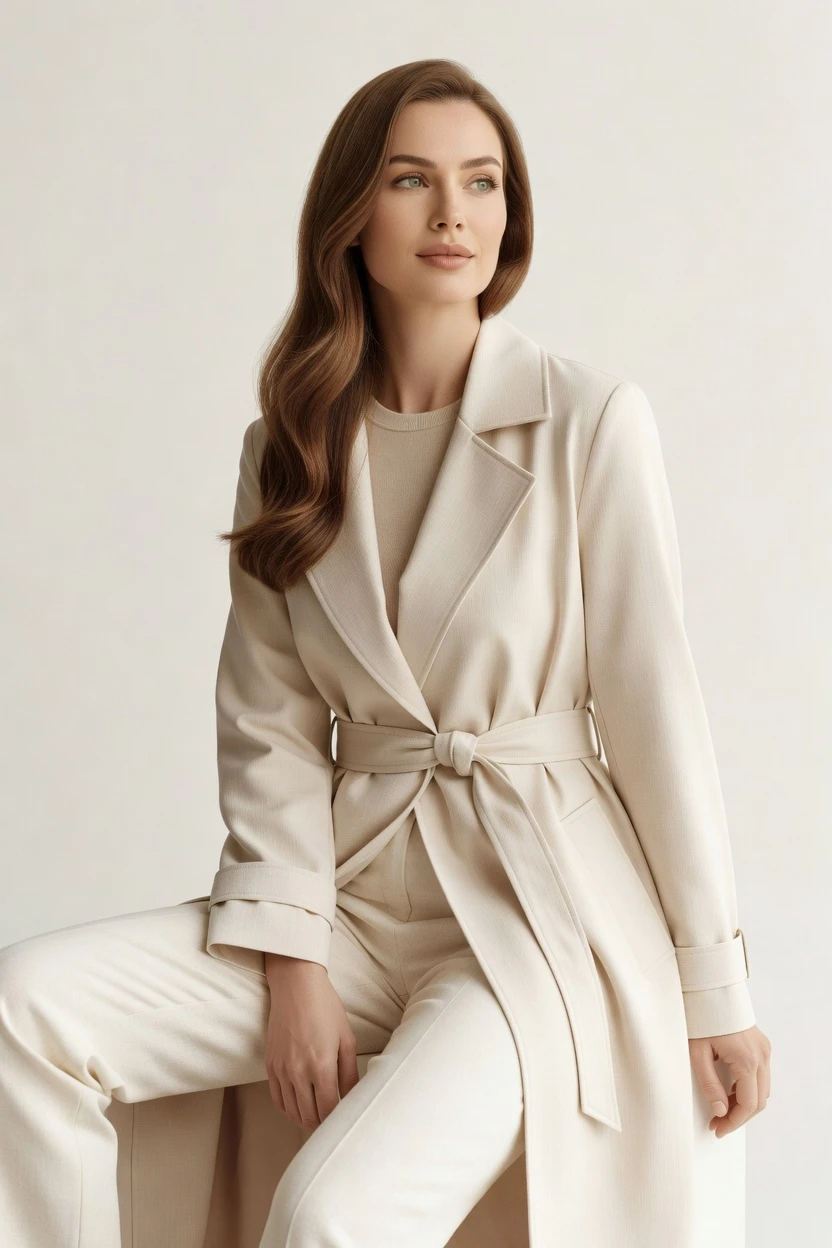
Direct the shoot. Zero prompts.
This demo uses a fixed set of lighting and framing controls tuned for garment-led campaign imagery. Select the lens, camera angle, and mood preset, then generate—every creative decision happens in the UI. 5 tokens · ~34s per image
- 6 clicks · 0 keystrokes
- app.rawshot.ai / new_shoot
How it works
Click through camera, light, and mood
Your creative decisions live in UI controls: lens, framing, angle, and lighting presets—then you generate on a garment-led engine.
- Step 01
Select your lighting controls
Click a camera preset, lens, framing, and a lighting system. You’re directing the look like a real shoot—without typing anything.
- Step 02
Match the garment to the brief
Keep the product faithful by staying garment-led in every generation. RAWSHOT represents cut, colour, pattern, logo, and drape as the anchor for the scene.
- Step 03
Generate, label, and publish-ready
Create the images in your chosen aspect ratio and resolution. Outputs carry signed provenance metadata, watermarking, and AI labelling for transparent ecommerce use.
Spec sheet
Proof that lighting stays practical
A focused set of proof surfaces showing click-driven control, garment fidelity, provenance, catalog scale, and reliable publishing-ready outputs.
- 01
No-likeness by design
RAWSHOT uses synthetic models built from 28 body attributes with 10+ options each. Accidental real-person likeness is statistically negligible by design, and outputs are transparently labelled.
- 02
Click-driven UI, no prompts
Every creative choice is a button, slider, or preset: camera, angle, distance, frame, pose, facial expression, and lighting. You direct the shoot in the interface—not in a text box.
- 03
Garment fidelity stays faithful
Cut, colour, pattern, logo placement, fabric character, and drape are represented faithfully. Your garment is the brief, so lighting changes don’t rewrite the product.
- 04
Synthetic models, transparently labelled
Diverse synthetic models are used for on-model photography. They’re labelled for transparency so your catalog and campaign teams can publish with confidence.
- 05
SKU consistency across the catalog
Save the model once and reuse it across your entire catalog. The same face and body stay consistent while you generate new SKUs, reducing drift and rework.
- 06
150+ visual styles for every mood
Choose from 150+ visual style presets spanning catalog, lifestyle, editorial, and campaign looks. Adjust lighting and mood without switching tools or workflows.
- 07
2K/4K outputs in every ratio
Generate in 2K or 4K with any aspect ratio you need. From close-up details to full compositions, outputs stay production-ready for publishing destinations.
- 08
C2PA-signed provenance and compliance
Outputs include C2PA-signed provenance metadata plus visible and cryptographic watermarking. RAWSHOT aligns with EU AI Act Article 50 and California SB 942, with GDPR-aligned handling and labelling.
- 09
Signed audit trail per image
Each image carries a signed audit trail so teams can trace generation decisions. This supports QA workflows and predictable asset management in real production pipelines.
- 10
GUI for singles, REST API for scale
Use the browser GUI for single shoots, then switch to REST API for catalog-scale pipelines. The same engine, controls, and quality apply across your workflow.
- 11
Fast generation with transparent pricing
Photo generation runs around 30–40 seconds per image, priced flat per image. Tokens never expire and failed generations refund tokens for smoother operations.
- 12
Full commercial rights, permanent, worldwide
Every output includes full commercial rights, permanent, worldwide. You can publish across platforms without fuzzy rights stories or per-seat gating for core features.
Outputs
A lighting-led proof set you can ship with Designed for garment teams
See on-model imagery that respects the garment while you iterate lighting and framing. Outputs are labelled, watermarked, and provenance-ready for ecommerce production.


Browse 150+ visual styles →
Comparison
RAWSHOT vs category tools vs DIY prompting
Three lenses on every dimension — what you optimize for in RAWSHOT versus typical category tools and blank-box AI workflows.
01
Interface
RAWSHOT
Click-driven controls for lens, lighting, framing, angle, and mood.Category tools + DIY
Shorter controls and less granular scene direction; more automation than control. DIY prompting: Typed prompts and trial-and-error to steer lighting and composition.02
Garment fidelity
RAWSHOT
Cut, colour, pattern, logo, fabric, and drape stay product-faithful.Category tools + DIY
Higher risk of product mutation when style and lighting change. DIY prompting: Garment drift when the model reinterprets your description.03
Model consistency across SKUs
RAWSHOT
Same saved model face and body reused across your catalog.Category tools + DIY
Inconsistent faces across generations; catalog drift adds rework. DIY prompting: Unstable identities across outputs, forcing retakes or manual selection.04
Provenance + labelling
RAWSHOT
C2PA-signed provenance metadata with visible + cryptographic watermarking.Category tools + DIY
Often no provenance record or clear watermarking and labelling workflow. DIY prompting: No clean attribution trail; hard to explain output origin for publishing.05
Commercial rights
RAWSHOT
Full commercial rights to every output, permanent, worldwide.Category tools + DIY
Rights can be unclear or vary by tool tier and account structure. DIY prompting: Licensing ambiguity and per-use uncertainty when generating for products.06
Iteration speed per variant
RAWSHOT
Generate variants quickly by adjusting UI controls, not re-authoring text.Category tools + DIY
Rework-heavy iteration because controls don’t map cleanly to fashion needs. DIY prompting: Prompt roulette: you rewrite prompts and hope lighting lands correctly.07
Pricing transparency
RAWSHOT
Flat per-image photo pricing with token economics and refund rules.Category tools + DIY
Per-seat pricing and volume tiers that punish growth or reduce predictability. DIY prompting: Costs add up through repeated trials and inconsistent outputs.
Prompting does not scale
Stop writing essays. Direct the shoot.
Most AI photo tools start with a blank text box. Rawshot turns the shoot into repeatable controls, so creative teams can produce consistent fashion imagery without prompt syntax or one-off hacks.
Category norm
ManualCreate a premium editorial fashion photograph of a model wearing the exact navy oversized wool coat from SKU-1842, full-body crop, realistic hands, consistent facial identity, clean e-commerce lighting, subtle Paris street background, 85mm lens, no logo distortion, no fabric hallucination, same pose as last campaign, repeatable for all colorways...
A prompt can describe one image. It cannot become a shared production system for hundreds of products, models, angles and markets.
Rawshot
ClicksSaved shoot recipe
Apply to 1 SKU or 10,000 via GUI, CSV or REST API.
Rawshot makes creative direction visible: buttons, presets and sliders instead of hidden prompt craft. The result is easier to teach, faster to approve and built for repeat production.
Use cases
Lighting workflows for teams that scale
Operator archetypes and how click-directed, garment-first output fits the way they actually work.
- 01
Indie designer launching a drop
You direct a clean campaign look in-browser, then repeat lighting variants across the full range without studio scheduling.
Confidence · high
- 02
DTC brand refreshing seasonal creatives
You keep the garment identical while you change mood and light for website heroes and email headers.
Confidence · high
- 03
On-demand label with tight timelines
You generate multiple angles for a new release in one session, keeping product fidelity as you publish faster.
Confidence · high
- 04
Crowdfunding creator building a lookbook
You click through editorial lighting presets to show silhouettes clearly before production ships.
Confidence · high
- 05
Kidswear label matching formats instantly
You generate consistent on-model imagery for every aspect ratio needed for product pages and ads.
Confidence · high
- 06
Adaptive fashion line with controlled styling
You keep fit and garment structure consistent while you run lighting variations for accessible, repeatable visuals.
Confidence · high
- 07
Lingerie DTC for PDP-ready detail
You use close-up framing and garment-led control to deliver consistent imagery across the catalog.
Confidence · high
- 08
Resale and vintage seller rebuilding listings
You turn a single product into multiple publish-ready angles while avoiding prompt-driven garment drift.
Confidence · high
- 09
Marketplace seller updating thousands of SKUs
You reuse a consistent model and generate lighting variants nightly through the REST API.
Confidence · high
- 10
Factory-direct manufacturer prepping bulk catalogs
You generate product-led scenes at scale with an audit trail and provenance metadata for QA.
Confidence · high
- 11
Fashion student preparing a portfolio
You learn lighting by clicking real controls instead of wrestling with prompt syntax and unpredictable outputs.
Confidence · high
- 12
Sunglasses, watches, and accessories catalog team
You generate consistent on-model lighting for accessories without inventing branding or losing product details.
Confidence · high
— Principle
Honest is better than perfect.
RAWSHOT keeps output attribution clear for fashion teams that publish at speed. Images include C2PA-signed provenance, visible + cryptographic watermarking, and AI labelling, supporting responsible workflows for ecommerce and campaign work. This fits EU AI Act Article 50 expectations and California SB 942, with GDPR-aligned handling so lighting exploration stays transparent.
Rights & provenance
Full commercial rights. Forever.
- C2PA-signed on every image — EU AI Act Article 50 compliant
- 28-attribute synthetic models — real-person likeness statistically impossible
- Full commercial rights to every generation — no recurring licensing fees
- Tokens never expire · One-click cancel · Transparent pricing
EU AI Act
C2PA
Commercial use
Pricing
~$0.55 per image.
~30–40 seconds per generation. Tokens never expire. Cancel in one click.
- 01The cancel button is on the pricing page.
- 02No per-seat gates. No 'contact sales' walls for core features.
- 03Failed generations refund their tokens.
- 04Full commercial rights to every output, permanent, worldwide.
FAQ
Practical answers on control, rights, pricing, scale, and compliant publishing.
Do I need to write prompts to use RAWSHOT?
Never—you direct every output with sliders, presets, and clicks on the garment, not typed prompts. That UI control is consistent across GUI and REST API payloads, which is why ecommerce teams onboard buyers without rewriting creative briefs as chat threads.
For catalog teams, reliability matters more than model cleverness; RAWSHOT keeps tokens, timings, refund rules, commercial rights framing, provenance signalling, watermarking cues, REST surface, and SKU-scale batch patterns explicit so operations can rehearse PDP launches without hallucinated garment inventions.
What does AI-assisted fashion photography change for SKU-scale catalogs?
You gain repeatable, lighting-led on-model imagery across many SKUs without reshooting every season update. Teams can adjust lighting systems, framing, and aspect ratios while keeping the product as the anchor, which reduces QA loops.
RAWSHOT is built around garment fidelity, so cut, colour, pattern, logo, fabric character, and drape stay consistent as you iterate visuals. Pair that with a signed audit trail and labelled outputs, and catalog workflows become easier to review and publish.
Why skip reshooting every SKU for seasonal updates?
Traditional reshoots force new samples, studio days, and scheduling overhead whenever lighting or marketing direction changes. When you need consistent output for fast product cycles, the cost and friction compound.
With RAWSHOT, you click lighting and camera controls to generate variants on-demand. Tokens never expire, failed generations refund tokens, and full commercial rights are included, so operations can iterate safely within predictable rules.
How do we turn flat garments into catalog-ready imagery without prompting?
You keep the garment-led brief inside RAWSHOT’s controls, then generate scenes by selecting camera, framing, pose, angle, and lighting presets. Because the interface is designed for fashion decisions, you don’t translate intent into text syntax.
That means fewer surprises in product structure, like colour shifts or altered fabric behaviour. You also get C2PA-signed provenance, watermarking, and AI labelling so your publishing pipeline stays transparent and reviewable.
Why does garment-led control beat prompt roulette for fashion PDPs?
Prompt-based DIY generation often causes garment drift, invented logos, or inconsistent identities across outputs—problems that are costly when you’re managing many SKUs. It also shifts creative work onto you as the operator, turning QA into a recurring firefight.
RAWSHOT keeps the garment as the brief and lets you steer the shoot with click-driven controls. The same saved model can be reused for catalog consistency, reducing drift between shoots and keeping your visuals closer to your brand product.
Is output attribution and licensing clear enough for commercial publishing?
Yes. Every RAWSHOT photo output comes with C2PA-signed provenance metadata, watermarking (visible and cryptographic), and AI labelling so stakeholders can understand what they’re publishing.
For licensing, RAWSHOT provides full commercial rights to every output, permanent, worldwide. This is designed to fit real commerce workflows where legal, QA, and marketing need clear rules without improvising attribution after generation.
What quality checks should we run before uploading RAWSHOT photos to PDPs?
Start with garment fidelity review: cut, colour, pattern, logo placement, fabric character, and drape should match your product specs. Next, verify composition details like framing and focus for the intended PDP context.
Then confirm provenance and labelling cues are present for each asset and that the aspect ratio and resolution meet your publishing destination. RAWSHOT’s per-image audit trail supports repeatable QA, so teams can approve faster and with fewer back-and-forths.
How do token pricing and generation time work for photo batches?
Photo generation is priced per image and typically completes in about 30–40 seconds, so you can estimate throughput for batch work. Tokens never expire, so you can plan experiments without urgency pressure.
If a generation fails, RAWSHOT refunds the tokens, which reduces wasted budget during early iteration. You can cancel with one click from the pricing page, keeping spend control straightforward for ecommerce operators.
Can we plug RAWSHOT into our catalog workflow via API?
Yes. RAWSHOT supports a REST API for catalog-scale pipelines, while the browser GUI covers single shoots for creative direction and quick approvals.
This lets engineering or operations connect your SKU list to a repeatable generation workflow, producing labelled and provenance-ready assets with consistent settings. The same garment-led engine behind the GUI also applies to API output so your pipeline doesn’t learn a new tool for scale.
Will RAWSHOT help our team scale output while keeping roles separate?
It’s built for teams where creative direction, QA, and production need to move independently. Operators can click and adjust controls for lighting and framing in the GUI, while catalog teams run batches through the REST API.
Because RAWSHOT keeps a consistent model approach and includes audit trails, QA can review outputs with clearer expectations. That separation reduces bottlenecks and helps you ship more variants per week without rebuilding the creative process each time.
Keep exploring