
— On-model imagery · 150+ styles · 2K/4K
Direct campaign-ready on-model photos with the Tie AI On-model Photography Generator.
You direct the shoot with buttons, sliders, and visual presets—then generate clean on-model images from your real garment. Every creative choice stays in the RAWSHOT interface, so you never switch to a typed prompt workflow mid-project. No studio days. No samples shipped cross-continent. No prompting.
- ~$0.55 per image
- ~30–40s per generation
- 150+ visual styles
- 2K and 4K
- Every aspect ratio
- Full commercial rights, permanent worldwide
7-day free trial • 50 tokens (10 images) • Cancel anytime

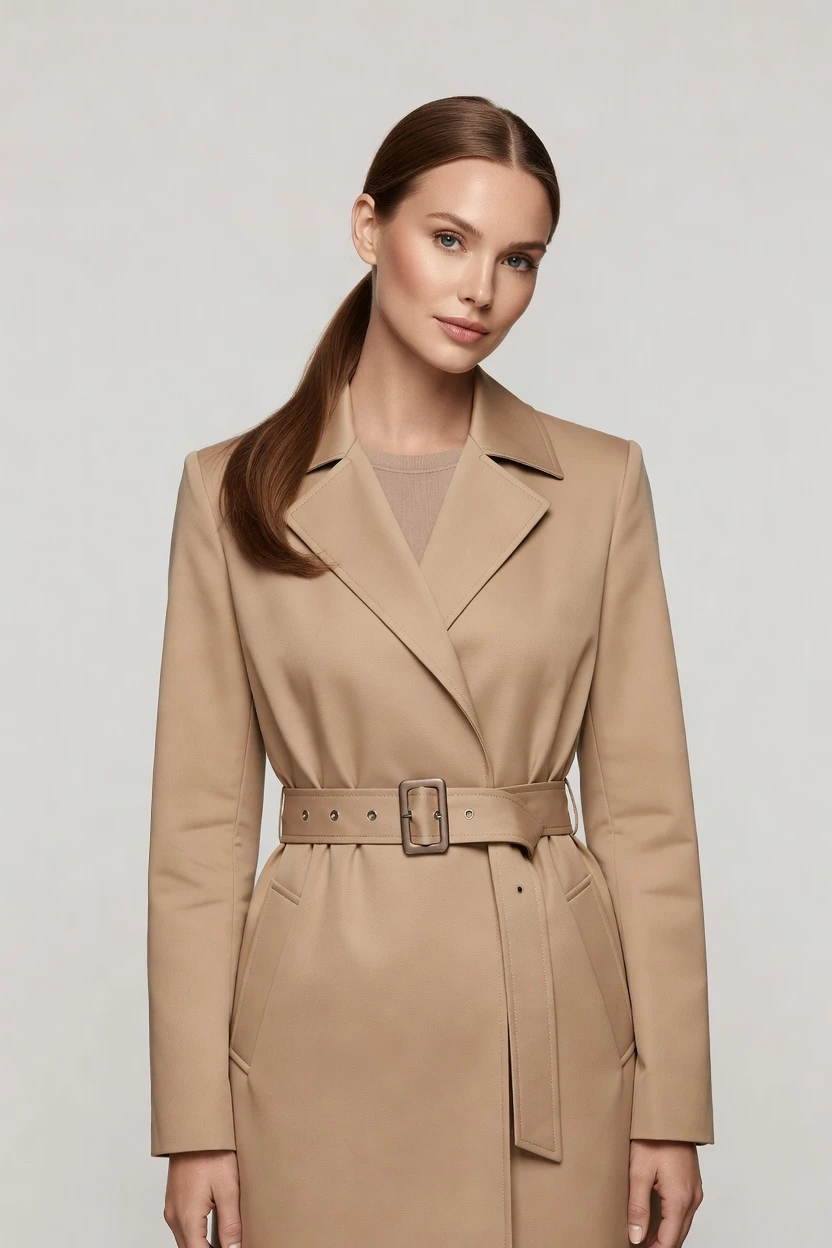
Direct the shoot. Zero prompts.
Select lens, framing, lighting, background, and a visual style preset—then generate. The engine keeps the garment as the brief while the UI locks in your camera and art direction. 5 tokens · ~34s per image
- 6 clicks · 0 keystrokes
- app.rawshot.ai / new_shoot
How it works
Click controls for real garment-led shoots
Direct camera, lighting, framing, and visual style in the browser. Generate stills with provenance and commercial-rights clarity—no prompt syntax involved.
- Step 01
Load the garment, then set the camera
Click lens, framing, pose, angle, lighting, background, and a visual style preset. You’re directing the image like a real shoot—without switching into a text workflow.
- Step 02
Generate on-model imagery with locked control
Generate the still image. RAWSHOT keeps your garment as the brief while you maintain consistent art direction across variants.
- Step 03
Review provenance and publish with confidence
Download the output with C2PA-signed provenance and watermarking cues. Your team can move from preview to PDP, lookbook, or ads with clear commercial rights framing.
Spec sheet
12 proof surfaces, one garment-led pipeline
Each tile confirms a distinct proof surface: control, garment fidelity, model consistency, styles, resolution, compliance, audit trail, and rights.
- 01
No-likeness by design
RAWSHOT uses diverse synthetic models built from 28 body attributes with 10+ options each, so accidental real-person likeness stays statistically negligible by design.
- 02
Click-driven, no prompting
Every creative decision is a button, slider, or preset inside the app. There’s no typed prompt box to invent a new workflow for every shoot.
- 03
Garment fidelity first
Cut, colour, pattern, logo placement, fabric, and drape are represented faithfully. The garment is the brief, not an afterthought reshaped by wording.
- 04
Synthetic models, transparently labelled
You get diverse synthetic models and clear labelling so your team knows what it’s using and can document it for brand governance.
- 05
SKU consistency across variants
Save your model once and reuse it across your catalog work. Same face, same body framing—so you don’t chase “close enough” retakes between SKUs.
- 06
150+ visual styles
Choose from catalog, lifestyle, editorial, campaign, studio, street, Y2K, vintage, noir, and more. Style selection stays consistent across your batch.
- 07
2K/4K plus every aspect ratio
Generate at 2K or 4K with every aspect ratio you need for web, ads, and social placements. The output is built for real storefront layouts.
- 08
Compliance you can point to
Outputs are C2PA-signed and AI-labelled, aligned with EU AI Act Article 50 and California SB 942. Provenance isn’t hidden; it’s part of the delivered file.
- 09
Signed audit trail per image
Each output carries a signed audit trail so teams can trace settings and provenance for internal review, approvals, and operational QA.
- 10
GUI for singles, REST for scale
Use the browser GUI for direct creative control, and the REST API for catalog-scale pipelines. Same engine, same results, consistent operations.
- 11
Speed and transparent token pricing
Photo generation runs in ~30–40 seconds per image at about ~$0.55 per output. Tokens never expire, and failed generations refund their tokens.
- 12
Full commercial rights, permanent worldwide
You receive full commercial rights to every output, permanent and worldwide. Publish for ecommerce, campaigns, and marketplace listings with a clear rights story.
Outputs
Proof outputs you can publish On-model stills with provenance
Browse example images generated from the same garment-led controls, with C2PA-signed provenance and consistent model direction.


Browse 150+ visual styles →
Comparison
RAWSHOT vs category tools vs DIY prompting
Three lenses on every dimension — what you optimize for in RAWSHOT versus typical category tools and blank-box AI workflows.
01
Interface
RAWSHOT
Click-driven controls for camera, framing, lighting, and style.Category tools + DIY
Shorter controls with prompt-based or limited art direction surfaces. DIY prompting: Typed prompts plus iterative guessing to reach a workable composition.02
Garment fidelity
RAWSHOT
Cut, colour, pattern, logo, and drape are represented faithfully.Category tools + DIY
Weaker garment fidelity; the tool may reshape product details. DIY prompting: Garment drift between outputs; subtle changes accumulate across variants.03
Model consistency across SKUs
RAWSHOT
Save a model and reuse it across your catalog for consistency.Category tools + DIY
Face and pose can drift across generations, breaking catalog uniformity. DIY prompting: Inconsistent faces across runs; you end up rejecting “almost right” results.04
Provenance + labelling
RAWSHOT
C2PA-signed files with visible + cryptographic watermarking cues.Category tools + DIY
Often lacks provenance metadata and clear labelling for outputs. DIY prompting: Missing C2PA-style provenance; audit trails are not part of the workflow.05
Commercial rights
RAWSHOT
Full commercial rights to every output, permanent and worldwide.Category tools + DIY
Rights story is commonly unclear, especially for team publishing pipelines. DIY prompting: Unclear rights handling when outputs come from generic image models.06
Iteration speed per variant
RAWSHOT
~30–40 seconds per photo with repeatable control settings.Category tools + DIY
Slower or less repeatable controls lead to more manual iteration. DIY prompting: Prompt-engineering overhead becomes the time sink before you get usable output.07
Pricing transparency
RAWSHOT
~$0.55 per image with token rules and failed-generation refunds.Category tools + DIY
Per-seat pricing and volume tiers can punish growth and collaboration. DIY prompting: Compute and iteration costs rise as you run multiple prompt attempts.08
Catalog API
RAWSHOT
GUI for singles and REST API for batch-scale pipelines.Category tools + DIY
Limited export and weaker integration for catalog-scale workflows. DIY prompting: No stable REST pipeline; operations rely on manual prompt runs and cleanup.
Prompting does not scale
Stop writing essays. Direct the shoot.
Most AI photo tools start with a blank text box. Rawshot turns the shoot into repeatable controls, so creative teams can produce consistent fashion imagery without prompt syntax or one-off hacks.
Category norm
ManualCreate a premium editorial fashion photograph of a model wearing the exact navy oversized wool coat from SKU-1842, full-body crop, realistic hands, consistent facial identity, clean e-commerce lighting, subtle Paris street background, 85mm lens, no logo distortion, no fabric hallucination, same pose as last campaign, repeatable for all colorways...
A prompt can describe one image. It cannot become a shared production system for hundreds of products, models, angles and markets.
Rawshot
ClicksSaved shoot recipe
Apply to 1 SKU or 10,000 via GUI, CSV or REST API.
Rawshot makes creative direction visible: buttons, presets and sliders instead of hidden prompt craft. The result is easier to teach, faster to approve and built for repeat production.
Use cases
From one look to thousands of SKUs
Operator archetypes and how click-directed, garment-first output fits the way they actually work.
- 01
Indie designers launching a drop
Upload each garment, click the camera and visual style, and generate campaign-ready on-model stills without reshoots between edits.
Confidence · high
- 02
DTC ecommerce teams refreshing PDPs
Keep the same model direction across colorways and sizes so every product page stays consistent for weekly catalog updates.
Confidence · high
- 03
Marketplace sellers building listings
Generate variant images for multiple aspect ratios in the same workflow so each SKU looks cohesive across marketplaces.
Confidence · high
- 04
Catalog managers running nightly batches
Use the REST API for SKU-scale pipelines, keeping art direction steady while generating stills with signed provenance metadata.
Confidence · high
- 05
Adaptive fashion lines with clear brand governance
Maintain respectful model-led visuals with transparent synthetic labelling and watermarking cues your compliance team can review.
Confidence · high
- 06
Lingerie DTCs and intimate wear operators
Click lighting, background, and framing choices to build consistent on-model imagery for catalog pages and ads without prompting.
Confidence · high
- 07
Resale and vintage sellers restoring product presentation
Generate clean, garment-faithful on-model photos for listings when you don’t have studio access or sample wardrobes.
Confidence · high
- 08
Factory-direct manufacturers preparing seasonal updates
Generate controlled stills for each SKU and season with consistent framing—so teams can publish updates without studio schedules.
Confidence · high
- 09
Students and makers building portfolios
Learn fashion photography control through presets and click-driven art direction, then output labelled files for portfolio use.
Confidence · high
- 10
Lookbook teams styling editorial moods
Switch between editorial, campaign, and vintage styles while keeping the garment faithful and output ready for publishing formats.
Confidence · high
- 11
Influencer teams aligning brand visuals
Create consistent on-model imagery across platform aspect ratios with a repeatable style system and stable model direction.
Confidence · high
- 12
Watches, sunglasses, and accessories catalog work
Generate close-ups and details with consistent camera choices so every accessory SKU stays clear and branded.
Confidence · high
— Principle
Honest is better than perfect.
Every RAWSHOT still includes C2PA-signed provenance with visible and cryptographic watermarking cues and AI labelling. That gives your team an auditable record of what was generated and how, aligning with EU AI Act Article 50 and California SB 942 for day-to-day publishing workflows.
Rights & provenance
Full commercial rights. Forever.
- C2PA-signed on every image — EU AI Act Article 50 compliant
- 28-attribute synthetic models — real-person likeness statistically impossible
- Full commercial rights to every generation — no recurring licensing fees
- Tokens never expire · One-click cancel · Transparent pricing
EU AI Act
C2PA
Commercial use
Pricing
~$0.55 per image.
~30–40 seconds per generation. Tokens never expire. Cancel in one click.
- 01The cancel button is on the pricing page.
- 02No per-seat gates. No 'contact sales' walls for core features.
- 03Failed generations refund their tokens.
- 04Full commercial rights to every output, permanent, worldwide.
FAQ
Practical answers on control, rights, pricing, scale, and compliant publishing.
Do I need to write prompts to use RAWSHOT?
Never. You direct every output with sliders, presets, and clicks on the garment, not typed prompts. That UI control stays consistent whether you’re making a single still or running catalog-scale jobs via the REST API. For ecommerce teams, this matters because creative decisions become repeatable settings, not instructions that vary by wording or iteration.
RAWSHOT also keeps the commercial story and provenance signals inside the output: C2PA-signed metadata, watermarking cues, and clear labelling. You get a workflow your ops team can rehearse for PDP launches without inventing new prompt grammar each time.
What does AI-assisted fashion photography change for SKU-scale catalogs?
It turns repeatable art direction into an operations workflow. Instead of reshooting for every SKU, you generate consistent on-model imagery by selecting camera, framing, lighting, and a visual style preset in the RAWSHOT interface.
The practical win is control with consistency: save your model direction and reuse it across your catalog so the face and body framing don’t drift between variants. Each output is delivered with signed audit trail per image and the provenance cues your team needs for approvals.
Why skip reshooting every SKU when you need season updates fast?
Because production schedules block iteration. When you need new colorways, sizes, or seasonal edits, traditional shoots require samples, shipping, availability, and studio time before you can even start. RAWSHOT removes that bottleneck by letting you generate stills directly from your garment-led setup.
You still keep creative control: choose lens, framing, pose, background, and lighting through the UI, then generate in ~30–40 seconds per image. The outputs come with C2PA-signed provenance and full commercial rights framing so your team can publish confidently.
How do we turn flat garments into catalogue-ready imagery without prompting?
In RAWSHOT, every step is a click on settings that map to real photography decisions. Pick your lens and framing, choose the mood and lighting system, and set aspect ratio and resolution to match the destinations where your product will be published.
Because the engine is garment-led, the product remains the brief—cut, colour, pattern, logo, fabric, and drape are represented faithfully. You also get labelled synthetic models and an audit trail per image, which makes QA and approvals simpler for catalog teams.
Why does garment-led control beat prompt roulette for PDP photos?
Prompt roulette introduces uncontrolled variation. Generic image models can shift details like logos, fabrics, and proportions from one run to the next, so you spend time rejecting outputs that don’t match your product.
RAWSHOT keeps your creative intent inside the interface, where settings are stable: click camera choices, lock the style preset, and generate again with consistent model direction. On top of that, the delivered files include provenance metadata, watermarking cues, and clear commercial rights framing—so your publishing workflow doesn’t stall on cleanup.
What provenance and licensing signals come with RAWSHOT outputs?
Each still is delivered with C2PA-signed provenance metadata plus visible and cryptographic watermarking cues, along with AI labelling. That gives your team an auditable record of the output and the operational context around it.
On licensing, you get full commercial rights to every output, permanent and worldwide. For brand governance, this reduces ambiguity when teams approve imagery for ecommerce, ads, and marketplace placements.
How can we QA outputs before putting them on a storefront?
Use your standard visual checks, but rely on RAWSHOT’s built-in signals to speed approvals. Confirm garment fidelity—cut, colour, pattern, logo, fabric, and drape—then verify the framing and aspect ratio match the placements you need.
Also check provenance and labelling cues on the delivered file: C2PA-signed metadata, watermarking cues, and the per-image signed audit trail. That makes it easier to review images consistently across your catalog pipeline and keep your team aligned.
Is video more expensive, and how do token rules affect photo budgets?
For still photos, pricing is straightforward: about ~$0.55 per image with ~30–40 seconds per generation, and tokens never expire. Video costs more because it uses more tokens per second than stills, so longer clips increase token usage.
Operationally, failed generations refund tokens and you can cancel in one click on the pricing page. That means your team can iterate safely on creative direction without turning experimentation into budget risk.
Can we integrate RAWSHOT into a Shopify-style workflow for batch generation?
Yes. RAWSHOT supports both a browser GUI for single shoots and a REST API for catalog-scale pipelines, which fits the way commerce teams already operate. You can keep your creative controls consistent while automating generation for multiple SKUs and variants.
Because outputs include provenance and labelling cues, your workflow can also carry compliance information alongside the imagery through approvals and publishing. That keeps your integration practical, not just experimental.
How do roles like designer, ops, and catalog manager share control from UI to API?
Designers can direct the look in the browser GUI with click-driven controls, while ops and catalog managers run repeatable batches through the REST API. The same garment-led engine and controls philosophy apply across both surfaces, so teams don’t relearn creative workflows.
To close the loop, review and publish with signed provenance and per-image audit trail cues, then reuse the same model direction across SKUs. This structure supports throughput without sacrificing consistency, which is what catalog-scale teams need.
Keep exploring